Minerals for Regime Security in the DRC
Washington’s desire to extract mineral wealth has led it to full backing of Felix Tshisekedi, even as he angles for a third term.
By experts and staff
- Published
 Michelle GavinCFR ExpertRalph Bunche Senior Fellow for Africa Policy Studies
The Trump administration has made it plain that they have little interest in supporting democratic governance around the world, arguing that internal legitimacy issues can distract from putting America first and are simply none of Washington’s business. But the United States’ eager pursuit of minerals from the politically fragile Democratic Republic of Congo (DRC) is being lashed to the political agenda of its current president, Felix Tshisekedi. No matter how much American officials may wish to pretend that they have nothing to do with governance choices abroad, leaders with dubious mandates wish to project something else entirely.
Tshisekedi, who came to power in a backroom deal with former President Joseph Kabila that subverted actual election results, has a mandate that ends in 2028. But he has been pushing plans to revise the DRC’s constitution, a tried-and-true method of evading term limits. He has publicly stated that he will accept a third term if that is what “the people want,” and has cast doubt on the timing of the next election cycle, claiming that the conflict in eastern Congo could make it impossible to hold elections on time.
All of this is familiar to the Congolese people; Kabila overstayed his mandate by two years, and even argued that instability in the East was one of the reasons elections could not be organized on time. But a new twist has come in the form of signals interpreted to mean that the U.S. stands squarely behind Tshisekedi. Since he came to power, a falling out with his predecessor has become a preoccupation, leading Tshisekedi and his allies to lift Kabila’s immunity and eventually sentence him to death in absentia for alleged collaboration with M23 military forces in the East. On April 30, the U.S. Treasury Department announced sanctions on Joseph Kabila, echoing Tshisekedi’s accusations of support for M23 rebels. Whatever the merits of those charges, it’s not lost on anyone that the U.S. could have sanctioned Kabila for years for any number of reasons, including grand scale corruption and gross interference in Congolese elections. But the timing and rationale read as a gesture of support to Tshisekedi.
Then there was the Congolese government’s curious announcement that it was creating a special paramilitary force to guard its mines, supposedly backed by financing from the United States and the United Arab Emirates. The claim, galling to Congolese civilians who have endured decades of their government’s inability to provide security to their communities, prompted the U.S. embassy in Kinshasa to issue a denial, but the damage is not so easily undone, particularly when so many details of U.S. deal-making remain shrouded in secrecy.
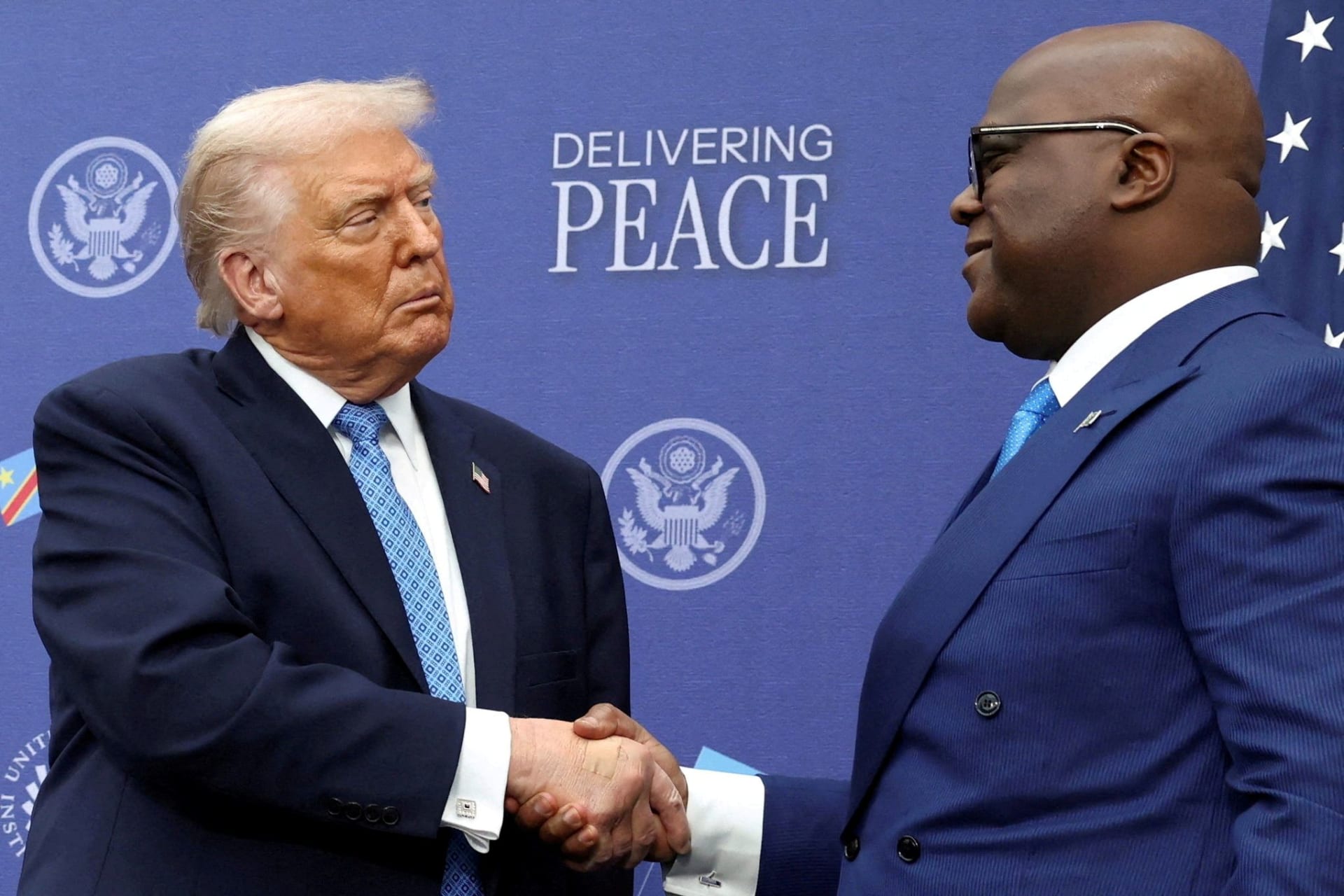
Washington’s emphasis on transactionalism has led Congolese citizens to draw their own conclusions. When President Trump promised late last year that “everybody’s going to make a lot of money” as a result of his administration’s Central African diplomacy, no one was under the illusion that he meant the populations of the countries where his administration seeks deals. On social media, Congolese commentators decry perceived arrangements in which Tshisekedi offers up the country’s riches in exchange for sanctions on his political enemies or a willingness to accept U.S. deportees. The public believes the U.S. has a thumb on the scale, and it appears that political elites do as well. As repression ramps up as part of a third term campaign, it is happening against a backdrop of perceived American support. When, eventually, the political tide turns, the U.S. may find itself in an uphill battle for influence and access.