What Do Voters Think of Operation Epic Fury After Three Months?
Republican support for the Iran war remains high even as Republican congressional candidates see the conflict as a growing political liability.
By experts and staff
- Published
 James M. LindsayCFR ExpertMary and David Boies Distinguished Senior Fellow in U.S. Foreign Policy
The 2026 congressional midterms are now five months away. With voter preferences starting to solidify, whether on who to vote for or whether to vote at all, it is worth looking at the one foreign policy issue with the potential to influence the outcome in November—Operation Epic Fury.
In early March, it was clear that President Donald Trump had a lot of work to do to persuade Americans of the wisdom of attacking Iran. The early polls showed that the public was at best split on the idea of attacking Iran. At worst, they showed that a plurality of Americans thought that Trump had made a mistake. As with almost all polls today, the results revealed a deep partisan split—Republicans overwhelmingly gave Trump a thumbs up, while Democrats, and Independents to a lesser extent, gave him a strong thumbs down. This was when Trump was promising that the fighting would end quickly, with a decisive U.S. victory.
So where does the public stand after three months since the war began, with a shaky ceasefire now in place and the Strait of Hormuz closed? In a nutshell, the war is even less popular today. An average of national polls shows that 58 percent of Americans now oppose the war, while just 35.7 percent support it. That compares to 47.3 percent opposition and 35.1 percent support at the war’s start.
Not surprisingly, views on the Iran War continue to break down along partisan lines. Opposition to the war has only grown among Democrats and Independents, while Republicans continue to overwhelmingly support it. A CBS News poll conducted two weeks ago found that 81 percent of Republicans say they supported the war, down only three percentage points from the war’s start.
That topline number may, however, mask growing Republican disenchantment. Trump’s approval rating on economic issues has dipped since Operation Epic Fury began, likely because of its consequences. The CBS News poll found support among Republicans for Trump’s handling of the economy was down four points between February and May (77 to 73 percent) and his handling of inflation was down nine points (72 to 63). Likewise, back in February, 41 percent of Republican said the price of gas was either difficult or posed a financial hardship for their families. In the latest poll, that number was 50 percent.
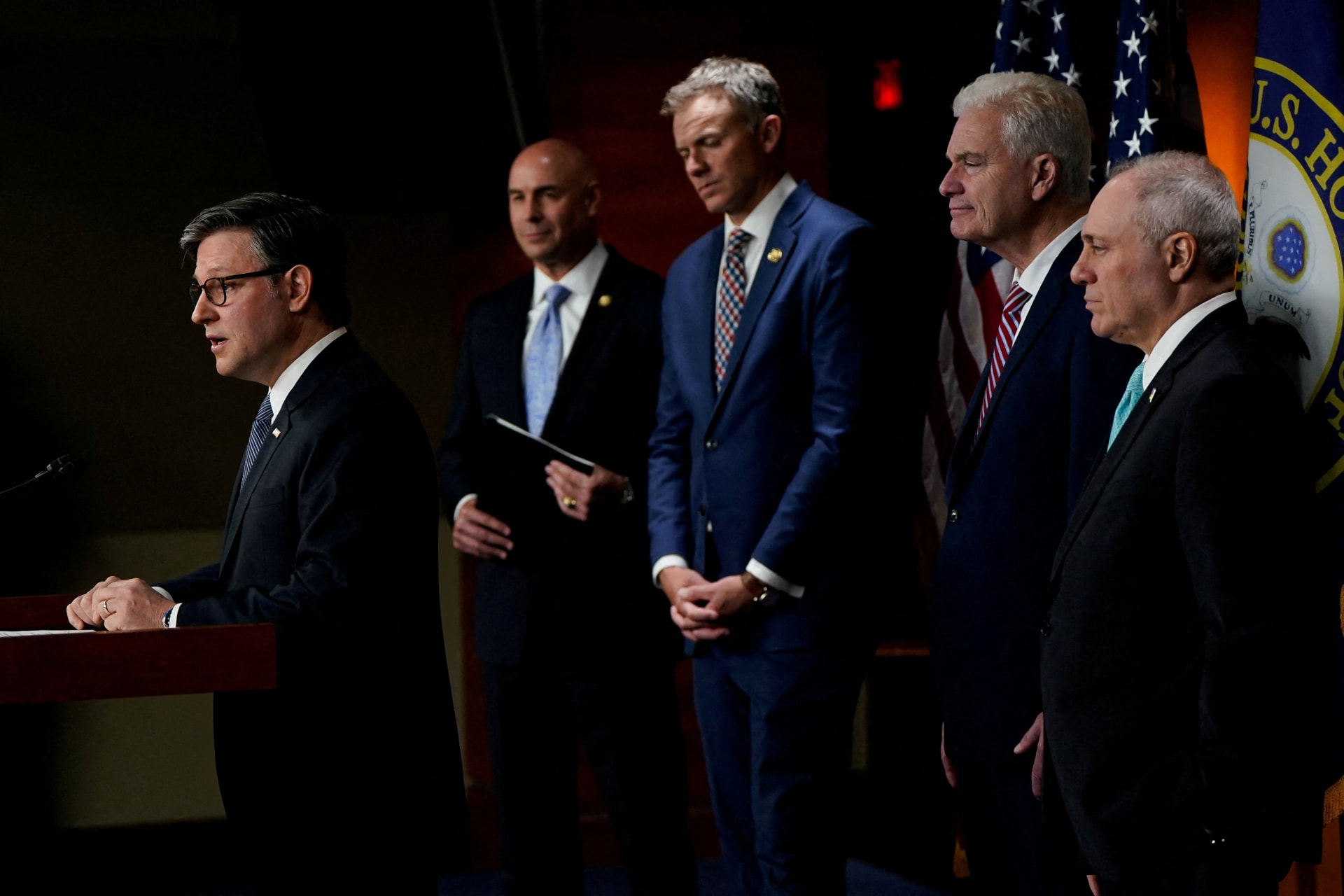
Some Republican lawmakers seem to be sensing the unease among Republican voters about the Iran war. A few lawmakers have signaled their willingness to support legislation that would require Trump to secure congressional authorization for continued hostilities. The prospect that the House might pass such legislation after having previously rejected it prompted Speaker Mike Johnson to postpone a vote on a War Powers Resolution two weeks ago.
Republican candidates, especially those in competitive races, are also acknowledging that the war is a looming electoral problem. Representative Ashley Hinson, who won the Republican nomination yesterday for Iowa’s open Senate seat, told a group of voters last week that she hopes the war will “by the next couple of weeks. If it drags on beyond that, it’s a political liability for us.”
Hinson does not appear likely to get her wish. Iran announced on Monday that it was suspending its participation in peace talks, and the two sides exchanged renewed fire. Trump shrugged his shoulders at the news that talks were off, saying, “I don’t care, honestly. I really don’t care.”
Republican congressional candidates are likely to care, however. Democrats continue to push for new War Powers Resolution votes. A House vote could come as early as today.
The votes themselves will be symbolic. The House will be voting on a nonbinding concurrent resolution. The Senate vote is on a binding joint resolution. However, the House would need to pass it as well, which is highly unlikely. Even if the war’s opponents succeed in overcoming those hurdles, Trump would veto the measure, as he did back in 2019 when Congress tried to end U.S. support for Saudi Arabia’s war in Yemen.
But even symbolic votes can force lawmakers to take positions that could be used against them in an election year. To borrow an old political saying, it is better to be on the right side of a vote than on the winning side. Which is why many Republican lawmakers are hoping for a quick peace deal that spares them from what could be a heavy political liability when the voters head to the polls in the fall.
Numbers to Note
The public’s assessment of Trump’s job performance continues to turn negative. An average of national polls has 38.6 percent of Americans giving him a thumbs up and 57.6 percent a thumbs down. Trump’s current -19 net approval rating is the lowest of his second term. He was underwater by 13.4 points before Operation Epic Fury started and by 16.9 points a month ago. Gasoline prices have retreated a bit in the last week but remain far higher than they were when Operation Epic Fury began. The average price for a gallon of gas today stands at $4.29, compared to $4.46 a gallon a month ago. Gas prices hovered around $3.00 a gallon at the end of February.
The numbers for the generic congressional ballot continue to move in favor of Democrats. Last month, Democrats held a 5.9-lead over Republicans in an average of national polls. That lead has now expanded to 7 points. At this point in 2018, Democrats held a 6.5-point lead on the generic congressional ballot. That election saw the Democrats pick up forty House seats.
The defeat of Sen. Bill Cassidy in Louisiana’s Republican primary and Sen. John Cornyn in Texas’s Republican primary brings the number of open Senate seats up for grabs in November to thirteen: nine Republicans and four Democrats. Open Senate seats are worth tracking because they are more likely to change parties than seats defended by an incumbent. Republicans will almost certainly hold on to the Senate seat in Louisiana. The same cannot be said for the Texas Senate seat, where Republican Ken Paxton looks to be in dogfight with Democrat James Talarico.
Professional Congress watchers are still digesting the impact of the Supreme Court’s April ruling largely invalidating majority-minority districts, the Virginia State Supreme Court’s early May decision overturning the commonwealth’s redistricting referendum, the legal battle over Alabama mid-decade redistricting, and South Carolina’s decision to stick with its existing congressional redistricts. The Cook Political Report currently sees eighteen House seats as toss-ups, Larry Sabato’s Crystal Ball sees sixteen, and Nathan Gonzalez with Inside Elections sees fourteen seats. Put differently, all three prognosticators agree that we likely already know the eventual party affiliation of more than 90 percent of House seats. If these numbers hold, whichever party wins in November will have a slim majority.
News to Note
James Traub explained how the Supreme Court’s 2019 ruling in Rucho v. Common Cause set the stage for its ruling last month in Louisiana v. Callias and exceeds it in importance because it blessed extreme gerrymandering in the service of partisan purposes.
The New York Times’s Nate Cohen and Eve Washington reviewed how race neutral redistricting could still produce sizable minority representation in Congress if it were paired with party-neutral redistricting.
Oscar Berry assisted in the preparation of this article.
Other posts in this monthly series: