NATO Is Marking Its Seventy-Seventh Anniversary. Will It Be Its Last?
The future of the world’s most successful military alliance is in doubt.
By experts and staff
- Published
 James M. LindsayCFR ExpertMary and David Boies Distinguished Senior Fellow in U.S. Foreign Policy
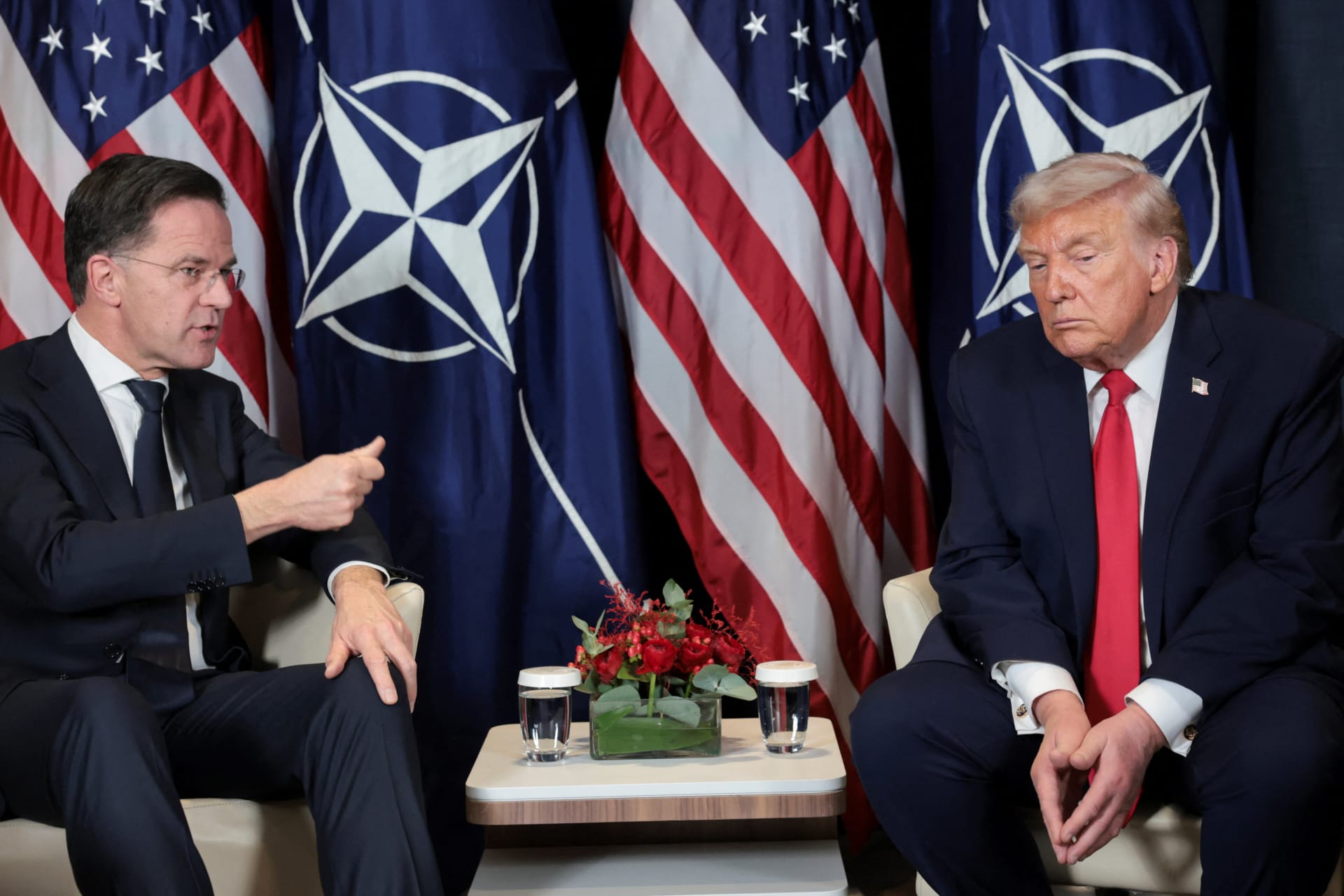
NATO marks its seventy-seventh anniversary today under a cloud. President Donald Trump told reporters on Wednesday of his “disgust with NATO” over its failure to help the United States reopen the Strait of Hormuz. He added that he was “absolutely” considering taking the United States out of the alliance. Those comments prompted widespread speculation that he might use his address to the nation Wednesday night to announce the withdrawal. That didn’t happen. But NATO’s future remains in doubt.
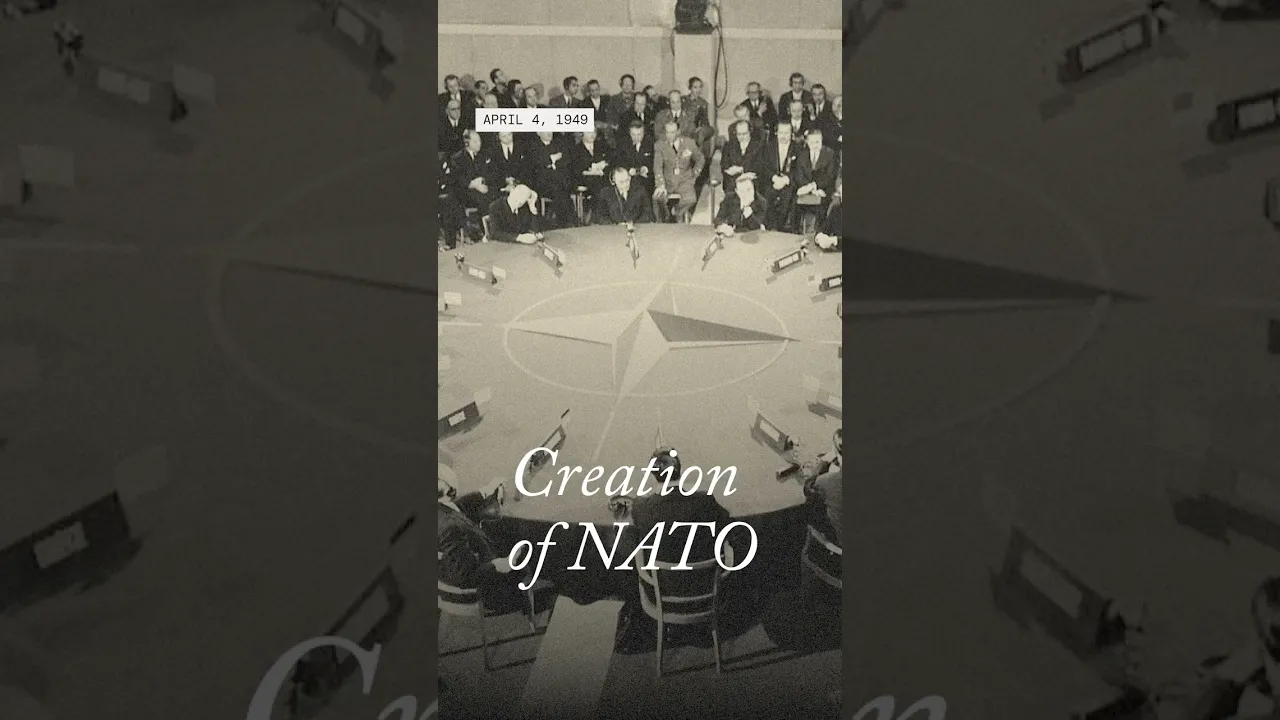
A U.S. withdrawal from NATO would be an epic strategic blunder. NATO stands as the most successful defensive military alliance in history, having deterred a Soviet attack on Western Europe and ushered in the continent’s Long Peace. A recent survey I conducted on behalf of the Council on Foreign Relations with members of the Society for Historians of American Foreign Relations ranked the creation of NATO as the sixth best decision in U.S. foreign policy history.
[Video: https://www.youtube.com/shorts/bK6vK672ADc]
NATO remains just as relevant today in a world of growing great power rivalry and multiplying geopolitical threats. There is a fundamental truth in world politics: strength lies in numbers. NATO provides just that.
Trump’s Complaint
Trump’s unhappiness with NATO had been longstanding and specific: most NATO countries welcomed the U.S. security guarantee and failed to spend in their own defense. The free-riding complaint, of course, long predates Trump. In 1953, just four years after NATO’s founding, President Dwight D. Eisenhower warned a much smaller NATO to spend more on their militaries “because the American well can run dry.” Many of Eisenhower’s successors repeated his demand.
What Trump can claim, and most of his predecessors cannot, is that he got NATO countries to spend more on defense. At last year’s summit in The Hague, NATO members committed to spending at least 5 percent of GDP on defense by 2035. In good part because of Trump’s haranguing, all thirty two NATO members now meet the 2 percent of GDP defense pledge made at the 2014 Wales Summit. Moreover, nine NATO countries besides the United States currently spend more than 2.5 percent of their GDP on defense, and six spend more than 3 percent. The fact that Russia’s invasion of Ukraine also gave NATO members an incentive to meet the moment does not diminish Trump’s accomplishment. He rightly praised the alliance at the time for meeting his challenge, saying that NATO is “not a ripoff, they really love their countries.”
Trump’s current threat to withdraw from NATO reflects the refusal of many NATO countries to assist with Operation Epic Fury. Despite not having consulted NATO members on the wisdom of attacking Iran in the first place, Trump was surprised they were not willing to follow his lead. Not satisfied with calling NATO members “cowards,” he told a British newspaper on Wednesday: “I was never swayed by NATO. I always knew they were a paper tiger, and Putin knows that too, by the way.”
Yet from the start NATO has been a defensive alliance, motivated by the idea that an attack against one is an attack against all. It has never been based on the idea that its members are obligated to join any military operation another member might launch. The United States certainly has never operated on that principle. Just four years after NATO was founded, Eisenhower ignored France’s request to intervene to save embattled French forces at Dien Bien Phu. During the Suez Canal Crisis two years later, Eisenhower responded to Britain and France’s decision to join Israel in attacking Egypt not by providing support but by forcing all three countries to withdraw.
The Power to Withdraw
Trump may have denounced NATO this week, but does he have the power to withdraw the United States from the alliance? You might think the answer is no. After all, in 2023, Congress prohibited the president from terminating U.S. membership in NATO without first getting two-thirds support of the Senate or the approval of both houses of Congress. No such congressional support is likely forthcoming.
However, the 2023 law may not be constitutional. It is a bedrock legal principle that Congress cannot claim powers through statute that the Constitution denies it. And the courts have never settled whether the president has an independent authority to terminate treaties.
Whatever the answer to that legal question, it is in important ways irrelevant. NATO’s effectiveness does not rest on who is formally a member. It rests instead on the belief, both on the part of alliance members and potential adversaries, that its members will act if challenged. Shake that belief and the alliance withers. As French President Emmanuel Macron said on Thursday: “If you create doubts every day about your commitment, you empty [NATO] of its substance.”
In short, alliances are one place where words matter. Trump doesn’t need to formally withdraw the United States from NATO to cripple it. He can accomplish the same result by saying he will not honor U.S. alliance obligations. Even if he stops short of making such a declaration, his very hostility to the alliance is weakening the very pillars that made it so strong.
The Continued Merits of NATO
Hopefully, Trump’s current tirade against NATO will pass like a summer storm. He has threatened to leave NATO before. As time passes and European leaders look for ways to assuage his anger, he may return to telling people “I love NATO.”
If there is a silver lining to this week’s events, it is that they have shown the costs of Trump’s ally-bashing. The reluctance of NATO members to rally to Trump’s call to re-open the Strait of Hormuz, along with the decisions of Britain, France, Italy, and Spain to limit or bar the U.S. military’s use of bases on their soil, is not simply the result of pique over not being consulted on the decision to attack Iran. It is the culmination of the anger that has built up over the past year as Trump blamed Ukraine for Russia’s aggression, hiked tariffs, threatened to seize Greenland, talked of Europe’s civilizational erasure, praised far-right European leaders, and dismissed the losses Europe suffered in Afghanistan and Iraq. Europe, just like the United States, has domestic politics. The United States, or more accurately the Trump administration, is deeply unpopular across the continent. Governments cooperate with Washington at their peril. In politics as in most everything else in life, you reap what you sow.
While it was never Trump’s intent, Operation Epic Fury also shows why NATO remains critical to U.S. national security. The ability of the United States to project power abroad, as well as its ability to protect itself at home, has long rested on the willingness of NATO allies to provide bases, overflight permission, and intelligence cooperation. Abandoning those advantages, which is what withdrawing from NATO would mean, would leave the United States far weaker and more vulnerable than it should be.
Some Good News
As bleak as this week for NATO, there is some good news. Bipartisan majorities of Americans continue to support the alliance. The Chicago Council on Global Affairs has been asking Americans how they view NATO for more than half a century. Its most recent poll found that three-quarters of Americans want either to keep the current U.S. commitment to NATO or to increase it. And while Democrats are more likely to applaud NATO than Republicans are, it is still that case that six-out-of-ten Republicans favor maintaining current support for NATO or increasing it.
Self-interest rather than sentiment explains continued U.S. public support for NATO. Chicago Council polling shows that nearly six-in-ten Americans believe that NATO makes the United States safer. That number drops to 43 percent for Republicans, but just 8 percent of Republicans think that NATO makes the United States less safe.
Admittedly, these numbers might look different if both questions were asked today as Trump denounces NATO. But given how skeptical most Americans are about Operation Epic Fury, the shift might be smaller than you think. More generally, it remains the case, as Bruce Jentleson noted years ago, that Americans are “pretty prudent.” They like having partners and understand that strength lies in numbers.
Big Yellow Taxi
So NATO begins its seventy-eighth year facing an uncertain future. A U.S. withdrawal would not automatically push the alliance onto the ash heap of history. The signatories to the Trans-Pacific Partnership responded to Trump’s decision to withdraw by crafting the Comprehensive and Progressive Trans-Pacific Partnership. The non-U.S. members of NATO could do something similar. But the alliance would be something fundamentally different, with U.S. national security irrevocably changed. And Americans might be reminded of the wisdom in Joni Mitchell’s observation “that you don’t know what you got ‘til it’s gone.”
Oscar Berry assisted in the preparation of this article.