Japan’s 2026 Election: Immigration Reform
The concerns over the growing number of non-Japanese in society may offer important insights into the issues informing the country’s 2026 election.
By experts and staff
- Published
 Sheila A. SmithCFR ExpertJohn E. Merow Senior Fellow for Asia-Pacific Studies
- Research Associate, Asia-Pacific Studies
On January 23, Prime Minister Takaichi Sanae dissolved the Diet and called for a Lower House election on February 8. She hopes to take advantage of her continued high approval ratings which hovered around 70 percent for months to better position the Liberal Democratic Party (LDP) to legislate a slate of policy initiatives in the coming year.
The last two elections proved the LDP had fallen out of favor with Japan’s voters, and Takaichi is betting that she can repair that erosion of confidence in her party. The 2024 Lower House election resulted in a loss of fifty-six seats and left Japan’s conservatives in a minority position. The LDP similarly suffered in the Upper House election last summer, losing its majority and only winning 39 out of the 125 contested seats.
As the campaign for the Lower House opens, Takaichi’s approval ratings have dipped to the 60 percent range. Yet, there are broader political currents afoot.
The LDP’s longstanding electoral and governing coalition with Komeitō dissolved in October 2025 after Takaichi assumed leadership of her party. Takaichi then formed a new coalition with the Ishin no Kai, a conservative Osaka-based party. This upcoming election will be the first test of its political impact on both parties.
Japanese politics are in the midst of a realignment. In addition to the new LDP-Ishin coalition, the Constitutional Democratic Party of Japan (CDPJ) has now joined forces with Komeitō to form a new party, the Centrist Reform Alliance (CRA). Where the Democratic Party of the People (DPP) will align remains to be seen.
What are the issues that inform this realignment of parties? To be sure, Japanese voters are worried about affordability and the growing economic pressures on their households. But there are other social issues that are shaping Japan’s political debate. Three in particular may offer some insight into this election.
The Growing Presence of Non-Japanese
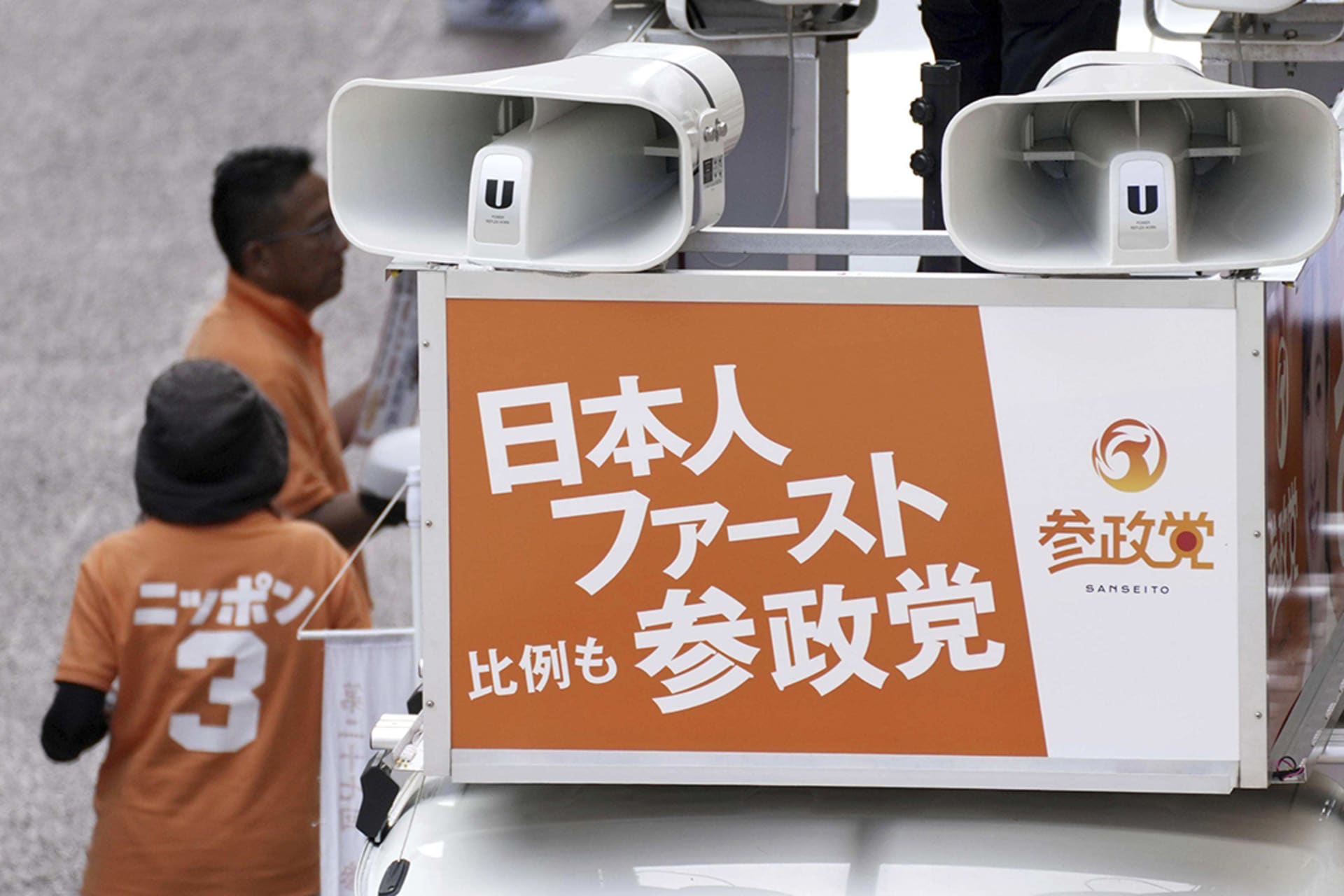
The first is the discomfort among the Japanese people with the growing presence of foreigners in their society. The Sanseitō party, a relative newcomer to the electoral scene, captured attention when it won fourteen seats in last year’s Upper House election. One of its priorities was to proclaim a “Japanese first” agenda and argue that the influence of non-Japanese visitors and residents alike was overwhelming the interests of Japanese citizens.
For some time now, the behavior of tourists coming to Japan has been concerning to many. According to the Ministry of Land, Infrastructure, Transport, and Tourism (MLIT), in 2025, Japan saw approximately 42.7 million visitors—a 15.8 percent increase from 2024. While this surge is boosting revenue, the brunt of the impact is on the local government, forcing it to implement countermeasures to overtourism.
Many local governments are struggling to cope with the impact of overtourism on the daily lives of their residents. In Kamakura, an “anime pilgrimage” linked to Slam Dunk overcrowded a small train station, raising safety concerns after a middle-schooler was struck by an unlicensed taxi (shirotaku). Meanwhile, the rural, picturesque town of Biei, Hokkaido, with 9,344 residents, hosts 2.4 million visitors annually. Biei has been used as a backdrop for numerous Japanese commercials and TV shows, making it popular with photographers and nature enthusiasts. Attractions in Biei include the Seven Stars Tree, the Shirogane Blue Pond, and the well‑known Christmas Tree spruce, and as tourist numbers increased significantly, the city moved to protect these locations by rolling out access restrictions. To visit the Christmas Tree, the town implemented a shuttle service that runs only three times a day to transport tourists and to manage congestion.
Beyond tourism, the growing presence of foreign workers and long-term residents has also attracted attention. Over 3.9 million foreigners currently reside in Japan—a 5 percent increase from 2024. Chinese residents make up the greatest share of foreign residents in Japan with over nine hundred thousand living in Japan—a thirty thousand increase from 2024. With Japan’s ongoing labor shortages, demand for foreign workers resulted in a record 2.3 million in 2024, and that number is expected to be even higher for 2025. These arriving workers come mostly from Asian countries, including Vietnam (24.8 percent), China (17.8 percent), and the Philippines (10.7 percent).
A Conservative Backlash?
Takaichi has been one of the few leaders in the LDP to address this issue. In her campaign to lead her party, Takaichi was the only one out of the five candidates on the debate stage who explicitly raised concerns about how foreigners are behaving in Japan. In her press conference announcing her intention to run, she stated, “I, Takaichi Sanae, will devote myself to protect the traditions that made Japan an irreplaceable country if foreigners trample on the feelings of the Japanese.”1 She ultimately beat her main competitor for party leadership, Koizumi Shinjirō, and became prime minister.
Takaichi’s interest in the issue may be personal. She has voiced concerns about her home constituency in Nara, a popular tourist destination. Social media has been full of videos showing foreign visitors mishandling and in some cases being abusive to the deer that famously run free at Tōdaiji Temple. She expressed this concern saying, “as a woman from Nara, I cannot help but worry about the more than 1,460 deer living in Nara Park.”2 Takaichi has repeatedly cited this example of bad behavior in calling for government action to regulate tourist behavior.
A second explanation for prioritizing this issue may also be Takaichi’s desire to bring conservative voters back to the LDP. Much of the analysis of the LDP’s recent electoral performance focuses on the disgruntlement within the conservative wing of the party with policy under former Prime Minister Ishiba Shigeru. Takaichi has been an advocate for Japan’s traditional values and social practices, and this priority informs her broader framing of Japan’s future.
Without a doubt, Sanseitō’s rise pushed the issue of foreigners into the national spotlight. During the July 2025 Upper House Election, the new party’s emphasis on putting “Japanese first” and adopting tougher policies for immigrants and foreign tourists resulted in a big win. From 2022 to 2025, the party gained an additional 5.6 million proportional votes. And this rise in Sanseitō’s popularity has challenged the LDP’s hold on many conservative districts long loyal to the LDP.
Recent public opinion polling reveals this heightened concern about the number of non-Japanese in Japan does not belong solely to conservatives. A November 2025 Asahi Shimbun poll found that 56 percent of their respondents believe Japan needs fewer visitors and immigrants and 66 percent back Prime Minister Takaichi’s tougher stance. A December 2025 Yomiuri Shimbun poll found that 59 percent of their respondents oppose foreign laborers. Japan’s public broadcaster, NHK, also found that 70 percent of their viewers support raising the bar for obtaining Japanese citizenship.
From Politics to Policy
Once elected prime minister, Takaichi created a new ministerial office to find ways to realize a “society of well-ordered and harmonious coexistence.” Heading up that office is Onoda Kimi, a new face on the national stage with a binational upbringing. Onoda set to work immediately on the task of examining how to manage the impact that non-Japanese were having on society. She convened the first ministerial council meeting on “Acceptance of Foreign Nationals and the Realization of a Society of Well-Ordered and Harmonious Coexistence” with an aim to implement changes in Japanese policies on immigration and on tourism in the next fiscal year.
The issues discussed were varied, as were the solutions recommended. Most of the proposed policy changes focused on tourists and on raising the cost of international travel. One measure to address overtourism is to increase the international tourist tax. In the FY 2026 Tax Reform Framework, the LDP and Ishin proposed tripling the international departure tax from ¥1,000 to ¥3,000. Japan’s international tourist tax applies to both Japanese citizens and foreign travelers when they depart the country. To ease the added cost for Japanese nationals, Foreign Minister Motegi Toshimitsu said the government would submit a bill to lower passport issuance fees, aiming to offset the impact of the tax increase.
Another measure proposed by the council was to increase fees for visas to Japan. In December 2025, the Cabinet approved its initial FY26 budget, which includes these planned increases. The government is considering raising fees for single-entry visas to ¥15,000 (from ¥3,000). The government hopes that this increase will discourage the number frivolous applications and align Japan with international standards.
The council also discussed long-term residents in Japan. Their initial proposal is an overhaul to the permanent residency requirements for foreigners by including a Japanese language proficiency test.
What to Look for in the Election?
Whether this new attention to foreigners in Japan will prove to be a lasting political issue remains to be seen. But keep an eye on Sanseito. Japan has a mixed electoral system, with 289 single-member seats and 176 proportional seats. Can Sanseitō be competitive in single-member districts given the financial and organizational challenges faced by a new party?
Second, how much does Sanseitō rely on its “Japanese first” platform during the campaign? Is this the issue that gives the party national clout in the debate over Japan’s future?
And finally, will Takaichi and her party woo back voters who are more socially conservative? How much will she advertise her efforts to address the growing foreign presence in Japan during the upcoming campaign? Will others in the party join her? A second issue to watch for is the salience of political reform initiatives among Japanese voters. Numerous efforts to reform how voters are represented are shaping new political party alignments. Our next article will explore these ideas.