Right-Sizing the Russian Threat
European concerns about Russian aggression are justified, yet severe constraints on Moscow make an attack in the near future unlikely. Europe needs to balance military deterrence with diplomatic engagement to achieve stable coexistence with Russia.
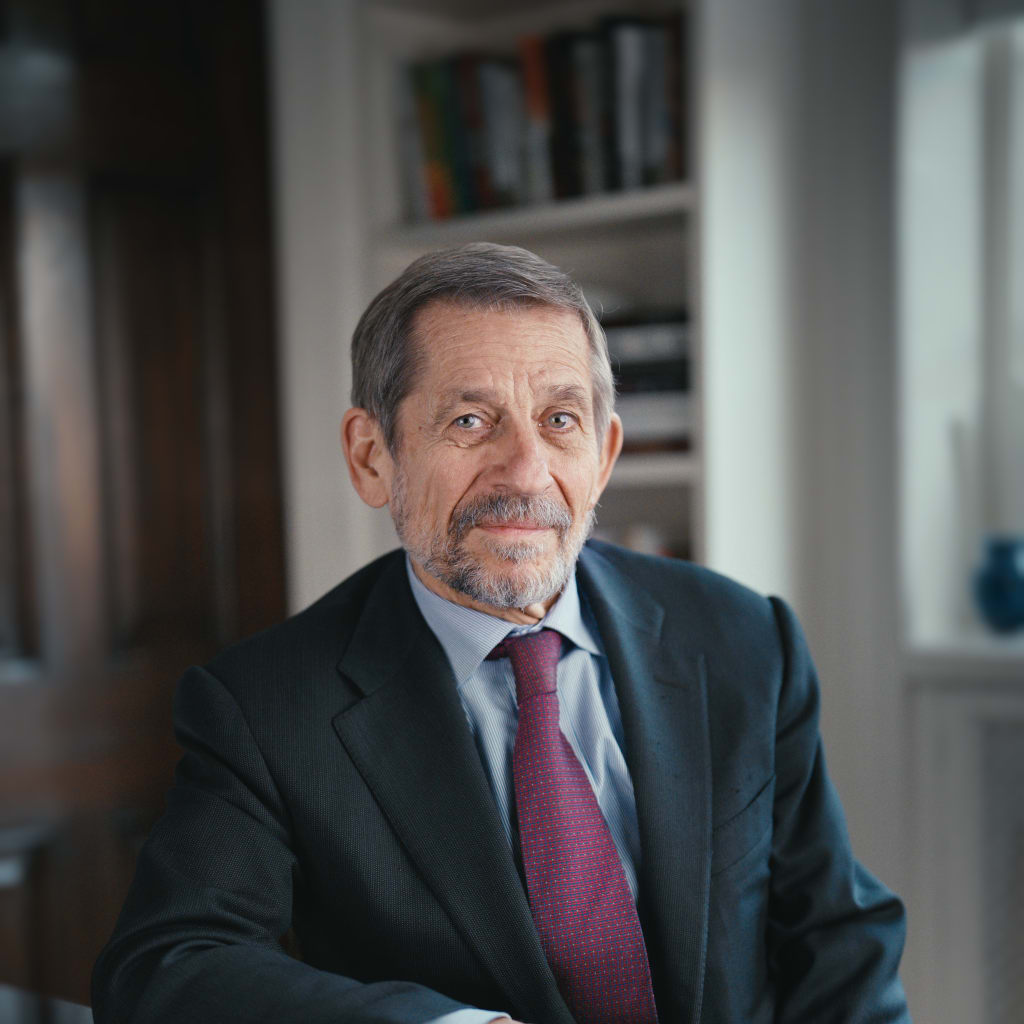
Thomas Graham is a distinguished fellow at the Council on Foreign Relations.
This Ukraine Policy Brief is part of the Council Special Initiative on Securing Ukraine’s Future and the Wachenheim Center for Peace and Security.
Executive Summary
Europe fears Russia could launch another attack within five years. It has good reason for vigilance: Russian President Vladimir Putin has repeatedly threatened countries that support Ukraine. Weighing against a deliberate attack, however, are serious domestic and foreign challenges for Russia, including the need to revitalize the nonmilitary segment of its economy, increase investment in advanced technologies, reintegrate hundreds of thousands of veterans into civilian life, reconstruct the devastated Ukrainian land it has seized, and rebuild its position in the former Soviet space. The Kremlin’s desire to normalize relations with the United States to offset Russia’s excessive reliance on China makes a deliberate attack even less likely. Those objective restraints should temper Putin’s ambitions, but they cannot eliminate the danger. Europe’s Russia policy should rest on two pillars: deterrence and dialogue. With sustained investment in deterrence and dialogue, and a clear-eyed understanding of the constraints Russia faces, Europe could use the next five years to consolidate a competitive, uneasy, but stable coexistence with Russia.
Introduction: The Specter of War Haunts Europe
Europe is preparing for the prospect of war. Echoing other European leaders, NATO Secretary-General Mark Rutte has warned that Russia could attack NATO “within five years,” while German Defense Minister Boris Pistorius suggested that could happen by 2028–29. Apprehensions are most acute in the east, where people have experienced the brutality of Russian aggression within living memory. Russian President Vladimir Putin’s insistance that Russia has no plans to attack offers only cold comfort—he said as much before he launched a full-scale invasion of Ukraine in February 2022.
Europeans have good reasons for vigilance: Putin has repeatedly threatened dire consequences for states that support Ukraine, and his anti-European vitriol has escalated as the war rages on. Russian hybrid attacks have raised alarms across the continent. Deepening doubts about the U.S. commitment to Europe’s defense have only compounded fears that Putin will exploit Europe’s apparent weakness.
Russia’s long history of westward expansion reinforces that concern. Whether it has expanded in search of security, to regain lost Russian lands, or to unify the Russian people—three narratives Putin has used to justify his invasion of Ukraine—does not matter to his victims. That the line dividing Russia from the West has not lain this far east since Peter the Great declared Russia an empire in 1721 only amplifies those fears. As Putin declared in justifying the seizure of Crimea in 2014, “Russia was backed into a corner and could retreat no further. If you push a spring to the limit, it’s bound to snap back.”
Yet rhetoric and history do not determine policy. A decision to attack Europe will emerge from a cost-benefit analysis grounded in the Kremlin’s assessment of Russia’s geopolitical and domestic circumstances. To be sure, the analysis will vary greatly between a massive invasion and a small-scale attack to test Europe’s resolve and slightly improve Russia’s strategic position—for example, an invasion of northeast Estonia to better guard sea and land approaches to St. Petersburg or an effort to create a land corridor to the Kaliningrad exclave. Nevertheless, given the domestic and geopolitical difficulties Russia will face in the years ahead, a deliberate invasion of Europe, even a small-scale one, appears less likely than prevailing fears suggest.
The Challenges Facing Russia
For centuries, Russian strategy has sought to prevent hostile coalitions from consolidating along its borders. For the past eighty years, Europe has been the focus of that effort. During the Cold War, Russia sought to drive a wedge between the United States and its European allies. After the Cold War, it resisted NATO’s expansion toward its borders. It fought wars against Georgia and Ukraine to derail their ambitions to join the alliance. And it used influence operations and other tools to retard Europe’s consolidation and sow domestic discord.
The end of the Russia-Ukraine war will not eliminate the threat the Kremlin sees from Europe. In its view, Europe will remain fundamentally anti-Russian, and a unified Europe would dwarf Russia in population, wealth, and latent power much as the United States does today. Russia will thus almost certainly seek to exacerbate divisions in Europe. It will reconstitute its military as a deterrent against possible European aggression. Driven by a profound sense of vulnerability, it will likely build forces well beyond the limits that an outside observer would judge necessary for deterrence, thus stoking fears in Europe of its own aggressive intent.
But critical factors weigh against Russian aggression. Domestically, the Kremlin will have to urgently address socioeconomic challenges it has ignored or allowed to grow more acute as a consequence of the war. At the top of the list will be reenergizing the nonmilitary segment of the economy, which has fallen into recession. Economic growth [PDF] has plunged from just over 4 percent in 2023 and 2024—largely as a consequence of money poured into defense production—to under 1 percent in 2025 and 2026, according to the latest forecast from the International Monetary Fund. Tight monetary policy brought inflation down from 9.5 percent to 5.6 percent in 2025 but inflation is expected to pick up in 2026, as, among other things, the government raises taxes to cover a widening budget gap. Meanwhile, the Russian Central Bank’s interest rate may have dropped from over 20 percent to 16 percent as inflation eased, but the still-high rate continues to discourage the investment needed to spur economic growth.
Economic growth is, however, critical to meeting popular expectations of improved standards of living. Those expectations will mount rapidly, once the war ends in what Putin will undoubtedly declare a victory, no matter how limited the benefit to Russia. Regardless of the state of the war, he will also need to accelerate investment in cutting-edge technologies—particularly artificial intelligence, where Russia lags far behind the United States and China—to enhance his country’s economic competitiveness and military capabilities in the decades ahead.
At the same time, whenever the war ends, the Kremlin will face the difficult task of reintegrating hundreds of thousands veterans into civilian life, without the extraordinary monetary benefits they and their families enjoyed during the war. And it will have to undertake all those tasks as the constellation of security officials and civilian technocrats around Putin makes a fitful adjustment to peacetime and a new set of national tasks.
Rebuilding the destroyed infrastructure in the Ukrainian land it seized will only compound the Kremlin’s burden. That will require hundreds of billions of U.S. dollars [PDF]. Pacifying the substantial share [PDF] of the population that will not welcome Russian rule will only add to the difficulties.
The cumulative impact of those urgent challenges will likely reduce the Kremlin’s appetite for external risk. It may continue to depict Europe as an external menace to maintain national unity and to justify repression. But launching a new war against Europe, which would require mobilizing a society already wearied by four years of war, is a different proposition.
Geopolitics reinforces those constraints. The Kremlin will want to recoup some of the losses sustained during the war, especially in the former Soviet space, its declared sphere of interest. Regional leaders have reoriented their foreign policies away from Russia while it has been fixated on Ukraine: Moldova has accelerated it movement toward Europe, Turkey and the United States have made inroads into the South Caucasus at Russia’s expense, and China has displaced Russia as the main outside commercial partner of the Central Asian states.
Beyond the former Soviet space, Russia will face a larger challenge: preserving its position vis-à-vis the powers against which it measures its own success, China and the United States, the two genuine superpowers. For all the soaring rhetoric about strategic partnership, the Kremlin is increasingly worried about too close an embrace with China. The asymmetry in power is steadily widening in China’s favor. Contrary to Russian expectations, China has done little to replace the investment Russia lost after the West severed commercial ties. Although Russia has no interest in disrupting ties with its strong neighbor, it does require a counterbalance. Only the United States can provide one. That geopolitical reality helps explain Moscow’s current effort to normalize relations with Washington. The war against Ukraine has impeded progress. An invasion of Europe would foreclose it.
Objective Reality and Putin’s Ambitions
Given the domestic and geopolitical challenges, a deliberate invasion of a European state, let alone a NATO ally, would make no strategic sense in the years ahead. If war does spread, it will more likely result from an unwanted escalation of the current conflict in and around Ukraine than from a calculated decision by Russia. That risk gives both Europe and Russia a strong interest in ending the war now on terms that reduce the chance of renewed fighting.
Those objective restraints should temper Putin’s overweening ambitions. But they cannot eliminate the danger. In the run-up to the invasion of Ukraine, Putin grossly miscalculated the balance of power, and he has continued the war in search of an elusive victory despite the mounting domestic and foreign costs.
At the same time, recent events suggest a more sober appreciation of Russia’s limits. The Kremlin has faced a series of setbacks: the fall of its Syrian ally, President Bashar al-Assad, in December 2024; the U.S. bombing of its Iranian ally in June 2025; and the recent U.S. capture of its Venezuelan ally, President Nicolás Maduro, and arrest of a Russian-flagged tanker on the high seas. Its muted responses to all those episodes attest to a greater appreciation of the realities of power—and a lesser willingness to run the risks that an invasion of Europe would entail.
The Implications for Western Policy
For Europe, as for the United States, Russia policy should rest on two pillars: deterrence and dialogue. Deterrence demonstrates the will and means to resist Russian aggression. Dialogue helps ensure that Russia does not misread defensive steps as offensive intent and provides a channel to explore ways to ease tensions.
Given the uncertainty surrounding Putin’s intentions, Europeans should reinforce the calculus against aggression by accelerating the buildup of defense capabilities and deploying capable forces along the frontier with Russia, particularly in those regions where Russia could be most tempted to probe Europe’s resolve: for example, in northeast Estonia and around Kaliningrad. That will not require allies spending more than 5 percent of gross domestic product (GDP) on defense and defense-related matters, to which most have committed. But it will likely require accelerating progress toward the 5 percent mark and using the funds effectively to address the vulnerabilities in capabilities and force deployment that the Kremlin will be most tempted to exploit. For European countries, getting their own houses into order is essential to puncturing the Kremlin’s confidence in the efficacy of hybrid tactics. Meanwhile, sustained support for Ukraine is critical to demonstrate the political will to counter Russian aggression and defend Europe’s security order.
European leaders should also resist the natural tendency to rely on alarmist rhetoric to shock complacent citizens into squarely facing the Russia challenge. In particular, they should eschew rhetoric that demonizes Russia and Russians. Such language only plays into the Kremlin’s narrative about an innately hostile Europe, which it deploys to maintain elite and popular support for its aggressive conduct.
At the same time, dialogue is essential. It is not a concession but a safeguard. It reduces the risk that the Kremlin will misread Europe’s intent and overreact, increasing the danger of a wider war. Over time, sustained contact can create opportunities to stabilize the long frontier between Russia and the West.
Care will have to be taken in setting up such a dialogue, given the divisions within Europe over the character of the Russian threat and the depth of anti-Russian sentiment. Putin could use a poorly structured dialogue to drive wedges between European states and exacerbate tensions in the transatlantic relationship, which is already under severe strain because of the Trump administration’s policies.
Outreach by a single country or a small group without proper coordination across Europe, as French President Emmanuel Macron has proposed from time to time, could backfire. The heightened concerns of the countries on the eastern flank, especially the Baltic states and Poland, need to be addressed directly to preserve European unity. In addition, Brussels should coordinate its dialogue with Washington to ensure that Moscow faces a more-or-less united Western front, as the West did in the 1970s, when Washington, Bonn, and Paris aligned their separate channels to Moscow.
That combination of deterrence and dialogue could underpin a tense but enduring stability between Russia and Europe—a goal the Trump administration identified as a priority in its new national security strategy. The United States could bolster deterrence by backstopping Europe as it develops its own capabilities to avoid the appearance of weakness, which Russia could be tempted to exploit. As the main interlocutor with Russia today, the United States could also encourage the dialogue both Russia and Europe are reluctant to pursue. European leaders may fear a Russian attack within five years. But there is no need to panic. To the contrary, with sustained investment in deterrence and dialogue, and a clear-eyed understanding of the constraints Russia faces, they could use that time to consolidate a competitive, uneasy, but stable coexistence.
This work represents the views and opinions solely of the author. The Council on Foreign Relations is an independent, nonpartisan membership organization, think tank, and publisher, and takes no institutional positions on matters of policy.