The Age of Economic Warfare

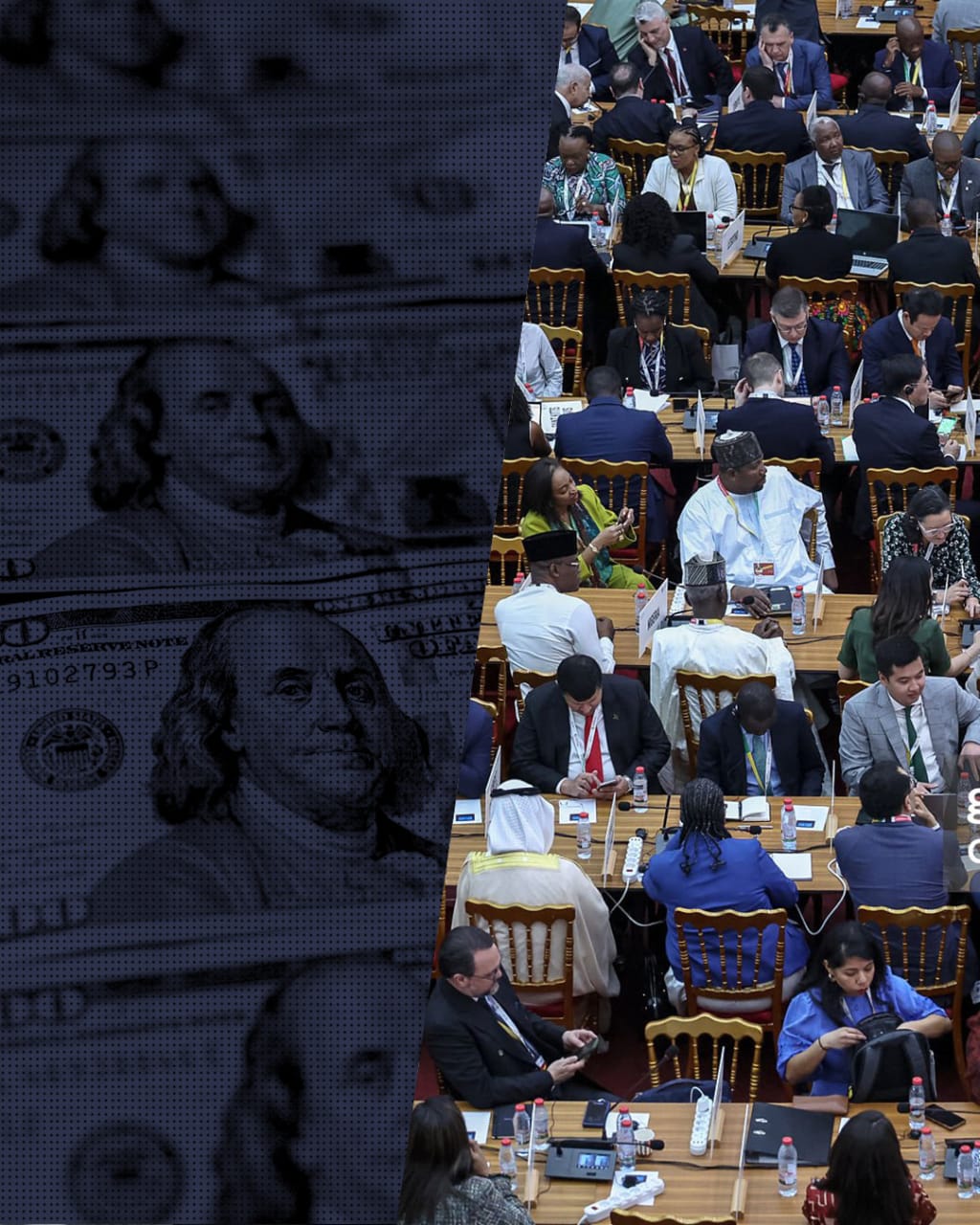
President Donald Trump did not start the age of economic warfare. Nor will it end when he leaves office. Every U.S. president in the twenty-first century has imposed sanctions at roughly twice the rate of his predecessor, and in recent years this trend has gone global. Between 2019 and 2024, the number of trade restrictions enacted worldwide more than tripled. In Beijing, Brussels, Moscow, Tehran, Tokyo, Washington, and beyond, governments are arming for economic war and building defenses against their rivals’ economic weapons.
[Video: https://vimeo.com/1192638877/7d9614da19]
This accelerating economic arms race and scramble for economic security reflect a structural mismatch: today’s global economy was built on assumptions that no longer hold. It was designed for the halcyon 1990s, when the United States faced no competitors and viewed China and Russia more as potential friends than rivals. Now that geopolitical competition has returned with a vengeance, features built in the name of economic efficiency—such as just-in-time global supply chains and a financial system centered on a single currency—appear as glaring vulnerabilities. For governments around the world, it is as if they have woken up in a house that served them well for decades, only to discover that the climate has turned and the big windows that once let in the sun now leave them perilously exposed to storms.
The proliferation of economic warfare represents disjointed efforts by governments to retrofit the global economy to suit today’s geopolitical realities. It is leading to geoeconomic fragmentation across the financial system, energy markets, the technology sector, and industrial supply chains—and it will continue until the international economic order is fundamentally transformed.
Economic orders come and go. Just because the old one is unraveling does not mean the new one will be worse. The problem is that no one has presented a compelling vision for a new system, much less a coordinated effort to build it. Instead, the world is drifting into an every-nation-for-itself tussle, uncomfortably reminiscent of the beggar-thy-neighbor breakdown of the 1930s. One way or another, a new global economic order is taking shape.
Three paths define the range of possible futures, each with its own promise and peril. The first would aim to preserve as much global economic integration as possible to minimize disruption to existing markets, business models, and supply chains. In this “Globalization 2.0,” governments would manage intensifying geopolitical competition by agreeing to shared rules and norms to constrain the use of sanctions, tariffs, and export controls. One could imagine a kind of Geneva Convention for economic warfare, placing explicit limits on coercive economic measures, alongside “arms control” agreements in which governments commit to restraining the use of their most powerful tools. At the same time, great powers would develop more explicit economic deterrence doctrines to discourage rivals from violating those rules.
Attractive as this path may seem on paper, it would be the hardest to pursue in practice. It would require, at a minimum, the United States and China to reach a level of accord that has proved elusive for years. It would also require U.S. presidents to exercise restraint in unprecedented ways. A major reason economic warfare is so appealing in Washington is that the president has broad legal authority to deploy it—and it is often seen as preferable to the alternatives: doing nothing or resorting to military force.
The second path is a global economy defined by competing blocs, bearing some resemblance to the order that prevailed during the Cold War. Those blocs could take shape in many ways. An ideological version could see the United States and other democracies band together and collectively derisk from China and its authoritarian partners. A regional version could see the United States lead a bloc in the Western Hemisphere, while China anchors one in Asia, Germany and Russia divide Europe, and other regions pick sides or seek nonalignment. There are also narrower, issue-specific versions, such as coalitions to build integrated supply chains for critical minerals or to develop alternatives to the dollar-based financial system.
International economists tend to warn against a bloc-based system, and they are right that it would be less efficient than one founded on global integration. But efficiency is not the only metric that matters. If the United States can build a sufficiently large and cohesive bloc, it could still achieve scale and dynamism while providing far greater economic security. After all, the strongest decades of growth in U.S. economic history occurred within a bloc-based system during the Cold War.
The challenge is that blocs do not form on their own; they need to be deliberately built. And right now, neither the United States nor China is fully committed to that path. During the Trump administration, Washington has waged economic war against adversaries and allies alike, eroding the trust needed to construct a broad and durable bloc.
The third and final path is transactionalism—a world in which the great powers eschew any organizing principle and instead use their leverage to strike the most advantageous bilateral deals. That approach comes closest to what the Trump administration has pursued so far. For the United States, there is a certain appeal. As the world’s dominant economic power, it can expect to secure favorable terms in most negotiations. But this model has a major drawback: it systematically incentivizes hedging. In such a world, even close U.S. allies such as Canada, Germany, Japan, and the United Kingdom would have reason to develop non-dollar payment systems and diversify away from U.S. technology platforms. Over time, the costs to both U.S. influence and economic prosperity could be substantial.
The greatest risk of this path, however, is not economic but geopolitical. If states lose confidence in their ability to access markets and secure resources through open exchange, they will be more tempted to do so through military force. Over time, territorial aggrandizement could move from a relic of a darker past to a rational strategic objective, raising the risk of imperialism and conquest.
Few questions will more profoundly affect America’s future than the shape of the emerging global economic order. It will not wait for the United States to answer it. Economic fragmentation is already underway. We will all live with the consequences, whether Washington guides the process or not.
More from the Future of American Strategy >>