The Climate Threat

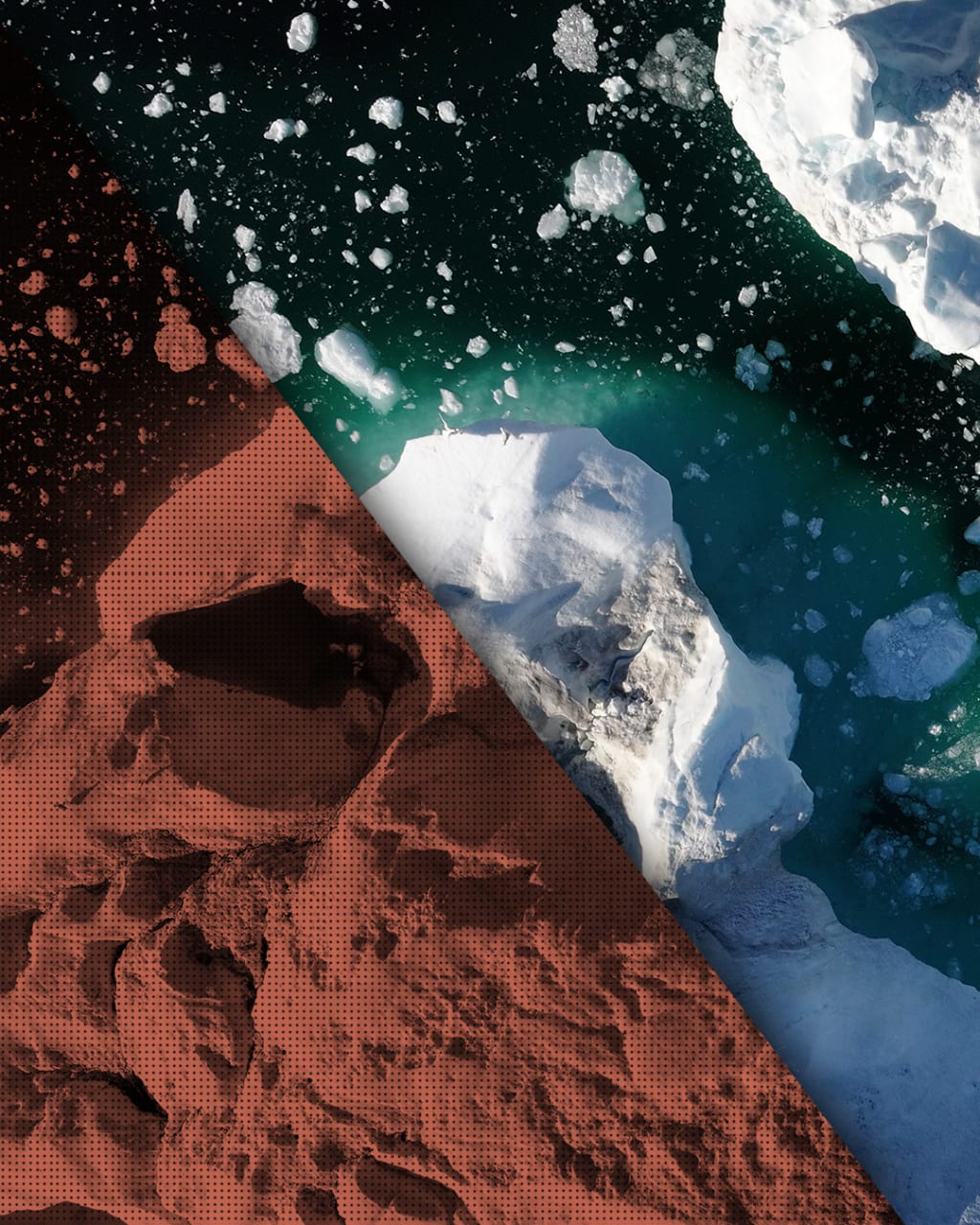
The effects of climate change are already redrawing the map of global power, and will likely continue to do so for decades and centuries to come. More intense storms, rising seas, prolonged heat waves, deeper droughts, and larger wildfires have touched every corner of the globe, confronting the United States with climate-altered geography, increased global and internal migration, water scarcity, and the prospect of sustained economic losses.
[Video: https://vimeo.com/1192638762/d1627e0eb9]
Rising seas shrink land mass. Without adaptive measures, increased flooding has the potential to degrade living conditions for millions of people in coastal regions across the globe, including in the United States. A 2026 review of close to four hundred scientific publications revealed that the scientific community has likely underestimated coastal sea-level height, meaning that around 37 percent more land mass and potentially over a hundred million more people are at risk than once thought. And an analysis of satellite data from 1993 to 2023 showed that the rate of global sea-level rise had doubled, which means that the line where the ocean begins and the land ends is moving inland at a faster clip.
As seas continue to rise, coastal cities will see their critical infrastructure, like power and wastewater treatment plants, chronically flooded, while vast agricultural lands will become drenched in plant-killing salt. Without significant investments in adaptation—like construction of seawalls, expansion of wetlands, and development of salt-tolerant plants—coastal residents will have to move to higher ground. Critically, climate change threatens U.S. military infrastructure and operations. More than 1,700 military installations in coastal areas either already are, or could be, at risk from sea-level rise and other extreme weather events.
Meanwhile, melting Arctic sea ice is opening new opportunities to mine minerals, catch fish, and extract oil. Russia has built extensive military and civilian infrastructure along the Northern Sea Route, which hugs its Arctic coast. China has declared itself a “Near-Arctic State,” acquired icebreakers, and sought to use the route to cut shipping distances. The High North is becoming high stakes, and the United States’ shortage of icebreakers and other equipment hampers its ability to compete. One study found that two-thirds of the seventy-nine U.S. military bases in the Arctic remain unprepared for thawing permafrost and rising seas.
Climate change will also accelerate migration. Droughts and extreme flooding will displace people from their homes and often from their communities, and the movement of large populations can spark political instability and create power vacuums—effects that reach well beyond the countries where they occur. Climate-driven migration could spill over to the United States, through increased pressure on its borders but also by destabilizing its neighbors and allies.
Another threat comes from changes to the world’s freshwater supply. Climate change threatens to alter the flows of critical transboundary rivers, lakes, and aquifers. As droughts intensify and countries begin to make unilateral infrastructure decisions, those shared resources will become pressure points. Many of the water treaties negotiated in the last century do not account for new climatic conditions and are therefore unsuited to the coming changes. Efforts to share a dwindling critical asset could exacerbate existing tensions and heighten the risk of conflict, a situation that is already playing out along the Indus River and its tributaries, which are shared by India and Pakistan.
The effects of climate change cascade through society, causing widespread damage. Consider extreme heat, the most certain and direct effect. Increased heat makes learning difficult for students in schools without air conditioning. It reduces labor productivity for outdoor workers, throws energy grids into crisis as demand spikes, degrades energy generation and transmission, strains health-care systems with heat-related illnesses, kills crops, buckles roads, kinks train tracks, grounds airplanes, and primes wildfires.
Traditional economic modeling typically fails to capture those types of cascading impacts. Models tend to focus on global average temperature increase rather than the extremes. But it is at the extremes that the losses begin to take the greatest toll. A mild temperature increase does not kill, but a three-week heatwave can result in thousands of fatalities, destroy harvests, and disrupt transportation and energy systems. Economists’ models sometimes treat climate impacts as if they cause a smooth and continuous increase in damages when, in fact, greater heat extremes could lead to severe abrupt disruptions like the die-off of coastal reefs or the alteration of ocean currents. Economic modelling also struggles to include feedback loops, such as higher temperatures leading to more wildfires that worsen air quality that results in increased mortality. Imperfect modeling can cause policymakers to underestimate the costs of climate change and thus delay investments in adaptation measures.
China has chosen to prepare for climate risks. While Beijing has built a technological powerhouse to dominate the global clean-energy market, leading in solar, batteries, electric vehicles (EVs), and rare-earth processing, it is also preparing, on a national scale, for the impacts of climate change. China has declared its aspiration to become a climate-adaptive society by 2035 and has incorporated adaptation into its centralized planning process, including in its latest five-year plan. It aims to build a national adaptation framework, systematically incorporating climate risk into government decision-making, even as it continues to build coal plants and rely on fossil fuels. To be sure, translation of top-down aspirations into effective on-the-ground projects presents many challenges, but the U.S. government currently offers no direction for national adaptation. Meanwhile, European and Asian countries have.
The United States is mired in political debates over whether climate change is even occurring. President Donald Trump has called it a “hoax,” and the 2025 National Security Strategy criticized “disastrous ‘climate change’ and ‘Net Zero’ ideologies.” Some U.S. states have developed adaptation plans and made progress, but their efforts match neither the scale nor the cross-jurisdictional nature of the threats. Other states continue to plan for the climate of the past, making choices about where and how to build based on historical climatic conditions.
With climate risk rising and adaptation lagging, U.S. property insurers have sought to raise rates, reduce coverage, or leave the market altogether in vulnerable geographic areas. Just adopting and enforcing stronger building codes would reduce damages. FEMA has estimated that every dollar spent on stronger building codes today can save $11 in damages later. Yet, 65 percent of U.S. counties, cities, and towns have failed to adopt modern building codes that protect against today’s weather extremes, and 30 percent of new construction happens in communities with either no or obsolete codes. In the absence of adaptation, the United States will spend more and more on simply managing losses.
As losses mount, the United States will find itself at a strategic disadvantage. Without adequate investment in adaptation, the effects of climate change will become increasingly costly. Businesses and homeowners will struggle to obtain property insurance, borrowing costs will rise, and high-risk areas could see their tax revenues, property markets, and infrastructure—civilian and military—erode. Meanwhile, competitors that are pushing ahead on national planning for climate change will have a headstart on identifying and deploying adaptation measures. U.S. policy that neglects climate change is designed for a world that no longer exists. The question is not whether to care about climate. It is whether Washington’s conception of U.S. interests is keeping pace with reality.
More from the Future of American Strategy >>