The End of Nuclear Diplomacy

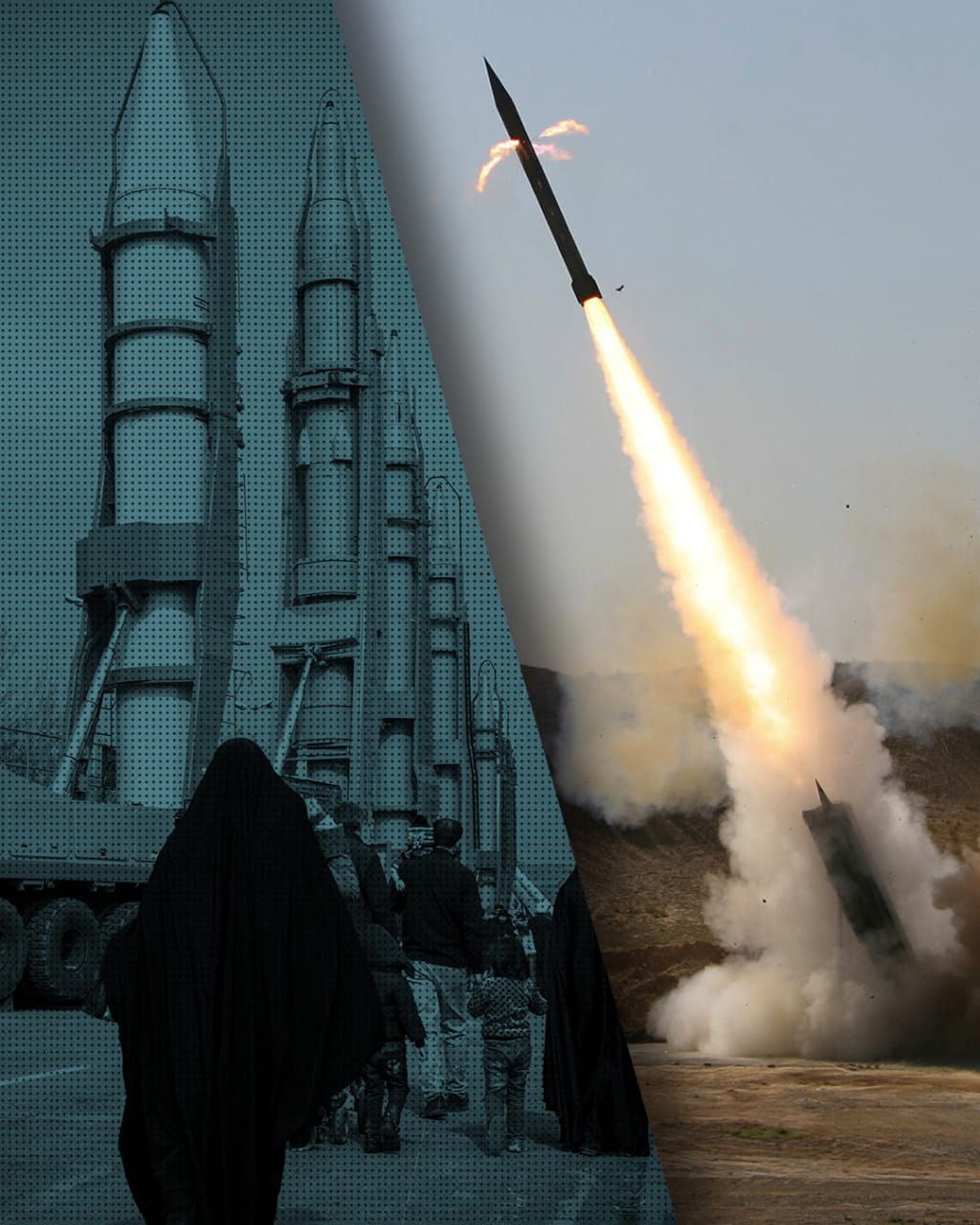
As of May, America’s latest war with Iran continues to oscillate between a shaky ceasefire and threats of escalation. But the real inflection point in Middle Eastern history came the year before, with the U.S.-Israeli strike on Iran’s nuclear infrastructure on June 13, 2025. Those strikes, coupled with the targeted killing of Iranian senior officials, effectively ended the era of diplomatic counterproliferation. In its place, Israeli policymakers now speak of “mowing the grass,” or recurring strikes that buy time but do not permanently solve the problem of Iran’s nuclear ambitions. The consequences of that policy change are still emerging, but the signs indicate an increasingly dangerous Middle East. In grand strategic terms, this means America will be engaged in a region it is eager to leave.
[Video: https://vimeo.com/1192640890/18308da48e]
For decades, U.S. and Israeli policymakers operated on the assumption that Iran’s nuclear ambitions could be contained through agreements and International Atomic Energy Agency (IAEA) inspections. That approach peaked with the 2015 Joint Comprehensive Plan of Action (JCPOA), negotiated by the Obama administration. The JCPOA—with its cascade of sunset clauses and permissive approach to sanctions relief—lacked a durable domestic constituency. President Donald Trump tore it up in 2018, and President Joe Biden did not put it back together again.
Israel had little confidence in those diplomatic forays and doubted the IAEA’s ability to monitor Iran’s nuclear progress. After the October 7 tragedies, Prime Minister Benjamin Netanyahu declared that the rules of the game had changed and that Israel would no longer wait passively for threats to emerge. Preemption became the new normal.
The case for bombing Iran grew stronger after millions of Iranian protesters took to the streets in January 2026. Their strength was a sign to many in Washington and Tel Aviv that the Islamic Republic was tottering and needed only a nudge to collapse. Thus, strikes were carried out against senior regime figures including Supreme Leader Ali Khamenei, as well as against police and military installations. Although those targets were eliminated, the regime still stands. But the logic of the argument should not be dismissed. The one certainty is that there will be another uprising in Iran. The underlying causes of discontent, ranging from political disenfranchisement to lack of economic opportunity, have not faded away. And no one believes that the system can reform. Given how foreigners have weakened Iran’s security infrastructure, such an uprising may have a greater chance of success than in the past.
Tel Aviv now believes that Tehran will only construct a nuclear weapon when its conventional forces have been rebuilt, and Iran is secure once more. Mowing the grass is, therefore, necessary—not to respond to nuclear urgency or provocation but, rather, to stop Iran reconstructing its air defense systems and replenishing its missile batteries. Those were the precise fortifications that Iran was reconstituting when Israel and the United States struck in February. It is not clear if that thinking is shared in Washington. Trump could have assumed that what he accomplished by less violent methods in Venezuela—removing the head of state and replacing him with a compliant alternative—would apply to Iran. After Khamenei’s death, the wishful thinking ran, hard-edged pragmatists willing to surrender the nuclear program would take over. It is a fool’s errand, and Trump will likely tire of it quickly. But he has saddled his successors with a different Iranian problem to the one he inherited.
Wars have a way of altering the regimes that manage to survive. The Islamic Republic that emerges from this conflict will be vastly different from that which stood before it began. And those changes will extend beyond a simple change in leadership. Despite the commemorations of Khamenei’s martyrdom, he had become an increasingly sidelined figure in his final years. As Israel evolved its capabilities and plans, Khamenei stuck to his old playbook, incrementally increasing the size and scale of Iran’s nuclear program but never crossing the threshold. Despite calls from the Islamic Revolutionary Guard Corps for “a shift in Iran’s nuclear doctrine,” Khamenei did not budge.
As a first-generation revolutionary, he had tangled with the United States many times, and he respected its power. He knew that his intelligence services were too penetrated for so bold a move as actually constructing a nuclear weapon. And the old man of Iranian politics seems to have believed that, no matter what happened elsewhere in the region, his territory would remain unmolested and his nuclear infrastructure untouched. With the return of Trump, a politician the Iranians never figured out, Khamenei was proved wrong. In June, his country was assaulted and, in February, he was assassinated.
In the future, Iran’s leaders will still want nuclear weapons. But the Islamic Republic is unlikely to return to Khamenei’s tactics and construct large enrichment plants beneath Iranian mountain ranges. U.S. and Israeli satellite technology is too good, U.S. munitions have demonstrated their ability to penetrate facilities built beneath the rock, and construction times for new underground facilities are too long. Numerous, easily concealed surface plants are now a better bet—so long as the regime can neutralize foreign spies in Iran. Tehran’s objective will be to confront Tel Aviv and Washington with scale. By building many small workshops containing advanced centrifuges, Tehran can challenge the prying foreigners to find them all. If any escape detection, the regime has a safter path to bomb production.
Amid all the wars in Central Europe and the Middle East, the principal casualty will likely be the global nonproliferation regime. As Iran has demonstrated, the deterrent value of nuclear arms has never been higher. As the mullahs learned the hard way, those who have the bomb do not get bombed. There are now no arms control processes to impose restraints on production of those deadly weapons. The Russian Federation will no longer be interested in arms control, and China will have no reason to regulate its stockpile given the disparity of power with the United States, which has made China’s containment the core objective of its foreign policy.
For decades, successive presidents have sought to pivot away from the Middle East to more promising regions such as East Asia. The Iran wars of the last eight months demonstrate that the region is still important and can impact the global economy in significant ways. The Persian Gulf waterways are vital transit routes for essential commodities, not just oil. And there is no regional security system that can substitute for American power. Whether we prefer it or not, we shall remain stuck in the Middle East.
More from the Future of American Strategy >>