The Shah, the Supreme Leader, the Same Miscalculation
Shah Mohammad Reza Pahlavi and Ayatollah Ali Khamenei both ruled Iran for 37 years. Their shared miscalculation: that Iran’s people could be bent to their will indefinitely.
Originally published at The Boston Globe
By experts and staff
- Published
 Ray TakeyhCFR ExpertHasib J. Sabbagh Senior Fellow for Middle East Studies
They both ruled Iran for 37 years. They both sought to refashion society in their own idealized images. They both believed that only rulers unencumbered by a prying public could do great things. They both thought that God was on their side. And they both ended their reigns ignominiously. Shah Mohammad Reza Pahlavi was overthrown in the 1979 Islamic Revolution and died a broken man in exile. Ayatollah Ali Khamenei was killed last weekend in his compound by strikes from the United States and Israel.
In the shah’s concept of modern Iran, the society had to have a Western tinge. Despite being a pious man, he had little time for clergy and saw them as a barrier to social progress. Iran’s cultural traditions were ridiculed by him and his technocratic functionaries, whose currency of exchange was knowledge of Western economic development paradigms. The Iranian people never measured up to his standards and never behaved like good Europeans. They remained tied to their traditions.
Beneath the glitter of the 1970s, Iran was undergoing a religious revival. The corruption of the ruling elite, the provocative class stratifications that sudden wealth often generates, led many to reclaim their traditions. In the hands of enterprising clerics like Ayatollah Ruhollah Khomeini, Shia Islam became an ideology of dissent. Symbols and rituals of faith were cleverly used to mobilize the public. Shia religious holidays became scenes of political protest; the mosque became a platform for the opposition. Modernization became a catalyst for return to the old ways.
Ayatollah Ali Khamenei assumed power in 1989 and proved an adept political survivor. Initially, he was cautious and deferential to other centers of power, such as the presidency and the seminary leaders in Qum. Soon, though, he revealed himself to be a harsh, uncompromising ideologue. At his core, he believed that his mission was to uphold divine ordinances and resist popular attempts to alter the regime along democratic lines. Sustaining the revolution required clerical despotism. The more Iranians soured on the revolution, the more he insisted on imposing onerous religious strictures.
The genius of the Islamic Republic was that it contained within its autocratic structure elected institutions that have little power but still provide the public with the means of expressing its grievances. When average citizens are faced with a choice of rebelling against a vicious system or casting a ballot that will have a limited impact, they will probably opt for the latter. To have a modest say in the government is safer than confronting a regime determined to hold onto power. The presidents and parliaments did not govern the theocracy, but they did provide it with an important safety valve — allowing the public a limited opportunity to impact government deliberations.
It was this safety valve that Khamenei all but shut down in the past decade. The choice of candidates for public office was narrowed to those acceptable and obedient to Khamenei. The elections were no longer competitive but mere rituals ignored by the majority of people, particularly in the urban areas. The presidents implemented Khamenei’s decrees, the parliament was reduced to a rubber-stamp organization, and there was not even a pretense of the rule of law. When all political channels are closed, street politics flare up. In the most recent popular uprising, the regime had to go on a vicious killing spree to sustain its power.
It was in the realm of foreign relations that both the Shah and Khamenei stumbled, embarking on policies whose costs were more obvious than their benefits. The shah had delusions of grandeur and spent billions of dollars on sophisticated weapon systems that his country did not need and his armed forces lacked the technical skill to use. As the economy contracted in the mid-1970s, his spending of a large portion of the national budget on warships and jet fighters indicated how out of touch he had become.
Khamenei seeded the region with proxies such as Hezbollah and Hamas, which did Iran’s bidding. Billions were spent on militant groups that shared the regime’s animus toward America and Israel.
And then there was the nuclear project that consumed additional billions of dollars. The price Khamenei paid for his halting march to the bomb was sanctions that battered Iran’s economy and kept its oil off the global market. China is the last nation to purchase Iran’s oil, and it does so at a steep discount.
Khamenei’s greatest failure was not recognizing how the Middle East had changed post-Oct. 7, 2023. Israel’s military degraded his proxies — Hamas, Hezbollah, and Houthis — and in conjunction with America buried the vaunted nuclear program in rubble. The revolutionary who was once acclaimed for mastering the Middle East lost his bearings and then his life.
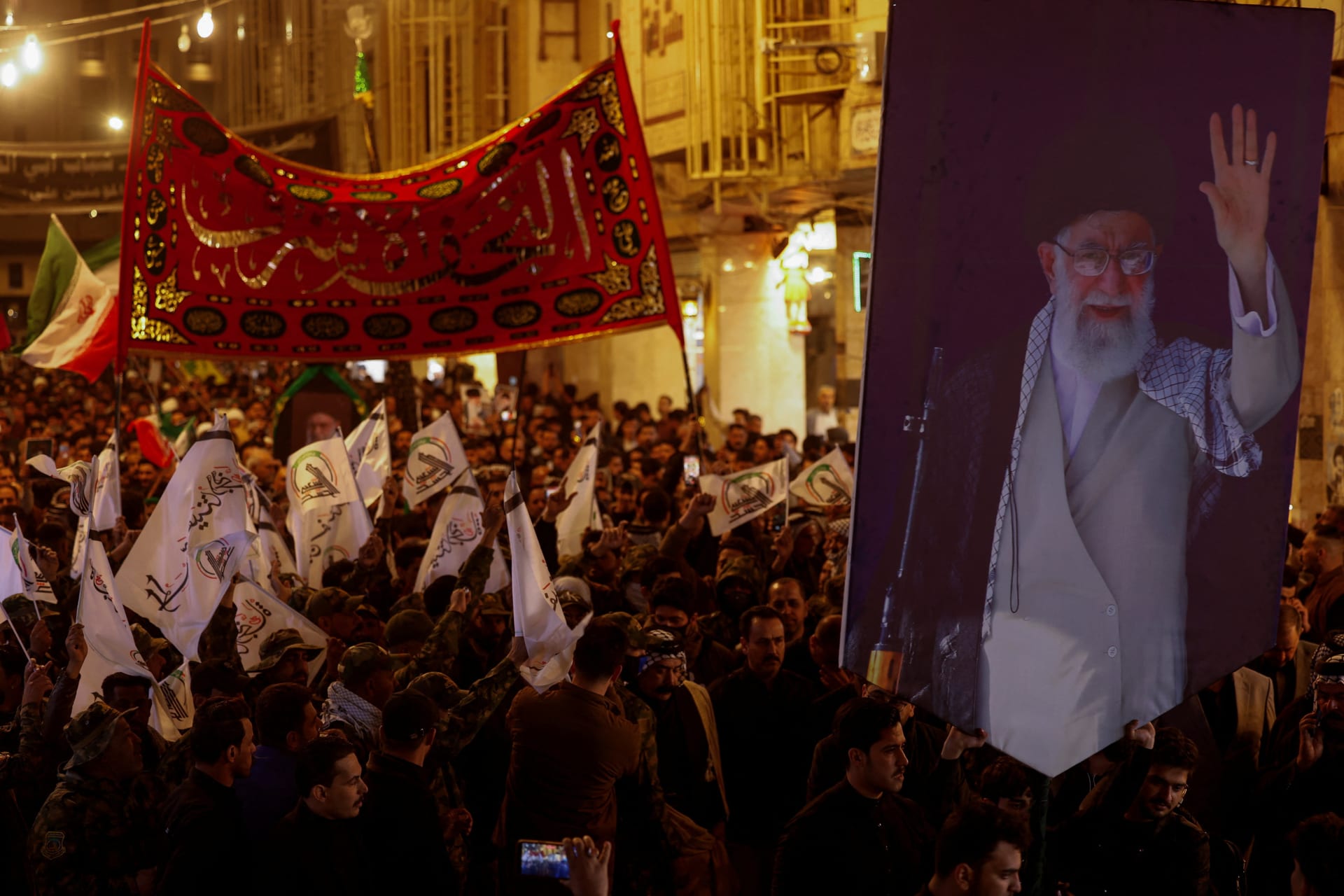
When the shah died in 1980, Iranians took to the streets to celebrate. And when Khamenei was killed this week, the regime tried to stage its usual rituals for martyrs. But few in Iran mourn the passing of their reckless leader and his ruinous policies. Two very different Persian rulers tried to bend history to their will, and in the end, both succumbed to forces they helped to unleash but ultimately could not control.