FIFA World Cup 2026: The Geopolitical Tensions at Play Off the Pitch
The Iran war, immigration enforcement, and the Trump administration’s travel bans have raised the stakes of this summer’s tournament.
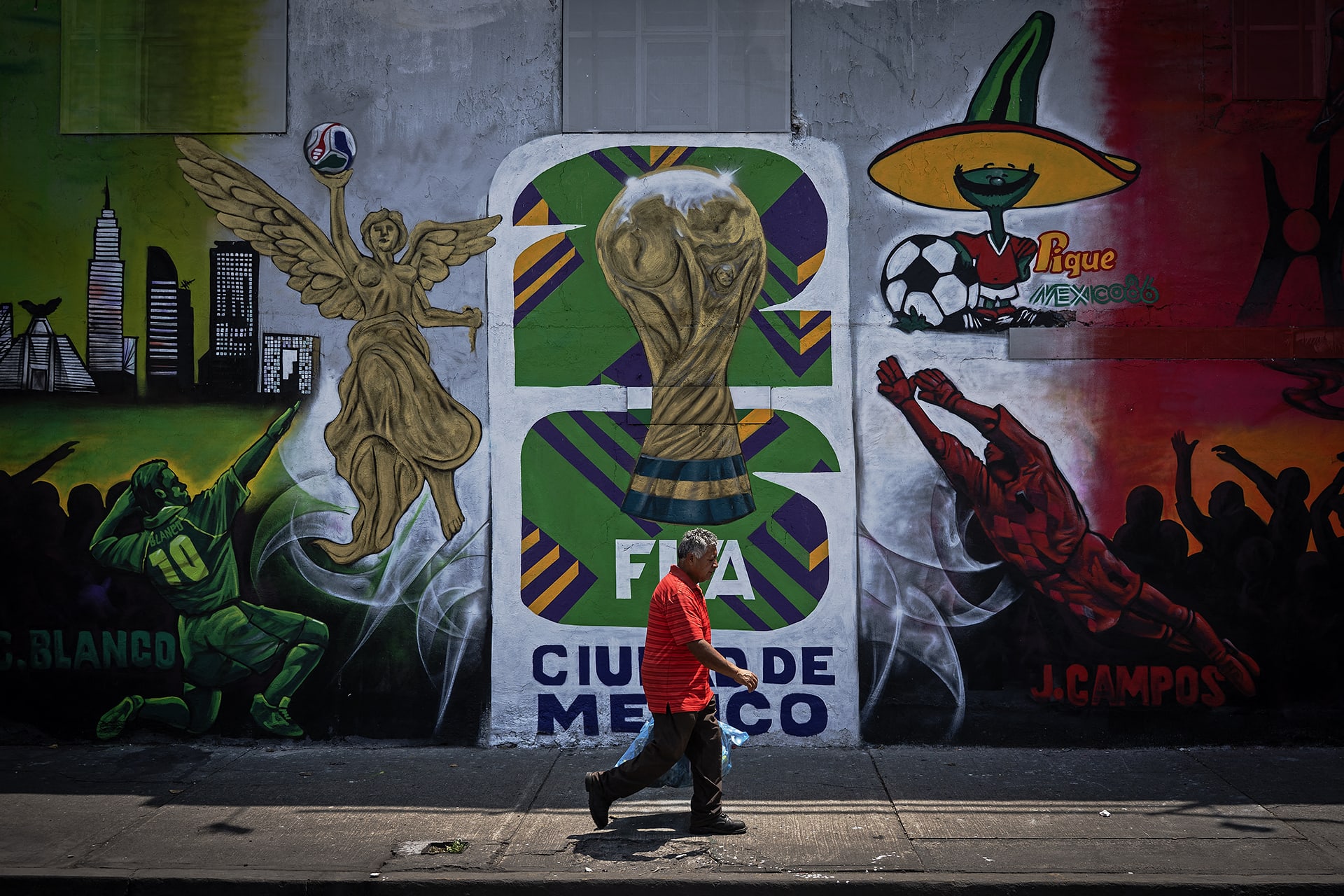
The mantra of the International Federation of Association Football (FIFA), soccer’s global governing body, is famously that “football unites the world.” But this summer’s men’s World Cup is set to kick off with both sports and geopolitical tensions on display.
This is the first World Cup to be hosted by three nations: the United States, Canada, and Mexico. The United States’ relations with its two neighbors, however, have become strained during the second Trump administration over trade, immigration, and border policies—marking a dramatic shift since the three countries initially planned to cohost back in 2017. Amnesty International warned that the United States’ new hard-line immigration and border policies could affect fans and players from competing countries. U.S. military actions abroad, particularly in Iran, have also raised tensions.
As national teams began to arrive in the United States, border officials questioned some tournament participants—and turned others away. A Somali referee was denied entry into the country on Monday, while Iraqi striker Aymen Hussein was held for seven hours of questioning and a phone inspection over the weekend. Hussein was eventually allowed in but others traveling with the Iraq team, including a team photographer, were not. Amid the ongoing Iran war, FIFA permitted the Iranian national team to move their base camp from the United States to Mexico. But the players were granted U.S. visas to participate in their scheduled group stage games just a week before the tournament’s opening, and several Iranian team staff were denied visas, the country’s state media said.
The United States is set to host three-quarters—78 of 104—of the World Cup matches in 11 U.S. cities. Canada and Mexico will each host thirteen games across two and three cities, respectively. Given the geopolitical tensions surrounding the tournament, onlookers are questioning how this World Cup—which is expected to attract more than one million international visitors—will actually play out.
“I don’t think this is going to be as smooth as previous World Cups,” CFR Africa expert Ebenezer Obadare said.
CFR explains the potential complications ahead for players, fans, and hosts.
How could President Donald Trump’s travel restrictions affect World Cup attendance?
Earlier this year, the Trump administration enacted a travel ban that fully or partially bars citizens from thirty-nine countries from entering the United States. It has steadily added travel restrictions, including halting immigrant visa processing for seventy-five countries.
The United States is hosting the men’s World Cup this year as well as the 2028 Summer Olympics, so the administration said that athletes, coaches, and support staff for those tournaments—among a select few other sporting events—would be exempt from such restrictions. The State Department clarified that “only a small subset of travelers” would qualify for the exemption, suggesting that fans and foreign spectators, media, and corporate sponsors from countries restricted by the Trump administration’s travel policies could be excluded.
Four countries whose teams have qualified for the World Cup fall under Trump’s travel ban: Haiti and Iran face full entry bans, while the Ivory Coast and Senegal face partial restrictions. Fans from those countries will be unable to attend World Cup games hosted by the United States unless they are also U.S. residents or dual nationals with countries not on the travel ban list.
At least fifteen Iranian officials and team staff were denied visas, according to state media, including the head of the Iranian football federation. U.S. officials said they granted visas to all “necessary” support staff, while Iran said those left out were “integral.” FIFA also revoked Iran’s allocation of tickets that each competing federation is entitled to distribute to its fans, which amounts to thousands of seats.
Many other qualified countries are on the Trump administration’s visa pause list, including Egypt, Ghana, Jordan, Morocco, Uruguay, and Uzbekistan, which only applies to immigration visas. “That shouldn’t stop fans from those countries from getting tourist visas,” explained CFR immigration expert Edward Alden, “but you can certainly expect that anybody coming from those countries is going to face an extra level of scrutiny.”
For fans who clear the legal entry barriers to attend U.S. games, another hurdle is cost. Aside from this year’s games having the most expensive tickets of any cup so far, the Iran war caused airline prices to soar, and nonimmigrant visa holders from five participating countries—Algeria, Cape Verde, the Ivory Coast, Senegal, and Tunisia—expected to face a $15,000 bond requirement to attend matches on U.S. soil. In mid-May, the U.S. government waived the requirement for fans from those five countries who had purchased tournament tickets as of mid-April.
The Department of Homeland Security (DHS) could also ramp up screenings for visitors from countries not affected by current travel restrictions. One proposal would require applicants from forty-two countries—including close U.S. partners—to hand over troves of online data, though it remains unfinalized just a week before the tournament’s opening. U.S. Customs and Border Protection confirmed in May that the new rule likely would not be finalized until later this year, but the agency planned to conduct more targeted social media screenings of select travelers.
High costs, intense application processes, and bans aside, Alden suggested another barrier could be psychological: “Are people going to be scared to enter the United States?”
Obadare noted that the 2026 World Cup will be monumental because it features a record ten teams from African countries. However, many African fans with visas to enter the United States chose to make other arrangements. “They’re saying there’s something about this atmosphere—‘I don’t want to get to an airport and then have to explain myself for three hours and then somebody says, can I see your phone?’” Obadare said. “So they’re giving the United States a wide berth and going to Canada or Mexico.“
Another consequence of the travel restrictions could play out in the psychology of the games themselves, Obadare contended. “There’s something about having your fans in the stadium, rooting for you, shouting their heads off,” he said, remembering when fans from his home country, Nigeria, flocked to Atlanta for the 1994 Olympics. “If you don’t have those people in the stands, it’s not the same thing.”
What about safety at the tournament?
Several aspects of the games are under scrutiny when it comes to perceived threats to safety:
Venues. Security during major sporting events is always a concern. That’s particularly true for this year’s World Cup, which is the largest version of the tournament ever held. The U.S. government has awarded $846 million in grants to nine U.S. host states to shore up cybersecurity, emergency response preparedness, security, and drone protection across the eleven U.S. host cities.
Intelligence briefings from U.S. officials and FIFA obtained by Reuters warned on March 20 that the potential for extremist attacks on the games, fan events, or transportation infrastructure—as well as civil unrest—had grown because of heightened tensions over Trump’s immigration policies and the war in Iran.
Meanwhile, cartel violence in Mexico disrupted one planned host stadium in the months before the tournament began. When a Mexican operation assisted by U.S. intelligence assassinated the drug lord El Mencho in February, chaos erupted in Guadalajara as organized crime groups set fire to public infrastructure and attacked vehicles on the roads. The unrest affected tourism in the area.
No significant safety concerns have emerged about host stadiums or cities in Canada.
Enforcement. Questions have swirled about the role that U.S. Immigration and Customs Enforcement (ICE), an arm of DHS, could play in the tournament since the agency announced in February that it planned to play a “key part” in World Cup security.
That might concern some participating countries. Germany and the United Kingdom have discouraged U.S. travel due to DHS enforcement, while Ecuador has condemned ICE immigration raids. Meanwhile, Italian officials objected when the United States planned to send ICE to help with enforcement at Milan’s Winter Olympics in February amid the agency’s aggressive crackdowns in Minnesota. Democratic lawmakers introduced three bills in March aimed at limiting immigration enforcement at the World Cup over safety concerns for attendees and travelers. However, none are expected to pass the Republican-controlled U.S. Congress in time for the tournament’s start.
The prospect of an ICE presence at the World Cup has galvanized some venue workers. On May 29, the union representing two thousand hospitality workers at Los Angeles’ SoFi Stadium—which is set to hold eight World Cup matches—broke off negotiations with stadium operators over a contract to improve working conditions and keep ICE out of the venue grounds. SoFi union workers voted to authorize a strike just days before the stadium was set to host the first U.S. match on June 12, which was only averted when the union struck a tentative deal for higher wages and more protections. Hotel workers in at least two U.S. host cities, Philadelphia and Seattle, are considering similar moves on World Cup match days.
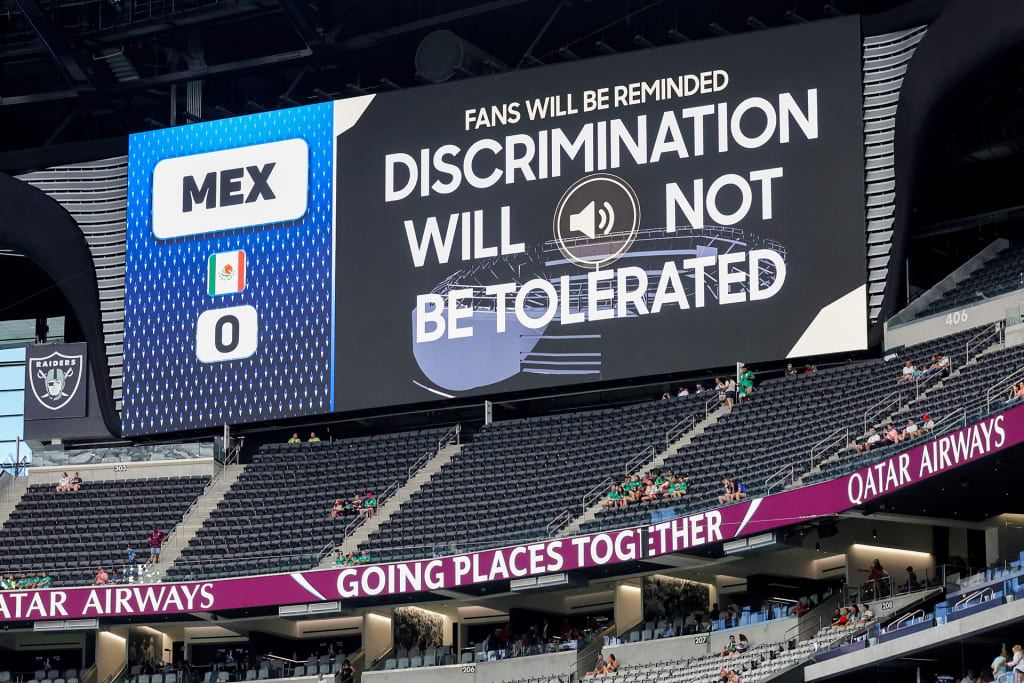
Alden believes ICE does not have a reason to be at the games. “World Cup fans are not likely overstayers, for the most part,” he said. “This is a world-stage event, and I don’t think that it would make sense to disrupt it with a heavy ICE presence.”
Player safety. Concerns about player safety have largely derived from the ongoing Iran war. After initially threatening a “boycott” of the United States games due to security concerns, Iran reached an agreement to move its team’s base camp from the U.S. state of Arizona to Tijuana, Mexico, in order to reduce the amount of time the Iranian team spent on U.S. soil. Yet even after FIFA confirmed Iran would cross the border for its U.S. matches, the logistics are coming down to the wire—the team expects to receive their U.S. and Mexican visas two days before kickoff, an Iranian federation representative said, and has plans to travel to Spain in the meantime.
Aside from heated sentiments, the actual temperature could be another player-safety issue. Several host cities, such as Los Angeles and Mexico City, are in areas that pose a high risk of heat-stress injury to players. (Other stadiums, such as those in Atlanta and Arlington, Texas, are temperature-controlled.) Last year’s Club World Cup in the United States saw midafternoon kickoffs that led to heat exhaustion, raising concerns that players could face similar conditions this year.
Is there a risk of a boycott?
Discussions about boycotting this World Cup have come from soccer coaches, politicians, and civilians, including the heads of twenty European soccer federations—but none ultimately came to fruition. Although many criticize current U.S. policies or the 2026 games, the odds of a boycott that involves countries withholding their teams remains incredibly low, Obadare said. “At the end of the day, [players] want that shot.”
Boycotts from individuals or fan groups are more likely. Some people have reportedly sold their tickets, though the Los Angeles Times reported in early February that FIFA stood to gain from these transactions by taking a 15 percent fee from both the sellers and buyers.
Boycotts have certainly swirled around World Cup games before. In 1964, more than a dozen African teams withdrew from the tournament in protest of FIFA’s regional qualification policies.
What is FIFA’s stance?
FIFA policies include human rights guidelines in line with the United Nations, and require World Cup host countries to do the same.
The 2026 games were the first to have human rights criteria embedded in the bidding process, and each host city published a plan declaring the ways it would promote human rights. Atlanta pledged to raise hourly worker wages for the tournament to $17.50, Dallas committed to looking out for human trafficking, and Vancouver outlined a “zero-tolerance” policy for “all acts of discrimination,” among others.
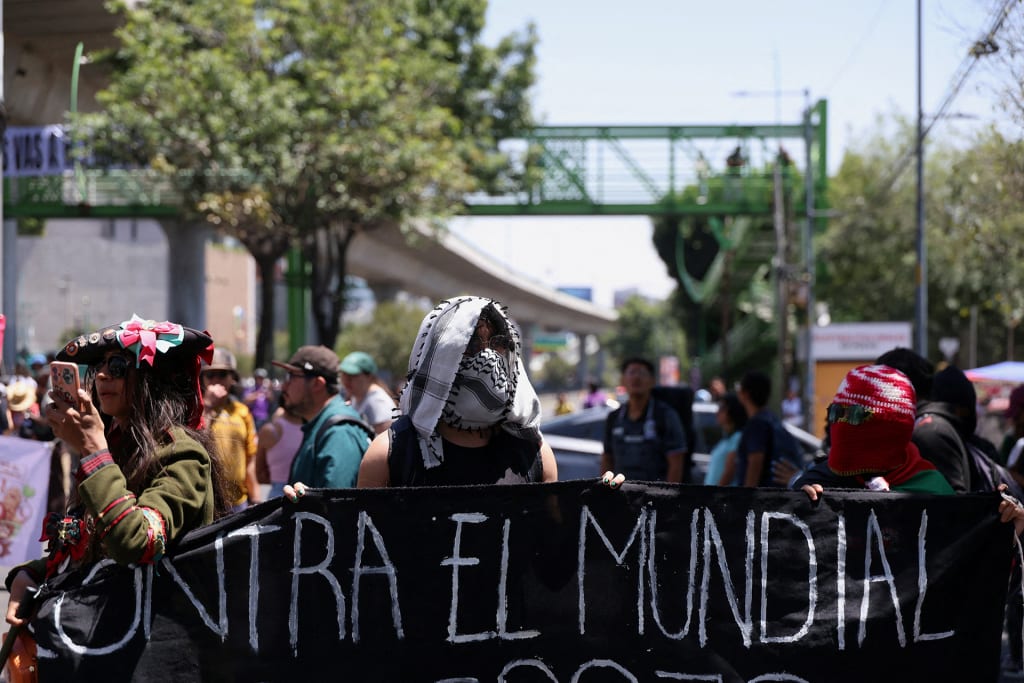
Yet Amnesty International issued a report in late March that said there was a “human rights emergency” in the United States, characterized by abusive immigration and border policies, incursions on freedom of speech and assembly, and discrimination against LGBTQ+ people. Human Rights Watch said in a report in late April that “all but one” host city committee had either failed to produce the required human rights action plans, or produced plans failing to adequately address human rights risks.
FIFA and tournament hosts have come under scrutiny before. At the 2025 Club World Cup, FIFA canceled long-standing antidiscrimination messaging despite instances of fans chanting slurs. During the 2022 Qatar World Cup, protesters were removed from games for speaking out on issues such as Iran’s Women, Life, Freedom movement, while migrant workers who built infrastructure for the games died because of unsafe working conditions. Worker deaths were also reported in the buildup to prior World Cups hosted by Russia, Brazil, and South Africa.
FIFA is unlikely to offend a host nation by speaking out. Obadare noted that the World Cup brings in nearly all of the organization’s income, with the Qatar games in 2022 bringing in 83 percent of FIFA’s revenue from the four-year cycle following the 2018 games. According to Amnesty International, this year’s tournament is expected to be the most lucrative to date, raking in up to $11 billion.
Are there other geopolitical issues surrounding the games?
Trump has discussed the World Cup’s potential for sports diplomacy, while the State Department’s “Sports Diplomacy Playbook”—seen by Politico—maps out how Washington could leverage the event to advance foreign investment and soft policy aims. Trump also expressed interest last year in revoking a ban on Russia playing in the World Cup, which had been implemented after its 2022 invasion of Ukraine, though the ban was ultimately upheld. Meanwhile, calls for Israel to be banned over its war in Gaza looked set to be ignored, with the State Department confirming it would “work to fully stop any effort” to ban Israel. (Israel ultimately did not qualify for the tournament.)
On a lighter note, four teams are stepping onto World Cup grass for the first time ever: Cape Verde, Curaçao, Jordan, and Uzbekistan. With those four debutants and the expanded forty-eight-team format, there will likely be several games involving two teams that have never played each other before, providing new arenas to watch for both friendly competition and displays of soft power.
In practical terms, FIFA organizers will be taking notes on the first-ever jointly hosted tournament among the North American neighbors. This year is a test case for the shared hosting model, with the 2030 World Cup set to be split among Morocco, Portugal, and Spain.
Although this year’s hosts have pledged to work together, Canada and Mexico have seen their bilateral ties with the United States change significantly during Trump’s second term. Their disputes over trade, immigration, and other issues could underscore the effect that geopolitics has on the games. Given all the dynamics set to unfold, the World Cup could “be a different tournament” this year, according to Obadare.
Colophon
Data Visualization
- Austin Steinhart
Additional Reporting
Surina Venkat contributed to this article.