Where is the Lebanese Zelensky, Part II
My recent blog post “Where is the Lebanese Zelensky” elicited an interesting response suggesting that it is international support, not Lebanese voices opposing Hezbollah, that’s missing today.
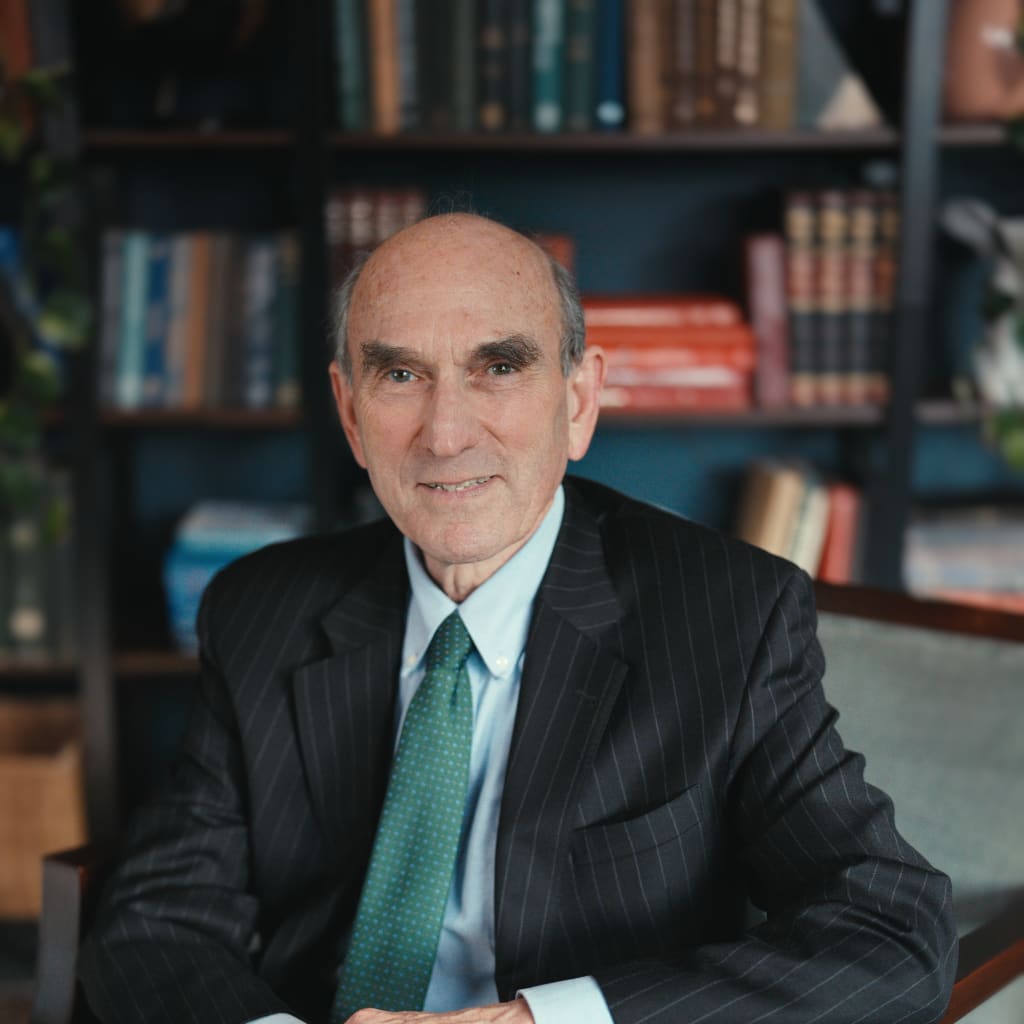
My recent blog post entitled “Where is the Lebanese Zelensky” elicited an interesting response from my friend Joseph Gebeily, M.D., who is Chair of the Advisory Board of the Lebanese Information Center and a member of the Lebanese Forces Party Executive Council.
Joe wrote as follows:
The Lebanese Zelensky Exists and Stands Firm: Where Is the International Support?
Elliott Abrams raises a critical point about Lebanon’s struggle to free itself from Hezbollah’s domination, but his claim that no one in Lebanon is standing up to Hezbollah is not accurate. The opposition to Hezbollah has been vocal and active for years, well before the events of October 7th. Leaders such as Samir Geagea, and others (Gemayel, Moawad, Chamoun,…) have consistently called for the disarmament of Hezbollah, the cessation of Iran’s interference, and the full implementation of the Taif Agreement and U.N. Security Council Resolutions 1559, 1680, and 1701. These political figures have not only criticized Hezbollah’s armed dominance but have also condemned the Lebanese government for allowing this militia to operate unchecked, with Geagea even accusing them of high treason.
However, the problem lies not with the lack of leadership but with the lack of power. The opposition does not control the executive or legislative branches of the government. In parliament, they are continually blocked by Hezbollah’s ally, Speaker Nabih Berri. The voices of the opposition are loud and clear, but they are systematically sidelined by a political structure designed to maintain the status quo.
The “Zelenskys” of Lebanon are there, and they do have popular support. My question in response to Elliott Abrams is: where is the international support for this opposition? Despite engagement with the U.S., France, and the so-called “Friends of Lebanon,” these powers continue to work with figures like Najib Mikati, Walid Jumblatt, and Nabih Berri, who position themselves in the middle—avoiding direct confrontation with Hezbollah and offering compromises that accommodate the group’s agenda.
If the Lebanese opposition, led by Geagea and others, received even 10% of the support that the West gives to President Zelensky in Ukraine, they would dominate Lebanon’s political landscape. But the international community, including the U.S. and France—who once supported Lebanon’s liberation from Syrian occupation—now prefers to deal with centrists and figures with ties to Hezbollah, while offering minimal contact with the patriotic opposition.
Moreover, where is the foreign role in stopping Iran from intervening in Lebanon in support of unlawful militias? Iran’s continuous meddling in Lebanese affairs and its support for Hezbollah is a blatant violation of international resolutions, yet there seems to be little action from global powers to curb this interference. Instead of just asking where the Lebanese Zelensky is, we should be asking: where is the international pressure to stop Iran’s intervention and uphold Lebanon’s sovereignty? Without a firm stance from the global community, Hezbollah’s grip on Lebanon—and Iran’s influence—will remain unchallenged, leaving the courageous Lebanese opposition to fight an uphill battle without the external support it desperately needs.
I have some sympathy with this view. For example, here is a news item regarding the rejection of Iranian interference in Lebanon, quoting caretaker prime minister Mikati and Samir Geagea:
Caretaker Prime Minister Najib Mikati on Friday condemned remarks attributed to Iranian parliament speaker Mohammad Bagher Ghalibaf about Tehran’s readiness to negotiate with France over the implementation of Resolution 1701.
“This stance represents a blatant interference in Lebanese affairs and an attempt to impose a rejected tutelage on Lebanon, knowing that we had informed Iran’s foreign minister and parliament speaker during their visits to Lebanon of the need to understand the Lebanese situation,” Mikati said in a statement.
“Lebanon is facing an unprecedented aggression and we are working with all of Lebanon’s friends, including France, to press Israel to cease fire,” the premier added.
“The issue of negotiating to implement U.N. resolution 1701 is being handled by the Lebanese state and everyone must support it in this direction, instead of seeking to impose new hegemonies that are rejected under all national and sovereign considerations,” Mikati said.
He later asked caretaker Foreign Minister Abdallah Bou Habib to summon the Iranian charge d’affaires to grill him over Ghalibaf’s remarks.
The Iranian parliament, however, later denied the remarks attributed to Ghalibaf, stressing that Tehran “backs everything decided by the Lebanese people, government and resistance to achieve a permanent truce.”
Lebanese Forces leader Samir Geagea meanwhile said that Mikati’s stance “gives us a glimpse of hope that the Lebanese state” has started to “assume its responsibilities.” “What Mikati said this morning expresses the viewpoint of every true Lebanese, and we hope PM Mikati would continue to say that the Lebanese government demands a ceasefire based on resolutions 1559, 1680 and 1701, because this is the only way to halt the massacres that have been ongoing in Lebanon for around two months,” Geagea added.