World on the Move: Understanding Europe’s Migration Crisis
By experts and staff
- Published
- Stewart M. PatrickJames H. Binger Senior Fellow in Global Governance and Director of the International Institutions and Global Governance Program
Coauthored with Theresa Lou, research associate in the International Institutions and Global Governance program at the Council on Foreign Relations.
The migration crisis of 2015 makes for somber reading. Seven hundred migrants drowned crossing the Mediterranean from war-torn Libya. Last week, Austrian authorities made the grisly discovery of seventy-one corpses in a truck. Most recently, the body of a three-year-old Syrian boy washed up on a Turkish beach, sparking international outcry.
People have been on the move since the dawn of time, of course, but never in such numbers. By the end of 2014, 59.5 million individuals had been uprooted due to conflict or persecution—the highest level since World War II. Despite knowing the risks, every day thousands continue to board rickety boats, or pay smugglers for the promise of safety and better lives ahead.
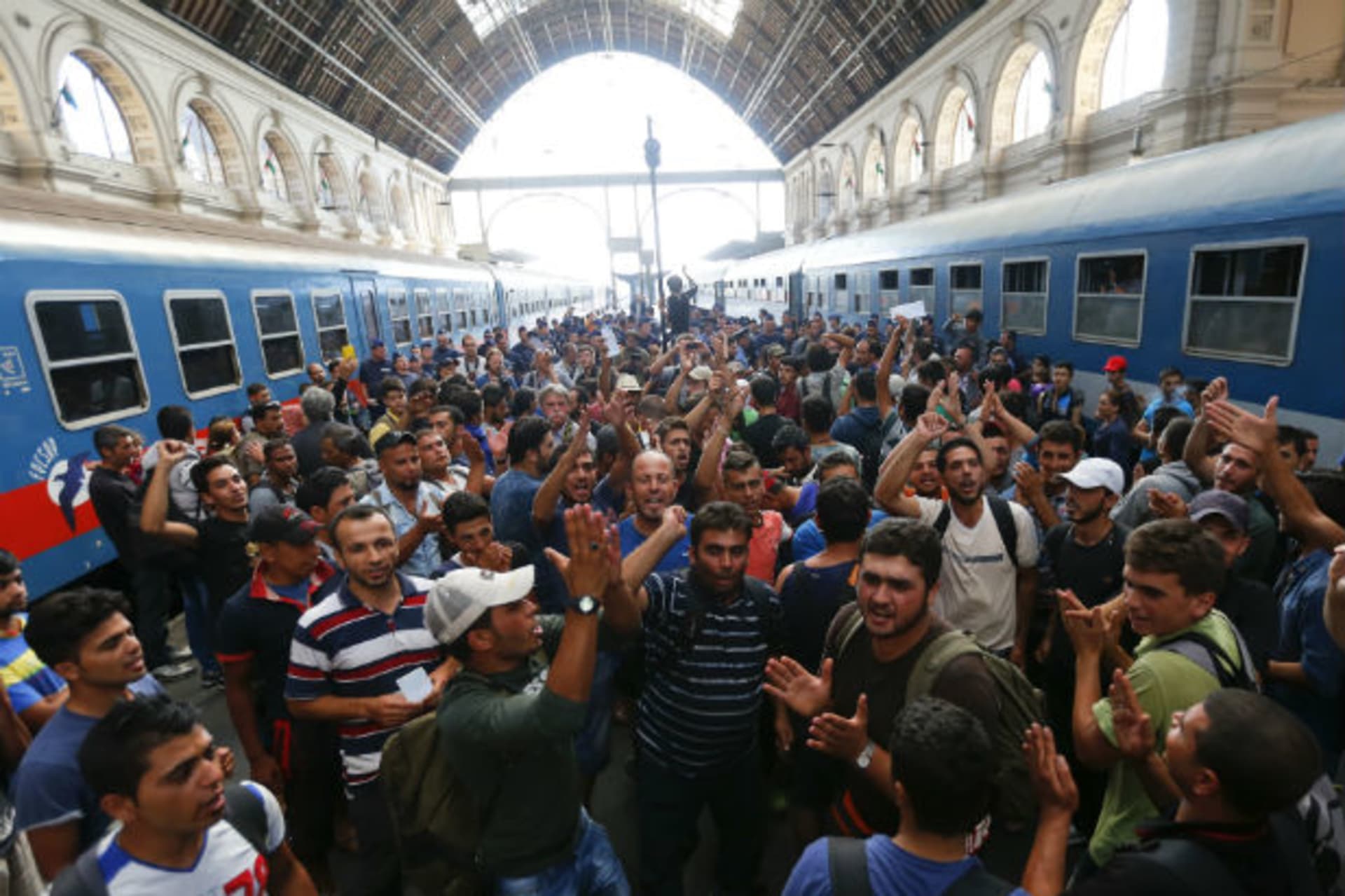
Ground zero for the current crisis is the European Union (EU), where approximately 1.7 million desperate people have attempted to enter between 2011 and 2014. The Syrian civil war has displaced more than four million refugees to neighboring countries such as Turkey, Jordan, and Lebanon, where camps burst at the seams. As chances of returning to Syria dim—and prospects in host countries remain bleak—even more refugees are now heading for Europe.
The EU’s crisis is compounded by poverty in the western Balkans, where high unemployment and entrenched political corruption have led many to conclude that life will simply not get better. More than forty percent of all asylum applications in Germany during the first six months of 2015 came from Kosovo, Serbia, and Macedonia.
Why is Europe Struggling?
The pressures of uncontrolled migration are hardly restricted to Europe—as the U.S. presidential campaign has underscored. But the EU’s predicament is particularly acute. The sudden influx of migrants has appeared to catch European governments by surprise, and has exposed fissures among the members of the Union. There at least four reasons why Europe is struggling.
All of these dilemmas are complex, and none is easily resolved. But the EU can and must do better. European leaders will meet on September 14 in Brussels to combat the growing migrant crisis. At a minimum, they need to reach agreement on the following points
Finally, Europe’s current predicament carries a larger lesson. The nations of the world need a more robust multilateral mechanism to develop and promote common global standards for the processing and treatment of migrants and refugees. The building blocks of such a system already exists, including in the International Organization for Migration (IOM) and the UN’s High Commissioner for Refugees (UNHCR). But the IOM is mainly an assistance body rather than a forum for negotiation, and UNHCR is stretched thin by multiple humanitarian crises. However, rather than seeking to create an entirely new international organization, UN member states should look to strengthen these existing ones so that they can do more to assist countries and regions coping with unexpected spikes in refugees and migrants. Ban Ki-moon’s upcoming emergency summit on migration (planned for September 30) is a welcome step in this direction.