Postcard From Cotonou
Foiled or not, the attempted military takeover in Benin bodes ill for political stability in West Africa.
By experts and staff
- Published
 Ebenezer ObadareCFR ExpertDouglas Dillon Senior Fellow for Africa Studies
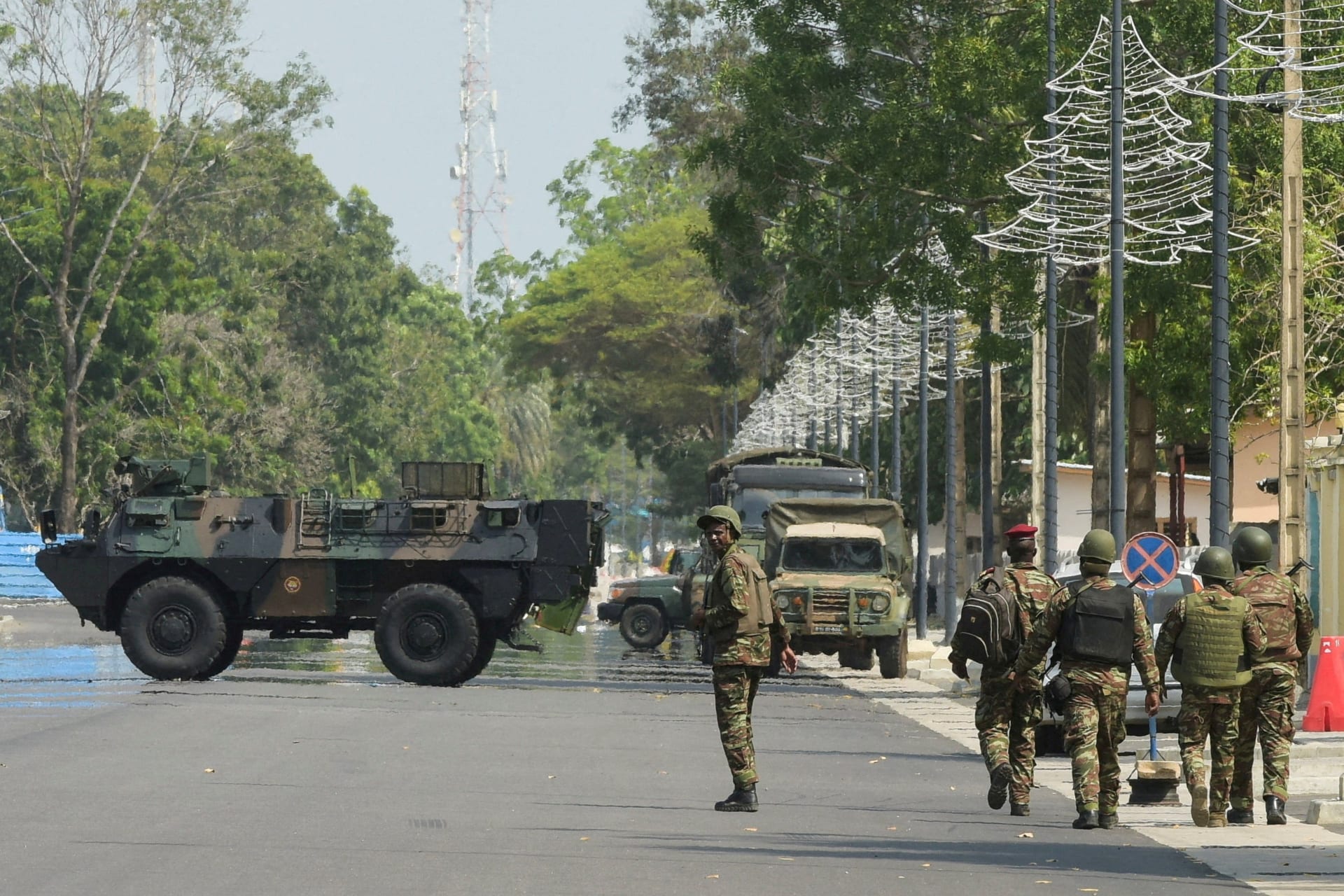
With good reason, it is the positive part of the coup attempt in Benin last weekend that is getting all the attention in the media. Responding to an SOS from President Patrice Talon, Abuja reportedly obliged with fighter jets, followed by troops on the ground. The operation went rather smoothly, and as a testament to what the Nigerian armed forces could do given the right conditions, one could hardly conceive of a better example.
President Bola Tinubu deserves praise for reacting decisively and preempting what effectively would have been a near-encirclement of Nigeria by military regimes, and although taking down a group of putschists is admittedly a different kind of challenge from fighting an armed insurgency, one can only hope that the Nigerian armed forces did learn a thing or two about acting speedily on the basis of reliable intelligence.
Having said that, the attempted coup itself is a reminder of the political situation in the region, marked by a seemingly inexorable slide towards instability and chaos. Accordingly, the fact that the so-called Military Committee for Refoundation did not succeed matters not so much as the fact that the group acted fully conscious of the favorable environment across the region.
Including palace coups, there have been eleven successful military takeovers in Africa since 2020. Eight of these illegal transfers of power have taken place in West Africa, the latest being the “ceremonial coup” in Guinea-Bissau, which resulted in the deposition of President Umaro Sissoco Embaló. Before Embaló’s deposition, the country had witnessed several failed attempts, most recently this past October when some senior officers were rounded up for planning to overthrow the government.
Incidentally, coup rumors have also caused political tremors in Nigeria. In September, the country’s military intelligence reportedly uncovered a plot to overthrow President Bola Tinubu. Although the army promptly denied the reports, it is significant that shortly after, President Tinubu conducted a sweeping shakeup of the leadership of the military. Last week, the Nigerian leader also swore in a new Minister of Defense. The extent to which President Tinubu’s response to the call from Cotonou may have been guided by a desire to send a clear message to potential mutineers within Nigeria itself is an open question.
At any rate, and considering recent developments and the overall mood in the region, one might be excused for thinking that we are back in the 1980s, and at the very height of military rule for that matter. Back then, commentators would refer to the Economic Community of West African States, the fifteen-member regional bloc, as the Economic Community of West African Soldiers. The pun was both an expression of frustration at the position that various military regimes had come to occupy in the politics of the region, as well as a commentary on their seeming impregnability. Between 1956 and 2000, West Africa alone accounted for over 46 percent of all coups and coup attempts in sub-Saharan Africa.
To be clear, we are not approaching anything near that atmosphere of semi-invincibility; the military hardly controls as many West African states as it did at the time, never mind the depth of fear it evoked at the apogee of its political supremacy. Nevertheless, that does not make the emergent pattern any less worrisome—a distinct shift of public sentiment in favor of military rule, especially among young people, evident in the enthusiasm for charismatic despots like Burkina Faso’s Ibrahim Traoré or Guinea’s Mamady Doumbouya.
This is the changed and, frankly, unsettling moral environment that those bedraggled-looking Beninese soldiers under the auspices of the Military Committee for Refoundation sought to exploit. The growing tendency of incumbents (Togo and Côte d’Ivoire are the two most recent examples) to manipulate the statutes in the service of regime perpetuation delegitimizes democracy as an idea, erodes democratic norms, and creates a justification for military intervention.
If regime perpetuation is a harbinger of political instability, the jihadist insurgency, without question the most pressing threat to the region in a generation, places the state at additional risk.
Given these conditions, Benin’s foiled coup may not be the last in West Africa for the foreseeable future. For its own sake, and for the sake of a region in turmoil, Washington urgently needs to reconsider its strategic retreat from the region.