In Nepal, Gen Z Gets a Victory—and the Country May, Too
Rapper-turned-politician Balendra Shah’s success at the Nepalese ballot signifies a triumph for Gen Z demonstrators across the country.
By experts and staff
- Published
 Joshua KurlantzickCFR ExpertSenior Fellow for Southeast Asia and South Asia
As I have noted in many prior articles, despite the wave of Gen Z protests that have swept through Asia in recent years and carried over to other parts of the globe (from Togo to Madagascar to the Caribbean), in the past year most of the youth protests led to minimal results at the ballot box, at least in Asia.
Since the beginning of the year, voters in Thailand chose a conservative, pro-military party to lead the new ruling coalition, while the progressive People’s Party, the party most aligned with the Gen Z demonstrators that rocked Bangkok several years ago, underperformed its predicted results. In Japan, recent elections resulted in a massive victory for the Liberal Democratic Party, the ultimate establishment party. And in February in Bangladesh, where in June and July 2024 student-led protests had ousted Sheikh Hasina and her increasingly authoritarian Awami League government, the leading Gen Z party won six seats in national elections. Meanwhile, the Awami League’s establishment counterpart, the Bangladesh Nationalist Party, dominated voting and controls parliament.
But last week in Nepal, Gen Z triumphed – big time. In September of last year, large, often Gen Z-led protests in Nepal, some of which turned violent, toppled the government, as anger boiled over about nepotism, corruption, a crackdown on social media sites and the deaths of protestors. Following that government collapse, an interim government was formed and eventually held elections last Thursday. Counting is not yet complete in a rugged and rural country, but the outcome seems clear.
As the BBC notes: “Partial counting of votes in last week’s general election in Nepal shows the party of rapper and ex-Kathmandu mayor Balendra Shah on course to win a landslide majority in parliament. The Rastriya Swatantra Party’s [Shah’s party] win marks the first time in decades that a single party has garnered a majority in Nepal which has a two-system format that makes it difficult for any one party to win outright.”
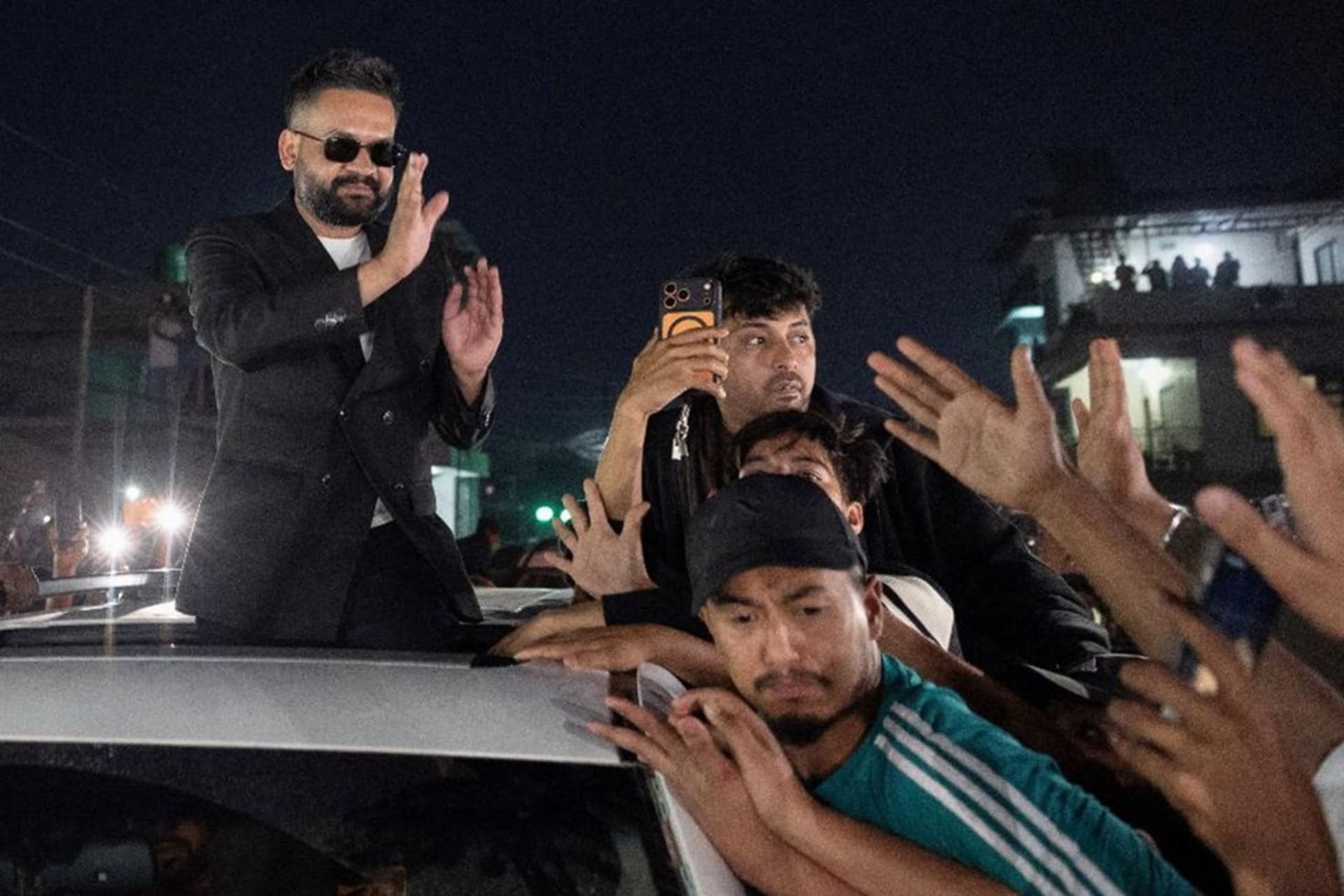
Shah had been mayor of Kathmandu when the protests erupted last year, and Nepal’s younger generation rallied around him, as he projected himself as a new face untouched by Nepal’s entrenched problems. Shah—who also defeated former prime minister K.P. Sharma Oli in a specific constituency for a seat in parliament, capping off the victory—will almost surely become prime minister. At thirty-five years old, and with only four years in politics, he will be the youngest prime minister in Nepal’s history, and the first Madhesi prime minister. The Madhesi are an ethnic group that lives primarily in southern Nepal, and that has long been ostracized by the political classes dominated by people from upland Nepal.
What was different about Nepal? For one, the percentage of the population that is young is considerably larger than in places like Thailand, Japan, or even Bangladesh. Japan is one of the most geriatric societies in the world, while in Bangladesh about thirty percent about the population is aged 15-29 and in Thailand about thirty percent of the population is under thirty. In Nepal, a whopping fifty-six percent of the population is under thirty, giving Gen Z a much larger pool to draw upon at the ballot box, and creating an even bigger divide between the majority of the population and the older political class than in a country like Thailand.
In addition, the level of crisis was worse in Nepal than in Thailand, Indonesia, or many other countries where Gen Z protests have broken out (though not worse than Bangladesh). Youth unemployment is high, the economy is broken, a kind of feudal system still exists, and corruption and nepotism paralyze business. The lack of real opportunity leads to a huge outflow of talent, and at least ten percent of Nepalis work overseas, often in jobs in the Persian Gulf countries.
In the election, both younger voters and many others tired with traditional parties rallied around Balen Shah’s party, which has advertised itself as free of corruption, without links to traditional patronage, and filled with technocratic problem solvers. (The population appeared angry even with the interim government that was in place for several months before the election and made little progress toward accountability for the crackdowns on protests and protestor deaths.) As some reports have noted, voters chose his party in districts where they did not even appear to know who the candidate of the party was. Nepal’s traditional parties were completely decimated.
The new government lacks political experience, which could certainly be a problem. But on the other hand, it will likely have a massive majority in parliament, portending real stability and potentially allowing the government to last longer than many of its predecessors since democracy was restored. As Nepali analyst Amish Raj Mulmi wrote last year for the Carnegie Endowment for International Peace, “Since the restoration of democracy in 1990, Nepal has cycled through twenty-seven prime ministers, each averaging barely a year in office.” The short terms of these governments came in part because establishment parties rotated power, keeping it in their hands, but also because often no one won a majority in parliament, and so the country relied on fragile coalition governments that easily collapsed.
Shah and the RSP vowed to end this instability. As Mulmi noted in an Election Day analysis for the BBC, “The quest for political stability through an electoral majority – which was one of the campaign lines for the RSP – has come to fruition, something most had thought would not be possible under the current electoral system.”
Now, with a true majority in parliament, voters seem to have rejected the fragile coalition politics of the past, along with Nepal’s old leaders. The RSP may have time to address Nepal’s many serious problems, from corruption to patronage to the weakness of institutions to massive inequality. These are all huge challenges, and none will be easy to solve. But voters seem willing to give the RSP at least some time to try.