A Conversation With Panama Canal Authority Deputy Administrator Ilya Espino de Marotta
Event date
Speaker
- Deputy Administrator, Panama Canal Authority
Presider
- Managing Director, Northern Latin America, McLarty Associates; Former Fellow for Latin America Studies, Council on Foreign Relations
Introductory Remarks
- Permanent Representative of Panama, Organization of American States (OAS)
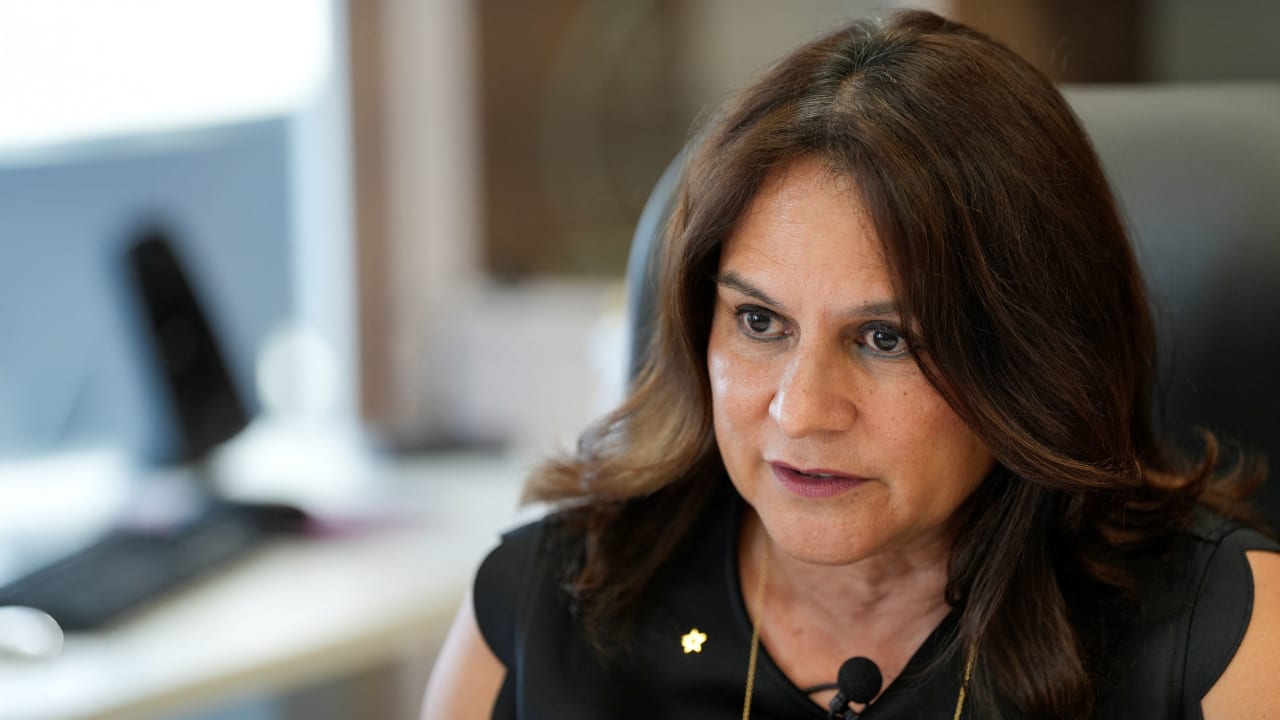
Panama Canal Authority Deputy Administrator Ilya Espino de Marotta discusses the the Canal’s functioning, its role in global trade and supply chains, and its strategic outlook.
DELGADO: Good morning. Distinguished members of the Council on Foreign Relations, esteemed guests, ladies and gentlemen, it is a pleasure to join you today here on one of the world’s leading spaces for thoughtful dialogue on global affairs and strategic challenges. On behalf of the Permanent Mission of the Republic of Panama to the Organization of American States, I would like to express our sincere appreciation to the Council on Foreign Relations and to Mr. Paul Angelo for moderating today’s timely discussion on the Panama Canal and its evolving role in global trade connectivity and international commerce.
For Panama, the canal is far more than a maritime route. It is a symbol of our national identity, our sovereignty, and our commitment to responsible global stewardship. Over the past twenty-five years under Panamanian administration, the canal has demonstrated not only operational excellence but also resilience, innovation, and long-term strategic vision. At a moment when the world is navigating geopolitical shifts, supply chain transformations, climate pressures, and growing demand for sustainable infrastructure, the Panama Canal remains a vital artery of global commerce and a trusted partner in international trade.
It is therefore my distinct honor to introduce a distinguished Panamanian leader whose professional career has been deeply connected to the modernization and future of the canal. Engineer Ilya Espino de Marotta served as deputy administrator and chief sustainable officer of the Panama Canal Authority. A marine engineer with more than forty years of leadership experience at the canal, she played a pivotal role in successful expansion program and today leads critical initiatives focused on sustainability, innovation, water resource management, and climate resilience. Her leadership reflects Panama’s vision for a canal that is not only efficient and competitive, but also forward-looking and sustainable for generations to come.
Please join me in welcoming engineer Ilya Espino de Marotta. Thank you. (Applause.)
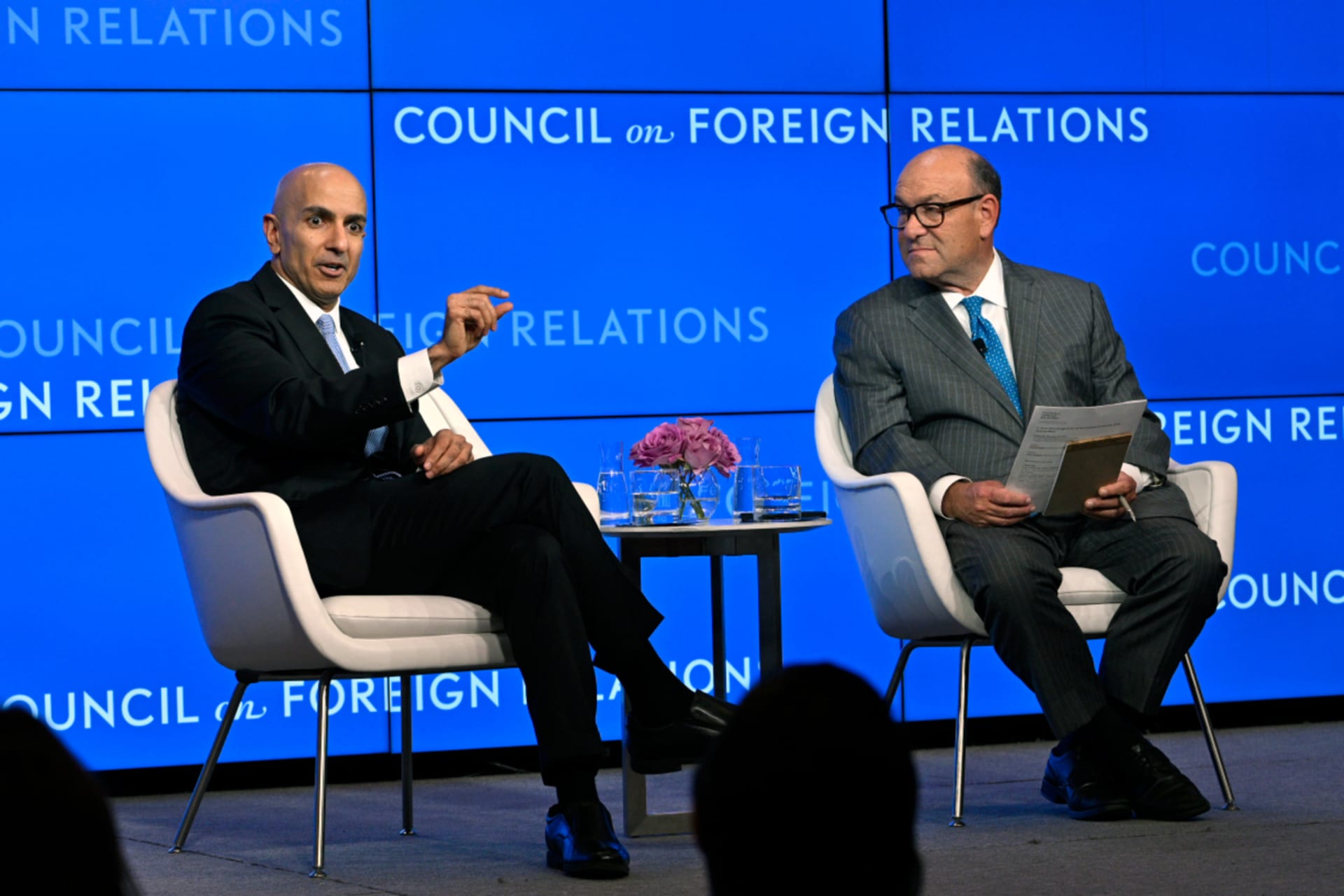
ANGELO: Thank you, Madam Ambassador. And good morning. Welcome to everyone. I am Paul Angelo, managing director for northern Latin America at McLarty Associates, and in that capacity I cover Panama. And it is a great pleasure to be presiding over today’s meeting.
Like to start by expressing my gratitude and admiration for the inimitable ambassador of Panama to the Organization of American States, Ana Irene Delgado; and of course, our history-making featured speaker of the Panama Canal Authority, Deputy Administrator Ilya Espino de Marotta, for joining us for today’s session. This is a rare opportunity to see the engineer without her trademark pink hard hat on. (Laughter.)
And of course, I’d like to thank CFR for welcoming me back. For those of you who don’t know, I was here as the Latin America fellow for several years, from 2019 to 2022.
A few housekeeping notes. Today’s meeting is on the record, and after the conclusion of the meeting will be posted to CFR’s website. We will begin with about thirty minutes of moderated conversation between me and the engineer and then I will open up the floor to questions, to include questions from members of the media. And for those of you, when we move to the question and answer period, if you’d like to ask a question please turn your placard to the side.
As the ambassador said, engineer Marotta has been working in her current role since 2020 following more than thirty years of working at the Panama Canal Authority in various capacities. Her leadership helped shepherd the expansion of the Panama Canal, which was completed in 2016. And in 2024 she was elected as the chief sustainability officer of the Panama Canal, which is the first person to hold that particular post. We’ll—I think we’ll get into that conversation about sustainability of the canal in just a little bit.
But I’d actually like to start by setting the scene with some statistics to ensure that everyone in the audience is familiar with the importance of the canal both to Panama, the Americas, and of course the United States and the globe. The canal currently handles about 5 percent of global maritime trade. And it serves as a key route between the United States East Coast—particularly the Gulf Coast, which has in recent weeks and months become hugely important for global commerce and Asia. And at present, the canal channels some 40 percent of all U.S. container traffic globally. As we look forward to the next coming years—decades of this critical waterway, and potential chokepoint as we have learned in recent months given the salience of the chokepoint concept with the closure of the Strait of Hormuz, I’d like to focus our discussion mostly on the strategic vision required to ensure that the Panama Canal remains competitive in an era of increasingly complex trade and security considerations.
And so, engineer, just to begin the conversation, I think it’s probably worth a while for everyone in the audience for us to explore a little bit what the relationship is between the Panama Canal Authority and the government of Panama; and how, following the implementation of the Torrijos-Carter Treaties, beginning in 1999 when the canal fully came under Panamanian stewardship, that the Canal Authority is able to maintain its own agency and autonomy to safeguard the financial and operational considerations of this piece of global strategic and critical infrastructure.
MAROTTA: Great. Good morning, everybody. Happy, happy to be here. Thank you so much.
So I’ll talk a little bit about our regime. How do we operate? The Panama Canal was created in 1997, the Panama Canal Authority. And it has its own constitutional title in our constitution, Title 14, which establishes that we are an autonomous entity of the state of Panama. Then, after that, we have the law, Law 19, which is the framework where the board of directors actually makes all of the regulations that manage the canal.
So the way the board directors was selected, the first board of directors, which started in ’99—well, December 31 at noon is when the transfer was going into effect—prior to the Panama Canal Authority, the Panama Canal Commission had a board of five—of nine members, five U.S. and four Panamanians. So, when we went to ’99, it would be we have a board of eleven members, all Panamanians. And they were chosen—the first board of directors was chosen in staggered terms: three years, six years, nine years. So whenever we replace the board, there’s not political influence because you have a selection in staggered years.
So, of the eleven members, nine members—three of them are nominated by the president, they are ratified by congress, and then they work for nine years. We have one member that is solely appointed by congress, and their term is undetermined. It could be one year or ten years. And then we have the chairman of the board—which is just one more board member, has one vote—which is also assigned by the president of the country. So we have board members that been with two different presidents. Some have lasted less than a president term. So that keeps a non-political/-partisan board of directors, so it gives a very robust independent entity.
We also have our autonomies. We have our own budget. So the government can approve or disapprove, but cannot modify the budget. And the budget is prepared by the administration, approved by the board of directors, presented to Cabinet for approval, then presented for congress. Our budget cycle differs from the government. Our budget cycle is October 1 to September 30. The country’s is in December. And by law we need to give a dollar per ton to the government on a monthly basis. So if we have 498 million tons in a year, they’ll get on a monthly basis the amount of tonnage that we transit. At the end of the year, once we do our budget to define our maintenance, operation, investments, and reserves, the surplus is given to the government. So, in twenty-five years of Panamanian administration, we have provided the government with over $30 billion in these twenty-five years.
So the board of director(s) is—it’s like a small congress just for the canal, and they do all of the rules and regulations. We have an independent purchasing system of contracting. We have different labor laws. You cannot strike in the Panama Canal, but there’s an arbitration body that was created with the creation of the Panama Canal Authority so any arguments between unions—we have seven unions in the Panama Canal—and the administration get resolved by these bodies, the Junta de Relaciones Laborales.
ANGELO: Great. And this year we’ve seen—thanks to the superior administration of the canal, we’ve seen an uptick in the daily number of transits through the canal. I think traditionally we’re seeing anywhere between thirty to thirty-two; and this year we’ve got—we struck an average of thirty-seven transits per day, with some days reaching as high as forty-two. Can you talk a little bit about how ships seek placement within the transit governance and architecture, and specifically whether or not the impact of auction prices—there’s been any number of headlines about record-breaking auctions for placement within the Panama Canal passage—how these are determined and what we can expect from the weeks and months to come in terms of the price of auctions in the Panama Canal?
MAROTTA: Absolutely. So throughout these twenty-five years we have changed many rules in the canal. Before 2023, there was the first in, first out way of transiting the canal, besides reservations. So we had some reservations, then we had some first in, first out. But 2023 became very cumbersome and problematic because vessels were waiting for many days to transit the canal and we had a water shortage. So we modified the system that now everybody that transit(s) the Panama Canal has to get a reservation, so there’s nobody waiting out there for days.
So we have three or four different periods for reservations. Cruise liners—oh, sorry. Thank you. Cruise liners and containers get priority. So they can—they can book a slot, like, up to two years ahead of their transit day because cruise liners need that certainty. Then you have the period for the liquid bulk, which is LNG/LPGs. And then you have the rest. So in those three periods, which have different timeframes, people can make a reservation.
We have—if we think—we normally put twenty-six vessels in the Panamax locks and ten in the Neopanamax locks. So, of the ten slots of the Neopanamax locks, six are reservation with the standard schedule. Three of them is a new program that we have established which is called—and it was a result of conversations with the industry from 2023. It’s called the Long-Term Slot Allocation system, which is a sealed-bid auction for—we have different packages. We have packages of 104 transits in six months or 54 transits in six months, so different packages get offered and then that takes three out of the ten slots. So six regular reservation, three the sealed-bid auction, and one is an auction. If you were not able to get reservation either one of these methods, then you go to the auction. And that’s the famous $4 million, which is one.
So the base price for the auction, it depends. We have three auctions daily. We have two size vessels in the Panamax locks. We have the regular, the Panamax, which is the biggest vessel that can go through Panamax locks, and the Neopanamax. So it’s one auction per size vessel. And they have different prices. So, for example, if you are a regular vessel and you want to go through the Panamax locks, through a reservation you pay a booking of $12,000. If you want to go to a(n) auction, it’s a base price of $15,000. If you are a super, if you want a reservation it’s $50,000. If you want an auction, the base price is $55,000. And in the Neopanamax, a reservation is a hundred thousand dollars and the auction starts at a hundred thousand dollars. So the industry is the one that dictates how much they want to pay for that empty slot, that auction slot, so that the canal gives you this is the base price and then the market decides how much they pay.
So, during these very difficult times in Hormuz, we can see that the hundred-thousand-dollar base price for an auction has gone to an average of $380,000. So this 4 million (dollars) kind of skews that average, you know. So that happens in all of the segments, and it depends on how much demand is for the canal if the prices will be driven up or not.
ANGELO: Great. Thank you for that clarifying explanation.
And something that you mentioned was the challenge that you confronted in 2023, which was largely a result of El Nino phenomenon, which is a climate pattern that affects the Pacific. We see warming waters in the Pacific, that in Central America—much of Central America it actually results in a reduction in rainfall. We’re planning for one of the worst-ever cycles of El Nino later this summer. And so the question I pose to you is: What is the Panama Canal Authority doing in coordination with the government of Panama in order to prepare for this? Are there any technological innovations that you’re pursuing in order to ensure that Lake Gatun has sufficient water to both meet the needs of the Panamanian population and supply the canal with the water flow that it needs in order to continue such a high volume of passages daily?
MAROTTA: Yeah. Something very, very important is that the lakes that store the water, the rainwater—we are a—we’re not a sea-level canal, unlike Suez. So, basically, what—how do we operate? You come on sea level, you climb through water elevators—which are the locks—twenty-seven meters above sea level, go through an artificial lake, and come down the other side. So we depend a hundred percent on rainfall. But not only the canal; also, 2 million people of the country draw water in potable water plants for potable water. So the reason why we dropped the number of slots for transit in 2023 was not to impact drinkable water for half the country.
So what are we doing for medium term and long term is the project of the new Lake of Rio Indio. It’s a new reservoir that we’re going to build. The canal is composed of two lakes—Gatun Lake, that was built or created in 1914; and Madden Dam or Alajuela Lake, which was created in 1935. So we’re going to create a new lake, which is one-tenth the size of Gatun Lake, but stores the water equivalent of ten to fifteen transits per day. Potable drinking water. It’s 8.8 transits per day. And it’s going to reach ten because we have two new potable water plants being installed, and we’re expanding one that is canal owned.
So this new reservoir will guarantee the drinking potable water for the population with a fifty-year horizon, and even 10 or 15 percent increase in the operation of the canal. So that’s a medium, long-term solution. What we learned in 2023—and, by the way, we did have—the worst El Nino we had in the canal is 1997. The second-worst one was in 2015. So when we inaugurated the Neopanamax locks, we actually told shipping you can come with a forty-three-foot draft, when we normally offer fifty feet drive. So not a lot of cargo. Then we had another year in 2019. And we learned how to maximize the use of water besides using the water saving basins, with some operational alternatives, like doing cross fill, which means I move the water from the east lane to the west lane, and I stagger the ships to be able to use the water more than once, which is basically what the water saving basins do in the Neopanamax locks. We maximize the use of tandem, which is, if I have small enough vessels I can put two or three vessels in one lockage, saving water. We also use operational measures, like using inner gates that allow me to use less water to put the ships through.
So there’s many operational alternatives that we had to use. 2023, the third driest years of the Panama Canal, full Neopanamax operating, full Panamax operating, which didn’t happen in ’15. And ’19 was a dry year, but not as bad. So what we did is, because the salt water could become a problem in the dry season, if I maximize the use of the water saving basins, we are now installing a new pipeline that draws water from the middle of the canal, where salinity is not an impact, over to the potable water plant in Miraflores, because they’re right next to the locks. As a matter of fact, when the canal was originally built the intake for the Miraflores potable water plant was in Miraflores Lake. And they had to move it a little bit farther north in Paraiso, because they had the same problem with the saltwater intrusion. Which is a temporary measure. It gets more pronounced in the dry season, because the way we operate as a convoy, and we have the Chagres River in the middle of the canal, the currents flow out the water. So this pipeline will allow us to use the water saving basins a lot more than we can use them right now, because of the location of the intake.
So that’s something that should be hopefully finished by December this year. So if we have a very bad El Nino year, we have one mitigating measure in addition to the operations that we experienced in ’19 and ’23. And also, we had a very rainy season. So we see the climate is totally kind of moving around. This dry season, where we thought we were going to do a lot of road world work and all that—(laughs)—didn’t happen. We had a lot of rain. So the lakes are offering right now maximum draft, which is fifty feet. We actually had to spill water in February, never heard before, because we had no capacity to store the amount of water we were getting in the dry season. So that gives us a really good head start for the next dry season. And we’re already starting the water saving measures in spite of the rain, because we have—like you mentioned before, we’re going from thirty-four to thirty-six transits per day to thirty-eight, thirty-nine, forty, forty-one. So even though we have a lot of water, we have a lot more demand. So we’re being very cautious and very aware of what’s happening. Hopefully it won’t be a too strong of El Nino. We’ll see. We’ll know better in June.
ANGELO: Fingers crossed. I think a lot of countries in Central and South America are bracing for impact. Something—last week, the city of Washington, D.C., hosted an AI exposition. And I’m wondering if you could elaborate a little bit on how the Panama Canal Authority is making use of artificial intelligence to improve its efficiency, particularly in terms of reservoir management.
MAROTTA: Yeah. We are baby steps on that right now. We are doing a lot of AI forecasting for water quality, which allows us to mitigate. So some forecasting on water quality. Also a lot of forecasting on ship arrivals, so we can better deploy our resources—whether if it’s the pilots, or the launches, or the tugboats. So we’re just starting on that. And, of course, you know, your administrative work. So I’m a little bit using some of that. So AI, we’re not deep into it. We’re experimenting with little things here and there.
ANGELO: Great. And on that same note, could you speak a little bit about the cyber governance and perhaps the kinds of protections and cybersecurity protections that the Canal Authority has invested in, in recent years, in order to ensure that the Canal Authority and its operations aren’t subject to espionage or cyberattack?
MAROTTA: Yeah, definitely. We are—we’re working very close with CISA and with the U.S. Corps of Engineers to make sure that we have up to the best standards. And we’re very focused on resilience. You know, if something happens, we have resilience to continue operating. So it’s more—it’s, of course, preventive, but we’re also prepared to have alternatives to not have to stop for some reason like that. And we’ve done a few tests. So we follow Gartner. We follow standard industry. So we are very resilient in operational stability of—if something should happen. So prevention is there, but resilience on continuing operations is key.
ANGELO: Very good. Last year the Canal Authority unveiled an investment plan for the next decade or so. And part of that investment plan included the Rio Indio Project, as you mentioned, but also a port terminal expansion and a new LPG pipeline. Can you provide a little bit of an update on where the planning for these three major initiatives stands, and at what point we might be able to see a tender process for the new two-port terminals that are that are being planned for either end of the Panama Canal?
MAROTTA: Excellent question. Yes. So priority number one is Rio Indio. We need to guarantee the water, so that’s already—we’re hoping to put a tender out in ’27, water in ’27, and start actual physical work in January ’28. We do have to relocate 423 families. We are in the process of acquiring the new land. We already agreed with the communities the compensation plan for the relocation, which includes housing, land, their livelihood, and all of the infrastructure required for social sustainability. So we’re working on that. Hopefully we’re finalizing the environmental impact study, which we will present to Ministry of the Environment by December this year. And then we’ll start off with the relocation of. This lake which will take three different, what you call states in the states, three different provinces. So we’ll have different resettlement programs. It’s thirty-eight communities that need to be relocated, 1,600 people. That’s the 423 families. So that’s already on the works.
We did a prequalification for the ports. It will be a bid for two ports, one in the Atlantic and one the Pacific, estimated about between 1 ½ (million) to 2 million TEUs per site. This is Panama Canal-owned land. We did try to put out a bid back in 2017, I believe, for a Pacific port, but that didn’t work very well. And now we are envisioning that now that the capacity on the five main ports around the canal in Panama are reaching capacity. It’s probably the best time to go out to bid. So they will go out to bid at the same time. We haven’t decided if it will be awarded to the same company or different companies, Pacific and Atlantic. And 2027 would also, we think the tender will go out. These 2026, we are looking at the prequalification and they put the tender out for the actual bid.
The pipeline, it also went through a prequalification phase. I think in June we should receive the prequalified—people who are interested, and then we’ll go through the process of the prequalification. Also 2027, the tender is supposed to be. We have not defined the project yet. Once we have the prequalified companies or consortia, then we’ll have the one on ones to see the extent and the scope of the first phase. If it’s going to be one phase and two phases, how big is it going to be? But the idea is to have LPG move by land from Atlantic-Pacific, or vice versa, and that will allow us more slots to be able to move more vessels through the locks, and maybe some of the LPG outreach, which it’s about our second-biggest customer. So we have containers is number one, liquid bulk is number two, and then we have dry bulk is number three, and then car carriers. And then, of course, everybody that is just a smaller.
ANGELO: That’s some great perspective. And on that note, I think I will open the conversation now to our members here around the table. So, as I mentioned, if you’re interested in asking a question, please turn your placard to the side. And we’ll get to you. Mr. Levinson.
Q: Hi. My name is Marc Levinson—(off mic).
At the moment—there we go. At the moment the Union Pacific and the Norfolk Southern Railroads have asked the U.S. Transportation—Surface Transportation Board to approve a merger that would create the first coast to coast railroad in the United States. Do you anticipate that if this merger is approved it would affect the canal? And if so, how would that happen?
MAROTTA: Yes. To us it’s very, very important to see how the world is moving, dry canals, where is manufacturing, where is consumption? So we are always looking at what could impact the transit in the canal. So, just like the dry corridor in Mexico, we see this more as complements than a competition to the canal. Because moving goods by water are a lot more economic than by land. And also, I like to—when people ask me about, mainly, the Mexico corridor, I say, you know, yes, it’s good, because they have a lot of import and a lot of export. Panama is a transition hub. We just move cargo through Panama. There’s some merchandising, but not a lot. Insignificant. But when we put—let’s see, the biggest container vessel we can put in the Neopanamax locks can carry 17,600 containers. And let’s say we put another one that’s 12,000 containers, 9,000 containers, and three in the Panamax locks, with 5,000 containers each. So when you have to think about the length of that rail to unload all that amount of container to move it to the other side, time and distance is huge. So definitely we see it as a complement and not as a competition directly.
ANGELO: Ambassador Aponte.
Q: Thank you. I’d like to start before I ask the question by acknowledging Deputy Director Marotta’s role in the canal.
MAROTTA: Thank you.
Q: And how she has changed from the inside out, and the presence of women, in all aspects of the functioning of the canal is visible. And I thank you for that.
MAROTTA: Thank you.
Q: But now to my comments. Ambassador Delgado in her introduction talked about how the canal is really a commercial artery, but with strategic properties or strategic assets. The times, they are a-changing. And they’re changing rapidly. As Mr. Angelo pointed out, and called it a chokepoint, which sometimes does not allow for institutions that control passages to do much except take sides. And I wonder what your view is, looking at the future, not talking about the canal, whether the era of free flow of commerce is going to diminish, and we will see institutions act more like sides having taken—taking sides, and acting less technocratically, which is the strength of the Panama Canal, I may add, and acting non-politically. Do you see us coming away from that?
MAROTTA: No. I think the strength of the Panama Canal is its neutrality. We have a neutrality treaty that guarantees that we will always be offering passage to ships of all nations. And that—I think that is the biggest shield that we have, the neutrality treaty. And the way—the governance that we have will be able to sustain that. So, I don’t see the canal as ever moving away from a completely neutral passage for shipping, whether if it’s commercial—
Q: But how about other points in the world, globally?
MAROTTA: I think—even though we are different countries, I think global shipping is key for the world to advance, to progress, to move. So I think eventually, even though there might be some situations, I think everybody will realize that the common good is more important than an independent country.
Q: Thank you.
ANGELO: I appreciate your optimism. I would like just to follow up with a quick question about the physical security provisions of the canal. Can you talk a little bit about what that architecture looks like, for those who may be unaware?
MAROTTA: OK. We do have our own internal security for just our operation areas. The government ensures, let’s say, the security of the canal. So it’s a joint effort and we rely a lot of intelligence. So that’s basically the way we operate. So the government kind of dictates.
ANGELO: OK. Great. Thank you. Ms. Carruth. please.
Q: Yeah. Hi. I want to thank you for an excellent panel this morning, and a wonderful presentation. My name is Reba Carruth. And I teach at the University of Maryland.
I have a quick question. So looking back at the history of the Western Hemisphere and the 250th year anniversary of the United States, could you talk a little bit about how you see the Panama Canal evolving relative to the Atlantic world? The standards and the frameworks that are emerging in terms of sustainable shipping and nature-based resilience, because of the fact that shipping contributes a lot of pollution but also it has an impact on native ecosystems that are necessary for the clean water and the management of different types of water. You know, we have—in the Chesapeake Bay we have the third-largest freshwater estuary in the world. And so the difference between salt water from a rising Atlantic Ocean coming inward makes a big difference, particularly when we’re talking about clean drinking water but also the native species of things. So could you talk a little bit about what you’re doing relative to the U.N. International Maritime Organization and the transatlantic frameworks that are in place?
MAROTTA: Yeah. Yeah. We definitely have a lot of rules and regulations to preserve the fresh water of the lake. That’s utmost importance, because it’s our drinkable water. But we also have a lot of regulations and restrictions on bilge water on the canal entrances. We have an oil pollution policy, very strong. We have—in whale season the ships need to slow down so they can get to the canal without harming the whale season, which is very important for us. And we also—we just recently completed our climate risk assessment on the Panama Canal watershed. So the Panama Canal also, by constitution, has to guarantee the quantity and the quality of the fresh water for the canal or for drinking of people. So we have a huge watershed that we need to protect. We don’t own the watershed so we work with the people in the watershed. We teach them how to protect the water, how to preserve forests. We have a—what we call a payment for forest protection. So each family that has forest in their land, we actually pay them a fee once a year to preserve that forest and not to cut it down for other activities. We teach them on how to be more effective in their cropping with the land that they have. So we have a lot of educational activities for the protection of the watershed.
We also, first incursion on going to net zero on scope one, two, and three, in the canal. So scope one, basically replacing our tugboat fleet to hybrid tugboats and going to renewable diesel, to drop our emissions from—our CO2 emissions. We have two hydro power plants and one thermal. We just—we’re in the process of installing a photovoltaic to get rid of the thermal. That will drop emissions. Our highest emissions, scope three, shipping. So what are we doing with shipping? Right now we’re incentivating. So we created what we call—that’s another way to transit the canal—a net zero slot. So, it’s one reservation per week that will be awarded to the vessel that is the greenest. And there’s certain things that you need to fulfill. So they want us to add two a week. Right now we’re with one. So it’s vessels that have invested on a dual tank, because they have an investment that was going green, even though we don’t have green fuels.
So, we signed an agreement with the Mærsk Mc-Kinney Møller Center in Denmark. We’re working on green corridors. We’re also working with the Port of Algeciras in Spain on green corridors, to see the future fuels, so Panama could become a hub for green fuels when they come. So we’re analyzing all of that and working with international agencies to look into the maritime decarbonization.
Q: Well, thank you so much. I really appreciate your answer. Just so you know, we’re also focused on biosecurity, because of the fact that, for example, oysters, mussels are very important for clean water.
MAROTTA: Oh, yeah.
Q: And their stocks have been mysteriously dropping. So it is a biosecurity issue, whether it’s naturally occurring or whether there’s, you know, other—so, anyway, I think this is a good response that you’re giving, yeah.
MAROTTA: Yeah. Monitoring is key.
Q: Yeah
MAROTTA: Absolutely.
Q: Yeah.
ANGELO: Great. We’ll take a question now from Mr. David Wass (ph).
Q: Thank you very much. I appreciate all the information.
I think you talked about Rio Indio and you talked about LPG by land, but you also have an existing pipeline across the isthmus. And you also have a railroad across the isthmus.
MAROTTA: Yes, we do.
Q: So could you please tell us how these other two elements fit into the overall equation?
MAROTTA: Yes, absolutely. So the railroad is a plus for us, absolutely. Even though the railroad is managed by a private company. And so it’s very important, we don’t—the two ports at the Panama Canal, we develop, will be Panama Canal ports. The ports that exist, the five ports that we have in Panama, are not Panama Canal ports. They’re managed by the Autoridad Maritima De Panama, Panama Maritime Authority. So they regulate. They are the landlords. We do move with our pilots—three of the ports are within Panama Canal’s water, the pilots are the ones that move the ships in and out to these ports.
So the railroad in 2023 was very good for us because some vessels will bring cargo that would provide a larger draft than they could use to transit the canal. So what they would do is they would bring a lot more cargo, unload, move by rail, and load again. So it was—the railroad increased 40 percent usage during the route for the canal. So it was good for the clients that that was there. It was good for the railroad, because they improved their usage. So it’s key for us, the train, definitely.
So we do have Petroterminal, which is a company that moves crude fuel on the border with Costa Rica area. So that’s been in place since the ’70s. We see it also as a complement, because that’s more throughput through Panama, you know, not necessarily using the canal.
ANGELO: Sir. Please identify yourself as well. Thanks.
Q: Yeah. Thank you. Jordi Zamora. I’m a correspondent here in Washington for AFP, Agence France-Presse. Thanks for doing this. I’m a journalist here.
Following that the legal role between, you know, U.S. companies and Chinese transfer, I’d like you, if you may update us, what is the current situation? The legal situation has, I guess, a transfer of properties? Or, I don’t know, between the Hong Kong company and the U.S. company. What is the status of all these, if you could say that the whole thing has been completed and it’s over? And what is the—how would you qualify the relationship with the Chinese government right now?
MAROTTA: Well, like I mentioned, the ports are not part of the Panama Canal Authority. So we don’t control the process. That is the Panama Maritime Authority. So our relationship with the ports is strictly technical. We move ships in and out of the port through our pilots. The process, how it’s going, I’m not privy to the negotiations or what’s happening. All we can tell you is that we know that the ports have been assigned on a temporary basis to Maersk in the Pacific, to MSC in the Atlantic, and that the government is planning on going out to bid with those ports.
ANGELO: Great. Sir in the back, please.
Q: Hey, thank you very much. Sam Fowler with Tokyo Broadcasting. So I’m a journalist as well.
I had a few quick questions on LNG travel through the canal. With the Middle East supply and the situation going on right now, the disruptions ongoing, are you seeing immeasurable shifts towards American origin energy heading to Asia through the canal?
MAROTTA: Yes, we have. Actually, LNG was a market that we did not expect to see through the canal, because we have never had it. The ships were too big to transit the Panamax. So one of the big surprises, if you want to call it, was the LNG segment coming through the Neopanamax locks. Which it was pretty strong. And then with the Ukraine-Russia war, that segment disappeared. I mean, zero LNG through the canal. We see it coming back now. We went from zero to we’re having twelve transits a month, nine transits a month. So we do see that we are getting the market back.
Q: I just have one more question. How significantly has U.S. LNG traffic through the canal grown in recent years? And what share of that is destined for Asian markets, such as Japan and South Korea?
MAROTTA: Yeah. So the LNG goes to all three countries—China, Korea, and Japan. And, like I said, it was the market that, when we opened the canal—because they don’t—they don’t have a lot of draft. So even with a forty-three foot draft, they were—they can transit very easily. But it disappeared, I guess, economies of how much the Europeans were willing to pay for the LNG versus the Asian importers. But we see it. We see it coming back.
ANGELO: And I’d like to double down on this sort of—this emphasis on energy. On January 3 of this year, the United States government removed President Nicolas Maduro from Venezuela. And in the interim period we have a government that’s been set up by former Vice President Delcy Rodriguez, and major overtures from the U.S. government and the U.S. oil and gas sector to extract greater energy resources from Venezuela. Many of the very heavy crude that Venezuela produces can only be refined by the U.S. Gulf Coast, India, and China. And so we’re seeing an increase in Venezuelan refinery activity along the U.S. Gulf Coast. How has that recently affected throughput through the canal? And where do we see this going, as Venezuela works its way back up to producing anywhere between two million and three million barrels per day?
MAROTTA: Well, I cannot distinguish the crude that we’re moving that has increased, where is it coming from. But there is an increase on the movement of crude and of chemical tankers, very much. But I cannot tell you where—is it Venezuela or not.
ANGELO: Understood. OK. Great. Mr. Levinson.
Q: Thanks. As I’m sure you know, the question has been raised, really in the context of geopolitical concerns, about the priority that U.S. military vessels are given or will be given to pass through the canal. Could you talk a bit about what that priority is at present, and what kind of issues the United States has raised in terms of that priority in the future?
MAROTTA: Sure. The neutrality treaty is very clear. And, like I said, that’s a great shield we have. And the neutrality treaty says that the U.S. military and auxiliary vessels will have priority. So they’ve always have priority. These twenty-five years, nothing has changed. So they don’t need to, they don’t need to secure a reservation. So they don’t have to pay for a reservation. And they get priority. When they say they need to transit, they will transit.
Q: So am I correct to understand that there has not been any demand from the U.S. side for greater assurance in the future about how many vessels would be able to move through the canal, or—military vessels?
MAROTTA: Well, there is no limit. So as many vessels as they’ll need to transit, they will transit. So there is no limit.
ANGELO: And you began in your current role just prior to the COVID-19 pandemic. And so now as we’re all a bit spooked by recent news about the Andes variant of the Hantavirus, I wonder if you might talk a little bit about the experience of equipping the canal and its operations for the major readjustments that had to be made during the supply chain limitations of the COVID-19 pandemic.
MAROTTA: Yes, absolutely. We actually didn’t close one day, one hour. We were fully operational. We did a lot of internal modifications. We modified our reporting stations, we modified the shift work for the employees. They were—we rented hotels to have them secure in a facility that they wouldn’t have to be moved around fourteen days in and then fourteen days out, and then switching the whole crews. So we had to modify. That’s when I realized we had 800-plus facilities, because we had to modify them all with all of the regulations. So it was—it was a challenge, but it was successful. We managed to provide a very good service to our customers and keep shipping open through those difficult times.
We also were able to assist a cruise liner that had people that had passed away on board and was not being received by any port in South America. And they needed to get to Florida. So we actually had two pilot volunteer transit the—because then they had a sister ship to kind of move the people that didn’t have COVID from the people that had COVID. So there were two vessels that we transited. It was, like, a heroic act from two of our Panama pilots. They moved—it was a Panamax-size vessel. We put them in the Neopanamax locks. No line handlers, no tugboats, straight through, six hour transit. It was a milestone. So the workforce, the 9,400 employees in the canal, really, really are very committed to provide a good service to our clients and continue to be in a good company for our country.
ANGELO: Mr. Petri (ph), please.
Q: Thank you. This might—you might not be prepared to answer this, but maybe you are. There have been—there’s been various efforts over the years to build another canal through Nicaragua. Now, more recently, I think the Chinese have opened a port on the Pacific, over by Chile, and are building infrastructure to move goods from Latin America into the Chinese market, without having to go through the Panama Canal. Could you talk about whether there’s rising competition to move goods through the region?
MAROTTA: Yeah. Of course, there’s competition. And that’s why we are always aware of it. So, Asia to Peru would not transit the canal anyway. So that new port would be more a competition for the Atlantic Panama ports, which is MIT, and CCT, and Cristobal. So it’s not a competition to the canal itself, but it’s a competition to our ports that will do transshipment on that side.
So, yes, Nicaragua did try to build a canal. I think it was in 2012 or ’13. It’s a monumental project. Anything, technically, is possible, but we estimated, even though they had suggested that it was a 40(billion dollar) to $50 billion project, investment project, we estimate it was a $90 billion project, based on what we knew from the project and the fact that we were building our project at the time. So, we don’t see it as a realistic investment or very competitive with the canal, because how much would they have to charge for tolls to be able to compete with the canal? So we did look at it. Actually, they came to see the project when we were ongoing, the people from Nicaragua. But that hasn’t come to happen. But we do keep an eye on all of the potential alternatives to the canal, absolutely.
ANGELO: Ambassador Aponte, please.
Q: You personally led one of the most impressive projects, engineering projects. And that was the expansion of the canal. And I wonder, are there any lessons that were learned out of that humongous experience, that might be—that might light the way now that we see geopolitical changes and other kinds of pressures? Are there lessons from that experience?
MAROTTA: Oh, many, many lessons. And those lessons are going to help us to make a stronger Rio Indio Project. So if we compare, the expansion was a $5.2 billion project. Rio Indio is a $1.5 billion project. The new lesson that we’ll get from Rio India is a relocation program, but all of the engineering part of how do we prequalify the contractor, the type of contracting. When we build the expansion, we had a consortium of four companies—one from Spain, one from Italy, one from Belgium, and one from Panama. So it was a challenge when you have many very different cultures working together, especially if they haven’t partnered together before.
So now we’ll probably ask if somebody is going to partner with somebody else, have you done a successful project before without, you know, too many problems? So there’s a lot of lessons learned about the geotechnical information that we need to gather, and how we present, how we draft the contract. We’ve had some arbitrations, but successful—the resolutions have been successful to the Panama Canal so far. Out of five arbitrations, four have been in favor of the canal. So it was a very well-written contract, a very well-managed contract. So that gives us the assurance that we’ll probably do better in Rio Indio. Maybe we’ll have less claims.
Something that I might want to touch on, and maybe I didn’t touch at the beginning was the fees that we charge to come through the Panama Canal, because we also mentioned the auction. But we have the every vessel—and because it was asked about what are the costs of the canal. So we have two major—or, two distinct categories. We have what we call tolls and other marine services. How are tolls established? Tolls are established based on our competition, what route will be more beneficial for other person. And we want to remain competitive, so we base our tolls on the alternative routes for the different segments. So we have containers, like I mentioned, dry bulk, liquid bulk. So we segment our tolls on a market base of the commodity, what is it that is going to transit and what’s the alternative route?
And we elaborate the tolls. Then we present it to our customers. They analyze them. We usually give them three to six months. And then we have a public hearing—that actually in COVID we had to do it virtual, and now we do it hybrid, virtual or going there. And we can listen to the industry’s comments, observations to our proposed toll. If there’s something that has a validity, for example, I remember one year we skipped the cruise liners because they have gone through a very difficult time with COVID. So I think we withheld the toll rates for two years for them. The rest of the industry got it. So then we give them, like, six or eight months to go into effect, because, of course, they have agreements they have signed with the customers. And that’s how it gets approved. So that’s one piece of what you pay to come through the canal.
Then you have what we call other marine services, which is the reservation, which is we have fees for tugboats, fees for pilots, fees for locomotive cables. And that’s what we call other marine services. And we have a freshwater fee that is—it’s a fee that is paid according to the lake level. So the higher the lake, the lower the fee. It’s 6 percent of your of your tonnage. And if the lakes are very, very low, then it goes to 10 percent of the tonnage. So those are the two compositions. And then we have, according to the vessel size, you have a fixed fee. You have—if it’s a super, regular, or a neo, you have a base fee. And then on top goes the toll according to cargo capacity and actual cargo being moved by a vessel. And that all is on our webpage.
ANGELO: Sir.
Q: Thank you again. I’m Whitney Debevoise from Arnold and Porter.
In terms of lessons learned from the expansion project, is one of the lessons learned that the contracts that you enter into for these types of projects are actually commercial construction contracts, to the point where you would say to the potential contractors, you need to waive your right to bring investor state treaty cases following any commercial cases? Because my understanding is that you’ve had five commercial cases and you’ve won most of them, as you said, but this hasn’t stopped the contractors from trying for a second bite at the apple. And that seems a little bit unfair.
MAROTTA: Yes. It is unfair. I haven’t discussed that with the legal team. (Laughs.) I don’t know if we can actually do that. But it would be interesting to look at. But, yes, we did have two investment agreement arbitrations against the country, one from Sasser and one from Webuild, or Salini Impregilo, now Webuild. Sasser was in favor of Panama, of the country, so hopefully the other one will be too. Because, really, they’re not investment—the countries are not investing. It’s just a construction contract. So you build something and I pay you for it. So they shouldn’t even be admitted. I’m not a lawyer, but—(laughs)—looking at the commonsense perspective, they were not investments in the country. They were a construction contract. Thank you for that.
ANGELO: And we will take our final question from Mr. Petri (ph).
Q: You mentioned various categories of fees. What about just a private yacht, or boat, or non-U.S. military vessels?
MAROTTA: OK. Non-U.S. military vessels, like I said, they go through these toll structure, everybody. So smaller vessels, yachts, we have a flat fee of $1,500. And I think it’s $500 to make the reservation. And then the toll is a flat fee of $1,500, up to $2,500 depending on the size of the yacht. Then everything after that goes according to tonnage.
ANGELO: Well, Engineer Marotta, I want to thank you. Thanks for providing such clarifying answers for a lot of us here in the audience, and those who will connect later on our stream. We’ve all been reminded of the diplomatic, commercial, technological marvel that is the Panama Canal. And I appreciate your sharing your expertise and your good nature with all of us here in this room. So, please join me in a round of applause. (Applause.) And thank you.
MAROTTA: Thank you.
ANGELO: And to the Panama Canal Authority and to the Embassy of Panama for supporting this event. Thanks to all of our members.
MAROTTA: My pleasure. Thank you. Thank you for having me.
(END)
This is an uncorrected transcript.