After the Strikes: The Prospects in Iran
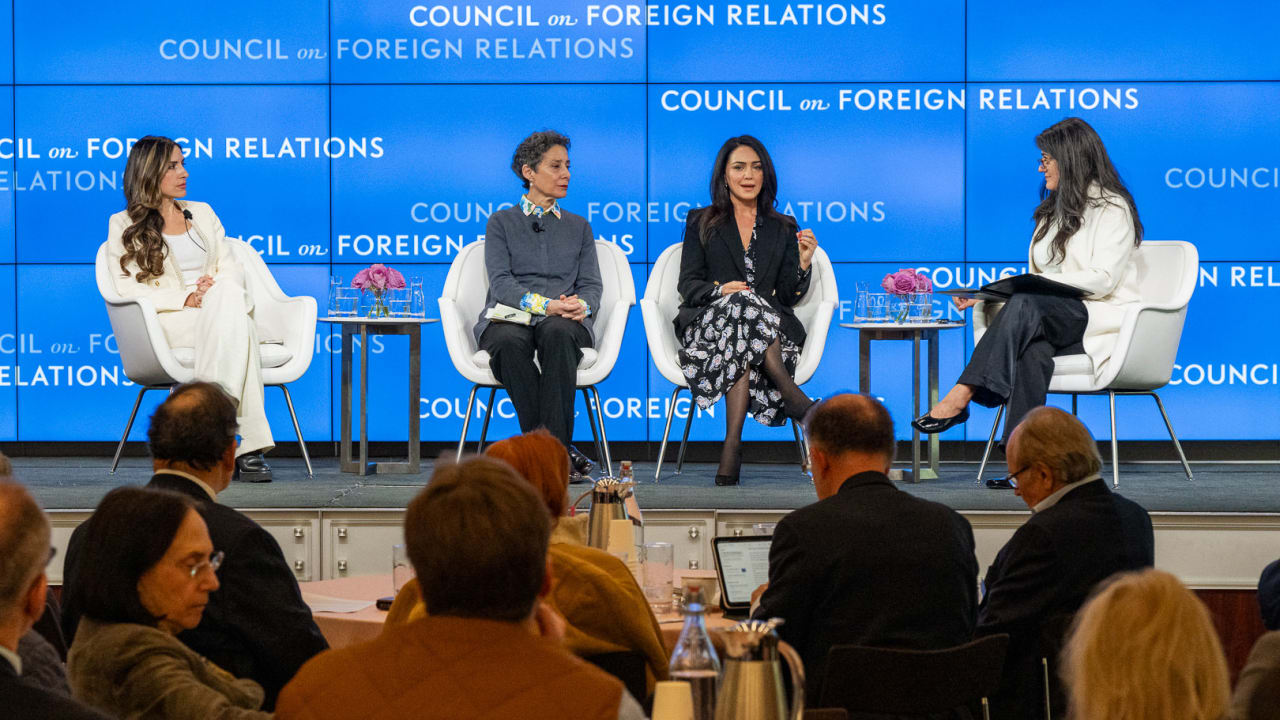
Event date
Speakers
- Ambassador, Amnesty International, UK; CFR Member
- Historian; Cofounder, Abdorrahman Boroumand Center for the Promotion of Human Rights and Democracy in Iran
- Director, Strategic Litigation Project, Atlantic Council; Member, Board of Directors, Iran Human Rights Documentation Center
Presider
- Senior Fellow for Middle East Studies, Council on Foreign Relations
Panelists discuss scenarios for the fate of the regime and of future governance inside of Iran; the risks to Iranians now as well as what may happen when the military campaign ends; and how Iranians, with international support, might pursue accountability and justice, and their political transition.
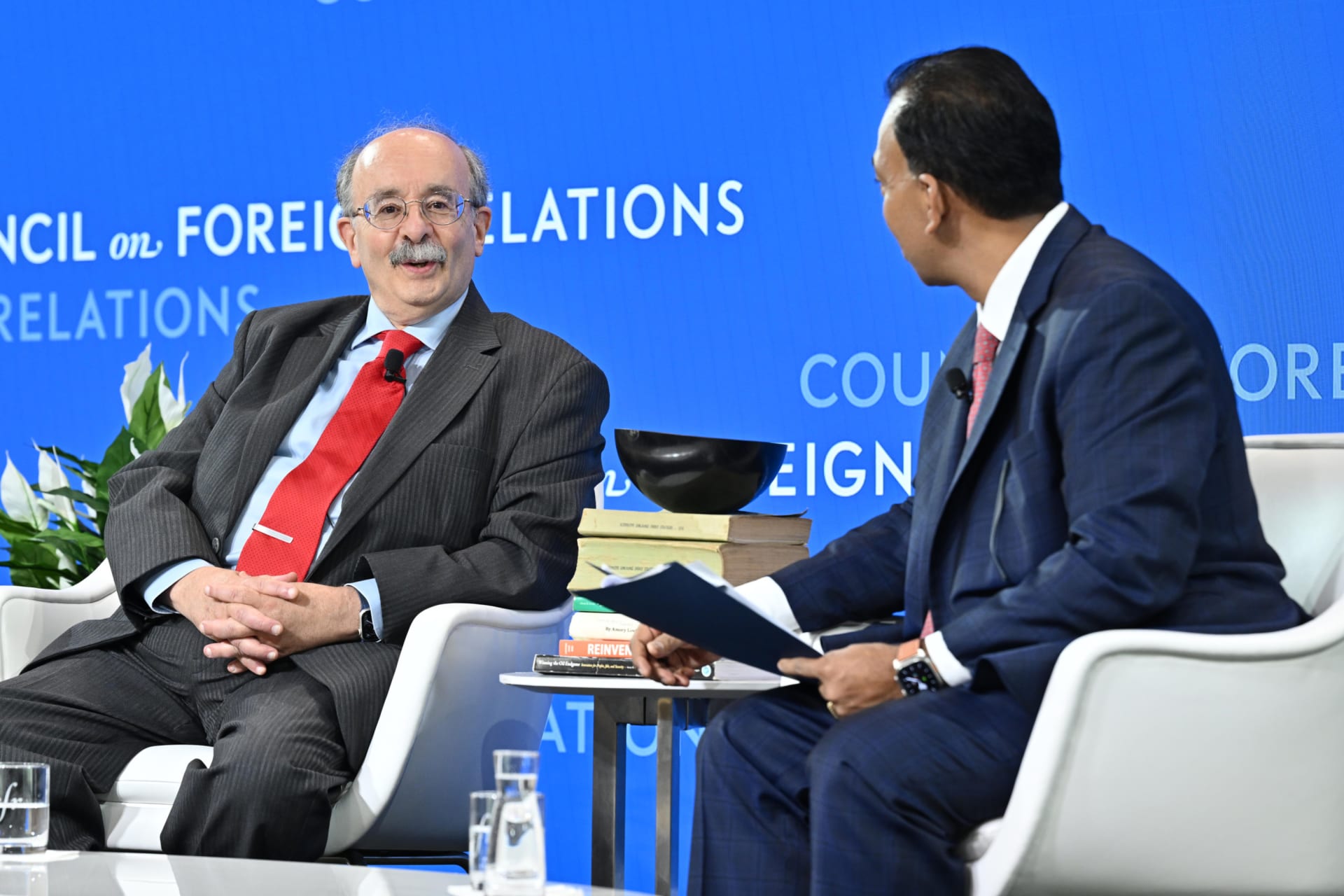
EWERS: Welcome, everyone. So we now have at least a two-week ceasefire, in what has been a six-week war between the United States and Iran. There’s been quite a bit of focus on those military operations and the fallout in the region of those operations, how what’s left of the regime has retaliated and responded, but there’s been less of a focus over the last six weeks on what’s happening inside of Iran with the Iranian people. And so our conversation today is an attempt to focus that discussion a little bit more. It is arguably why President Trump started this discussion about intervention back in December.
And so to help us focus on the internal situation and on the perpetual issue of human rights in Iran, I’m very pleased to have this group of experts and scholars and friends on stage with me today: Nazanin Boniadi, a human rights activist, a CFR member, and also a Sydney Peace Prize Laureate; Ladan Boroumand, a historian and scholar, a cofounder of the Abdorrahman Boroumand Center for the Promotion of Human Rights and Democracy in Iran; and Gissou Nia, an international human rights lawyer and the director of the Strategic Litigation Project at the Atlantic Council.
So my first question is actually a question that I’d like each of you to answer briefly. There’s been an internet blackout since before the war started, and it continues. We don’t have a whole lot of information about what’s happening inside of Iran, and what we do have is anecdotal. And so I’d like to ask you all to give us a sense of what you do know, and maybe what the gaps are of what you know, about what’s happening inside of Iran right now. Gissou, can we start with you?
NIA: Yeah, sure. First of all, thank you for having me here to speak about these issues at such a critical time, and to hopefully fill the gap a bit on what Iranians inside the country want and what they’re asking for. The way that I have my information, first of all, we should note that we’re in the fortieth day of an internet shutdown in the country. According to NetBlocks, which is an internet watchdog that monitors shutdowns all over the world, this is the longest ever that a government has shut down the internet in a country. So this is the worst globally ever.
What this means is that our access is obviously a bit restricted. All of you can’t just hear and listen online to what Iranians are saying about how they feel about the situation because most of them can’t access the online world. The way that we do get our information is through activists that have Starlink terminals, and also through—if you’re clever with VPNs you can sometimes access. You have to be very tech savvy to do so. And then another primary way is people who speak to their friends and family in one- to two-minute phone calls and relay what their families are saying. Sometimes it’s a controlled and surveilled line, so it’s not always easy to be so candid about how you feel. But that’s another way that we can get information.
On my Instagram account, where there are—there used to be a lot of Iranians inside Iran talking to me in direct messages, it’s now their family in the diaspora who are sharing what they’ve been talking with their families about. What we can say is that initially people were very supportive of the military strikes, at least a very strong segment of the country was, as long as it went after regime officials and was targeted and precise. And they were also guided by looking at what the Trump administration did in Venezuela and how they captured Maduro. So they were thinking it would be something that would be very targeted to regime officials.
As threats to attack civilian infrastructure have increased, as there has been rhetoric from the president of the United States saying that they will essentially, you know, bring Iran to the Stone Age, some of them have gotten that information and it has really turned the tide of how they feel about this. They’re not clear on the goals. And they’re wondering if the regime will really be gone. So now we’re starting to see a bit of fear. And I think we all think that we really need to supercharge this effort to make sure that this regime does not stay in power, because that’s what all these people wanted and why they supported this, in a limited way, in the beginning.
EWERS: Ladan.
BOROUMAND: Well, to confirm what Gissou said, what we get from the Abdorrahman Boroumand Center’s contacts with victims, or people—witnesses that we are in touch with, again through the same channels, is that they were actually, as Gissou said, supportive of an intervention that would lessen the coercive power of the state. And as state violence and repression continued during the war, that was—their worry was that this war would be ending with leaving an injured regime taking its revenge against them. And I think this is very important to have in mind, that the Islamic regime has survived for a long time through a fierce war of narratives.
And the blockade of the internet is one of the major—this is the nuclear weapon in the war of narratives. And one of the—whatever we say is anecdotal, right? We cannot—there is no survey. There is—we just hear what people tell us. But I think one indicator that is not anecdotal is the shutdown of the internet. And it shows that the Islamic Republic doesn’t want Iranian public opinion to be known by the world. This is what I could add to what Gissou said.
EWERS: And I want to come back to this in just a moment. But, first, Nazanin, your answer to the question.
BONIADI: That’s exactly right. First of all, it’s good to be with you, my distinguished colleagues and friends, and all of you. Thanks for making the time to be with us today.
I want to echo what both Gissou and Ladan said. First of all, the last statewide state-imposed internet shutdown was Sudan in 2019. That was thirty-seven days. We’re at day forty. It’s likely to go on for a very long time. There are fears inside the country of it turning into a North Korea-type situation. And Ladan is absolutely right. You know, any government that views itself as legitimate does not need to shut down the internet and stop its population communicating with the outside world, particularly during a war. We know, anecdotally, that when people were reaching out to us and managed to contact us, I’ve had contact through, like Gissou said, a VPN—limited VPN and Starlink access, they have said that, you know, we support this intervention, is what they called it at the time, far more than the population inside the U.S.
In fact, it’s one of the only times I’ve seen in history that the population inside the country being bombed is, to some degree, more supportive of a military strike against them than the population of the country doing the bombing. And that should tell you everything. The regime did not want those voices to be heard in any way. Of course, we’ll get to what they wanted from this intervention. And, again, to give you a brief overview of sentiments shifting, in late January before the war the renowned human rights lawyer Nasrin Sotoudeh echoed the voices of people she was talking to inside the country. And she said that—and she actually called for humanitarian intervention and the responsibility to protect. And then there were reports right before the war started that Iranians were looking up to the skies, waiting for the U.S. to bomb, to kill the regime, to remove the regime.
And then the early days of the war, in late February people were, indeed, celebrating when Ali Khamenei was killed, and some of the heads of the regime were killed. And then started the mixture of despair and hope. One person told me, my children are afraid of the bombs. I’m afraid for their future if this regime remains in power. And going to today, after the bridge in Karaj fell and was struck, and then, of course, calls to send Iran to the Stone Age, et cetera, and ending Iranian civilization. Iranians, really the ones we were speaking to, at least I was speaking to, started to panic. This is not what they wanted. And now the sentiment is, you’ve left us with remnants of this regime that are vengeful and are likely going to retaliate in a horrific way.
EWERS: So we’re going to dig into that one as well in just a minute. But, Ladan, I want to start with you. You’re a historian. You’re a scholar. You have studied the Islamic Republic. What has history taught us about the nature of this regime? Especially now, in a pre-February 28 context, but also now that we’re looking at potentially a ceasefire for some period of time, negotiations with remnants of the regime. How do you see this in kind of a historical context?
BOROUMAND: Well, this regime, as I think everyone knows, is essentially an ideological regime. But what distinguishes it from other ideological regime, like the Soviet Union or Nazi Germany, is that their accountability for the ideology is not in this world. They are accountable to God. That makes them invulnerable, because you cannot—they cannot fail. They are killed. They are martyrs. They, they attack the seventh of October, they have victory. Now, today, they have victory. So you cannot ideologically defeat them in that—in that way.
And they have another advantage over liberal democracies or any other worldly regime, is that time is not of essence for them. For the American administration, time is always of essence. You have the midterm elections, you have the next elections, you have your public opinion. For this regime, which represents God on earth, the population is—it’s not their citizens. They are not representing the will of their people. They are represent—they are representing God and the people are their creation. So if the public opinion is against them, they suppress it, physically. Forty thousand people or several thousands of people in two days.
And in that way, in the confrontation, they have a lot of advantages that I think those who want to contain them, or even to help with regime change, must take into consideration. You cannot just dismiss that part of this regime, because military operation is just politics by other ways. Everybody knows that. And if you don’t have this politics and strategic understanding, and also really the philosophical understanding of this regime, you are playing with your arms and your military operation becomes the end of the game. And at the end of the day you are a loser because you have all these other constraints—time, accountability, public opinion, elections, economy, the stock market. Iran, on the scale—for governance, on the scale of is the low—is the bottom of the scale of good governance countries in the whole world. They don’t care. They are not here for good governance.
EWERS: So, Nazanin, Ladan talks about maybe the restraints or limitations of military intervention. After the protests and the killings of what we believe to be tens of thousands of Iranians, you and others talked about a humanitarian intervention. So I want to ask you, is what’s happened over the six weeks, you know what you believe Iranians envisioned? You talked a little bit about this in the opening, but I want you to go a little bit deeper. What, perhaps, has gone wrong? What is there still a chance to recover, from where we are today?
BONIADI: First, I want to—I want to echo what Ladan said, which is so important. This Islamic Republic regime has become very skilled at using democracy against itself, because they’re not accountable or representative—or accountable to or representative of their own population. And they fully understand that the U.S., any U.S. government, will have to respond and be accountable to their own population. So they’ve used that to their advantage in this moment. And while it seems like they’ve won militarily, they’ve definitely won the information and the propaganda narrative war.
So, and going back to the question that you just asked me, Elisa, the definition of success is interesting here, because the regime has basically won this by surviving. And the U.S. has lost this by not, basically, fulfilling the will of the—or, heeding the will of the Iranian people. Which was to end this with an accountable, representative government. And that’s what they wanted. That’s why they called for humanitarian intervention. When I was echoing the voices of people like Nasrin Sotoutdeh, Nobel Laureate Shirin Ebadi, and countless other Iranians who don’t want war. I don’t know of any Iranian who says “yay” to war. I mean, it’s, it’s, it’s a last resort for someone—for a people who have lived under forty-seven years of tyranny, because they understand that that war, anybody who’s—I mean, I always say it rings hollow when you say no to war, and you don’t immediately afterwards say “free Iran.” Because the war has been ongoing for forty-seven years by the regime against its own people.
When we talk about the 30,000 people killed in January, that is, by all estimates in modern history, the highest spasm of violence—state violence against its own people. And, truthfully, the international order has failed the Iranian people because, you know, its post-1945 order is based on the U.N. Charter. It prioritizes state sovereignty, but at the cost of the rights of individuals and human rights. So until that changes, of course people are going to call for some kind of intervention to stop that state violence. And that’s what they were talking about. They weren’t talking about hitting infrastructure or ending Iranian civilization.
Notably, the uprising in January was a nationalist uprising. They were holding the lion and sun flag. They were trying to reclaim their culture, their civilization, from a regime that had tried to replace Iranian national identity with an Islamist identity. And notably Ayatollah Ruhollah Khomeini, the founder of the Islamic Republic, had said in ’79, “patriotism is paganism.” He would sooner see Iran burned to the ground in the name—so that Islam survives. So that Islamism is what they were trying to oust, and bring back their own national identity. To say, you know, you want to end Iranian civilization and start hitting heritage sites is not what they were calling for.
EWERS: So, Gissou, Nazanin just said the international community has failed the Iranian people, who have for forty-seven years suffered this waging of war against them. How should we think about the international community’s role? What could we be doing that’s more aggressive? What should others be doing? What tools do we have when it comes to really looking at the support of the same aspirations that you’ve all spoken about to a certain degree. But help us understand the kind of the international dimension and the tools we have that we could employ?
NIA: Yeah. Well, there’s a lot. And there’s a lot that hasn’t been done. And I really question why it hasn’t. And I think a lot has to do with trade relations, money interests, and things like that. I’ll start with a very obvious example, which is that we’ve seen in recent days reports from the United Arab Emirates about cracking down on the money washers or the money changers that work to circumvent financial sanctions on the Islamic Republic. There are people that are connected to IRGC-linked entities that are based in Dubai and elsewhere in the UAE that change this money. And the UAE has just decided now to finally arrest these people and to crack down on these networks.
I wonder why that didn’t happen sooner. I know that the UAE has a tremendous amount of influence in this town as well. And so I think that’s a very fair question to present to UAE officials, because part of the sanctions, the financial sanctions that have been placed by the U.S. government for many years on the Islamic Republic, was intended to avoid kinetic approaches. It was intended to bring about regime behavior change in different ways. And obviously they can’t be effective if there are countries that are part of the international community and who are not rogue states, to my knowledge, who are actively helping them circumvent those sanctions for financial reasons.
We have different banks, like BNP Paribas, who obviously faced a financial sanction and potential criminal prosecution for this reason, deciding that it’s more lucrative to circumvent sanctions and have that be their business model, and then pay the fee later once they inevitably get caught and the U.S. Department of Justice or another judicial body puts a financial penalty on them, once they do a plea deal, right? So we see this happening a lot. And I would say that we have to understand that this problem is not going to go away. There are different interests that different governments have, whether it’s security or otherwise. What we can say for certain is that the Iranian people do not want this regime in power. That we know. That much we know.
And so whether it’s happening now or later, that’s going to be an inevitable consequence. And so I would really urge members of the international community to not try to preserve the status quo but really get creative for how to encourage defections from maybe not the senior-level officials—because, honestly, those guys are just lining up to be martyrs, as we know—(laughs)—but there’s a whole IRGC force that really is motivated by money. And how do we know that they’re motivated by money? They’re not only motivated by ideology and religion. They’re also very keen to line their pockets. They own many holdings also in the Western world.
We see that somebody like Mojtaba Khamenei, who may or may not be alive, I don’t know what the latest intelligent assessment is, but he is the new supreme leader. He has a multimillion-dollar—pound home in north London. This was something that Bloomberg uncovered in some investigative reporting. And he sought medical treatment in the U.K. for months. Why is that happening? I’ll note that the United Kingdom is the only country, to my knowledge, in the West, other than perhaps New Zealand, who has yet to proscribe the IRGC as a terrorist organization. Funny how that is lining up, right?
So these are the things that different countries, if they’re really serious about helping the Iranian people realize their goals, and if they’re not even serious about helping the Iranian people realize their goals but understand that that country is going to be unstable until this is sorted out, I would really encourage them to start to follow the money, really take this seriously, and not wait until the Islamic Republic is launching attacks on civilians and retaliatory strikes. That was the reason, obviously, that UAE decided to, you know, remove the residency permits of Iranian nationals and also crack down on these money washing networks. But really take that seriously. I don’t know how much time we have. There’s so much else to talk about.
EWERS: So I want to ask you a specific question for, like, one minute, because I am watching the time and it goes by very quickly. What do you think about especially multilateral tools with respect to accountability and justice? And what can be done now in—all three of you work in this space already—but when we think about kind of the multilateral dimension of this, are there things that should be increased more aggressively, supercharged in this period especially, when it comes to the question of accountability and justice for Iranians? Later at some point down the road, you can—if you take a minute, and in our last question, maybe? If Ladan or Nazanin want to also touch on that, they can.
NIA: Yes. Just super quickly. The Islamic Republic is not a member of the International Criminal Court. And, of course, the International Criminal Court has been hobbled somewhat by the sanctions on the chief prosecutor and different judges that the U.S. government has placed on it. But there’s also no regional criminal court, right? So what we’re really looking to is universal jurisdiction. It’s this idea that regardless of where a perpetrator is from, regardless of where the victims are from, and regardless of where the act occurred, that domestic courts can actually bring allegations of crimes against humanity, which the Islamic Republic of Iran is committing, and they can bring that in their domestic courts. I think many will be familiar with all the trials against Assad regime officials and others in the Syrian conflict that happened in Germany, German domestic courts, for example.
Not enough action has been taken there. So there have been multiple criminal complaints that have been submitted by Iran human rights organizations and justice organizations. We’ve had multiple Islamic Republic of Iran judges, officials responsible for crimes against humanity, who have gone into Germany for medical treatment, to escape corruption charges. Not a single one of these individuals had an arrest warrant issued for them, even though there was very firm evidence to do so. What countries can do now is open what is called structural investigations. That can happen in Sweden. That can happen in Canada. That can happen in France. That can happen in Germany. It looks at the structures of the Islamic Republic so that if an official is visiting it’s a much quicker turnaround on an arrest warrant because the information that would support that warrant has already been built out.
EWERS: So we have about four minutes before we start opening it up for questions. I want to ask a question that each of you get a chance to answer. You’re, all three, members of the Iranian diaspora community. We’ve talked about in a couple of different questions both—that the Iranian—the views of the Iranian people, it’s not monolithic. That also, I think, is a fair assessment to make of the diaspora community as well. But you play a critical role in our understanding, certainly the understanding of policymakers here in Washington. But you’re a step removed, as we all know, from what is actually the Iranian experience, especially in recent years. And so what I’d like each of you to think about and answer is, what role can the diaspora play in ensuring an optimal outcome for the Iranian people? What’s, perhaps, not helpful? And what could be more constructive? Ladan, why don’t we start with you?
BOROUMAND: Yes. That’s a difficult question, because the diaspora is also targeted by the Islamic Republic. Not only physically through transnational repression, but also through infiltration and sowing—you know, making groups fight each other against—as opposed to focus on how to get rid of the Islamic Republic. So the diaspora can do many things because it’s—right now is part of the—it has the levers of influencing public opinion in host countries. And one of the things that the diaspora could, in one voice, ask is for their government—host government to set up systems that counter the Islamic Republic transnational violence. This is very important. And coordinate with each other. Democracies should coordinate in fighting Islamic Republic terrorism, which is part of—integral part of its functioning. So if you fight this terrorism abroad, you are weakening this system anyways. That’s one point.
The other point, I think, which would be very self-critical, toppling the Islamic regime is very difficult. So instinctively, the diaspora is focusing on the after the overthrow of the regime. And they are fighting for what—the next regime. Whereas they should concentrate and focus how to overthrow this regime and work on that instead of—it’s as if de Gaulle was fighting with economists while he was in London. No. They coordinated their work together and they got rid and helped and allied themselves with British and American forces. That’s how we should do. But I think this is where the Islamic Republic’s infiltration campaign has been very efficient.
EWERS: Gissou.
NIA: I think in terms of this—the thing that’s really weighing on my mind, and I know the minds of many of us, is how to encourage pluralistic politics. So although—I mean, I agree we need to focus on what are the measures that are actually going to weaken the regime, there’s also more of an ability to foster creative thinking when the space is open. And I think different countries also have a role to play in this in terms of creating those spaces and encouraging more dynamic thinking that goes broader than any one person, any one personality, any one thing, to really encourage that. So that’s what I’m looking to.
EWERS: And Nazanin.
BONIADI: I mean, the regime has stayed in power for forty-seven years with a simple policy of divide and rule. Divide its opposition, divide you in the West, countries in the West, divide political parties. And, you know, when you—when we hold elections here, they inform those elections without any of us knowing. They pit left against right, Republicans against Democrats, Republicans against themselves, Democrats against themselves. It is ongoing. That is how they survive. It is a propaganda war that we are losing in the West. And so my call—I mean, if we take this moment right now as a potential failure of yet another attempt at humanitarian intervention—because that’s what they tried to call it—then that doesn’t set a great precedent for the future.
We need to set a positive precedent for humanitarian intervention. And part of that is not stripping away funding of institutions and groups that work to that end, day-in and day-out, like the Abdorrahman Boroumand Center, like the National Endowment for Democracy. And I think looking long term and strategically, we have to understand the people that are holding the regimes to account and documenting the abuses are extremely important, and the ones who are amplifying the voices of the dissidents, the same dissidents that the regime is trying to silence.
EWERS: Thirty minutes goes really quickly. There’s so much more to talk about. So we have thirty minutes to take questions, both from the audience and from those who are viewing online. I’ll just remind everyone that questions are on the record. And I would ask you to please keep your questions crisp. And, in fact, do ask a question. I know that there are microphones to be passed around, so if there are those who want to ask a question of our panelists? Yes. And please introduce yourself.
Q: Ariel Cohen, the Atlantic Council. Good to see colleagues from the Atlantic Council here.
I spent my life engaged in efforts to help the communist regime in the Soviet Union and Eastern Bloc out. I started in Radio Liberty/Radio Free Europe audience and opinion research in the ’80s. How do you see the emergence of the post-Islamic Republic coalition? What we see is the royalists. We see the shah people. We see the MEK. And we a little bit see, for the lack of better words, the regime liberals. But they don’t talk to each other. There’s no common platform, as far as I know. And also in that respect, to what extent do you see the Western governments helping, engaging with opposition, like we did with Solidarność in Poland? Like we did with the Soviet dissidents? And also, to what extent the regime change is even realistic if the regime is willing to murder as many thousands of Iranians as they do? The reason communism in Eastern Europe fell is because Gorbachev was not willing to murder so many people. Thank you.
EWERS: So three questions to choose from. Ladan, do you want—do you want to take the first one?
BOROUMAND: The first one would be?
EWERS: You may choose of the three questions, but take this set of questions. You’re the first—you’re the first panelist to answer, and then we’ll go on to the next one.
BOROUMAND: Well, you know, you mentioned in the—I would say maybe if the—if the Western governments do engage Iranians, no, not politically directly, as they did perhaps with the Russians, but they do—they have been doing it institutionally, the way they did with the civil society. There is some very not really fundamental engagement, but solidarity and support. That we exist is because Western government have been funding and also civil society, Western and democratic civil society, mainly also have supported us.
But I think one thing that you can—we can look in Iran which is different is that, yeah, we have MEK that is a cult, a small organization, very efficient, a little bit military, and has no supporter inside Iran. We have the crown prince, who has really some—has been called inside Iran by the public opinion. But I think we have—what is our richness is the civil society that made Women Life Freedom Movement happen. This is a huge potential we have. And I think we should work on giving it and helping it mature into political expression and political organization, being inclusive with all the other political forces that are there.
EWERS: Let’s take another one in the room and then we’ll go to online. Yes.
Q: Hi. Thanks very much. Chris Isham with CT Group. Nice to see you all.
Quick question. Which is, what more can be done by the West, by tech companies, by U.S. government agencies, by international organizations, to reverse the blockade of the internet internally in Iran? Are there—are there technical things that could be done? Are there more things that could be done to open that up? Thanks.
EWERS: Gissou, can I throw that one to you?
NIA: There’s quite a lot that can be done. But one pressing thing that much of Iranian civil society has been calling for is to enable Direct to Cell technology. I’m sure some folks in the room have already heard of this, but it’s essentially the idea that if you have a smartphone that’s made after 2020 you can link—which most Iranians have, by the way—you can link up into satellites that are flying overhead and you will get access to the web. And you will have online connectivity. But it requires a humanitarian investment. So the data that’s used costs money. And so it shouldn’t be—it really would require a government to try to fund that. There’s been ongoing conversations with a few different governments about this, by the way. Or it could also require Starlink or Apple to actually enable the technology.
One of the issues is around sovereignty. Typically, you have to ask the local carriers to accept that. That’s how it was enabled in Ukraine. But you can imagine that Ukrainian local carriers would say yes, whereas carriers that are controlled by the Islamic Republic, which is shutting down the internet, is not going to say yes. I would argue that we haven’t exactly respected sovereignty in many other ways lately. So I think that when it comes to this, that shouldn’t be a blocker. And Internet is a basic human right, as we know and as the United Nations has said over the past decade. So that’s part of the solution.
I will flag one thing, is that there is a meeting of the ITU, which, of course, is the agency that deals with looking at broadband, at spectrum ranges, that a lot of these questions that are wrapped up in whether or not this technology can be enabled. And there’s a meeting in Shanghai in November 2027. And there are twelve countries that really would have a say on whether or not, you know, this can be allowed. And there’s obviously some countries that wouldn’t want it, for all the reasons that you can imagine. So I think Western nations have to decide are they OK with enabling this? Or any nations that are open to free expression. And really push for that to be allowed, so that no one over the—all over the world, not only in Iran but all the other places that are experiencing internet shutdowns, so that they don’t face those challenges moving forward.
EWERS: Let’s go online for the next question.
OPERATOR: We will take our next question from Sharon Nazarian.
Q: Thank you. Sharon Nazarian from the Nazarian Family Foundation.
I’d like to commend your panelists for really offering critical analysis that we have not heard in other places. So, first of all, thanks to all three of them. My question is really about if this regime survives. One of the concerns I’ve been hearing is the worry about a massive refugee problem that could arise if the people of Iran feel that this regime is not going anywhere, is bloodthirsty, and it’s going to take revenge. Have you all heard about that? Is that a concern you share? Thank you.
EWERS: Nazanin.
BONIADI: Yes. Thank you for that question, Sharon. I actually got a message from a very prominent dissident, who herself has been—was imprisoned by this regime. Used to be a reformist, is now a supporter of the crown prince. And she said—she said basically that if this regime is not toppled at the end of this campaign, or this intervention, there will be a mass exodus of people, particularly to Europe, obviously, because we’re not taking people. But she said that if people aren’t leaving now it’s because there’s hope that democracy may prevail, that everything that we fought for with our lives may actually come to fruition with this military campaign.
So my biggest fear is that that’s going to come true. If there’s—if this regime stays in power, they’re already going on an execution binge. And last year was the highest number of execution, 2,066 according to the Abdorrahman Boroumand Center—and, full disclosure, I’m also a board member. (Laughs.) But they—you know, 2,066 is the highest number in thirty years in Iran. But I also want to be clear that Iran has the highest per capita state execution in the world for the past several years. And so that is already likely to be surpassed by a large number this year. And we are very afraid for that outcome.
EWERS: Thank you for that question. Can we take another one from the online audience?
OPERATOR: We will take our next question from Fred Hochberg.
Q: Thank you. This has been very helpful. But listening to this it seems that perhaps this whole war was a mistake, that we are not going to be able to affect the change. Listening to the four of you, we have a theocratic government there that is not subject to the normal kind of influences, as you mentioned, from voters, elections, markets. So this is a pretty bleak assessment. So am I wrong in thinking perhaps this was not something we were ever going to be able to accomplish?
EWERS: Ladan, why don’t we just start? And then if either of you want to add on.
BOROUMAND: Yes, it’s bleak and it’s not bleak. Because I think what Gissou said that should be done should have been done to make the nonmilitary pressure on Iran real and efficient, has never been done. So this can be done. And I’m sure one of the reasons that the Islamic Republic survives, it’s because it’s sitting on oil well and has the money, income coming from the oil. And that makes it, to some extent, autonomous from its civil society. This regime doesn’t need so much its civil society—its society. It has the income of the oil. It can has—it has an army that it pays with its oil. So if this oil income is not getting to this regime, it can—first of all, it will start reform, opening up, and then it will disappear. So this is the real challenge.
It’s easy to go and bomb a country. And it could—it could have been efficient or successful if it were done within the framework of a political strategy. And that has not been done. For instance, I was listening to somebody talking about a potential defector from the Revolutionary Guards. They were saying, OK, we want to defect. Where should we go? How should we protect our families? There is nothing about that. And we talk about defection. Oh, there has been no defection. Of course there has been no defection, because there has been no place indicated where they could go. There is no strategy taught. And these are difficult issues that must be taught and organized within the framework of a potential military action. And this was completely absent of this operation—this military operation.
EWERS: I’d like to give both of you a chance to add your view to this.
BONIADI: I mean, I want to agree and say that incentivizing defections, I know that Gissou and I have talked about this and I’m sure she has more to say about it, is hugely important. This is a regime, unlike the former—the shah’s time, where officials were sent abroad and they had Western educations and they had a soft landing, they could leave and go to various countries, they knew the language, these are people who are extremely, you know, provincial, in many ways. And so they don’t have—they don’t know where to go, they don’t know where they might defect to. And I’m not talking about the top tier of this regime, who must unequivocally be held accountable for crimes against humanity. I’m talking about the mid-tier, who don’t have blood on their hands, who possibly could topple the regime—help topple the regime. We’re looking for this—the fractures within the regime. We have to ensure that we have the political savvy and know-how to basically help that happen. And I’ll hand it over to Gissou.
NIA: Well, if the New York Times reporting yesterday on what happened in the Situation Room is correct, I don’t think regime change was actually President Trump’s stated objective. So to the—to the question asked, it seems that he said either Israel could handle that or the Iranian people could handle that. And I would say that the Iranian people should handle it, with the help and assistance of the international community. And so on the question of defections, I really want us to get—and by “us,” I mean the world—to get creative about what could happen here. It could be a public-private partnership. Some of the ability to be able to pay some of the lower-level people. So we just got this report saying that the Sepah Bank was disrupted, and IRGC folks were not getting paid on Sunday. That’s good. We want them to not be paid so that there could be a different, higher bidder that could perhaps encourage public defections.
A lot of this will come at a big price, but if there are thousands of people doing it the cost to each individual is less, it’ll be much more difficult to try to, you know, punish them, from the regime’s perspective. And so much of this is psychological. Part of it is money. Part of it is psychological. But I do not think that many of these individuals are so beholden to their ideology that they’re ready to die for it. Honestly, they’re trying to provide for their families sometimes. So if there’s a way to get them to move in a different direction, maybe there are some countries that are willing to figure out a framework. Maybe they wouldn’t be coming here, but maybe they’d be going elsewhere. We’ve obviously seen different examples of deradicalization camps that are set up in different countries to take prisoners from Guantanamo and any number of other things. I think we need to really think creatively and outside of the box because Iran sits at the center of so much geostrategic concern. Let’s try to transition Iran to a democracy.
BONIADI: And I just want to add one more thing, which is I want to debunk the idea that that this campaign has caused a rally around the flag effect in Iran. It has not. It has entrenched the regime, in many ways. But, you know, what you’re seeing in those images are designed. Those are regime supporters. It’s undeniable that they have—still have 10 to 15 percent of support in Iran, which has likely been entrenched by this campaign. Those images are meant for you. They’re being sent to you by the regime. The only people who have access to internet, by the way, are regime officials, because they want to further and push their narrative with all of you, with all of us. And that is, look, we have all this support.
What has happened is people have rallied on the soil of Iran around their national identity. But that is not the same as rallying around the Islamic Republic or its flag. And I want to also point out that they’re bringing in militia, terrorists from Pakistan, from Iraq, to crack down on the Iranian people. That should tell us something. That should tell us that there are likely less people inside the country who are willingly going to accept cracking down on fellow Iranians. So I don’t think it’s been a complete failure in decapitating the regime, weakening the regime. It’s just that, as Ladan said, we haven’t had the full scope of multilayered approach to finish the job. Which is maybe not saying end Iranian civilization. Instead of that, maybe targeting strategically and having a plan in place to incentivize defections, to fracture the regime, and to empower the people.
EWERS: Let’s come back to the room. Yes, please.
Q: Thank you. Toby Gati. I served in the Clinton administration.
I have two questions. The first is the threats that are being made against Iran and against Islam in general. You know, in one sense maybe it’s good the Iranians can’t hear them, but the rest of the Muslim world can. And what’s being said by the United States is very detrimental to what you want to do and to what other people want to do in terms of support for movements in the region. So my question is, do you see that as a problem as you move forward? And will people rely on the United States after such statements were made about Iran, that it couldn’t be applied to them? And the second one, what is the view of Israel in all of it this? I haven’t heard people talk about it, but there was a point when Iran and Israel had very good relations, before the regime. But now the situation may be very different, once the Iranians get the kind of information about Lebanon, or the West Bank, or whatever, that others have. So can you comment on those two points?
EWERS: Ladan, do you want to start?
BOROUMAND: I didn’t hear the beginning of the question.
EWERS: So the first—the first part of the question was comments coming out of the United States focused on Islam in particular, and what effect that may have inside of Iran, if they’re hearing it—
BOROUMAND: Negative comments?
EWERS: Negative comments, yes.
BOROUMAND: OK. You know, Iran is the country in which the rate of Christianization is the highest in the world. So it should be known that people are turning away from Islam because they are seeing no alternative to political Islam, that is killing them by the thousands in two days. And this has been ongoing since 2009. People are returning to Zoroastrianism. They are—we never had atheism. Now surveys show 6 percent of atheists in Iran. It was—when I was growing up nobody would—I didn’t even—I hadn’t even heard the word “atheism,” and “agnosticism,” and all of that. So I don’t think that insulting Islam would be Iranian—a majority of the Iranian people would take umbrage, because they are doing it every day themselves. So that’s for the religion. So that would not have a problem.
Now, for Israel, if you want, you know, Iranians—there are many people who are—who were for Israel in general, and because the Israelis have, you know, infiltrated the regime. They are not—I think probably, I don’t want to say because we need really serious survey, but I think in the Middle East, it must be the least—the less anti-Israeli population in the Middle East. But just is a hypothesis. I don’t want to say more.
EWERS: Nazanin.
BONIADI: I think we have to be careful, because, you know, when we talk about—this is a country that has—the Islamic Republic has killed more Iranians than any outside force. And when we’re talking—I’m talking about civilians, civilian casualties. Of course, there was the Iran-Iraq War, and we had countless civilians then, of military on both sides. The civilian casualties over eight years, as far as I know, is 60,000. And that’s nothing—that’s not a small number, on both sides, Iraqi and Iranian. Over eight years. We just saw thirty—was it six hundred—no, I’m talking about civilian casualties. Sorry. So civilian casualties were, over the course of eight years on both sides, was approximately 60,000.
And so when you talk about 30,000 Iranians killed in the course of forty-eight hours by the Islamic Republic, you can imagine the backlash to religion and to theocratic rule that that creates inside a country. And when you’re—when I’ve talked to Emiratis and the Gulf state—members of the Gulf state, they tell me that they want this regime gone too. So whatever rhetoric is coming out of D.C., I agree it should be more targeted against Islamism and not Islam as a whole, but I think the primary culprit here of who has created that backlash and Islamophobia, if you will, is the Islamic Republic of Iran.
EWERS: Let’s go to—I think we’ll have room—maybe time for two more questions. So yes, please.
Q: Thank you. Hi. I’m Matt Aks with Evercore.
Do you see the evidence that the war has damaged the regime’s ability to control and repress internally? And what is your assessment of the state of the regime as it stands today? Thanks.
EWERS: I think you each should comment on that. Gissou, why don’t we start with you? Maybe a quick response from Ladan and Nazanin.
NIA: I mean, one of the interesting things is that the Islamic Republic of Iran’s Foreign Minister Araghchi, a few weeks ago essentially said that they don’t have centralized command and control at this point. And that was because, I think, after the twelve day war in June they decided, well, we’re going to have to decentralize this because our guys might be dead. And so who would be giving the orders, right? And even after the ceasefire was announced, and then we saw that there were, you know, missiles flying from the Islamic Republic, it’s, like, honestly, I’m not even sure if this is all in a centralized chain and command, because they’re just kind of acting independently at this point.
Which is convenient for his, you know, escaping liability for war crimes. But I think there is a bit of truth to that, from what we’re seeing. And so that should give a suggestion as to how much the forces in the more senior levels have been depleted. We obviously know it’s not only the supreme leader who was killed, but many others. And I will say that during the twelve-day war, for example, in a list of perpetrators that, you know, we regularly draft and look at to see who’s responsible for human rights violations and atrocity crimes, one-third of that list had been killed by Israel in that twelve-day war. And those were senior-level officials in intelligence, military, police. So that should be an indication of just how deep that goes.
EWERS: Ladan, Nazanin?
BOROUMAND: Nazanin, go ahead.
EWERS: No? All right. One last question from the audience. No? All right. Then I will ask the last question and give you each chance to answer it.
So here we are in a ceasefire, anticipating the beginning of negotiations or the continuation of negotiations this weekend on a broader framework for potentially, I think, resolving any number of issues with the Islamic Republic as regime. If you had the opportunity to, in two minutes, say what you think should be the focus, or what things should we avoid in these negotiations, what kind of advice would you offer? Gissou, why don’t you start? We’ll just go down the line.
NIA: That even if regime change wasn’t one of the objectives originally of this, that it absolutely should be now. Because the problem will just be in a status quo. You know, the world will find itself in the same place a few years from now. And all the security concerns that they think have been allayed or alleviated for the present won’t be in a few years. But what will have happened is many more Iranians will have died from the repression of this regime. Iranians will still be struggling for freedom. And there are so many ways that are non-kinetic that have not been explored to really close that gap and help usher in this transition. So that’s what I would say.
EWERS: So, Ladan, Nazanin, I’m going to press you to try and say something different than what Gissou has said, just to give us as broad a perspective as possible. Ladan.
BOROUMAND: Yes. I think the dismantling of the coercive apparatus of the regime should be the—even if not explicitly said, it would—it should be part of the negotiation, so that the population inside Iran could start, reemerge, and organize. Because we have seen this population being extremely inventive and creative. Civil society—Iranian civil society has been really very active over the last three decades. So whatever is required, even to pressure a little bit to open the space for this society to be able to organize and express itself, would be strategically important.
And another point that I would tell policymakers right now, even if people are not fleeing repression in Iran, you should—we should—with this type of governance, we should expect mass movement of population, both inside Iran for water, for a lot of other issues, bad governance, and also immigration towards other countries which could destabilize the regime. So it’s not that if they don’t have the atomic bomb or the nuclear issue is settled that Iran as itself a ticking bomb will disappear. That’s a very important point to have in mind.
EWERS: Thank you. Nazanin.
BONIADI: I would just prioritize internet access, the freedom of political prisoners, and, as Ladan, said, opening up the civil space so that people can self-determine. If the Iranian people are neglected yet again, if their will and their voices are not heard yet again, this will be catastrophic, not just for them. We’ve poked the bear. There will be vengeance from this regime. It’s undeniable. That will happen, whether it’s, you know, measured in the short term, in the long term. They will go back to their normal ways. So ending this regime is not something that is just needed as a humanitarian intervention for the people of Iran. It is the only way to have peace in the region and stability in the world.
So I would just encourage all of you, and any anyone with any resources or power in decision making, to pressure this administration, and any other decisionmakers across the world. We need, for example, the U.K. to list—designate the IRGC as a terrorist organization. They are the outlier right now. And many other things that we can be doing to win the propaganda war, the information wars, which we have been losing, frankly, on college campuses and elsewhere. The narrative needs to shift to realize the humanity of the Iranian people, and not to neglect. For too long human rights has been a foreign policy soft topic. And I would just encourage you to please understand that without the human rights of the Iranian people being centered on any foreign policy approach vis-à-vis Iran, we will fail.
EWERS: On that note, I want to thank the three of you for spending an hour and talking through these very easy issues. It’s been a pleasure to have you. Thanks to our online audience and to all of you here. Hope to see you back at the Council soon.
(END)
This is an uncorrected transcript.