Term Member and Young Professionals Screening and Discussion of “Jean Monnet, Europe’s Adventurer”
Event date
Speakers
- Program Director, Institute for Global Affairs at Eurasia Group; CFR Term Member
- Cofounder and President, Institut Jean Monnet; Cowriter, Jean Monnet, Europe’s Adventurer
- Senior Fellow, Kleinman Center for Energy Policy, University of Pennsylvania; CFR Term Member
Presider
- Nonresident Senior Fellow, Atlantic Council; CFR Member
A special screening of the documentary Jean Monnet, the Adventurer of Europe, followed by a panel discussion on Monnet’s legacy and its relevance for international cooperation today.
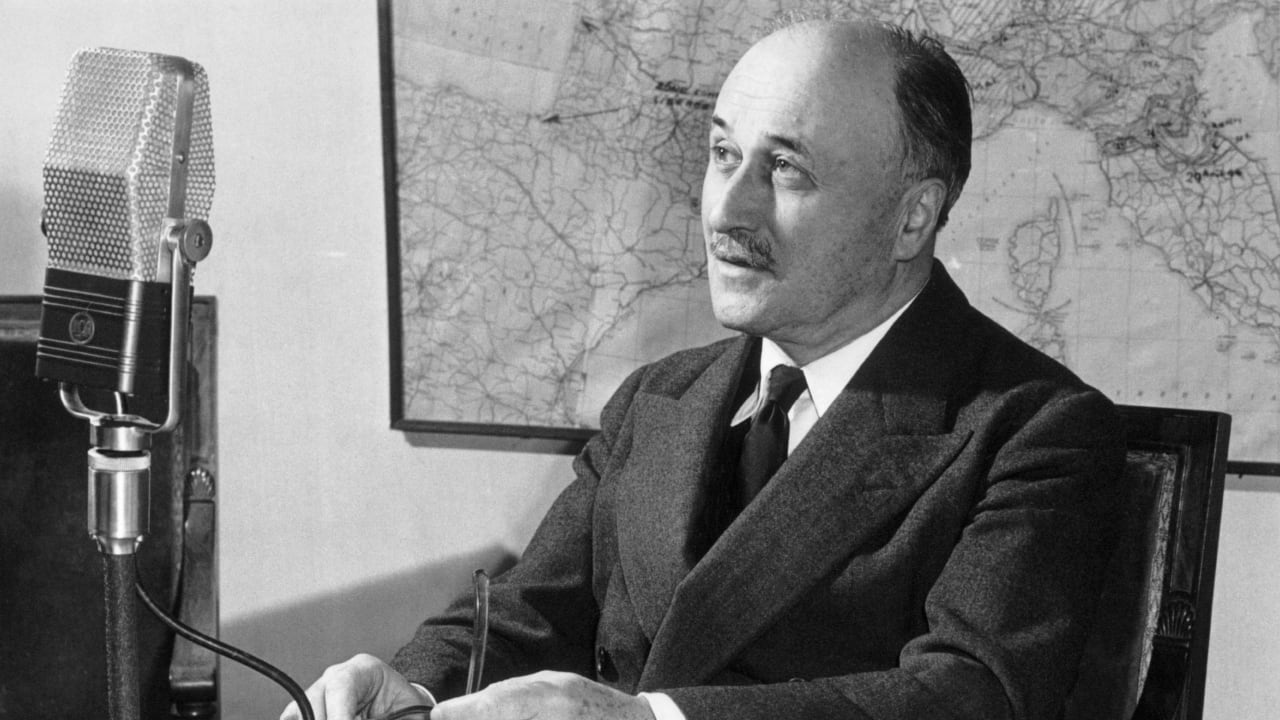
The film examines the astonishing life of Jean Monnet, a self-taught businessman who became a key architect of European integration and is often referred to as the “Father of Europe.” Built around unpublished archives and a rarely broadcast interview conducted shortly before his death, it explores Monnet’s role in coordinating Allied cooperation during the two world wars, advancing postwar European unity, and strengthening transatlantic ties. Monnet’s life and work offer insight into the development of international institutions and collective action in the twentieth century.
FULCO: Good evening, everyone. Thank you so much for joining us tonight for this special screening and discussion of Jean Monnet, Europe’s Adventurer. I’m so pleased to welcome all of you here this evening for this wonderful event. My name is Meaghan Fulco. And I’m the associate vice president of meetings in the Stephen M. Kellen Term Member Program here at the Council.
For those of you who’ve never joined us before this evening, CFR is an independent, nonpartisan membership organization, think tank, and publisher. On our newly redesigned website you’ll find links to past events, reports, podcasts, and analysis from our fellows. CFR aims to be a resource for its members and for the public to provide information and timely analysis on U.S. foreign policy. I encourage you all to look at the site at your convenience as there’s no shortage of real-time foreign policy topics to discuss.
But tonight we’ll journey a bit into the past and take an in-depth look at the life, career, and legacy of one of the founding fathers of the European Union, Jean Monnet. To do that, we’re incredibly lucky to be joined by Jean-Marc Lieberherr Monnet. Jean-Marc is the cofounder of the Jean Monnet Institute, which he established in 1921 to promote the legacy, vision, and philosophy of action of his grandfather, Jean Monnet. Before turning it over to Jean-Marc to introduce this terrific film, I would ask all of you to please take a quick moment to silence your cellphones and electronic devices and note that the discussion that will follow will be on the record. With the housekeeping out of the way, thank you all again for joining us on this beautiful spring-like evening that we’ve been waiting for. (Laughs.) And I’m now happy to invite Jean-Marc up to the podium to say a few words to introduce our film. (Applause.)
MONNET: Thanks a lot. And thanks for having me. Hi, everyone. I hope you’re enjoying your meal. I’ve just found out in a little room over there how tough it is to actually be where you are, how tough it is to be in the Term Program. So I’m really impressed with the audience here.
So as was said earlier, my name is Jean-Marc Lieberherr Monnet. I’m one of the four grandkids of Jean Monnet. And I created the institute in 2021, after a career in in business. So I’m not a specialist in European affairs or geopolitics. I spent fifteen years running diamond mines, and before that I worked for LVMH and Unilever. And so I’m really new to that world. But in 2021 I thought that it was time for me to focus my energy and efforts behind putting my grandfather’s legacy to work. I believe that we’re in a stage in history that’s not unlike those in which he played a critical role coming up with new solutions and new forms of organizations, new ideas. And I thought that we should try to get inspiration and ideas from his vision and his action. Which is why, essentially, I created the Jean Monnet Institute, to put Monnet back to work. Sorry for—that’s really the way that I like to put it.
And that’s really what it is. It’s not some kind of hagiographic or memorial institute to the glory of the great man. It’s really, how can we make him useful today? To make him useful, we’ve got to create the tools to make sure that people understand what he did and how he did it. And that’s why we created this film back in in 2024. And it’s not to tell the story of a man, again, but it’s more to try to explain how he acted, how he built his vision, that led to the construction of the European Union. And try to identify a number of key drivers that can be of use today, while telling the story of a man. Because the European integration adventure is a human adventure. There are men and women at the origin. It’s not some kind of institutional construction. And so to understand the true nature and the fundamental spirit of that extraordinary adventure that we’re still in the middle of, you know, what better way to do it than to tell the story of one of its key architects from the human side of it, which is why we created this film.
So I’m very happy to be here. Looking forward to exchanging with my fellow panelists and with you on the relevance and the lessons for today of my grandfather’s life. And I hope you enjoy the film. Thanks a lot.
(Jean Monnet, Europe’s Adventurer was shown.)
PISAR: Hi, everyone. Still here. Wow. How is the movie? (Applause.)
MONNET: Yeah? Thank you.
PISAR: The Oscars are coming up, what do we think? (Laughter.) Nominate it? You have to say yes, right? (Laughter.) Oui? Yeah, and how was it watching a movie—I’m sorry. I’m going to start asking them some questions because they’ve been listening for so long. How was it watching a movie in a foreign language with subtitles? That OK? Huh, what? Right, OK. All right.
So we have here Jean-Marc, who is the grandson of the great man, my friend Rudina, and my friend Benjamin for a little discussion. So it is now—how much—CFR, our how much time do we have? Thirty minutes? OK. It’s kind of cool to be on this side of the fence, but having been on that side I know that we have to respect all this.
Jean-Marc, tell us a little bit about the movie. How did this happen? How did it come together? How did you get this footage of your grandmother? All of it, what was the making of?
MONNET: Yeah. Actually, it was luck. We were doing some housekeeping in our country house. And I found this box full of old films. I had no idea what they were. All I could say is that they were fairly old. So we’ve got a foundation in Switzerland that looks after my grandfather’s archives. And I gave them the films and said, can you digitize all this, put it into? And they sent us the files and it was just extraordinary. There were things from 1934-1935. So the picture—the movie, in which you see my grandmother in her swimming trunk, remember, swimming, smoking, and drinking, that’s Capri 1934, to give you an idea.
When we see the little girl walking in the room, that’s my mother in 1941 in Foxhall Road in Washington, when they—you know now, they were there for the Victory Program. So we decided that we needed to do something with that. And someone came to me exactly the same time to say, why don’t we make a movie about your grandfather? That’s an important moment to do it. There are lots of stories to tell and it’s very relevant. And so it’s just a coincidence I got some new things to put in it to bring it to life. And we decided to make the movie.
And I co-wrote it with the biographer of Monnet, a guy called Éric Roussel, who is also becoming the biographer of Macron, our president—is writing his biography right now. But he’s got no idea how it’s going to end. (Laughter.)
PISAR: And you even have a cameo in this film.
MONNET: Sorry?
PISAR: You even have a cameo appearance in this film in one of these—
MONNET: Yes. So, anyone can say where I appear in the movie? I got a little prize for those who can. I should have said it before so you could have watched. Anyone can say? Yes. Sorry?
Q: (Off mic.)
MONNET: Yes. So this is for you. (Laughter.) I don’t know if anyone else has heard. Come on, you’ve heard, no. See, there is no shame in just raising your hand and say, you’re looking through the window. Yeah, I think you said it. Yeah. So, OK, one book for each. (Applause.) Yeah, so it’s—well done.
PISAR: Jean-Marc, how did he do it? We were talking about this earlier. Where did it come from? The cognac salesman, you know, who could have—who could have lived a quiet life in the vines, minding his own business, where did this passion, this necessity, this this fire?
MONNET: Well, it’s really hard to say. And, you know, many people have asked themselves this question, how did this young, self-taught, cognac merchant with no education, no name, no connection, manage to have such an impact on so many occasions? And, well, it starts from something inside, right? It starts from a calling. He had this conviction that collective action, union amongst men was essential to build the conditions for peace and prosperity. And he had that confidence that he could do something about it. So what made him think, when he was twenty-five years old in 1914, that he could meet the French premier and convince him to make the French and the British work together and procure what was needed for the war jointly? I got no idea, other than just the calling of necessity and a confidence—an incredible self-confidence in his ability to do something about it. I think it’s conviction, at the end of the day. Just very deep, very strong, very solid conviction is the key driver.
When he was asked, you know, what’s the mystery about all this? He used to say—he didn’t like that question. He was always answering, believe me, there is no mystery. It’s all hard work and a lot of trouble. But there’s a lot of conviction, a lot of determination. At the end, that’s probably the base.
PISAR: But it needs hard work.
MONNET: It is hard work. I mean, he started working when he was sixteen and he stopped working when he was eighty-eight. And at age sixty-five he says, my life only starts now. Everything till now has just been trial attempts, education.
PISAR: You also described him as a transgressor. What lessons can all of us draw from that?
MONNET: Yeah. I mean, he was a transgressor in the sense that he started with no preconception. He didn’t go to school. He didn’t read history books. He started everything from a white sheet of paper, was just the reality in front of him, and he built his convictions about what needed to be done by talking to everybody and coming up with solutions. But there was no sense of what should the conventional solution be. Whatever needed to be done had to be done. And if it meant that he had to transgress hierarchies, he had to come up with new ideas that no one had thought of, so be it.
So I think it’s someone who is not a system person. He was convinced that you don’t understand anything from inside. When you’re inside, you actually are there to manage the system. If you want to transform the system, you got to be outside and you got to shake it from outside. And you got to be a transgressor if you really want to—if you really want to transform things, and transform the reality, and change the course of events and the course of history. You’ve got to be a transgressor, and ready to take accept the consequences, which is never get elected, never hold public office, and always stay outside as a bit of a free agent.
PISAR: Now your purpose in all of this and in what you do, you explained this earlier, is not just to honor his memory, but to show his relevance and to try to draw applicable lessons. And so this is all very contemporary, right? It seems like ancient history to many of the people in this room, but tell us a little bit about the contemporary value.
MONNET: I like to talk about two key dimensions of my grandfather’s work. The first is the vision, that vision of union, the idea that union, peace, and shared prosperity is built through collective action. That is the strong belief that drives pretty much everything that he’s done. And that for this collective action to be durable and to perpetuate itself, it has to be done within the context of institutions. So that vision is at the very foundation of the European integration project, the idea of collective action to solve our common problems within the context of collectively accepted institutions is really what the vision. I think this vision is very relevant today. Some people would have us believe that it’s a vision of the past, that international institutions and the rule of law are not there to be respected. I think Monnet’s vision is precisely the opposite, that it is the foundation of civilization. And I think the European project has demonstrated that. I think that’s the first aspect, where I think it’s very contemporary, is very relevant, and I think it is an alternative narrative to the one that some are trying to push at the moment, which is very, very important for us to continue to convey.
The second aspect is the method. Here is someone who has managed to be at the origin of great transformations on several occasions. And if you look a little bit at how he did it, there are some constants in the method which I think are very relevant today. First, a very clearly expressed vision and conviction. The second is a method. And the method is not to think in general terms or act in general terms, but find the point to press on that’s going to put the whole system into motion. Coal and Steel in the case of European Coal and Steel Community. Of course, Coal and Steel is not everything, but that’s—by joining Coal and Steel that we’re going to change the context, psychological, the material, the legal context for European nations, and mostly French and Germans. So identifying the point, and then having the courage, and finding the person who’s got the political courage to push it forward. So there is a vision that’s very relevant. And I think there is a method that’s very relevant, and we need to revisit today as we are thinking about what the next big transformation will be in Europe, in particular.
PISAR: Which leads me to Rudina, to talk a little bit about Europe today. You have lived so much of this. And there are some very personal threads for you here. How do you receive it?
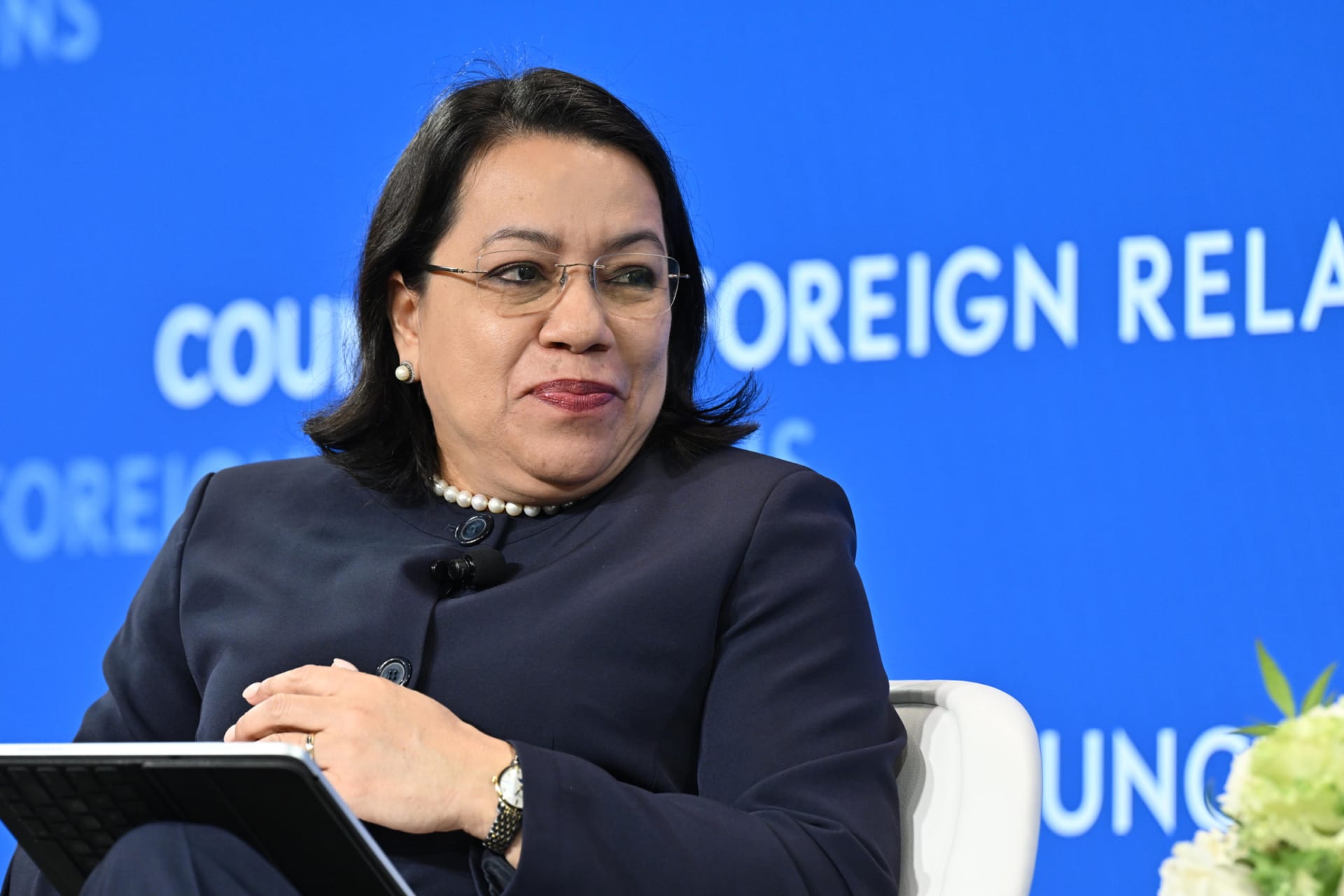
HAJDARI: I think that something that stuck out to me when I watched the documentary is when Monnet says that there’s two types of people, those that want to do something and those that want to be someone. And I think Monnet was definitely someone that wanted to do something. And I’d like to speak about him as someone that—he was an agent of change. And as an agent of change, I think he can give us many messages as young people. And I am someone who, as a child, I grew up with a family that fought communism.
PISAR: So you grew up in—you were born and you grew up in Albania.
HAJDARI: Yeah. Yeah. So—
PISAR: The last stronghold.
HAJDARI: So, as you can guess, maybe at the end of the 1980s, you can guess my age, at the end of it—at the tail end of it my father was someone who really fought for democracy in Albania. And he had that vision that Monnet had, which was making Albania part of the European Union. And so he fought so much that he had to give up his life. I mean, he was assassinated in 1998 for that vision. But Albania today, later on, when I became a member of parliament in 2017, coincidentally, I became the chairwoman of the integration committee. So I led some of the talks that Albania had to do in order to join the European Union.
And one thing that stuck out to me, even throughout that process, is that European countries within Europe, you know, did not fight as much to be in the European Union as much as the countries actually that are out of the European Union, or, like, knowing the values of being part of the European Union. And I think what’s interesting today as young people, I think we have forgotten the vision of Monnet, what it means to be a united Europe. And it’s not just about economic incentives. It’s also about human values in general.
And for me now, I see myself as being a bridge between living through that experience and someone that wants to continue that vision forward for Albania, but also for the wider Europe, where I feel that we need to save this vision. Because sometimes this kind of progress can be reversible. And it’s up to us to really decide what we’re going to do next, whether we’re going to salvage. And transatlantic relationships are not just—we can’t take that for granted. We have to renew those relationships. And if we don’t do anything about it, I feel like that process can be reversible.
PISAR: Benjamin. Your thing is energy security. And one of your great points of interest is how this Coal and Steel idea came to be, and what its implications were and are today. Tell us a little bit about that, and about how you see this dynamic as relevant today. What can we learn from this today for today’s challenges?
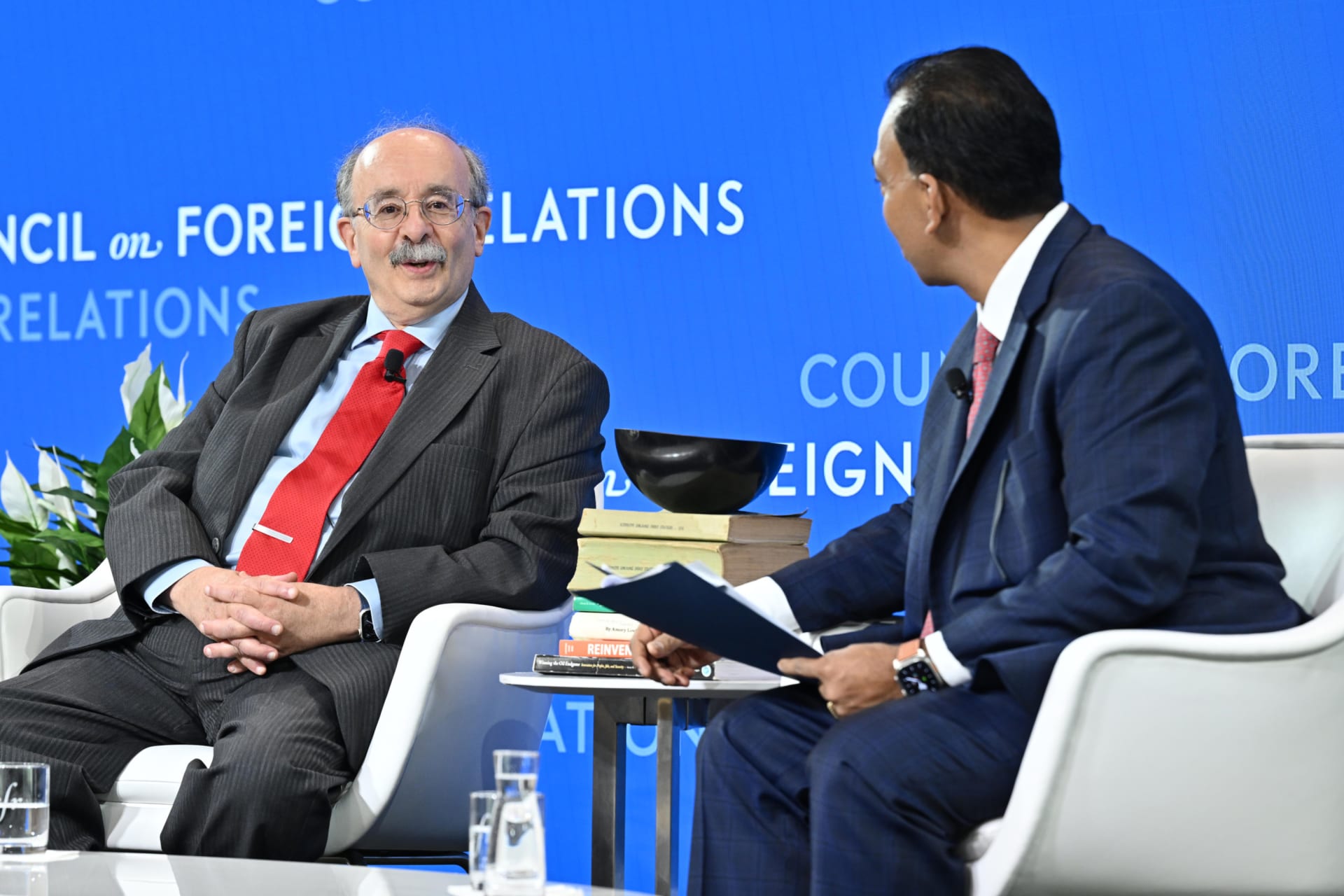
SCHMITT: Well, I mean, I think that, obviously, this documentary was fantastic in showing not only the historical antecedents that we can draw a lot of these sort of conclusions and lessons for today, but also to see that sort of evolution in Monnet’s strategy as he basically saw and experienced different parts of his career and traveling around the world. And one of the key elements I saw throughout the film and throughout the—you know, the nitty gritty of his life—which I knew about Monnet, but not all of these details, especially the rich early history of his life. You know, going to Shanghai and working with the Chinese on the need to build critical infrastructure, in that case rail. Earlier in his life going to the—you know, the wild west of Canada, and seeing the sort of boomtowns and rail infrastructure, and probably early electricity infrastructure that was needed.
Bringing all of that forward and then going through two world wars in which he was at the forefront of military procurement and military modernization, and basically preparing for both of these wars in order to win them. And it’s kind of—I said the Jean-Marc earlier today, I just thought it was fascinating that Monnet, kind of, if you pay attention, there’s a few points during World War I and then World War II, that are not the end of either of those conflicts, in which Monnet is already moving onto the future, right? Moving onto—it’s 1943, and he basically—OK, as I would say, you know, from a physics problem set, that the exercise is left to the reader, right? You know, the rest of this is, is done. So the second part of World War I and World War II, Monnet had already solved, and he was moving onto the next thing.
So that gets us beyond the Second World War and to basically using infrastructure, and his practical background both in international business and also understanding the needs of large-scale, modern, industrialized societies. And that’s where the Coal and Steel Community comes from, and then ultimately Euratom as well, seeing this, this energy angle and energy infrastructure angle is, as he says, to make war materially impossible between West Germany and France in the Benelux countries, going forward. And that was true. But it was also true only to an extent that he was doing this with partners like Konrad Adenauer and others that they were on the same trajectory in terms of values, you know, post-World War II. He wouldn’t have done this with the Nazis.
And, again, this is where we can look at the failed history of European external energy and infrastructure policy in which, you know, you have the German wandel durch handel, right, or change through trade, in which the idea is we’ll work with Putin’s Russia and try to make it more like us by building out infrastructure and increasing our reliance on their energy resources. And, of course, the opposite happened, right? And so, Jean,-Marc, you said that there was veritably zero chance that Monnet would have not seen Putin for what he is, which is a dictator that needed to be stood up to. So, again, bringing that true vision for how infrastructure, critical infrastructure, and shared cross-border energy infrastructure can be a part of European integration, and actually translate into tangible political success, I just think he’s a true visionary from that.
PISAR: Jean-Marc, what do you—how do you think he’d feel today? Would he be discouraged, as many of us are, or would he already be, as Benjamin was saying, one step ahead, and forging solutions, and thinking of something different?
MONNET: Well, he wouldn’t be discouraged because he was not the kind of man who would be discouraged. He used to say, I’m not optimistic, I’m undetermined. But maybe before I answer your question, just something around the Coal and Steel adventure. I think one of the core ideas behind taking Coal and Steel, it’s, of course, to make sure that, you know, war and industrial domination would not be possible, and even psychologically thinkable, between the enemies of the past. But it’s also to take the very object and the very tool of conflict between the two enemies and make it a common good managed for the benefit of all. And there is a constant in Monnet’s resolution, conflict resolution method, of focusing on the point of friction, the thing that hurts, the thing that divides, and precisely make this thing a link, something that brings together.
And I remember in Berlin with you a year ago I shared a page of Monnet’s memoirs in which he says, you know, the problem between the Arabs and the Israelis is probably not much more difficult to solve than the problem between the French and the Germans after three wars in eight years. And who could convince them to do something great with that point of conflict, that they share that land, to do something great with that land together, in the same way as the French and the Germans did something great with that toil and point of conflict that they shared with coal and steel in the Second World War. And I think it’s really interesting to understand Monnet’s method, that it’s very psychological. It’s all about creating the psychological context that’s going to make people behave in a different way, and make people look at each other in a very different way, because the context has changed. And that’s really what Coal and Steel tried to do.
The other aspect with Coal and Steel is obviously this whole idea of sharing sovereignty over a strategic resource. The idea that you actually change the psychology of the European nations by making shared sovereignty over a common resource, and therefore regaining together a capacity of action that they wouldn’t have on their own. So I think, to go back to your, you know, question on today, I think Monnet would probably say: Children—because that’s the way he was addressing his team who was always younger than him—he would say, you got to go back to the fundamentals. You got to think about—you got to—you got to share a common diagnostic about where you are and where you need to go, which we don’t have today in Europe. And if you can’t share it between all of you, the twenty-seven, then at least you form groups of people who do share a common diagnostic, who do share a common objective, and you move forward as is on some of the critical aspects of your national life that you can’t progress on your own. So I think you would—
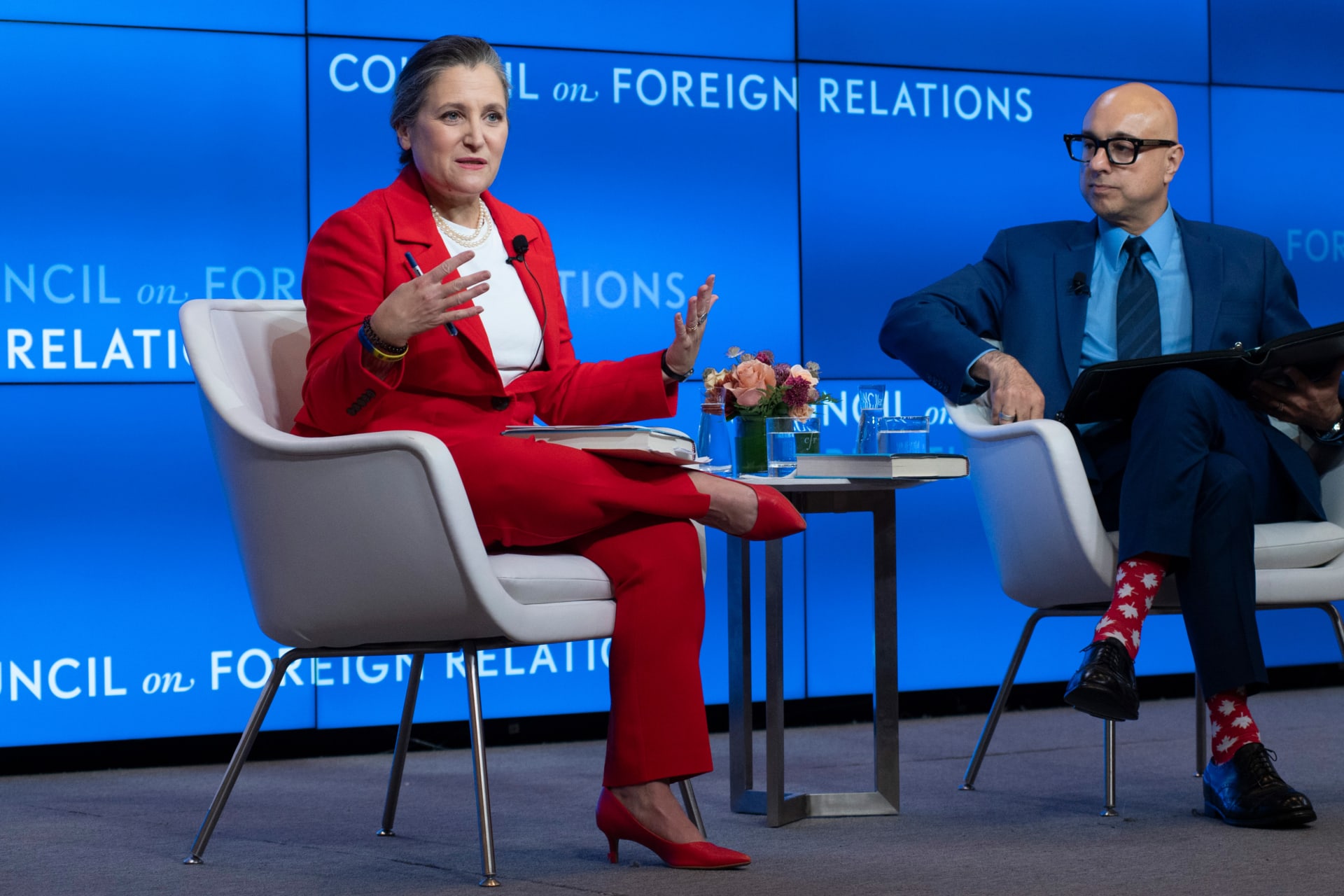
PISAR: So, to give a tangible example that we’re not going to get into but just to illustrate, we had a meeting over the summer with a number of European counterparts. And we thought about this. You led a brainstorming session, what would the issue be today? And this group—our group decided that AI would be the issue. And that if—and that if Monnet were here, that’s probably what he’d do.
And let’s give our audience—
MONNET: Our digital sovereignty.
PISAR: Digital sovereignty. That what it was?
MONNET: Well, the idea was, what’s the coal and steel of today, right? What’s the method? If we want Europe to move forward again, what’s going to be that lever today? What could be that lever today that would bring people together, that, you know, could neutralize a potential tool for domination and really seal our destinies? And we thought maybe digital sovereignty was it.
PISAR: Questions. If you can introduce yourself.
Q: Thank you. Is this on? Oh, great. Even better. My name is Eli (sp).
Thank you so much for being here. And it was really interesting to learn more about Jean Monnet. It seemed to me like there’s this tension on some level between—it’s talked about a little bit in the film—between, like, giving up sovereignty and integration. And I know that Jean Monnet, for instance, in the 1950s, was really concerned about NATO because he was worried that that would kind of stop. That, you know, the American efforts might undermine European will to integrate in the defense sphere. And we’re seeing, obviously, a lot of discussions today about European defense integration. It’s been longstanding. And I think we saw, you know, just recently when President Macron decided to kind of, you know, expand nuclear deterrence and kind of add a European dimension to that, the backlash that it got. And so, I guess my question, in the light of all of that, is do you think that there are people in the mold of Jean Monnet that you look across the European project, or more broadly, who both have the vision and the—you know, maybe the impetus to actually push that defense integration? Or do you think that that’s maybe a bridge too far for European states? Thank you.
MONNET: I can try to take that. There are two dimensions to defense integration. There is, you know, the industrial, the military kind of industrial capabilities, which is essentially what Monnet focused on during the two wars. You know, how can we make sure that we build joint capabilities, not competing against each other but procuring together, allocating resources in the best possible manner, and so on. So that’s one aspect. And clearly there are lots of efforts right now to try to make sure that, you know, we defragment the military industry in Europe, that we try to avoid duplication, that we spend together behind interoperable projects and so on. But it’s very complicated, and it’s very, very slow, and it’s very frustrating.
And information is not shared. So we talk about the balance sheet that Monnet was using to kind of drive that effort during the Victory Program and the First World War. Today, we’re struggling to build these balance sheets in Europe because we’ve got twenty-seven nations, they don’t share information, the military—the national industries are overprotected by the various governments. And we’re really struggling with that. But it’s making some moves. And, obviously, French and Germans find it difficult to agree on some pretty basic cooperation things. So that’s one dimension. And you can progress that without really involving political kind of sovereignty discussions.
The second aspect is one of a European Army, and the idea of a common defense and the European Army. And as you’ve seen in the film, in European defense community really kind of failed, mostly because there was no political union. And to have a single army or common army you need to have political union, otherwise, you know, who makes decisions for it? And I think that is really one step. I mean, today Europeans are not ready to even discuss, I think, the concept of European army. And what really needs to be focused on right now is the idea of common capabilities, optimize common capabilities where we don’t have twenty-seven different information system, thirty-two different tank programs, when the U.S. have only five, but trying to harmonize all this so that we defragment and we optimize. I think that’s really what people are really looking at doing now.
PISAR: Rudina, you work a lot with young politicians. Do you see a vision there? Do you see a new vision, project coming out? Is there—is—
HAJDARI: Well—
PISAR: Where’s the hope for the future?
HAJDARI: I want to add maybe something to the question, because I feel that when it comes to NATO versus EU, from the outside perspective, when you want to join these clubs there’s a completely different process. And, for example, you know, the Balkan countries are part of NATO. Albania is part of NATO. North Macedonia is part of NATO. Turkey is part of NATO. But when it comes to the European Union, they’re not, right? They have applied. Albania has applied since 2014. Turkey even longer, right? And so you can imagine that there is a lot of disagreements that come out of European Union. And even today, when we’re looking at Iran right now, I mean, you see that political disagreement is coming out of each country. And that’s the lack of cohesion that the European Union as a project has led many to believe that maybe this is a project that is not successful, or effective.
And there’s many young people in Albania or outside of, like, the neighborhood countries now that they’re kind of looking of who should we—who should we be looking at? Should we be looking at Turkey, or Russia, or European Union? Or what do we do now? I mean, we clearly wanted to join the European Union club. We clearly want—you know, the young population, we suffer from a very big phenomenon, which is brain drain. A lot of the young population is moving towards European countries. But the European Union is not moving towards us at all. (Laughs.) And that’s, like, making things even worse, because the politicians that are left within—who are they working for, right? Who are they building those institutions for if the young people are leaving and they’re going to other countries?
So now, going back to your question about working with parliamentarians, I work with parliamentarians that, you know, they come from across the world. Right now we have a group of ten people that span from five different continents. So their vision is very different. And the reason why we put them together is because we want to learn from them, from a different perspective, outside of the U.S. perspective. And Jean Monnet’s vision was about having, you know, a wider vision, including everyone, and not just having a very narrow kind of—he saw being inter-independent or multilateralism as something that’s productive and effective. But I think we have lost some of that going forward,
And the question now is, how do we go back? And some of that has come as a product of having very dictatorial characteristics in leaders, in political leaders now. And investing in political leaders at a young age I think is good, because then they’re not just looking up at these authoritarian leaders and saying that this is the only way you can actually get things done, because you have from history people like Jean Monnet who had this kind of vision, and he made it happen. He wasn’t even a politician. He didn’t come from a family of politicians. He didn’t probably even study enough to be a politician. But yet, he made that vision happen. And I think it’s—when it comes to being someone that wants to really change something, it really comes from the passion that you have and being consistent with that vision and that passion that you have. And so if we get more politicians like that working towards a better future, I think it can happen. And I have—you know, I have hope for the future.
PISAR: Good. (Laughter.) Good, good, good. Anymore? Where are we on time? One more question.
Q: I’ll make it really quick. Gabriel Noronha (sp). Just left government, now working in sovereign wealth.
Is the EU too big to be functioning properly? And should it ease up on unanimity in decision-making? Would that make it more effective? And is that possible to actually achieve, to make it nonunanimous in decision-making?
HAJDARI: Oh. I don’t think it’s too big. I think they need to deliver on their promises. So there’s a promise that they did since 2003, which is—it’s called the—you know, they had this vision of having Europe united, free, and at large, and at peace. And so that vision was also including the Balkan countries. And they include Bulgaria and Croatia as part of the former Yugoslavia, was able to join 2013. And I think having those countries in first has brought a lot of benefits to it, not just disadvantages. But there are some examples where people are skeptical about it, I think. But what are the stakes between having a small European Union and a big European Union? So those are the things that we have to sort of investigate.
But I do agree with you. The veto, the process of it, is quite difficult. Because when I was doing those talks, I had to go personally—and it varies very differently. So, for example, the Netherlands has a completely different process on how they make a decision whether they want the European Union to enlarge or not. It goes through the parliament. While in other countries, like Germany, it’s a very executive decision whether they like to have European enlargement or not. So that’s a mechanism that can be looked at, whether it should be going through the parliamentarian branch or legislative branch, or should it just be an executive decision. Because that makes it—gives it—makes it a bit harder to go forward.
MONNET: I’d like—yeah, I’ve got a very clear opinion on that. I think, yes, we’ve enlarged and not changed our governance accordingly to make it possible to make decisions in an efficient manner. So I think we do have a gap that has grown between our governance and our size. And that needs to be—that needs to be remediated. It’s going to be really hard to do, to remediate with twenty-seven people agreeing to give up their veto power on some very sensitive questions, like diplomacy and defense, for example.
So I do believe in the vision that’s developed by Mario Draghi of pragmatic federalism, where we identify some areas, like, you know, diplomacy and security, just to take these two, and those countries that want to integrate further and agree to share their sovereignty on these issues, to regain a capacity of action together, because that’s really what sharing sovereignty is about, actually go ahead. Five of them, six of them go ahead, move forward, and the others join if they want. but I think that’s the only way forward because we won’t be able to change the treaty with twenty-seven people, but smaller coalitions on specific subjects can move ahead. And, by the way, there is nothing revolutionary. The euro is also a coalition. Schengen is also a coalition. We don’t need to do everything with twenty-seven people, but otherwise we’ll be stuck if we don’t move forward on smaller groups on some critical issues.
PISAR: Ben.
SCHMITT: I’ll just say that, look, have we—have we reached peak Europe? I think the answer is no, right? I mean, I think there’s a reason that countries like Albania and in the Balkans, there’s reasons that Ukraine desperately wants to be part of the European Union. So it’s not a project that that Monnet set up to, you know, set it and forget it, as you said. Like the smaller coalitions. Right now, there still is this idea of defense sovereignty, right, strategic sovereignty in terms of defense issues, that still allows for coalitions of the willing, right, to support Ukraine. We’re seeing that go on right now. And that doesn’t involve all of NATO, nor does it involve all of the European Union. So that’s something to keep in mind.
But I think also, just watching this film, you see that Monnet learned these sort of elements of what the pitfalls of these sort of organizations, supranational organizations, can be, and try to refine them over time. Remember, this is someone that was part of the League of Nations, which famously failed, and arguably contributed to some of the conditions that led to World War II. And he understood that unanimity can’t always, you know, hold the day, especially when you’re talking about giving up sovereignty. So right now we see the same sort of issues going on just in the past week, right, with Hungary blocking more loans and aid to Ukraine, and having this fight over cross-border oil infrastructure that that goes against European sanctions, for the most part, right? So we need to remember that this is an aspirational sort of thing.
And the last thing I’ll say is, if proof be needed that the European Union is something that was as much America’s idea in partnership as Europe’s itself, it’s this film, right? Jean Monnet worked, you know, hand in glove with visionaries in the United States to help deliver this, not only to deliver European freedom and liberation in World War II, but also to set up these sort of organizations. When we talk about the post-World War II international order, this is that. This is what we’re talking about. It’s not just the U.N. This is also what we’re talking about. To the extent that Monnet was accused throughout his life of being effectively an American agent by forces, you know, related to Charles de Gaulle and others.
And I think that’s a lesson for those today, especially in this country and elsewhere across Europe, that either say that the European Union—we’re talking about from the U.S. perspective—the European Union is there simply to, quote/unquote, “rip off” the United States in terms of economic issues, or if it’s some sort of, you know, nefarious supranational body to take the sovereignty of individual member states away, none of the—none of the above. But it is something that’s aspirational. It’s not perfect, but neither is the United States. That’s why it’s a republic, if we can keep it, right? So something that we need to keep working on ourselves.
PISAR: May we keep both.
SCHMITT: Indeed.
PISAR: Thank you, everyone. It’s been a long evening. Thank you for sticking around. (Applause.)
(END)
This is an uncorrected transcript.