The Global Fight for Press Freedom
Event date
Speakers
- Advocacy Manager, Reporters Without Borders; CFR Term Member
- Host, Smart Girl Dumb Questions podcast; Former Senior Editor, New York Times
- Executive in Residence, Ashoka; Former Chief Operating Officer, Global Press; CFR Term Member
Presider
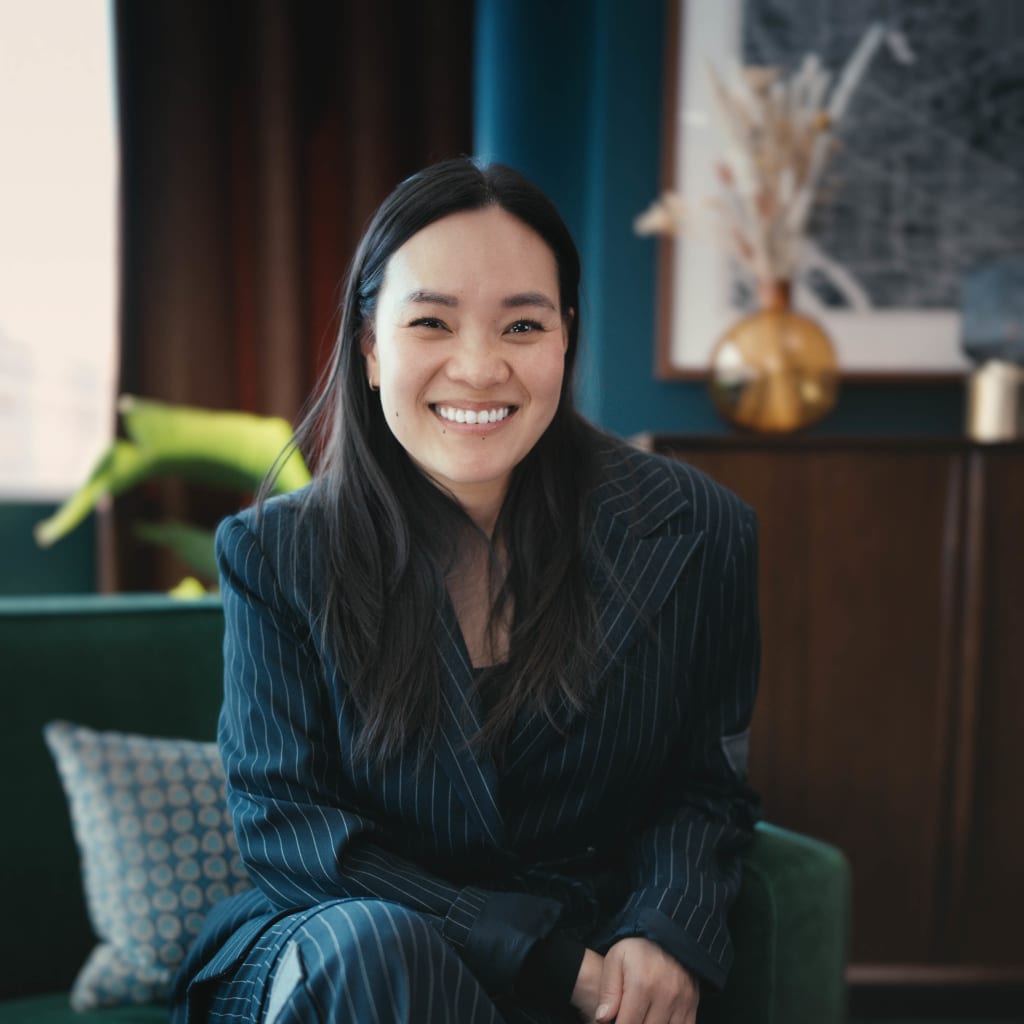 Vice President and Chief Digital Content Officer, Council on Foreign Relations; CFR Term Member
Ahead of World Press Freedom Day, panelists discus the rising threats facing journalists worldwide and explore solutions to protect independent reporting.
TRAN: Welcome to today’s Council on Foreign Relations virtual meeting, “The Global Fight for Press Freedom.”
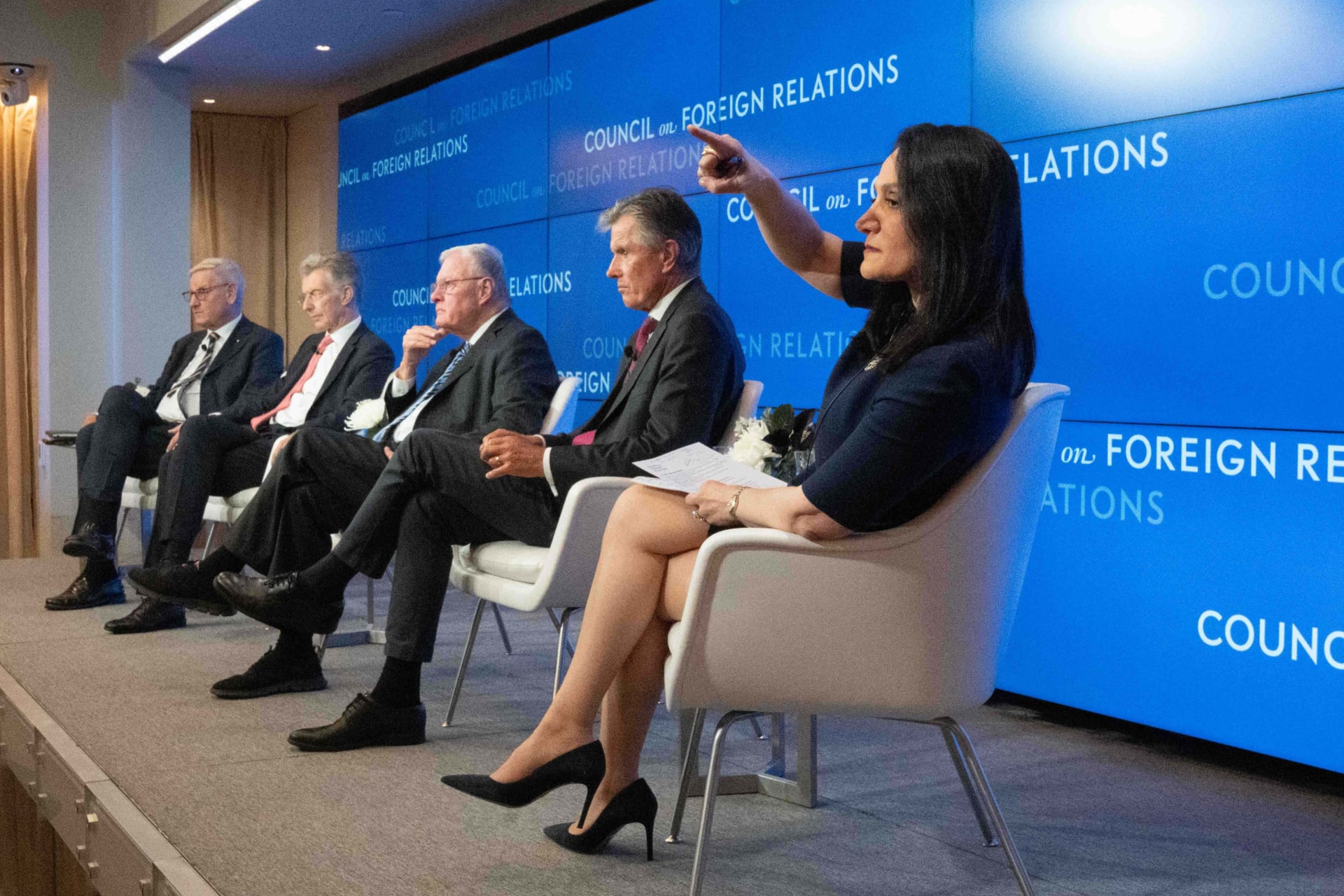
I’m Millie Tran, vice president and chief digital content officer here at the Council, and I’ll be presiding over today’s discussion.
Ahead of World Press Freedom Day on May 3 we’re going to talk about what’s actually happening with press freedom globally and here at home and what comes next. We’ll have thirty minutes for discussion, then open the floor for questions for the remaining thirty minutes.
I’m so happy to introduce our wonderful panelists, who are all either current or former term members, who bring different vantage points to this issue.
Ben Grazda is advocacy manager at Reporters Without Borders, the organization behind the World Press Freedom Index. Before RSF, Ben worked on disinformation and democracy at the LSE Maryam Forum as a whistleblower support advocate at the Signals network and as the U.S. campaigner at Access Now.
Laxmi Parthasarathy is executive in residence at Ashoka and the former chief operating officer of Global Press where she led worldwide operations and launched bureaus in under covered markets including Mongolia, Mexico, Nepal, Puerto Rico, and Ukraine.
And finally, Nayeema Raza is the creator and host of Smart Girl Dumb Questions, a Spotify top ten best new show of 2025 and a winner of the 2026 iHeart Podcast Award. She was previously a senior editor at New York Times’ “Opinion” and the on-air executive producer of Sway and On With Kara Swisher, as well as co-host of Semafor’s media podcast Mixed Signals.
So, Ben, let’s kick this off. The World Press Freedom Index just dropped yesterday. Can you tell us a little bit more about what the index is and give us the top lines and any findings that surprised you?
GRAZDA: Yeah, definitely. Thanks. It’s great to be here and thank you to the Council for putting on this event.
So RSF has been monitoring press freedom through its index for twenty-five years. It’s compiled by surveying hundreds of people from around the world. We have networks of people who are in or intimately familiar with each—the situation in each country and we use basically a qualitative tally of abuses against media and journalists in connection to their work, and we also have qualitative analysis of the situation in each country or territory based on the responses of press freedom specialists.
We rate it on five factors—legal, security, political, social, and economic—and to get to the takeaways, unfortunately, it’s not great news. The biggest takeaway of this year is it’s the worst overall year of global press freedom since we started tracking a quarter of a century ago.
So in twenty-five years, the average score of all 180 countries and territories surveyed in the index has never been so low. For the first time since we started tracking, over half the countries are in difficult or very serious circumstances. That’s the dark red and—dark orange and red behind me. And so this category was actually a very small minority, just 13 percent in 2002, so it’s gone from 13 percent to over 50 percent in just the last twenty-five years.
Similarly, in 2002, one in—20 percent of the global population lived in a country where the state of press freedom was characterized as good and now twenty-five years later less than 1 percent of the world’s population lives in a country that falls in the good category.
The biggest kind of trend that we’re seeing is the increased criminalization of journalism. So in the last year, the legal indicator deteriorated in five—sorry, three out of every five countries. Because we look at the whole world, that means that the legal factor or the legal analysis deteriorated in 110 countries, and so this has everything to do with the expansion of defense secrets and national security, as we’ve seen in Russia and Belarus.
But we’ve also seen this in the Philippines and India and other places, and now we’re seeing it increasingly in the U.S. and like-minded countries.
In other countries like Indonesia, Singapore, and Thailand, you have political and business elites that are also exploiting the legal system with abusive slap lawsuits. So journalists are really kind of under pressure from both the authorities that want to prevent coverage and also increasingly powerful corporate entities that want to decrease coverage.
A few things that I just want to highlight, like, a few individual takeaways, the U.S. registered at a much sharper decline than it has before, dropping from fifty-seven to sixty-four, and we can talk a little bit about that more later.
In Palestine, over 220 journalists have been killed since October 7 and at least seventy who were killed while carrying out their work, and there’s still a media blockade for international media to get into Gaza, which I think is really important to note.
The last two things, the steepest fall recorded in our index—thirty-seven places—was in Niger, underscoring kind of the wider decline in press freedom in the Sahel region. And lastly, a positive note, that in post-Assad Syria was the country to increase the most, climbing 36 places as journalists return to Syria and more independent reporting is coming out of that country.
So that’s kind of the state of things and I’m happy to discuss more.
TRAN: Yeah, thank you for that dizzying overview, Ben, and I’m happy to see that about Syria.
Nayeema, you’re closely covering the media business in the U.S. Ben just mentioned the U.S. dropped from fifty-seven to sixty-four. What does the threat to press freedom actually look like here?
RAZA: Yeah, thank you, and it was riveting to hear some of that data from Ben.
I think the way I want to talk about the threat to the media business in the United States is really in two ways. The first is a group of kind of secular threats, so the fragmentation of media that we’ve seen over much time that’s really crippling the media business. It’s creating a lot of opportunity for independent creators like myself, but it is in fact a threat to the media business.
And then there’s also a secular issue of distrust in media. Seven in ten Americans I think in the latest Gallup survey reported that they had little to no confidence or trust in mainstream media.
Now, that’s a secular issue but it’s also one that’s aided and abetted by—I think in many ways by the critique that we’re seeing from powerful individuals and entities around the press and freedom of the press in particular.
I think that’s the second category of things. We have I think a president who in one way has been more accessible than any other president. I mean, I literally have Donald Trump’s cell phone in my phone right now and I believe that if I were to use it he would pick up.
More journalists have, as Max Tani from Semafor has reported, this phone number than we’ve ever seen in previous administrations. He’s very accessible to the press.
And there’s no secondary meeting. When President Trump is meeting with President Zelensky, you’re seeing that meeting happen. There’s not some closed door meeting that you’re not seeing, and in that way we have a lot of access in this country right now.
But we are seeing a very chilling effect of lawsuits, capitulation, and the threat of lawsuits from not just the president but also from members of the administration, most recently the FBI director. And that, of course, is—you know, is going to go to the courts, and in some ways doesn’t and has a chilling effect even prior to meeting the courts.
(Background noise.) Apologies for the beeping in the background.
The second is actually less discussed but the corporate leverage that the administration has over mergers, acquisitions, purview of media entities. We’ve seen this play out in Paramount. We’ve seen this play out with also regulators, Brendan Carr and the Jimmy Kimmel situation of—you know, we’re having members of the administration kind of weigh in and weed into media in ways that we haven’t seen before, and that people on both sides of the political aisle have deemed concerning.
So I think what all this means is, you know, in one way I could look at this and say, oh, it’s a great time to be an independent creator and go out and you can get great news for myself, for Moshay (ph) or Jessica Yellin, et cetera. But all of us rely on that backbone of really rigorous newsrooms. And as Ben has just outlined, as the threats to global press freedom are so high, we can’t get access to cover some of these wars on the ground in Gaza, et cetera—the importance of, I think, the American media ecosystem is critical and it’s so critical that my—it’s beeping behind me—but it’s so critical. And also I think that there’s never been a more important time, I would say, to, you know, subscribe and participate in those newsrooms as well.
TRAN: Yeah, thank you for that.
Laxmi, I think Ben has provided us kind of the overview and backdrop. Nayeema has gone deep on the U.S. You provide a really unique perspective, and you’ve worked with reporters in Kyiv, El Salvador, Zimbabwe.
Can you share what you’ve learned from their experiences on the ground?
PARTHASARATHY: Yeah, absolutely. Thanks, Millie.
And yeah, I have to say, you know, Ben, some of those data points that you’re sharing I have seen, you know, firsthand how that actually plays out in action.
You know, I’ve had over a decade of experience working with reporters around the world, and what they face and what they’re navigating today in 2026, dealing with these authoritarian regimes around the world, is beyond anything most of us could fathom. But authoritarian regimes have actually been just finding really new and, frankly, creative ways to crack down on journalists and civil society for, frankly, the last decade.
What I’ve seen is really kind of a three-part playbook. They take advantage of—well, the first is they just take advantage of surveillance technology. They shut down social media platforms and sometimes, frankly, they shut down the entire internet.
So take, for example, Indian-administered Kashmir in 2019. There was a ton of civil unrest due to the revocation of Article 370, and the government decided to implement a 213-day internet blackout.
So I worked with several reporters in Kashmir during this time who lived through this, who had to find really innovative ways to try and work around these blackouts, and this was the longest blackout in a democracy and that was 2019. We’re dealing with some, you know, even more advanced technology today.
Second, they take advantage of a world in disarray, to quote Richard Haass. In Zimbabwe, the government literally tried to change the constitution during the pandemic because the public and journalists couldn’t attend public hearings.
Reporters were told that, you know, they were essential service workers but then they were told that they could only be out if they had 2020 press passes. But guess what? The government hadn’t yet issued 2020 press passes.
So there’s all this kind of chaos going on, and our reporters had to literally get new press passes, jump through a million hoops that the government was putting in place, and just take immense risks during this time to hold the government accountable to changing something so monumental like the constitution.
And, finally, I think they learn from each other. So take, for example, Latin America, where regimes have learned how to implement stifling censorship laws. This has been spreading like wildfire in places like Venezuela, Nicaragua, El Salvador. In some cases, reporters discover overnight that their work is illegal.
So to combat this, there are great organizations like CONNECTAS. They have written stories about the Nicaraguan regime and their abuses of power, and then they file them outside of the country in order to kind of elude these legal retaliation processes that happen locally.
And I know we’ll talk about solutions later, but I wrote this piece for Harvard’s Nieman Lab about how cross-border reporting can combat cross-border collaborations between authoritarian dictatorships.
And there are so many examples in there of this playbook, and I just think that there are really fascinating ways that people are circumventing these challenges.
TRAN: That’s such a great framework to think about, that playbook.
Ben, Laxmi mentioned civil society. Looking forward, what does civil society support for press freedom need to look like?
GRAZDA: Yeah, definitely. Thanks. And I also just wanted to add on to the very important points that Laxmi made.
The surveillance aspect is something that I think is really under the radar but it is just so devastating for journalists. You know, commercial spyware is—you know, can be purchased by basically any government and it can access anything on your phone, even encrypted messages. It basically just has access to your camera, to your signal, everything.
And so if you’re a journalist with contacts, it really just makes it impossible to do your job because you’re not sure if they’re watching your communications, and I think, you know, under the Biden administration, there was a lot of great work done to kind of curtail spyware, and now we’ve seen that effort kind of slow under the Trump administration.
So I think that people should still keep the gas on holding those companies accountable, and I think the internet shutdown point is also just really important because, you know, it’s not just journalists trying to get information, you know, with the bank accounts.
It’s the trying to, you know, order food and just, like, go to—do your work remotely, and so that impacts a lot of people that journalists work with, too. So it’s hard to provide and get reliable information when there are internet shutdowns, and I would refer people to Access Now’s #KeepItOn report if you are interested in data on that.
So really quickly, I think there’s, like, a few main things that civil society support can do. I think that right now we’re seeing journalists and press freedom groups fighting back, which we haven’t seen in a lot of different industries, and I think that that’s actually a really kind of bright spot, especially on the courts in the U.S.
So we’re suing the U.S. Agency for Global Media to bring back Voice of America and protect its independence. We’re doing that alongside journalists and some of the unions that they work with, and I think that that kind of consortium model of the different players and their equities in those cases are really important.
Other groups are suing to preserve access to courtrooms, to block mergers that would fire journalists, and prevent the government from surveilling journalists. I also think we need better networks to protect individual journalists when the government does kind of overstep.
In the U.S. we’ve seen ICE arresting immigrant journalists who are actually, you know, on the front lines trying to provide information to their communities in the languages that they know about, not just Spanish but, you know, Chinese, Vietnamese, other languages in targeted communities.
And so there is a network of press freedom organizations—lawyers, immigrant lawyers, press freedom lawyers—that’s working on these cases, and I just think closer coordination there is something that’s important. That’s something that we’re working along with other partners.
You know, there’s the case of Estefany Rodríguez, who is a Latin American journalist in Nashville, and she was arrested by ICE days after she had done some reporting on ICE. And, you know, there’s no, like, proof yet that it was because of that but, you know, circumstantially it’s really important to look at.
And so a lot of groups spoke up on her behalf. Some members of Congress challenged DHS directly online on Twitter and so trying to hold the administration accountable for their arrests. And so I think that that kind of network is really important.
Providing security training and resourcing both digital and physical is something that I think is important and not reaching as many of the independent journalists we need it to. You know, as corporations consolidate and journalists are fired in this country and as independent journalists are really important to doing work around the world, I think that’s important.
We really—we recently launched a personal protective equipment program in the U.S., which is kind of a weird and scary thing to do but I think important, and us as well as many other organizations provide training in security around the world. But I think we need to go that—do a better job of going that last mile and reaching some of these independent journalists.
I was going to talk about international support networks as well but Laxmi, I think, talked about that and at least monitoring transnational repression that happens. I think that that’s really important to kind of have journalists linked up together to cover those kinds of issues.
TRAN: Wow. All those sound like great initiatives.
Nayeema, did you want to jump in on that?
RAZA: No.
TRAN: All right.
Laxmi, you’ve talked about duty of care. I’d love for you to talk about what that means and what are some concrete ideas that either newsrooms or individual journalists could implement to protect press freedom.
PARTHASARATHY: Yeah, absolutely. I’m super passionate about this topic and, you know, I think Ben’s touched a little bit on this in terms of what other orgs are doing.
But I mean, broadly, like, we can’t change the state of press freedom as news organizations or independent reporters, and the onus isn’t necessarily on them to make these massive, monumental changes.
But when we’re employing reporters, I believe that we have a very important duty to make sure that they have access to the safety and security that they require to do their work well. And so, you know, safety and security means many different things. It can be, you know, digital security, legal security, emotional, physical security for reporters.
But often, like, that needs to focus on risk mitigation, not just crisis response, which is often what we see. I ran one of the industry’s only duty of care programs and I’ve trained newsrooms across Africa, the United States, and I can’t underscore how critical this process of duty of care is to the psychology of reporters. When you know my newsroom has my back, you’re able to just do better work.
So, you know, for example, we worked with a reporter, an exceptional reporter, in North Kivu province of DRC. If you’re familiar with that area, highly conflict ridden. M23, a rebel group, moved into the community of our reporter and everyone in that community was deemed evacuated, missing, or dead.
We quickly activated our duty of care protocols to locate her, and this was through, like, a network of emergency contacts, secure communications channels, and we had, frankly, mapped out this scenario. And so yes, this was a crisis but it was also something that we had prepared for, and when a newsroom really invests in this kind of risk mitigation, reporters know you have their back against any of these imminent threats.
Now, for independent reporters there are awesome organizations out there like A Culture of Safety—ACOS—Alliance. They have tons of trainings and resources, access to funding, all sorts of things for independent reporters who are trying to navigate some of these challenges solo.
TRAN: Speaking of solo, Nayeema, you’re running a top charting podcast as an independent creator and watching the media ecosystem from a very specific vantage point. Where is media headed in this backdrop?
RAZA: I think it’s—I actually have a question for Ben and—
TRAN: Big question.
RAZA: Yes, a big question. I have a question for Ben and Laxmi at the end of this too.
But I would say, look, it’s very tempting to say that the world is heading towards independent creators and everyone wants to be an influencer and this is where the world is heading. It is extremely hard to do diligent global-scale reporting, as you’re hearing.
I mean, there are consortiums, alliances, that will help protect individual journalists. But I recently had a conversation with Johnny Harris, the YouTuber, of, like, you know, what does he have when he goes into a country versus what does a CNN journalist have when they go into a country, right, and how different is that.
And I think—you know, I do believe that a lot of these larger organizations will continue to exist and win also in the field, and I would point to my former employer, the New York Times, as really important here, given the threats to press freedom that we’ve talked about in the U.S., because they have two things that I think are very important.
One, they’re actually a successful business. Meredith Kopit Levien has done a very good job of diversifying and building a business that has a strong moat so isn’t subject to the same kind of corporate leverage.
Two, they have a—you know, a dual-class share structure where the family retains control over that, and then A.G. Sulzberger, the publisher, and, you know, comes from a long lineage of belief in ethical and, importantly, press freedom and independent, free, and fair press.
And so I think you want—we need a world in which those institutions can continue to survive because they, you know, help subsidize our reporting—their newsrooms do. They also scale and they also are at the front lines of a fight for press freedom.
I think you want a world in which people can critique the press. That’s happening, clearly, and that will continue to happen. But I think Jim VandeHei from Axios had been quoted saying something to the like of, you know, the press makes mistakes, but people might look back and say, hey, I really liked having a free and fair press, and you want a press that can independently, freely, and fairly report on the administration and also handle critique.
Right now 75 percent of Americans, I believe, are unaware of the threats to press freedom in the United States so we have to do a better job of sharing that message, and also what it means to be a journalist is changing. You know, people could consider—it’s in the eye of the beholder—people could consider Joe Rogan to be a journalist. He does not consider himself to be a journalist but someone might see him as that.
And so I think we’re entering a really murky time of what it means to be in media and it behooves all of us in media to break out of the way in which we think about things and what we’ve read and what we hold dear in terms of our ethics, and actually make that known and accessible to people because people are more curious than ever.
They are searching more than ever. They are seeking out information, and even though we have a tune out problem in this country and beyond, I think people are deeply, like, desiring getting out of an echo chamber and so we have to do our job of creating content that is accessible, entertaining, fact-based, you know, and deeply reported.
I’m so grateful for the work that, you know, Ben and Laxmi are doing to support independent journalists.
I have a question for you guys. Can I ask one before we open it up?
PARTHASARATHY: Of course.
RAZA: I’m curious, when you—and I know the U.S. is included in the World Press Freedom Report and, obviously, dropped seven spots, but when you guys hear about the threats to press freedom in the United States or think about them, does it feel like a, quote, like, “first-world problem” to you compared to what we are seeing happen—I mean, the real toll on journalists’ lives in Gaza, for example, or covering, you know, Israel, Palestine, or other regions of the world.
Like, how do you look at that from your vantage point?
PARTHASARATHY: It’s a great question. I was just talking about this with someone this morning and, you know, one of my thoughts is just you can’t minimize what’s happening in any one place and, frankly, it’s relative, right?
So when there are really challenging stories we’re hearing about coming out of Minneapolis and other places, you know, it’s not like I’m going, oh, first-world problem. I’m going, that’s wrong—(laughs)—right, and it’s sad to see that happening in a place like the United States.
At the same time, we’re talking about many other barriers that some of these local reporters are dealing with in some of these authoritarian regimes, right, like rolling blackouts. Places like Zimbabwe you might have tons of cash in the bank but you can’t access that cash on that day because the country has a cash shortage, right?
So, like, how are you going to take the taxi to your assignment to, you know, cover that story, let alone, you know, the government saying you can’t be out and about during the pandemic?
So there are just so many barriers to overcome on top of the repression of reporters and that’s something that we can’t discredit.
GRAZDA: Yeah, I would totally agree with that that you can’t just, like, let it pass by. You have to kind of acknowledge the problem while acknowledging that there are much more serious problems.
As Laxmi was saying, like, the authoritarian playbook is very real and I think that we should be really looking to other countries to kind of see how they’ve responded. We were actually going to have a workshop in Zambia a few days from now with a bunch of journalists who had worked under authoritarian regimes to basically compare notes on how their coverage has changed, how their threats have changed, how they’ve addressed those.
But then the entire conference of, like, 3(,000) to 5,000 people was canceled because basically the Zambian government said they had maybe some issues with some of the people who are going to be coming, that there’s rumors that, you know, China could have put some pressure on them to cancel the conference or at least raise objection to some of the pro-Taiwanese guests who had been there. And so I think some people are doing some reporting on that right now to see where that is.
But I think, you know, we in the U.S. need to stand up and fight back against what’s happening in Minneapolis, in L.A., in Tennessee, because these are really important to our press freedom—to the press freedom situation in the U.S., but also because this is a global fight and the lessons we learn from this fight can then help inform fights around the world.
So we’ll see what laws hold. We’ll see what networks hold, and I think there just needs to be more exchange, as Laxmi was saying earlier, between—I mean, now the U.S. is kind of one of those countries that is reporting in an authoritarian-esque environment. And so I think we need to keep the fight up and not let anything pass because we need to be able to share the lessons with other people around the world, too.
RAZA: As you’re saying it, I’m realizing that there’s kind of a mental model in my mind of press as its own global supply chain, right? Your news is only as good as other—your news in China is only as good as press freedom in China, and your news on AI is only as good as our ability to cover that globally.
And so I think it’s really great that the Council has made available this platform on this day to talk about press freedom.
TRAN: Absolutely. And thank you for that bonus question there.
So we’ve covered a lot of ground and I want to close out with a question to each of you, which is what’s giving you all hope right now? Feel free.
Ben, you can kick us off.
GRAZDA: I’ll—
TRAN: (Laughs.)
GRAZDA: Yeah, I’ll go.
TRAN: Oh.
GRAZDA: A few just super quick things. I think the adaptation that journalists are doing right now to this environment in the U.S. is giving me a lot of hope. I’m from southwest Colorado, pretty rural part of the country. They were really hit hard with the cuts to public funding, but they’re looking at new and innovative ways to still keep news going to the people that rely on them every day.
So they’re sharing, like, an environmental reporter between a few newsrooms. They’re sharing an engineer to work on, like, you know, their towers between a few newsrooms. There’s different consortiums and deals. So—and they’re getting more sustainable funding to do that versus the will the government fund us or not kind of every year. That was really difficult.
Also, I think that we’re getting more requests for—f rom just, like, the public of how they can help us. Our internship applications are student journalists who have been censored and they want to be in this fight, and so that’s a really interesting pipeline of, you know, people really wanting to fight back.
And I think the last thing is just the people who are in these devastating circumstances, whether they’re arrested or whether they’re, you know, shut out from these conversations, they are still doing their work every day and we wouldn’t really be seeing these problems if they weren’t raising them themselves. And so you really have people fighting on their own behalf and we just need to have their back.
TRAN: Nayeema?
RAZA: Yeah. I would start with where Ben ended, which is I think the doggedness, which is a very important newsroom quality, but a doggedness, determination, and the deep curiosity of journalists that I know who are covering not just in this country but abroad. Their—you know, that—their spirit gives me hope and their tenacity gives me hope in what we can see for press freedom, going forward.
And I also think what I referenced earlier, there is a deep curiosity. When I look at my audience for Smart Girl Dumb Questions I can see on the back end what other shows they tune into and there’s—The Daily, Joe Rogan, Smart List, Tucker Carlson—you know, really a varied space and I think people are really hungry to bust out of their echo chambers.
I think we in the media—you know, it’s a good headline, everything’s worse. It’s always the low. It’s the Gallup new low in the press, the, you know, worst place for the U.S. in the World Press Freedom Report, et cetera.
But look at the world right now. Like, you’ve seen a very different outcome in the Hungarian elections than would have expected. I do think that ultimately the world is defined not just by the media and how we reflect it but by the people who are part of it, and I think people are curious. People are—they want, you know, not a partisan bend but they want an independent, truthful lens, especially in an era of AI and I think—I’m hopeful about that.
I’m also bizarrely hopeful about AI in one way, which is I think that there is a lens of objectivity. You have to still think about who’s making it—is it garbage in garbage out. But there is a potential for people to get access to—and I had this conversation recently with the Twitter CEO on my show but—or the former Twitter CEO on my podcast—but how AI can actually drive us to more moderate results.
Like, if you ask AI for a number between one and ten it’ll always tell you seven because most people say seven, and so I think there is an opportunity for objective coverage in artificial intelligence these days.
TRAN: I want to say two things, which is we almost made it through an entire media panel without mentioning AI, and that was a superb mention. Regression to the mean in a good way in this case.
Laxmi, do you want to close us out and then we’ll head to questions?
PARTHASARATHY: Sure. Sure. Yeah.
I mean, what has always made me hopeful and especially on this topic is local reporters. I mean, when these crises hit, helicoptering in for a short period of time isn’t going to cut it. When you have local reporters that live in the places that they’re covering, have immense historical context and access, and can really act as that watchdog, like, that is the core and the key to all of these challenges.
So I actually reached out to one of the local reporters that I used to work really closely with in Kyiv, and, you know, a country like Ukraine may have an RSF ranking of sixty-two, but, like, what does that actually mean and how can we understand what that means in practice.
So I reached out to one of our former reporters, Liubov Velychko. She’s a well-known investigative reporter in Kyiv, and what she shared back with me was—just gave me so much hope, and so I just want to—I want to read it to you all.
So Ukraine faces a war of attrition brought by Russia—oh sorry, yeah.
“Ukraine faces a war of attrition brought by Russia, marked by terrorist attacks, aerial bombings, missile strikes, and the use of loitering drones.
In such a context, the very existence of press freedom, or freedom of speech and democracy, is in many ways extraordinary. Yes, censorship exists and under these conditions it is normal. As journalists, we cannot disclose information that directly threatens national security. Quite literally it can be deadly.
I cannot freely report on the locations of Ukrainian military positions and I will not seek to receive comments from Russian soldiers for balance. I believe it requires no explanation why.
At the same time, it is remarkable that I can openly criticize the president, the government, the parliament, and the courts, and know that I will be heard, that there may be a response, and that I will not be imprisoned for it.
Yes, our ranking is sixty-two, but at this moment our top priority is survival and defending our country from Russian aggression.”
I just thought that, like, just seeing all of that, everything that she’s dealing with, she’s still able to be a critic. She’s still able to hold her government to account even amongst these constraints, and I just think it’s something that we should all reflect on as we think about press freedom and the challenges reporters have to deal with on the ground.
TRAN: That’s a great note to end on before we head to questions.
So at this time, I’d love to invite those attending to join our conversation with their questions. A reminder that this meeting is on the record.
Sydney, do you want to go to the first question?
OPERATOR: Sure. (Gives queuing instructions.)
It looks like at this time we don’t have any questions in the queue, so I’ll turn things back over to you, Millie.
TRAN: OK. Let’s talk amongst ourselves.
I think one thing that struck out to me was kind of the collaboration that you all talked about, doggedness, and kind of the local reporting on the ground as all things that just could point toward a future of, I think, responding to this ecosystem.
So I’m curious what you all think from this conversation so far.
GRAZDA: Laxmi, actually, I have a kind of question for you.
I mean, you’re talking to, like, a lot of journalists that are reporting kind of under authoritarian environments. Has their kind of what they’re focused on covering kind of changed much as far as, like, where they think is important to shed light on?
Like, I talk to reporters who are covering, you know, the last few years in the U.S. and they are focusing more on some of the tech oligarchs, if you want to say that, because of their influence with the administration, because of the kinds of tools that they’re producing. So they shifted their coverage a bit.
Like, as more—as power concentrates do you see that journalists are kind of covering certain angles more or less?
PARTHASARATHY: Yeah, it’s a good question. You know, I feel like on—it just, frankly, depends on, you know, the beat, the outlet they’re pitching to, et cetera. But I do see, like, the angle shifting slightly.
So, like, Rest of World is a great example of an outlet that’s doing great accountability reporting when it comes to, like, the development of AI in other parts of the world or AI accountability in other parts of the world, and I think that what’s awesome about their coverage is that they’re really relying on local reporters for that reporting and so, they’re getting, you know, nuanced sourcing and, like, you know, you’re not going to get the same person from Silicon Valley in that story over and over again.
And so I think that there is a little bit of a shift there. But I think that some of these, you know, barriers that reporters are facing, like, yeah, I think it is having reporters pause a little bit, reflect on can I cover this story in this moment. I have to think about my personal situation, my responsibilities. Like, they’re human beings too, right?
And so I think that there is—this is, frankly, one of the most insecure times for reporters to be covering many of the topics that we’ve been talking about today and, you know, I have seen a lot more, like, pause and reflection rather than, like, let’s go get that story, which is, frankly, I think a really good thing, and I think both independent reporters and news organizations should often be assessing, like, what are the risks associated with reporting on this story both to the individual and the organization and how can we cover this in a way that’s both meaningful, holds, you know, authority to account but, you know, doesn’t have severe consequences to the person doing that work.
And so that’s why I was giving the example of cross-border collaborations or collaborating with local reporters or publishing outside of the country. There are ways to kind of circumvent some of these challenges while still holding power to account.
RAZA: Yeah. That gives me so much concern, what you just said about, you know, the pause. I understand what you’re saying, it being a good thing for the safety and security of individuals.
But one of the things that I’ve seen a lot, and I talk to a lot of creators about this, is—you know, I interview people and I’ve interviewed a lot of tech oligarchs, as it were, and produced interviews with them over the course of the last five years.
But when people go out to creators they’re often asking them for questions in advance, to plant questions, to remove questions, to do—and I don’t do any of that on my show. It is rigorous and journalistic, and I don’t share questions in advance. I don’t do off topics.
But there is a marketplace for that and we are seeing, particularly in tech, people would go to such marketplace for it. And I think—again, I come back to the idea that consumers are sophisticated and discerning, and I think that we know a puff piece when we hear—when we see one.
That said, I think we also have to think about what—you know, how to get access. Access is important in journalism, right. It’s treated as a dirty word, but it’s important to have access to have—especially these accountability conversations you want journalistic outlets and journalists to have access to these individuals.
So just I think about it a lot in terms of the—like, I guess, lobbying is one word for it. Like, the new influence over media, and also you’re seeing people create—buy—their own media. Of course, Andreessen Horowitz did this with Future. OpenAI has just, you know, bought TBPN, which is going to stay independent. They report, et cetera.
But you have to wonder what that kind of ownership and consolidation is going to do to rigorous independent coverage.
Someone in the audience must have a question, but if they don’t we can keep talking amongst ourselves.
PARTHASARATHY: We can keep gabbing.
RAZA: Yeah.
GRAZDA: Yeah. So on that point of consolidation, what do you think is going to happen now that, you know, it’s, like, a few companies owning, like, the media, a few companies owning the online kind of big platforms and stuff?
Do you think that’s going to have as much of an impact as we’re worried about? We’ve seen journalists leave 60 Minutes and stuff like that, but do you still think that journalists will be able to do independent or there’s going to be diversity of perspectives with that kind of consolidated ownership?
PARTHASARATHY: Yeah, I don’t think you’re going to see—like, I think that people will vote with their feet in some ways. I do also think that there’s a lot more competition because of all the independent and outside, external, international accessibility that you have as journalists.
So I think we cover some of these stories, like, you know, with a lot of intensity that they feel like that’s happening everywhere. I do think that most news organizations and many parts of existing news organizations are actually, you know, having 90 percent of their work, 95 percent of their work, be completely free, unfettered—99 percent of their work unfettered from that kind of corporate influence.
And, again, it, like, comes back to the eye of the beholder. I don’t think most people—like, when you watch a show right now, I no longer think it’s an HBO show or a Netflix show or whatever. I’m just watching it on Apple TV or YouTube or whatever the distributor is and I don’t give that distributor credit for the show either.
So we’re just moving to a world, and I think media is in a similar milieu now, where people feel connected to individual journalists. So they will follow a—you know, if Anderson Cooper leaves 60 Minutes, which he’s set to do in May, like, they will continue to watch his stuff separately.
And so there is a leverage that individual talent have over corporate brands that we haven’t seen historically, and there’s also a leverage, of course, that corporate brands have over individual journalists because of the challenging nature of the business today.
PARTHASARATHY: We actually have a—I’m sorry. Go ahead.
TRAN: Go ahead, Laxmi.
PARTHASARATHY: I was just going to add that, you know, we’re talking about conglomerates. We’ve seen this play out time and time again across Africa, across Latin America. Often, it’s just a few families that own most of the national press in these places and, you know, there are grave challenges when that does happen.
There were consequences to, you know, the narratives that we consume, even here in the United States, right? If we’re reliant on a news source like the Nation Media Group in East Africa or, you know, another media group in Latin America, we’re often being, you know, fed a story that is quite top down and, you know, if you’ve worked as a reporter before, you’ve definitely gotten “Go get me an X story” and there’s not sometimes a story there to be told on that topic and subject.
And so those are real, real important challenges that we need to investigate, you know, hold power to account, really be, frankly, media literate and understand where our news is coming from. Why was that story filed in this country but the reporting was in Kigali, Rwanda? Like, what’s the connection, you know?
So there’s a huge part of this conversation is around, like, media literacy and how we help our audiences understand what’s happening behind the creation of the news. This is why I love when reporters do, like, first-person reporting and share a little bit of, like, behind the lens of what it took to put a piece together, and it just really helps the audience, the consumer, understand, like, damn, that took six months to do that investigation. Like, it took two years, you know. You worked with how many reporters, how many data scientists, et cetera.
Like, there’s a lot of work that goes into this and understanding how this all works is complicated and I think, you know, we just need to do a lot more work around media literacy.
TRAN: I think we can all agree with that.
Sydney, do you have a question from the audience?
OPERATOR: Yes. We’ll take the next question from Corey Trusty.
Q: Hey, everybody. Hopefully, you can hear me.
RAZA: We can.
Q: Oh, sweet. Thanks for all your insights today. It’s really interesting. I actually have two questions, if that’s OK.
So one, and I think you kind of touched on both of these a little bit, but I kind of wanted to see if there’s anything deeper. So from your vantage point, how should democratic governments, you know, really think about press freedom as part of a broader strategic competition, like, particularly when you do have these authoritarian actors and they’re increasingly, like, blending that censorship, the disinformation, technological control to shape, you know, the information environment?
Because, like, you know, for instance, you’re seeing a lot of things coming out with, you know, Iran and the Lego movies and all these different things that I think are hitting home with folks.
And then just my second question is to what extent have private, you know, technology platforms become really the de facto, like, arbitrators of press freedom globally and how should policymakers, you know, balance those concerns about harmful content with the need to preserve independent journalism?
Because, like, you’ve seen some stuff, I think, especially, like, in China, where you had, like, these kind of content creators were kind of saying a bunch of things and China kind of put the kibosh on it and said, like, hey, you have to have a degree or something within this area before you start, you know, talking about some of these things.
So I’m just interested in getting your thoughts on those.
PARTHASARATHY: Nayeema, do you want to go first?
RAZA: I have a thought on the second part, but you should jump in, Laxmi. I think the—
PARTHASARATHY: Yeah. Mine was, frankly, a little bit on the second part as well.
You know, I think that we need to be careful around deciding and determining, like, when to put, you know, some of these strategies in place, I’ll call them. I say strategies around—you know, I’m just thinking of so many situations where governments have said, oh, we did this—we shut down the internet, or, we turned off social media because it was for your good, right?
So take DRC 2019. The election is over and they go, internet blackout twenty days. Why? Because we want to prevent the spread of misinformation about the election results. It’s in your best interest, right?
So that’s where we’ve got to pause and say, like, yes, that was a very strategic move by a new administration coming into DRC, but also there are—you know, the public deserves to understand and connect with other points of view and connect with people outside of the country and communicate what’s happening locally.
And so it’s, I think, extremely dangerous when we kind of leave it up to these governments to determine what is in our strategic interest, and that is the whole point of freedom of speech, right? We should be able to critique governments.
We should be able to critique, you know, changes in policies, and the second that one administration or one individual determines what we can and can’t say and what channels within which we can communicate, I think that’s extremely dangerous.
RAZA: Yeah, I would just add to that.
So to the first part of the question, what is the case that leaders—what’s the best case you can make to leaders about press freedom as a kind of competitive reality.
I think the best thing to say is that you will one day not be in power. Actually, for anybody in media, right? It’s like a Rawlsian worldview of media—how would you want media to be if you were not the person that were, you know, in power and getting the spotlight right now.
And I think that’s probably the most persuasive secular argument you can make for press freedom around the world. And I’ve seen that. You know, I grew up in Indonesia and Sudan. I worked on—I worked in the context of helping mediate on the 2010 Ivorian presidential election.
Like, you see how quickly power shifts, right, and the desire to control a narrative is tempting, particularly in today’s environment. But it’s not always going to be you a hundred percent of the time. I think that’s the best case you can make. Hard case to make because a lot of people that are in those positions have a lot of ego and power.
So the second question on technology as an arbiter, I think that’s a really smart and nuanced question. We did an interview on January 6, 2021, of the CEO of Parler, which was the social media app that was being used or that was used by many of the people that were at the Capitol that day, and a central line of questioning in that interview was—this was from the New York Times—was, do you feel responsible? Do you feel responsible? And the CEO, John Matze, said he did not feel responsible and neither should the platform because, et cetera.
The next day, Apple and Amazon—Apple, you know, removed Parler from its app store. Amazon shut down web services for Parler. And I do think we live in a world where technology companies are the regulator, right? We’ve seen this with the president’s accounts being shut down after January 6 as well.
It happens on—in both directions, both ways, and everyone is extremely—I think we should be concerned about this because technology companies are not a neutral arbiter and we need to think just in the way that we’ve thought about international relations and the rise of non-state actors of technology companies in this way, and think about the safeguards and protocols and, you know, what beyond public reflection reaction which we’re seeing is actually not as informed as we would like it to be, right?
If only—if 75 percent of individuals are not aware of the threats to press freedom in the United States today per Pew reporting or Pew surveys, that suggests to me that, like, there’s more to be done in terms of, like, shining a light on technology companies and the outsized power they have today.
GRAZDA: And I can just touch—I would agree with all that.
I would just touch on the first part of the question, which is what can democracies or should democracies be doing. And actually Adam Kinzinger, who was at—was speaking at a press freedom conference in—I think it was Missouri or Mississippi a couple weeks ago, and he made a really interesting point. He said that, you know, when he was traveling and talking to people around the world, you know, the Voice of America would come up as, like, a topic of conversation, and what people liked about that was not necessarily that it was sharing an American perspective, but it was showing what press freedom could look like.
It was showing people actually criticizing their own government. It was interviews with policymakers in the U.S. that was, like, you know, asking hard questions and criticizing them. And so instead of just giving—you know, making U.S. Agency for Global Media, which oversees Voice of America, or Voice of America just a propaganda outlet for the U.S., which—I mean, a lot of people in these countries can see that coming from a mile away.
If there are some just like, you know, pro-Trump or pro-America talking points—actually using these tools to show what challenging authority, what holding people in power accountable looks like.
That’s what makes people, I think, in other countries want a model of press freedom that kind of looks more democratic. And so to any kind of democratic leaders I would say, you know, show up in these places. Be challenged. Show what that can look like. That’s really important.
And also just—I mean, the Trump administration has pulled tens of millions of dollars of funding from, you know, supporting independent journalists around the world, not just funding newsrooms but funding security trainings, funding physical equipment, funding other things that help journalists do their job.
So I would just say to other governments it would be helpful to step up and fill some of that gap.
TRAN: Thank you, Ben.
PARTHASARATHY: I’d just add—and Ben, that’s such an important point that I’m, like, frankly, surprised that I missed. It’s just that, like, it’s not just the cut in funding from governments. It’s also, like, philanthropies, right?
Major philanthropies have made some really significant cuts to their journalism funding in the last year and that I have found extremely disheartening during this time that people are deciding to close entire journals and portfolios or to cut their funding to those portfolios, because I think that is actually critical to fighting back against press repression.
TRAN: Thanks for that.
Sydney, I think we have one last question to close us out.
OPERATOR: Of course. We’ll take the next question from Ben Chang.
Q: Hi, everyone. What a great conversation. My gratitude for this session being organized, and I am such a fan of each of these speakers.
I was wondering—there’s so many threads to pull here. Laxmi, your talking about media literacy struck a chord with me. I was wondering if we could kind of shift from the global to local again and pick up on this theme of trust.
The role of an organization like the Council, whose mission is to inform U.S. engagement in the world, I’m interested in exploring how local press can be a part of fulfilling that mission, both to disseminate our work but also to inform our work.
Our colleague Irina Faskianos leads our local journalism initiative. We’re trying to look more and more into engaging local press. So I’m, frankly, asking for a friend, i.e. myself, what advice and thoughts do you have around how we can best engage and if that is a useful path to pursue?
PARTHASARATHY: Yeah, I can just jump in and say really quickly invite more local reporters to these kinds of forums. Like, invite them to be panelists. Like, they have such a wealth of knowledge to share on these topics, and the more we uplift their profiles and their work, frankly, the better it is for their security. But it’s also great for our own knowledge of what’s happening in the field.
RAZA: Yeah, I would add to that. I think that university newspapers are really underappreciated as a—every time I hear about the threats to local journalism, I think about how many great university and college reporters there are on campuses across the country and if that can’t help fill a gap.
And I do think, like, one of the things that gives me hope is the next generation always and so I don’t know if there’s ways to engage—for the Council to really engage with student media organizations as well or invite them even virtually to attend panels like this one and others where, you know, some of their reporting coverage lends—like, you just widen the aperture of what they’re thinking about as well as, you know, build that bidirectional relationship that Laxmi’s talking about.
GRAZDA: Yeah, I couldn’t agree more with of both of those.
I’d also just say, going a step further maybe on what the Council can do to kind of inform policy, I think that, you know, if there’s going to be an event on Sudan, like Laxmi was saying, invite journalists from, you know, Sudan.
I think, you know, by definition, local journalists just have to know so much local context to understand the situation and that’s something that is really hard to get from D.C. So it could be interesting, you know, with, you know, Foreign Relations Committee events or, you know, other kind of think tank events really being a place that is amplifying the local perspective because I think that would also help the Council be—you know, grow its influence if it was, you know, seen as someone that could really connect people to local perspectives.
And I think, you know, having been on the Hill before, that’s just something that is tough to get because there’s a lot of NGOs like ours that will kind of go and share it. But my—the favorite part of my job is when we can actually bring some of our people from around the world and kind of do a tour of the Hill and, I mean, the stuff I learn on those conversations is invaluable.
So I think more of that would definitely be useful.
TRAN: That’s a great note to end on. We’ll do this again but with all local journalists.
Thank you everyone for joining this meeting and thank you to our fabulous speakers. Have a great day.
(END)
This is an uncorrected transcript.