Lebanon: Military Strikes, Negotiations, and Where it Goes From Here
Event date
Speakers
- Distinguished Fellow and Program Lead, Middle East Program, Stimson Center
- Distinguished Resident Fellow, Institute for the Study of Diplomacy, Georgetown University; Former U.S. Coordinator for Counterterrorism, U.S. State Department (2025); Former U.S. Ambassador to Lebanon (2016–20)
- Contributor, Financial Times and The Atlantic; Visiting Professor, Dartmouth College
- Taube Senior Fellow and Director, Linda and Tony Rubin Program on Arab Politics, Washington Institute for Near East Policy; Former Assistant Secretary for Near Eastern Affairs, U.S. Department of State (2019—21)
Presider
- Senior Fellow for Middle East Studies, Council on Foreign Relations
Panelists assess the evolving situation on the ground in Lebanon, the role of the United States, and the opportunities as well as challenges in the ongoing negotiations.
EWERS: Thank you. And welcome to today’s Council on Foreign Relations virtual meeting to discuss developments in Lebanon. My name is Elisa Ewers, and I am the senior fellow for Middle East studies here at the Council. And I’ll be presiding over today’s discussion.
There is no shortage, shortage of issues in the Middle East to talk about, but today we really do want to focus on the developments in Lebanon. We may be on the verge of a third round of talks in Washington between Lebanon and Israel, a historic development by a relatively new government in Beirut that sparked hope in its early days, but now is facing a myriad of overlapping crises. These talks are happening despite continued Hezbollah targeting of Israel and despite extensive Israeli targeting in southern Lebanon. We may also be on the verge of a breakdown of what has been the ceasefire between the United States and Iran. So developments might be happening as we speak.
But we have an excellent group to discuss these issues today, starting with Kim Ghattas, a contributor to Financial Times and the Atlantic, a visiting professor at Dartmouth College, and author of one of my favorite books, The Black Wave; Ambassador Elizabeth Richard, a distinguished resident fellow at the Institute for the Study of Diplomacy at Georgetown University, the former U.S. coordinator for counterterrorism at the U.S. State Department, and a former U.S. ambassador to Lebanon; the Honorable David Schenker, a senior fellow and director of the Linda and Tony Rubin Program on Arab politics at the Washington Institute for Near East Policy. He is a former assistant secretary for new near eastern affairs at the U.S. Department of State. And finally, Dr. Randa Slim, distinguished fellow and lead of the Middle East Program at the Stimson Center.
So we’re going to dive right in and I’m going to start with Kim. Kim, you were in Lebanon until March 15, so after the war began. And I want to ask you to do two things for us today. First is to give members a sense of what it was like to be in Lebanon until very recently. And then, secondly, how the interplay between the war on and Iran by the United States and Israel, and Israel’s war with Hezbollah, are interacting and impacting Lebanon’s approach, as we’ve seen it over the last several weeks.
GHATTAS: Thanks for the great question. And great to be with such a fantastic group to discuss Lebanon, which doesn’t always make headlines and doesn’t always get enough attention because it is a small country. But as I always say, quoting one of my favorite authors and favorite books, “beware of small nations,” because it is where a lot of the trouble starts. It’s where you think that it has been resolved, and then years later it erupts again. Or, as we saw more recently with this war, what started in the 1980s with the collision of the Iranian Revolution and the first—and the Israeli invasion of Lebanon in 1982, eventually becomes a full-fledged, full-on war between the U.S., Israel, and Iran. And when President Trump thinks that he has a ceasefire with Iran, it turns out that Lebanon is the weak point. So that’s where we are right now. And I’ll get to some more details in a second.
Elisa, Lebanon has been—this is the second war that Lebanon has been through in just a year and a half. And the Lebanese are exhausted. This comes after the pandemic, the financial crash of 2019, the port explosion of 2020. That is a lot to bear for a small country, a small nation, four million people, who have also been through various military—Israeli military campaigns against Lebanon over the last few decades, a civil war. I have to say that even as somebody who has, you know, withstood a lot of that pressure, and, you know, I try to maintain my sort of professional approach to things because I write about it, I speak to you about it, to the media, it was the toughest moment of whiplash that any of us, I think, have lived through in Lebanon to realize that, oh, my goodness, another war.
We have barely recovered from the last one. And there was some hope that, you know, Lebanon would come out of this unscathed. But Hezbollah decided that they wanted to avenge the death of the supreme leader of Iran, and they launched the first missiles against Israel soon after Khamenei was killed. It’s important to know that, despite the fact that there was a ceasefire between Lebanon and Israel after November 24, Israel continued to strike Lebanon. And even though there is a ceasefire in place now, Israel continues to strike Lebanon, blowing up dozens of villages in southern Lebanon wholesale. And I may be wrong, Randa may know more, I don’t think Hezbollah has been striking at Israel since the ceasefire. I think they are targeting Israeli troops inside Lebanon. But I may be wrong. But they have indeed launched multitudes of missiles at Israel during the duration of the war.
And if I want to sum up how the Lebanese feel, other than exhausted and abandoned, I would say they feel trapped between Israeli repeated military campaigns, and Israeli bombardment, and Israeli military actions against the country, between that and between Iran, which uses Lebanon as well as a battleground in its war with Israel. So that answers your question about the interplay. They’re very much—these fronts are very much connected. And this sense of being trapped between these two regional countries, powers, leads to anger at both, depending on which community you’re in, or at one or the other. But for most people, I think right now it’s anger at both.
And now we’re also feeling slightly, you know, squeezed by the United States and President Trump, which, yes, has ushered in these historic negotiations, face to face, between Israelis and Lebanese. The first at this level since the ’80s. But it’s a contentious move also in Lebanon. And it is not necessarily welcomed by all. There’s a lot of apprehension. There’s a lot of discord also, and criticism. There are threats of assassinations and violence by Hezbollah. And my concern is that the Trump administration is trying to push for a photo op between the President Joseph Aoun and Benjamin Netanyahu and leaving the details for later. And that is the worst possible outcome. And I hope that’s not where we end up, and that the Trump administration will be wiser than that and try to deliver some concessions from Israel to Lebanon. And, of course, the onus is also on Lebanon to make sure that it is in control of its territory.
EWERS: That’s a great way to set us up, because I think there are a number of things there that I want us to unpack over the discussion, including this kind of what is the realistic space for these negotiations, how to manage for some of the, perhaps, unrealistic expectations of what can be accomplished in this difficult moment. But there’s one thing that I want to start with and direct to Randa. And this is the issue of the people of Lebanon being trapped between a war that is—(audio break). So, Randa, talk a little bit about the—(audio break). And I’d love to—(audio break)—understand the impact the last few years and the current conflict is having on internal dynamics in the (Shia community and ?)—(audio break)—Hezbollah in—(audio break)—and really kind of how this impacts what the negotiating positions and the talks with Israel right now are.
SLIM: Thank you, Elisa. And really it’s an honor and a pleasure for me to share this virtual podium with you all, and with Elise. You know, you are all great colleagues.
And you were cut off a little bit, so I did not get the full question. But let me—let me—I think, if I understand, it’s about the Shia dynamics inside the community, building on what Kim has just talked about people feeling trapped between these two powers, and particularly focus on the Shia community and what are the feelings inside, where they are on this issue, the dynamics inside Hezbollah, and how they are being impacted by this war. And if I have time, I’ll go into where is—again, building on what Kim said about normalization, and why I think it’s just a premature move at this point between Israel and Lebanon.
Let me start with the Shia community. You know, there are no reliable public opinion polls. Most of the evidence we have is anecdotal, based on interviews we have—I have done with people from the community, relatives, friends who are still in Lebanon, but also journalistic, you know, reviews, questions with people, especially the internally displaced. I have to say that what I’m being told by journalists is many of them find that initially the interviewee is open to them, and soon thereafter an enforcer from Hezbollah appears in the tent or wherever they are, and then the tone of the interviewee changes. And so we have to take into consideration what is being reported in the media in terms of how it’s relaying accurately the feeling.
I was in the country the first five days of the war, and then I left. And during those five days, I was able to speak with people. And everybody was really shocked and surprised. And, as Kim said, people were angry of being dragged, again, into yet another war. Look, right now, in my opinion—again, there is no evidence, hard evidence, to support my—whatever I’m about to say. It’s anecdotal and based on, again, some conversations. But I would assume that the Shia right now are divided into three major groups.
You have the core ideological—the ideological core of Hezbollah. These are the people whose sons are fighting and dying in the south of Lebanon. These are the people who are paid by Hezbollah over the years. Many of them are in their third generation fighting for Hezbollah, from the grandfather to the son to now the grandson. These are people who really are aligned with Hezbollah ideologically on wilayat al-faqih and are very religious. And I think I would say this is about 30 to 35 percent. And these are not going to be able to—I mean, we are—they are not going to change their opinions. They are committed wholeheartedly to the resistance cause and to the Hezbollah narrative.
You have on the other extreme about 10 to 15 percent. These are the independents. These are people who are secular, who have always been opposed to Hezbollah, who have participated in the #YouStink movement in 2015, in the 2019 October uprising. These are people who are against Hezbollah, but also against Nabih Berri, the speaker of the parliament—so, against the Shiite duo—and are looking for creating an independent space for Shia voices—independent Shia voices to be representative of the Shia community away just from the Berri or the Hezbollah dual choice.
And many of them are come from a leftist background. You know, after all, a lot of Shia in the past belong to the Lebanese Communist Party and to other leftist parties. Many of them are young. They are—also many of them are liberal in terms of their ideological affiliation. And but, however, again, in my last trip to Lebanon I spent a lot of time talking with representatives of this group, partly to figure out whether there is a viable space for independent Shia voices to emerge. And I found them to be divided, internally divided, and to lack a narrative that can attract a majority of Shia to their understanding of the political situation, and pull people away either from Amal or from Hezbollah.
And then you have the big, silent majority in between. And these are people who include, of course, Hezbollah, but also include Amal voters. These are people who include the merchant class, the Shiite merchant class. They include the expat community of Shia in West Africa and Latin America. These are people who voted for Hezbollah in the past, voted for Amal in the past, still look at Hezbollah and Amal as being the best political representatives of the Shia in Lebanon, and. in a way, are loyal to Hezbollah and Amal for empowering the Shia politically inside Lebanon. And so this is where the Shia community is divided today.
I think the major problem that’s going to hit Hezbollah once the war stops is going to be the IDP, the internally displaced people, right? We are talking about a million plus mostly Shia, the great majority are Shia, from the south, from Dahieh, southern suburbs of Beirut, as well as from the northeast. Some of them have found alternative housing. Many of them are in tents living still, or in schools without major, major accommodation. Some of them are living in major—I mean, in the sports stadium, you know, that is built inside—in Beirut. And these are people who are—many of them are farmers. They lost—many of them are small businessmen in the southern suburb of Beirut. They lost their homes. They lost their farms, their lands. Many of them are tobacco farmers in the south.
These are people who, you know, would vote for Hezbollah, would believe—you know, would—and these are people who lost homes in the previous wars that Hezbollah waged, especially in 2006, and whose homes were built—and they believe that Hezbollah built their homes, or the money from Hezbollah, when it was not necessarily the case. But these are the people for whom Hezbollah right now and in the future does not have an answer, which has to do with reconstruction. Hezbollah will not have the money because it will depend on Iran. And that’s another, you know, variable to discuss, how Iran—how quickly Iran can reconstitute itself. And the priority is going to be more domestic than regional. And Hezbollah does not have an answer for them.
And there is now a widespread belief, unlike Hezbollah’s narrative, that this war was waged by Hezbollah, as Kim said, to avenge the killing of the late supreme leader. And so Hezbollah has to answer them. These are the people also who, you know, again, they are part of their important base inside the community. And I think that’s going to be a major headache. They are not going to go out in the streets today and protest against Hezbollah, or speak publicly against Hezbollah, partly because they are under fire and the community feels like it’s facing an existential struggle. But once the guns stop, I think there will be—you know, Hezbollah has to provide answers. And I don’t think Hezbollah will have the answers.
And that I think, in my opinion, will create space. On one hand, it will create space for alternative Shia politics. But also it will create a vacuum. And so who is going to step in this vacuum? And, you know, the best alternative is for the Lebanese state to step in this vacuum, and to be able to, you know, bring these people behind them. That’s going to be the question going forward. And that’s where, you know, the reconstruction card is going to be a major leverage in the hands of the Lebanese states, in the hands of the international community, to push Hezbollah and move forward on a real disarmament plan, you know?
There are—I always have maintained that the only way to disarm Hezbollah is that Hezbollah has to disarm itself, the community has to disarm Hezbollah. There have been three enabling conditions for Hezbollah becoming what it is. One is a Lebanese state that has turned in the past a blind eye to Hezbollah’s armed status and has somehow blessed it. It’s no longer the case with this government. It has taken unprecedented decision in declaring the armed groups of Hezbollah as being outside the law, and in really putting together a serious disarmament plan. The community, the second enabling condition is a community that has sent its sons to fight for Hezbollah. And I don’t see this community right away, backing away from this commitment, but I see more and more discussion happening among these, among families of fighters or people who lost their homes and their sons, whether this was worth the cost.
And the third element is enabling regional sponsors. And in this case, for Hezbollah, it is Iran and Syria. With Assad gone, that strategic depth is gone, that weapons route is gone, that place where, you know, Shia who are, like today, in the past, in 2006, many of these people who are living in tents today of the Shia went to Damascus and they were housed in Syrian schools, and they were welcomed in Syria. Today, they have nowhere else to go. And the other, of course, regional sponsor is Iran. And that’s the big part, is where Iran is going to be on Hezbollah going forward. And we can discuss that. Now, I don’t think I have the time to discuss the Hezbollah trajectory, Hezbollah dynamics, but I can leave it for question and answer.
EWERS: I do want us to get back to kind of the question of really how Hezbollah could reconstitute its old model, or maybe it can’t. But maybe—let’s get—let’s get through a round of questions, and then maybe come back to that, because I think it’s an important one, when we also think about where these negotiations between Lebanon and Israel are going.
And so on that point I want to turn to David, because we’ve spent the first twenty minutes talking about the view from Lebanon and about Lebanon. And I’d like to ask you to help us kind of zoom in a different direction and try and talk a little bit about Israel’s approach right now, especially with respect to its continued operations against Hezbollah and what its objectives are. In this time of a, quote/unquote, “ceasefire,” what it’s really trying to accomplish through these continued operations. But also, how this fits into the Israeli government’s professed focus on seizing this opportunity for negotiations with the Lebanese government. So I want you to help us kind of unpack this kind of parallel track that—I’m calling it a parallel track—that we’re seeing from Israel. On the one hand, continuing to address Hezbollah as a threat quite actively and quite aggressively, but on the other hand also trying to maximize this opportunity to engage in negotiations with the government.
SCHENKER: Well, thanks, Elisa. And it’s a pleasure to be here with you at CFR and with my esteemed colleagues on the panel. Listen, hanging over this whole thing, whatever Israel decides to do, is, of course, elections. And, you know, as Kissinger once said, there’s no such thing as Israeli foreign policy. There’s just Israeli domestic policy. And so this is, you know, a constraining factor. We have elections that will take place in Israel in either October or perhaps as early as September. You may not have the prime minister return, although I wouldn’t count him out. I didn’t think he’d survive much after October 7, but here he is. And so, you know, in terms of this—you know, the politics, there won’t be any major steps going backward in terms of withdrawal or major deescalation, I don’t see, before then, the Israelis making some type of concession. I don’t think that plays well for some of the folks standing for elections.
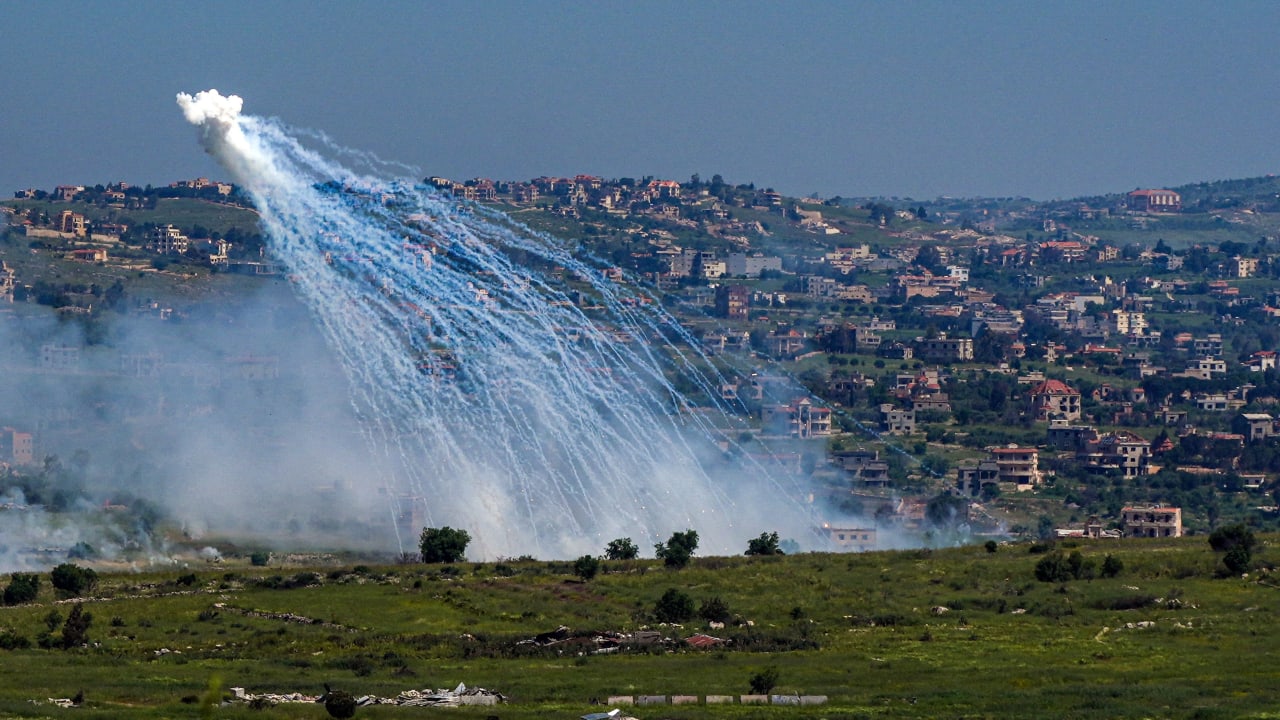
And, of course, all the communities in the north of Israel, I think 70 or 80 percent of them are supporting the continued campaign, because, of course, Israel occupied five sites in northern—in southern Lebanon in 2024, stayed in them until Hezbollah broke the ceasefire in March of ’26, and then did this enormous ground maneuver with five divisions, or something, and, you know, now occupies up to ten kilometers of southern Lebanon, and whatever else they’ve done there including, as Kim pointed out, the destruction of villages and other locations where Hezbollah had locations, tunnels, whatever.
I think, you know, you have to look at the purpose of this from the Israeli perspective, which was that they were going into Lebanon and doing this buffer zone once again to defend the northern communities of Israel, to do a buffer zone to prevent antitank weapons from being fired into Israel, ten kilometers line of sight. And they essentially failed at achieving the objective, notwithstanding being, you know, the ten kilometers in and earlier just in these five particular sites. You know, it’s déjà vu all over again. Back in 1982 we had, you know, the forty kilometers that Israel had occupied in southern Lebanon. That was the—at the time, the Katyusha line, you know, the missile with a certain range that the PLO was firing into Israel. And now this has all been complicated by the, you know, highly predictable Hezbollah use of FPV drones, which are, you know, the fiber optic cable that can travel thirty kilometers, right, and are very difficult to jam—impossible to jam. And Israel is vulnerable and starting to take casualties.
You know, so what’s, you know, the purpose now? We had Israel, I think, Katz and—the minister of defense—and Bibi said that they’re going to create a new reality on the ground. And that’s, you know, obviously something that is proving more difficult. So what’s, you know, the strategy now? Well, I know a guy in the Israeli government, a senior Israeli government official, who, back in 2003 when I was working at the Pentagon, said to me, Israel is a strategy-free zone. They’re really great at tactics. And so what is the long-term strategy? And I don’t—I don’t really see one. I think what they were doing was hoping to compel the government of Lebanon to meet the commitment that it made during the ceasefire of November 27, 2024, which was to disarm Hezbollah. That’s what they said they would do. Not just south of the Litani, but throughout the whole country.
And they sort of did half of the south. I think we can, you know, have an argument about how much they did. I think they tried. Obviously, didn’t do as much as they could have. Perhaps it was capability, perhaps it was will. That’s a whole twenty-minute discussion, or more. But they will remain in the south for the foreseeable future. I think they want to engage in the negotiations, but, you know, we have the ceasefire, and two very different goals from the sides. The Israelis, first and foremost, want the disarmament of Hezbollah, right? The Lebanese government wants a ceasefire, an end to the war, and Israeli withdrawal, and a return of the displaced people. You know, how you get there? Maybe it’s a matter of sequencing, but I don’t think there’s any confidence at all on the behalf of the Israeli government that this LAF, under the command of Rodolphe Haykal, is going to do any disarmament of Hezbollah.
What was done in the south was with the consent of Hezbollah. And it wasn’t even a complete job, as we’re finding when Israel goes and discovers every day and more and more tunnels in the south of weapons. There are things that can be accomplished in these discussions. And I think the Israelis, it would be productive if they delineate the southern border. I think there are twelve points in dispute. If Syria recognizes sovereignty over the Shebaa Farms, this is solved. And, of course, this would reassure some people that Israel was not staying and did not have territorial demands.
You know, they can draft the elements of a peace agreement for that day—(laughs)—someday—that we get to where we are in a position to move forward on that. But right now, there’s no trust between the sides and Israel. The only thing that Israel trusts is the mechanism, which is the U.S.-led military officer on the ground. And they want the mechanism going forward to play a bigger role in adjudicating what has and has not been done in terms of disarmament before they take any positive steps to either reinforce or have, you know, confidence building measures that they are going to respond positively to Lebanese steps on their obligations. And I’ll stop there.
EWERS: So, David, I think you’ve laid out kind of the gap between the two sides, I think, very succinctly. And I want us to maybe dig into that a little bit more. And I’m going to start with, kind of, asking Elizabeth to think about that from the perspective that she brings to this conversation. Elizabeth, you were ambassador in Beirut during a very tumultuous time, the port explosion, protests, economic collapse. You’ve also served in very complex conflict zones elsewhere in the world, in Yemen, and Afghanistan, and Pakistan. When you listen to David talk about the gaps between the two sides, what do you think are some of the ingredients that are necessary to deal with the conflict at hand right now between Israel and Hezbollah, but really between Israel and the government of Lebanon at the moment? And where can this path go from here?
RICHARD: Thanks, Elisa. And, again, great to be with such great experts here.
With your permission, I’d like to actually zoom out from that a little bit, because this already complex environment is even more complex today. And, you know, besides the fact that we have a war with Iran that Israel is prosecuting with us, at the same time it is in conflict with Lebanon, we have other dynamics. We have two special relationships, not one, here. Iran and Hezbollah, but the U.S. and Israel, to factor into this. And we also have a new element, which is, is Hezbollah a bargaining chip or not a bargaining chip in the eventual Iran negotiation? So what I thought I’d do is kind of draw back to those other experiences when I’ve kind of been part of peacebuilding efforts in those complex environments of Afghanistan, Pakistan, and Yemen. And there’s some principles that come out. And a lot of them are really relevant to what all three of you just said.
The first one is interdependence of effort. This is something I have seen in the Lebanese world for a very long time. You need all the various actors to have some kind of complementarity, or at least non-conflict, of their various efforts. And we’ve struggled with that. The French have some initiatives. We have some initiatives. The Saudis kind of—it’s a hub and spoke thing, though. And it doesn’t ever really come together with all the key actors in one place to think this through. The second thing is, successful peacebuilding processes are locally driven and inclusive. And I think both Randa and Kim pointed out, inside Lebanon the population is divided. And even further, to Randa’s point, the Shia are divided internally. And so when you have that kind of situation, it becomes very hard to talk about the Lebanese position on anything, let alone how it factors in with all these other actors.
I think the third point that I’ve always seen to be a real critical element is sequencing. And I feel like with the Lebanon issue, we are constantly dealing with the short-term issues, the short-term issues. We talk about, the long-term issues—economy, corruption, Hezbollah’s arms, but we never really grapple with those. We’re always busy trying to cobble together the kind of lowest common denominator thing we can do—all of us, collectively. And I think, you know, sequencing is critical. You have, you know, long-term process with short-term benchmarks. We tend to just focus on the short-term benchmarks as the international community. And you have to have a situation where concessions are rewarded, quickly, immediately, so people see the value of putting down their arms, and violations are penalized credibly. And that’s also difficult. I think it requires us to all collectively accept good enough at the start, and anytime we tend to—we, as the U.S., tend to do this my whole career all over the world. We start with our maximalist demands up front. And that just—Hezbollah must, you know, get rid of all its weapons now. That’s a nonstarter.
And I would also like to comment on Kim’s note on summits. The summit is when you’re close, when you’ve got something to talk about, when you bring in your closers, your big guns. The summit is not the first thing you do. And I think in this case, whether to have a summit or not is now becoming a distraction. It’s now another issue that people can chew on in a little micro way, which is not getting us any closer to the bigger, longer-term issue, that one would hope in a summit you would—you would discuss. You need a credible enforcement mechanism at the end of the day. And I got to say, in the case of Lebanon, we’ve all struggled. It wasn’t UNIFIL. It’s not going to be the Israelis. It’s not the LAF. But that’s an issue that needs to be kind of grappled with. You know, peacebuilding is always multidimensional. And that means you can’t just do, they must drop their arms. It gets into all the other things we always talk about. Not just in Lebanon, but in all these situations, because these situations happen when you’ve got a fragile state.
So you’re going to need something on the economy. You’re going to need something on fairness and rule of law. You’re going to need to deal somehow with the corruption, because these are the underlying factors that, in many cases, create the insurgency or the conflict in the first place. And they can also, on the flip side, if we, you know, input those into this discussion, they become confidence building measures along the way, I think—and one of the things—and Randa mentioned the reconstruction. I think another element we’ll have to deal with is how do we manage reconstruction for the Shia homes that have been destroyed, without creating massive resentment by everybody else in the country that isn’t so fortunate. And then the very last thing I like to throw out there is DDR. That’s something else we never talk about when it comes to Hezbollah. I mean, this is a—this is a conventional force, let’s be honest. And I—you know, Google the number of Hezbollah fighters. Of course, the numbers are, you know, unclear. Rut 40(,000)-50,000 fighters, you know, 70(,000)-100,000 supporters and reserves, all the weapons. That’s not just going to disappear. And we also haven’t really sat down and grappled with what DDR might look like.
So I think I close just by saying I think what we need to do is start looking at some of these things collectively. And part of the challenge I see right now is bandwidth. Forget about the fact that a couple of us are fighting more with Iran and trying to manage the consequences and fallout of that. But also this administration, you know, every president organizes themselves and their decision making in their own way. President Trump has chosen to have a very narrow circle of folks working on these issues with very tight control of information. And that works really well for a lot of things, but when you have this kind of complexity in front of it, it doesn’t work. Because people are human beings at the end of the day and need to sleep at night. So let me stop there.
EWERS: It lays out a lot of possible areas to work on, Elizabeth, but it doesn’t necessarily correlate exactly with the time pressure that is on this set of issues, right? When you are talking about three sets of meetings over the course of just a month, when you’re already talking about a summit, as you and Kim have said, it doesn’t leave you a lot of room. And you layer that on everything David said about the other party that we’re dealing with here in the state of Israel and its objectives and its—and its own constraints, I fear—I fear there’s not a whole lot in the Venn diagram right now that we’ve identified that’s going to keep this moving along. But we still have time to talk a little bit more about that.
I’m being told we have some questions from members, so why don’t we start there and wrap some of the other questions into the discussion as we go along? Olivia, do you want to take the first question?
OPERATOR: (Gives queuing instructions.)
We’ll take the first question from Aaron Miller.
Q: Thanks. Great panel.
Look, more often than not the Middle East is a place where American ideas on warmaking and peacemaking go to die. I mean, there are successes, to be sure. What none of you talked about, though, in my judgment, is, I think, the key to a lot of this. And that is the absence of leaders who are masters of their politics, not prisoners of their ideologies, more concerned with the looking forward to protect the security and prosperity of their respective peoples, rather than keeping their own seats. Anytime there has been any significant progress in this broken, angry, and dysfunctional region, it’s when you had leaders—Mandela-de Klerk, Sadat-Begin, Rabin even Arafat, in his first incarnation. King Hussein-Rabin. So this is what I don’t really get. And I just wonder if all of you can comment on the absence of leadership in this region. Because I look around and Israel-Gaza, Israel-Lebanon, U.S.-Iran, it strikes me as just another round.
EWERS: Leave it to you, Aaron, to put the fine point on it. I actually think all four of our panelists will have something to say about this. Kim, do you want to start, maybe?
GHATTAS: Sure. I would never dare to disagree with Aaron. But actually, on this occasion, and this was something I wanted to follow up with, I do think that we have leaders in Lebanon with, you know, their shortcomings, their imperfections. I do think that, for once, Lebanon has a good president, a very good prime minister. I think that they were courageous enough to put the proposal of peace talks with Israel on the table early on in the conflict, you know, within a couple of weeks. Did they not do enough in the preceding year to, you know, as David pointed out, deal with Hezbollah as per the ceasefire? Sure. But as we’ve all been discussing, it is a difficult problem to untangle. And it is not going to come by simply barging into the southern suburbs of Beirut and knocking down doors and confiscating weapons. I think that is a recipe for internal strife.
But I have to give credit to this president and prime minister for making this courageous statement. We heard from President Aoun saying, I will go anywhere to secure my country. And so if we want to inject a little bit of positivity in what is a very grim picture, we do have a few elements to work with. A president and a prime minister who, in Lebanon, are willing to take some of these steps, who have declared Hezbollah’s military and security activities as illegal, who are trying to, you know, assert their sovereignty, the Lebanese state’s sovereignty, on the territory. And who actually, despite the internal divisions, do have a lot of support. I see it on social media. I see it in the media. I see it from speaking to people. And not just, you know, a small bubble. There is a real thirst for this kind of leadership in the country.
And then some of the divisions, as Randa laid out, are within the Shia community. And then across Lebanon, it is about, should we just go all the way and fly to Tel Aviv, and, you know, just have peace, or, no, let’s not have peace right now. Let’s just settle for an armistice agreement. Let’s delineate the border, I think that’s a great suggestion by David, to sort of parse out and unpack this problem. Especially since, as he rightly points out, there aren’t going to be major Israeli concessions before the elections in in Israel towards Lebanon. So what do you really achieve with a face-to-face meeting between Netanyahu and Joseph Aoun, other than a photo op? Which will then be seen in Lebanon as a gift to Israel in return for which, you know, Lebanon isn’t going to get anything tangible, because Israel is not going to stop strikes for now, and is not going to withdraw or make any other tangible concessions. So what are the concessions that can be, you know, confidence building measures?
So just returning briefly again to the question of leadership by the Lebanese—and don’t get me wrong, I also have plenty of criticism—but I think we must give credit to this move by them. There is also an effort to coordinate with Arab countries—with Egypt, with Saudi Arabia—who are concerned, Saudi Arabia in particular, that Lebanon is being pushed into this photo op, and breaks ranks with, you know, with the rest of the Arab world. You could argue that that’s, you know, Lebanon’s decision to make, but it helps that Lebanon can argue the case against this photo op meeting by saying, look, you know, we’re also trying to do this in concert with Arab countries, including Mohammed bin Salman, who was willing to consider opening relations with Israel.
I want to say another point about support for President Aoun and Nawaf Salam—and, believe me, I never thought I would ever talk about popular support for a Lebanese president and prime minister. The idea of what to do with Hezbollah and moving past having a militia, a state within a state, is one that the Lebanese want to address for themselves. Not for Israel. That is something that is a national demand today in Lebanon, including amongst many in the Shia community. I did some very quick math as Randa was speaking. The hardcore 30 percent who are ideologues and support Hezbollah represent 10 percent of the total Lebanese population, roughly. And they are holding the country hostage. And the Lebanese have had enough of that. They may, as I said, disagree, should we sign peace, should we just have an armistice, et cetera. But I think there is support for the idea that we need to move beyond having the state within a state, and the corruption that comes with it, and then we can discuss the—we can also discuss the corruption of other politicians.
I’ll end with one—with two very quick points, if I may. I think it is a mistake to speak about disarming Hezbollah, because it invokes ideas of forcefully barging in and taking away their weapons, which adds to the sense of, for lack of better word, persecution amongst some in the community. And it’s not going to happen like that. It’s not going to work like that. I prefer to use the term “neutralize.” And you neutralize them by having a strong state, by showing that Lebanese state-led diplomacy can deliver for Lebanon. And you neutralize them by providing reconstruction effort, and aid efforts, and relief efforts through the Lebanese state. That’s how you begin to, you know, undo their work. And, you know, I know it sounds—it’s difficult. It’s not guaranteed. But I think that is the better path forward long term than trying to forcefully go in there and take away their weapons. The community will also begin to turn away from them. And you’ll always have, you know, the hardcore who want to fight till the end. And what do you do with the 30(,000)-40,000 men who are paid and have a salary from Hezbollah?
The last point, I would say, which is something that David mentioned, the difference today with what Israel is doing in South Lebanon, and the reason why I don’t really think it—I don’t really think it is that much of—I mean, it is déjà vu. It’s mowing the grass constantly—tactics, tactics, but no strategy. Is that in 1982 and throughout Israel’s occupation, they did not turn southern Lebanon into a wasteland. And they are doing that right now. The images are frightening. And this continues to happen. And so that is one big difference. And so reconstruction, and how do you bring a million displaced back into the south, is going to be a big part of the conversation.
EWERS: David, I want to give you a chance to, if you want, answer Aaron’s question on lack of leadership, or not, as Kim, I think, very elegantly just kind of answered in the affirmative, that maybe there’s more to it than then we all think. Do you have something you want to add there, or do you want us to move on?
SCHENKER: Yeah, no, just on the Israeli side I think—you know, I know—I think I have a good sense of where Aaron’s at on the prime minister. And I’m not sure that in terms of policy, even if you had a change in the premiership and post-October 7, mindset, I don’t know if you get a dramatically changed approach to Lebanon that is more creative, less security oriented. On Lebanon, listen, I’ve been so pleasantly surprised by Nawaf Salam, you know, who I knew before as a very impressive guy, but how brave he is. On the other hand, there’s all these edicts that the government of Lebanon pronounced that are amazing—outlawing the weapons, kicking out persona non grata, the Iranian ambassador, you know, a whole handful of things. And the only one that they actually did was to take part in negotiations with Israel at the ambassador level.
And there’s good reason for that. It’s because—and this gets to what—you know, perhaps what Kim said about Hezbollah’s sense of persecution, or the Shia sense of persecution. It’s because, you know, since 2005 Hezbollah has murdered twenty-five-or-so Lebanese politicians, journalists, civil society, people, domestic opponents. And they—and they’re also—you know, we should add, they helped the Assad regime murder half a million mostly Sunni Muslims in Syria. Like, there’s a good reason that they’re a little scared right now, because they murder people. (Laughs.)
EWERS: I’m going—I’m going to ask Randa if she wants to chime in on this question of leadership. My sense is that she might have similar things to say to Kim.
SCHENKER: Wait, wait, one last word. The leadership is lacking, the only place on the Lebanese side, in Nabih Berri, who has been an incredible problem in moving ahead in any degree, and is real, real barrier to progress.
EWERS: Well, Randa, let me ask you to actually comment on that before we go to the next question, if you don’t mind. Because I think everything Kim said, I think, is correct, but there are elements within the political structure in Beirut that actually makes this hard to deliver. And so do you—do you want to spend just a minute or two maybe building off of or responding to David’s last point on Berri?
SLIM: I disagree partly with him about Berri. (Laughs.) I think he has been a problem, definitely. But he’s the only one right now on the Shia side who is willing to meet Nawaf Salam and Aoun halfway. And there is a possibility. I don’t think he can be split totally from Hezbollah. I never bought into that theory of, like, I think the two are interdependent in in different ways. But for example, on the issue of direct negotiation with Israel, he—you know, he said, go ahead. Go for them. I’m not going to endorse you publicly. But at the same time, I’m not going to block you. I’m not going to create problems for you, Aoun and Nawaf Salam. And this is a guy, we have to understand him. He’s in his late eighties. I think, he’s about to turn ninety. He is very much focused on his legacy. And his legacy is particularly political empowerment of Shia. You know, in a—not necessarily in an economic sense. He definitely economically empowered himself and his family and his retinue around him. But in a political sense, he sees himself, he sees Amal, and he sees also Hezbollah having played an important part in gaining the Shia this important voice in the political—in the politics of the country.
And so—and he is looking at how he can preserve this legacy. And that’s why he is—I don’t think he will—he will stand in the way of negotiations, but, and as he has said it. But I think what he wants is a process where he can bring the community along. And he doesn’t feel that going for normalization or for a summit is the way to do it, partly because there is no consensus, of course, inside the community about it. There is no cross-confessional consensus. After all, let’s see, I mean him and Jablat (ph) are exactly on the same page. Even Geagea, I mean, he is for direct negotiation, but he has been very ambiguous on normalization. Everybody is really there, except for the few, are for the normalization process.
So, look, these are people—whether it’s Berri or all the other party—all the other, you know, leaders in Lebanon, they are there for their interest. And they—I mean, they are looking at everything, at this negotiation through the lens of their own political interest and their own economic interest. And if they see this negotiation going forward are going to harm these interests, they are going to, you know, try to create some challenges to them. But for now, I think they are for direct negotiation. They believe this is—especially Berri. He believes in a in a gradual process with focusing on certain priorities. For him, it is the withdrawal of the Israeli forces from southern Lebanon. It’s a return of the Lebanese prisoners. It is primarily reconstruction.
And that’s—again, that’s important leverage that President Aoun, that the prime minister, that the rest of Lebanon can have in pushing, as Elizabeth said, a DDR process. I don’t think disarmament can happen as quickly as everybody wants it to happen. As Elizabeth pointed out, we are talking about thousands and thousands of fighters. When you look at the organization, the different units inside Hezbollah, it’s like an army, you know? Logistics, intelligence, whatever, you know, reserves. So it’s going to take time. But we can help, say, condition it. I mean, we can use reconstruction and reforms to condition this process on.
EWERS: Olivia, do you want to go to the question queue, please?
OPERATOR: We’ll take the next question from Dr. Odeh Aburdene.
Q: Can you hear me?
EWERS: Yes, we can, Odeh.
Q: My question is to Kim and Randa. In my view, you have 1.1 or 1.2 displaced Lebanese. If these people stay in Beirut and other towns it will continue to disturb the peace and the harmony of Lebanon. So if they cannot go back, that’s number one. Number two, you need billions of dollars. And at the moment, there are priorities for other Arab countries, such as Gaza, Syria, Yemen. So where will the money come from? I do believe reconstruction can help—can help, if the current government wants to negotiate. But at the same time, before they normalize, they want to see where the endgame is.
EWERS: Kim, you want to start?
GHATTAS: I mean, yes, absolutely. You know, 1.1 million-1.2 million displaced who are sleeping in tents and sports stadiums and hotels and rented apartments across the country are—you know, are an issue that Lebanon is grappling with. It is, you know, adding inter-sectarian tensions. There’s some, you know, tensions when, you know, people who are thought to be affiliated with Hezbollah are renting homes here or there. We’ve seen Israel target these apartments. We’ve seen, you know, Revolutionary Guards renting expensive hotel rooms in Beirut and get targeted in these hotel rooms, while people are displaced and sleeping on the street. And that is also where some of the anger is coming from.
Where the money will come from, you know, I think that if we reach a stage where there seems to be a viable long-term trajectory for Lebanon with an armistice agreement, delineation of the border, a strong state, an understanding internally that Hezbollah, you know, cannot continue as a militia, you know, I think you could do an international conference easily. I think money would come from the gulf, from the United States, from Europe. I don’t think that is the problem. The problem is how do you get to the point where people feel this is worth investing in, right?
And that was the key concern with how Gaza unfolded with the peace Trump—with the Peace Board, right? What are we reconstructing? And how is the money getting there? And, you know, some of that effort is stalled and falling apart, and the U.S. is dismantling the base it has set up to begin some of that reconstruction effort and monitor things. So I’m less concerned about where we’re going to get the money. The Lebanese are very creative. And they’ll find a way. It’s how do you get to the point where you can encourage investors to actually place their money in Lebanon, and donors.
EWERS: Randa, do you want to add anything?
SLIM: I mean, I totally agree with Kim. I mean, people are not going to put money into places which are going to be destroyed in a year or two years. And there needs to be an end to this situation of Hezbollah, as an armed actor inside Lebanon. And how we get there, how long is going to get—how long it’s going to take the Lebanese to get there, that’s going to be the issue. But I agree with Kim. Unlike Syria, unlike Gaza, Lebanon is much a smaller place. You know, yes, the south of Lebanon is pretty much—at least south of Litani—pretty much destroyed. We’re talking about sixty-eight villages that have been totally destroyed. But it’s still a much smaller space in terms, and that requires less funding. And you have also the expat community. A lot of these villages—after 2006, many of these villages were rebuilt with expat Shia money. Of course, in addition to Qatari money, in addition to, you know, European money. But a lot of it was rebuilt with expat Shia money. And so this also can be brought in.
The critical factor is going to be, is not to repeat the 2006 mistake. Because in 2006 what happened? I mean the narrative that was promoted by Hezbollah, and which was, you know, to took root inside the Shia community, this was Hezbollah money. This was Iranian money. We rebuilt because of Hezbollah. And so the loyalty to Hezbollah was reinforced. Whereas it was not the case. This is—this is a critical factor going forward, is how we can delink reconstruction from Hezbollah and, in fact, put reconstruction under the control of the state. And have the narrative be about the state rebuilding the Shia homes in the south of Lebanon.
GHATTAS: If I may, Elisa, just one point, picking up on that. Yes, Lebanon is small. I think it’ll be much easier to get the economy going. I think that if you have a regional settlement of some sort—I don’t know what is going to happen with these talks with Iran, does it end up with an agreement, does the regime implode, I don’t know. But Lebanon, I believe, will also not necessarily be able to get to that endpoint of feeling that it is over unless regionally it also comes to a conclusion. That doesn’t mean that we should just wait in Lebanon to see what happens, which has been our usual modus operandi. Well, let’s wait what the region brings. No, this is, again, where Joseph Aoun and Nawaf Salam are, you know, taking over their country’s negotiations and not letting it be used by Iran or by Syria.
Lebanon never had a seat at any negotiating table regionally, because it was either under Syrian occupation or, you know, Iran wouldn’t allow it, and Lebanese leaders wouldn’t even think about it. But if you think just about—just to extrapolate a little bit to the region, I know that’s not the focus of our topic, but the situation economically in the gulf is difficult, right? It’s in limbo. Is it war? Is it peace? It’s neither. And so they’re also not sure how they can restart many of their economies. And so as long as the whole region is in limbo. I don’t think anybody is going to be talking about a reconstruction conference, a donor conference for Lebanon. And that limbo for the UAE, for Saudi Arabia, for Qatar, is really very difficult for them to, you know, go back to projecting stability and prosperity and confidence and Vision 2030. You can’t really do that when we don’t know where this is going. And just today there was, I think, another Iranian missile launched at the UAE.
EWERS: Yeah.
I mean, as much as we’ve tried, and others have tried, to delink the Lebanon file from what’s going on with Iran, it really—it’s really quite difficult to do. And so realistically how do you keep some of these threads alive long enough to wait and see, as you say, Kim, what might be resolved, even if it’s a temporary resolution not a comprehensive kind of solution, in order to kind of calm the waters enough for people to be thinking about the broader regional impacts that are going to emanate from the war? We’re not there. We certainly are not there. And yet, we are trying to keep this thread on Lebanon as alive as possible.
Olivia, I think we have other questions in the queue.
OPERATOR: We’ll take the next question from Jean-Marie Guéhenno.
Q: Yes. Thank you. Jean-Marie Guéhenno from Columbia University now.
The Lebanese, really, they have the best leadership in years. And Hezbollah is much weaker than it was after the war of 2006. So it seems like a great opportunity to at last, really strengthen the government of Lebanon to do all the daunting tasks that you outline, from transforming the Hezbollah, rebuilding the country, et cetera. But my one question is, does Israel—does the present Israeli leadership, does it really want a stronger Lebanon? Because when it—when its ambassador says that we’re on the same side after a meeting with the Lebanese delegation, when there is this insistence for a summit, all that can only weaken the Lebanese government. And so I wonder whether we can have—we can build a genuine consensus for an effective Lebanese strong government. I doubt it, to be honest.
EWERS: David, do you want to you want to start?
SCHENKER: Yeah, I mean, Israel hasn’t and doesn’t play in Lebanese politics. It doesn’t know Lebanon very well, I think, in some ways. And doesn’t do things that would necessarily strengthen or, as a matter of intention, do things to try and strengthen the government. Not necessarily to weaken them. I think it’s just focused narrowly on how it defines its security via tactical requirements in the south right now, and elsewhere. I don’t think that Israel wants to see a weak Lebanese government or a failed state in Lebanon. I mean, we can argue whether it is a failed state now, or starting to become less of a failed state. I think they want a successful Lebanese state. But the prerequisite for that, as we all know, is not to have a militia that dominates the country and decides on issues of war and peace that is essentially, you know, belonging to the IRGC. So, yes. The answer is the Israelis could do things that would make it less bad or less complicated for the government of Lebanon. But the government of Lebanon is vastly constrained in the things that can do anyway for fear of Hezbollah.
EWERS: Olivia, let’s take the next question.
OPERATOR: We’ll take the next question from David Skorton.
Q: Thank you. David Skorton from the Association of American Medical Colleges. Wonderful session, as always with the CFR.
Some of us, many of us, have been working on civil society issues, higher education, health care, and so on. And it probably sounds naive, but what’s the place of that kind of work even when things are at war, and so on? Civil society is what will eventually put things back together, when it’s possible. And so what is the place of civil society now? Not just including the one country, but bringing people together in healthcare, higher education, between the United States and also other countries in the Middle East. Thank you for any thoughts.
EWERS: Elizabeth, can I ask you to maybe give that a first try? And then, Randa, if you’d like to chime in.
RICHARD: Sure. No, I think it’s a great question, a great point. And something I said earlier about, you know, any kind of resolution of these conflicts requires local involvement at the beginning. And that is all these civil society groups. And it’s hard, because people who are at the top end of the food chain trying to negotiate big ceasefire deals, or whatever they’re working on, kind of miss and don’t want necessarily to bother with these kind of folks at the table. But at the end of the day if any of these things hold—and sustainability is a key element that we need to be thinking about when we engage—it’s going to be because of that glue at the local level. It’s going to be the hospitals. It’s going to be the education that continues. I salute the American University of Beirut, for example, for continuing on with their mission through all of this, because of their dedication to exactly that principle.
EWERS: Randa, in all our conversations about reconstruction of the south, how do you think about what role if any civil society will play in that?
SLIM: Well, that’s a very good point, and very good question. I think it has to—there is a lot of healing that needs to be done for these communities. I think we don’t emphasize in many of these efforts when we talk at the, you know, meta level, at the official level, the trauma that people has experienced. And most peacebuilding activities, especially done by governments, do not, in my opinion, focus enough on trauma, and especially for the children. I mean, a lot—a large number of those who were killed and wounded are children and women. And these, especially the wounded, they are going to require long-term care and psychology—physical care but also psychological care.
You have now children—like in Syria, you have children who grew up for years, in the case of Syria, without education, without access to schools. We now have also children of the internal displaced who are not going to schools. You have also children of schools where the internal displaced are located who are also not getting to school. And so that’s affecting also those communities and creating part of the sectarian friction that Kim talked about, especially inside Beirut between Sunni and Shia communities. I think in terms of health care, again, I would like to emphasize a lot the need for psychological care as much as physical care.
The Lebanese civil society has capacities and has skills. They have dealt with trauma for a long time. But I think in this time it’s—the conflict is structurally different, in my opinion, from what it was in the past. And that’s where I think assistance, lessons learned from other conflict setting that could be shared with Lebanese healthcare workers, with civil society organization in Lebanon, I think would be very helpful. And that’s where American organization maybe could play that kind of bridge building between locals and the outside, the international community.
EWERS: Let’s see if you can get one more question in, maybe.
OPERATOR: We’ll take the next question from Karmen Rouhana.
Q: Hi. Hello, everyone. My question is for Mr. Schenker and Ms. Richard.
So for the first time since 1983 we see a Lebanese president and prime minister who are willing to cooperate and leading the efforts for peace. We also see a very big support from the Lebanese population for the peace with Israel. But the experience has been different for all these years, where the Lebanese people are skeptical whether we’re going to be left alone. And I would like to thank Kim and Randa for what they have said. Neutralizing Hezbollah is going to take a very long time. So how can we be confident that the American government and the American support is going to last for the years to come? And if the negotiations are going to continue, despite the reservations of the Lebanese president and the Lebanese government coming over to Washington for negotiation?
EWERS: David, why don’t you start?
SCHENKER: Yeah. I’ll go first. And, Elizabeth, you can wrap it up. Yeah, the United States, this administration, seems to have at times a pretty short attention span. And also, I think, it was Elizabeth said before, fairly limited bandwidth, right? And we saw earlier that, you know, there was a great attention on Lebanon at the very beginning of Trump’s second term. And then things didn’t seem so promising. There was no progress being made. And all attention turned to Syria, which, you know, amazingly, seemed to be the more—(laughs)—you know, more promising, you know, country in terms of things that could be done or progress diplomatically or economically, politically. You know, now for a brief moment, it’s turned back to Lebanon. So I think we have both presidential attention and some, you know, some small degree of momentum that we have to really, you know, I think parlay.
But to maintain that attention and to maintain these negotiations, we’re going to have to accomplish something in them. And recognizing that this takes a long—will take a long period, and if there is whatever you want to call it, disarmament, or containing, or rendering, or whatever, of the weapons, that, you know, you’re going to have to, you know, have something to deliver to keep the talks going. They’re going to have to accomplish something. And it’s going to take a long time. And so whether there’s other things that can be worked on while this incremental process moves on. You know, just as Hezbollah is not going to, you know, render its weapons overnight, you know, on the Lebanese side, Israel’s not going to leave Lebanon—(laughs)—until there’s progress. I think these things are inextricably linked. This is the post-October 7 mindset.
So, you know, I think, once again, things can be accomplished that are important if, you know, less than full peace, I think things that are useful for both Lebanese people, Israelis. And we should be working on that, and the government should be focused on that. But It’s going to take a whole lot of effort, not just from the United States government, but both, you know, visionary Lebanese and Israeli leadership.
EWERS: Elizabeth, an apt place to end. How do we keep attention on this file?
RICHARD: Well, I agree with everything David said. And I would add something else too. You know, I mentioned in these peace agreements eventually you need what’s the enforcement mechanism and what’s the guarantee? And I noticed our questioner jumped over that question to immediately, what’s the United States going to do to guarantee and reassure everybody? So I would go back a step and say, OK, what is—what kind of a guarantee and enforcement are we talking about here? Is it military? Is it—is it economic? Is it political, capital? So let’s talk about that.
And then secondly, you know, I found in my experience, and I’ve served all over the world, that often the first answer to these kinds of questions is, the Americans will do it. And we now have an administration that says, you know what? We’re not doing it all the time everywhere all at once anymore. And that is a very fair question to ask. Why us? Now in this case, yes, there are compelling reasons. Our special relationship with Israel is compelling. Our capability is compelling. But I think this requires a good discussion among all of us about what does the guarantee part of this look like? And maybe it’s not entirely the United States, which is its own fraught dynamic when it’s the Americans—you know, the 600-pound gorilla in the room—taking care of things. I don’t have an immediate answer for you who that should be, but I do think we should be talking about that stuff. And we tend to not talk about that stuff.
EWERS: So that will be the topic of our next meeting on Lebanon. I want to thank David, Kim, Randa, and Elizabeth for being such excellent panelists and discussants during this meeting. And to all of you, for joining us. We’ll see you here again soon. Thanks, all.
GHATTAS: Thank you all.
SCHENKER: Thank you.
RICHARD: Thank you.
(END)
This is an uncorrected transcript.