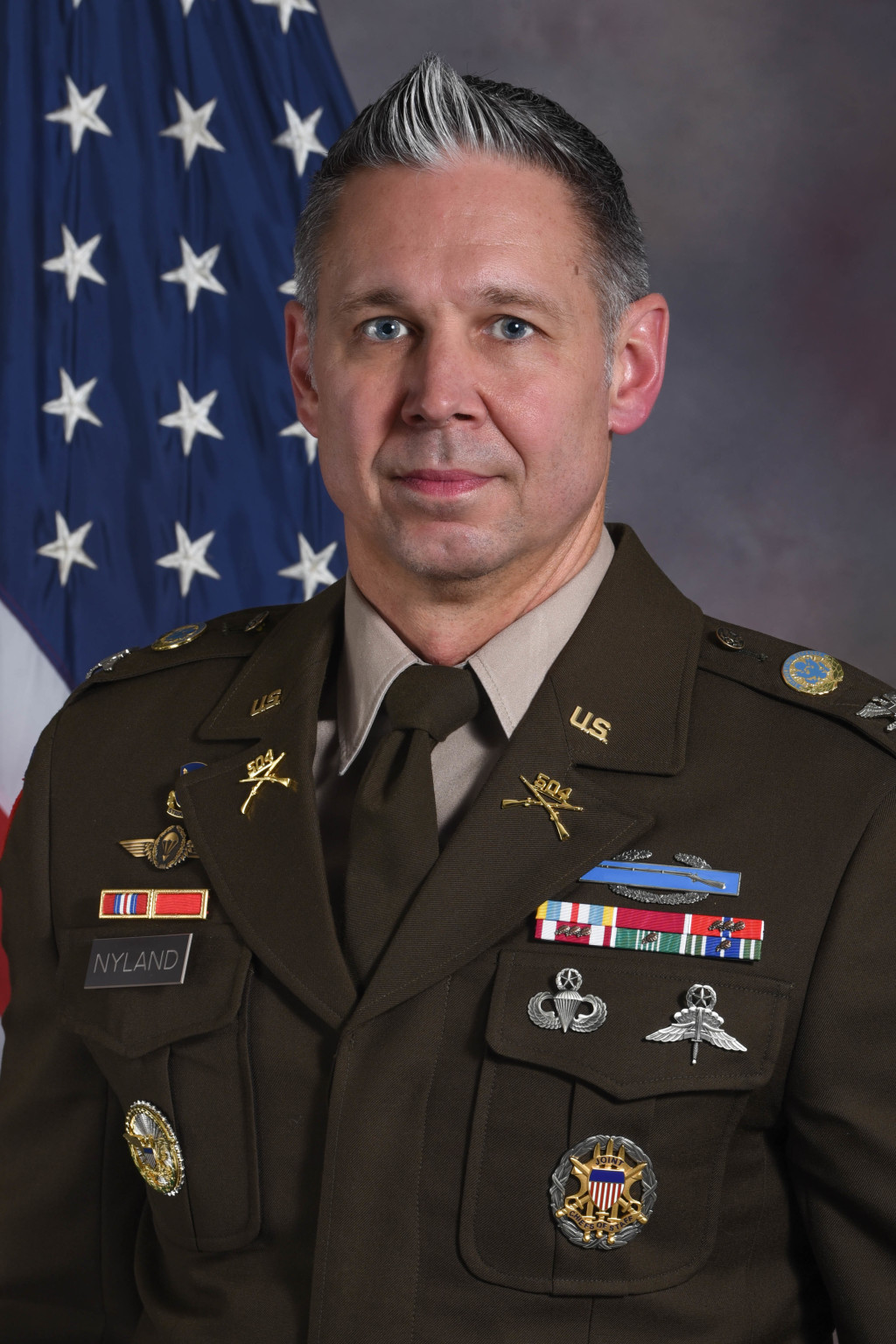
Christopher M. Nyland, U.S. Army, is a military fellow at the Council on Foreign Relations, where he focuses on the impacts of technology on the character of war, national security, and international competition along with the associated national resource strategy implications. Most recently, Nyland served as the chief of staff of the National Defense University.
He is a lifelong learner with breadth and depth of experience. A career infantry officer, he led formations from platoon to brigade level in locations from Bosnia-Herzegovina to Afghanistan, Iraq, and Korea.
As a Colonel, Nyland served as the military deputy and chief of staff for the assistant secretary of defense for manpower and reserve affairs; commanded the U.S. Army Garrison at Fort George G. Meade; and served as the executive officer to the president and then chief of staff of the National Defense University.
Colonel Nyland is a distinguished graduate of National Defense University’s Dwight D. Eisenhower School for National Security and Resource Strategy. He holds a master’s degree in national resource strategy with a concentration in supply chain management. While at the Eisenhower School, his research focused on China, artificial intelligence and robotics, and sustainment in contested environments. Additionally, he holds a bachelor’s degree from the University of Washington in Business Administration.
Colonel Nyland also studied Red Teaming at the University of Foreign Military and Cultural Studies. Those studies in applied critical thinking prepared him to examine situations, challenges, and opportunities from multiple perspectives and appreciate the viewpoints of all stakeholders. He has exercised those skills in multinational, joint, intergovernmental, and interagency settings to build common understanding, consensus, and unity of effort.