How Does Immigration Affect the U.S. Economy?
Immigrants have long played a critical role in the U.S. economy, filling labor gaps, driving innovation, and exercising consumer spending power. But political debate over their economic contributions has ramped up under the second Trump administration.
Immigration has historically driven U.S. growth and filled labor shortages in various sectors, but it has also remained one of the most politically divisive issues. In the modern era, successive administrations have agreed on the need to reform the asylum system and bolster border security, while differing sharply on how to manage immigration more broadly.
Since returning to office in 2025, President Donald Trump has reversed many of his predecessor’s policies and followed through on a campaign promise to crack down on both legal and unauthorized immigration. This has reignited the debate over the economic role of immigrants in the U.S. labor market.
Do immigrants contribute to U.S. economic growth?
Immigrants—totaling almost 48 million out of a population of roughly 335 million people—generated about $1.7 trillion in economic activity in 2023, according to an American Immigration Council analysis of the U.S. Census Bureau’s American Community Survey that year. They also paid roughly $652 billion in local, state, and federal taxes.
Undocumented immigrants, meanwhile, held $299 billion in spending power in 2023, and undocumented households had a combined income of nearly $389 billion—paying close to $90 billion in taxes. Still, proponents of immigration restriction have argued that undocumented immigrants in particular are a net drain, especially on state and local budgets, which bear a large portion of the costs such as education and health-care costs for a larger population.
Most economists say that immigration is good for the U.S. economy because it helps grow the size of the labor force, boost tax revenue, and increase consumer demand. There is some debate about the effect of immigration on wages, however. Some researchers, such as Harvard University’s George Borjas, have raised concerns about its negative impact on the low-skilled labor pool. Others, such as economist Giovanni Peri, have found [PDF] that immigration has only a minimal effect on the wages of U.S.-born workers.
How many immigrants work in the United States?
Nearly thirty-one million immigrants worked in the United States in 2024, accounting for 19.2 percent [PDF] of the U.S. civilian workforce, per the Bureau of Labor Statistics (BLS). The U.S. foreign-born population had a labor force participation rate of nearly 67 percent, compared to roughly 62 percent for the U.S.-born workforce. (The BLS definition of foreign-born includes legally admitted immigrants, refugees, temporary residents, and undocumented immigrants.)
Which industries employ the most immigrant workers?
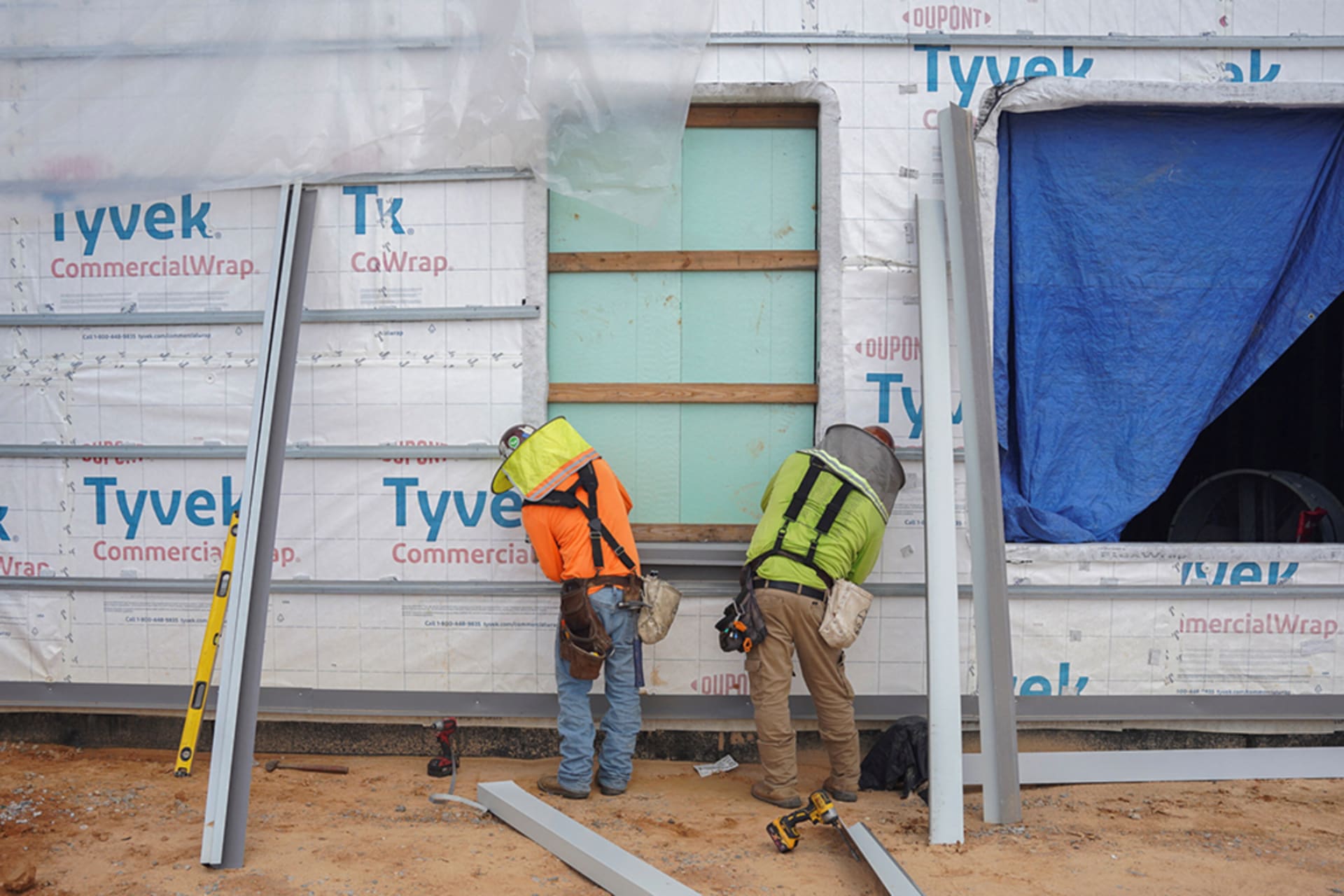
Immigrants work across a wide range of industries and occupations. Compared with those born in the United States, greater shares of immigrants work in service occupations (22 percent); natural resources, construction, and maintenance (13.9 percent); and production, transportation, and material moving (15.5 percent), according to the BLS.
A 2025 national survey found that 18.5 percent of immigrant workers participate in the gig economy as their primary or secondary job. Those who do typically get work through app-based digital platforms such as Uber, or work in an informal capacity—often under unsafe conditions—in industries including construction and manufacturing.
Immigrants also start a wide range of businesses, from mom-and-pop shops to large-scale enterprises. In 2024, 46 percent of companies that made that year’s Fortune 500 List—such as Apple, Amazon, and DoorDash—were founded by immigrants or their children, according to the American Immigration Council. Research has also shown that despite comprising only 16 percent of the U.S. inventor workforce between 1990 and 2016, immigrants produced roughly 23 percent of all patents [PDF] during that period.
How have Trump’s immigration policies affected the economy?
The administration’s changes to U.S. immigration policy—including indefinitely suspending the refugee resettlement program, rolling back country designations of Temporary Protected Status, raising certain visa fees, and ramping up deportations—have already had an effect on the U.S. labor force.
Since the start of 2025, job growth in industries heavily reliant on undocumented labor has been weaker than the rest of the private sector. These sectors include the hotel, restaurant, construction, and health-care industries. Experts say the agricultural industry in particular—in which 68 percent [PDF] of farm laborers for fiscal year 2021–22 were foreign-born—could suffer as the administration’s immigration crackdown continues. The Labor Department warned in October 2025 that the Trump administration’s immigration policies risk creating a labor shortage in the sector. Nationwide, the number of foreign-born workers declined by more than one million between January and August 2025, BLS data shows.
Some top administration officials, including Vice President JD Vance, have argued that limiting immigration will raise wages and create more job opportunities for U.S.-born workers. The administration has contended that these workers are available to counter labor shortages. “There is no shortage of American minds and hands to grow our labor force,” White House spokesperson Abigail Jackson said in a statement.
However, economists caution that a shrinking labor force could have long-term economic effects. The administration’s enforcement policies could decrease the amount of goods and services produced domestically—a major component of gross domestic product (GDP). This could cut annual economic growth by almost one-third by 2035, according to an October 2025 study [PDF] by the nonpartisan National Foundation for American Policy (NFAP). “Immigrants both create demand for the goods and services produced by U.S.-born workers and work alongside them in ways that increase productivity for both groups,” said Mark Regets, a senior fellow at NFAP.
The Peterson Institute for International Economics, meanwhile, estimated [PDF] in 2024 that deporting between 1.3 and 8.3 million undocumented immigrants would reduce U.S. real GDP by as much as 7 percent by 2028 while significantly decreasing U.S. employment, increasing inflation, and driving down demand. Still, economic analyses widely suggest that the administration’s actions, especially mass deportations and restrictions on legal immigration pathways, will have a negative effect on long-term U.S. economic growth.
Will Merrow helped create the graphics for this article.