Behind Trump’s Peace Efforts: A Strategic Focus on Critical Minerals
President Trump has repeatedly claimed to have ended eight wars since he returned to office. Accessing critical minerals and resource extraction appear to be at the core of those diplomatic efforts.
On December 4, the White House released its National Security Strategy, detailing President Donald Trump’s plans for promoting his “America First” philosophy. The strategy includes a stronger military presence in pivotal regions, bringing countries into Washington’s orbit by negotiating peace settlements, and “securing access to critical supply chains and materials,” among several other priorities.
The document casts Trump as the “President of Peace,” a title that aligns with the administration’s efforts to present Trump as an expert peacemaker while he vies for the Nobel Peace Prize. The administration has touted Trump’s success in purportedly ending eight global conflicts during his second term, the most recent of which culminated in the ceremonial signing of a long-awaited peace deal on December 5 between the Democratic Republic of Congo (DRC) and Rwanda at the newly renamed Donald J. Trump Institute of Peace.
In addition to the DRC and Rwanda, Trump claims to have resolved conflicts between Armenia and Azerbaijan, Cambodia and Thailand, Egypt and Ethiopia, Kosovo and Serbia, India and Pakistan, Israel and Iran, as well as the war in Gaza. His results, however, are “mixed at best,” Paul Stares, CFR senior fellow on conflict prevention, wrote about Trump’s efforts. “The eight cases cited as ‘cementing’ Trump’s peacemaking ‘legacy’ are all tendentious.”
These conflicts—and their peace prospects—are complex and varied, but several of them share one common denominator: the entangled countries have vast reserves of critical minerals or energy resources.
“The Trump administration has placed minerals diplomacy as a central pillar of its negotiations,” especially in “war-torn regions that are mineral rich,” CFR Senior Fellow Heidi Crebo-Rediker told CFR. This has largely been motivated by a desire to counter China’s decades-long dominance in critical minerals needed to manufacture many items, including automobiles, military equipment, and cell phones, she added.
“The United States must never be dependent on any outside power for core components—from raw materials to parts to finished products,” the National Security Strategy stated, underscoring the administration’s view that remaining competitive in this arena is vital to U.S. security.
Here’s a look at some of the mediation efforts that incorporate U.S. resource access and investment deals into peace negotiations, which experts say underscore Trump’s transactional approach to foreign policy.
Russia-Ukraine
In late April, Ukrainian President Volodymyr Zelenskyy secured an energy, infrastructure, and critical minerals deal with the United States, further cementing the bilateral ties between the two countries as Ukraine’s war with Russia stretched on. Ukraine agreed to contribute 50 percent of future revenue from critical minerals and new energy licenses to a newly established joint fund that would help the United States recoup its defense investments in Ukraine and later help fund Ukraine’s postwar reconstruction.
The deal was intended to give the United States a stake in negotiations between Russia and Ukraine by aligning U.S. and Ukrainian economic and security interests. It came after a fraught White House meeting between Trump and Zelenskyy in February had cast doubt on the future of U.S. security assistance to Ukraine.
Although the United States did not explicitly pledge continued security assistance in the deal, future U.S. contributions of in-kind military assistance will count as a contribution toward the fund, explained Crebo-Rediker.
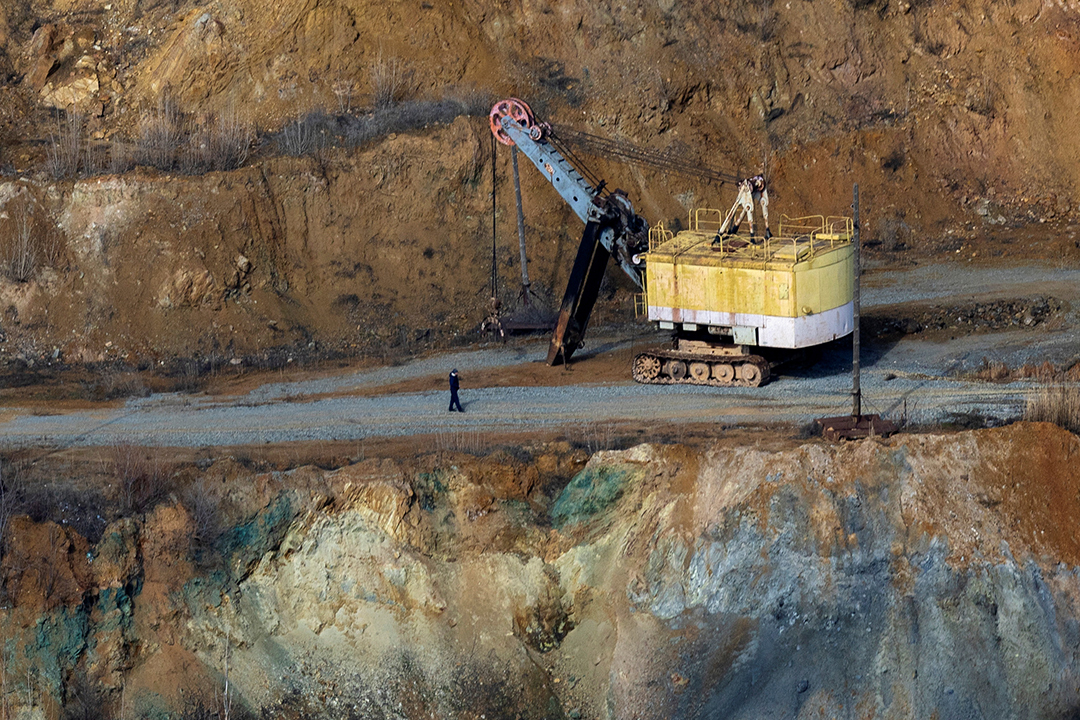
Ukraine possesses about 5 percent of the world’s critical raw minerals, including some 19 million tons of graphite, and large deposits of titanium, lithium, and uranium. However, the deal could collapse if Russian President Vladimir Putin gains control of the Donbas region, where many of Ukraine’s most valuable critical minerals and rare earths are located. The U.S. deal has proposed that Ukraine cede parts of its Donbas region, a provision still under debate and one of Ukraine’s biggest sticking points.
Meanwhile, at an August U.S.-Russia summit in Alaska, Trump reportedly discussed energy deals with Putin as incentives for the Kremlin to agree to peace in Ukraine. Since then, Trump officials have also discussed jointly mining rare earths in the Arctic with Russia, though Crebo-Rediker noted that Russia’s rare earth output is modest.
DRC-Rwanda
Eastern Congo has endured more than thirty years of conflict involving a complex array of actors, but fighting reignited late last year between the DRC and rebel group M23. The group is widely known to be supported by neighboring Rwanda, though Kigali formally denies the accusation. The clashes quickly pushed the DRC into one of the largest humanitarian crises in the world.
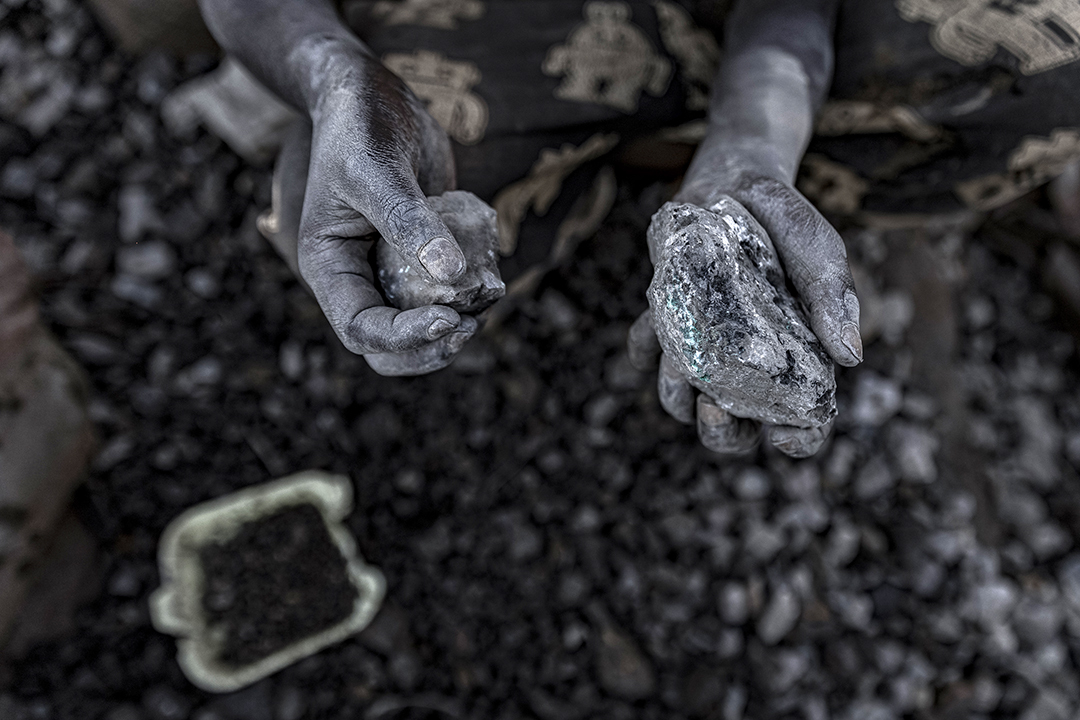
Congolese officials, seeking external support to contain the crisis, proposed a deal to the Trump administration in March to stabilize the area in exchange for cooperation on trade and mineral extraction. The DRC has the world’s largest reserves of cobalt, along with significant quantities of coltan, lithium, and uranium, all of which are overwhelmingly mined and processed by Chinese firms. Most of these reserves are found in the eastern region, where the conflict rages.
In June, the foreign ministers of the DRC and Rwanda signed a peace deal at the White House that called on both countries to disengage and disarm troops and respect each other’s territory. Backed by the United States and Qatar, the DRC also signed a parallel framework with the M23.
On December 5, DRC President Félix Tshisekedi and Rwandan President Paul Kagame visited Washington to formalize the peace deal. On the sidelines of the summit, the United States and DRC inked a new strategic partnership on critical minerals and security cooperation. The terms offer U.S. firms preferential access to Congolese mineral reserves when doing business with state-owned mining companies. In return, the United States plans to develop a corridor to more easily connect the DRC’s mineral-producing regions with Western customers.
Yet “very little has changed as a result of these many agreements,” CFR Senior Fellow Michelle Gavin wrote. “On the ground, violence persists, and civilians continue to suffer as both sides commit atrocities.” Reports indicate that U.S. diplomatic efforts have not significantly slowed the fighting, which intensified in the lead-up to the December summit and reportedly continued the day after the peace agreement.
Armenia-Azerbaijan
Armenia and Azerbaijan have been embroiled in territorial disputes since the Soviet Union’s dissolution. Following Azerbaijan’s 2023 seizure of the long-contested region of Nagorno-Karabakh, Armenia initiated peace talks.
A key point of contention centered on Azerbaijan’s Nakhchivan territory, which is enclosed by Armenia, Iran, and Turkey. Nakhchivan has significant copper reserves, but an Armenian blockade of the region since 1989 has hindered its economic connectivity. Armenia had long objected to the creation of a transit corridor linking Nakhchivan to Azerbaijan via its territory, fearing the route would undermine its sovereignty.
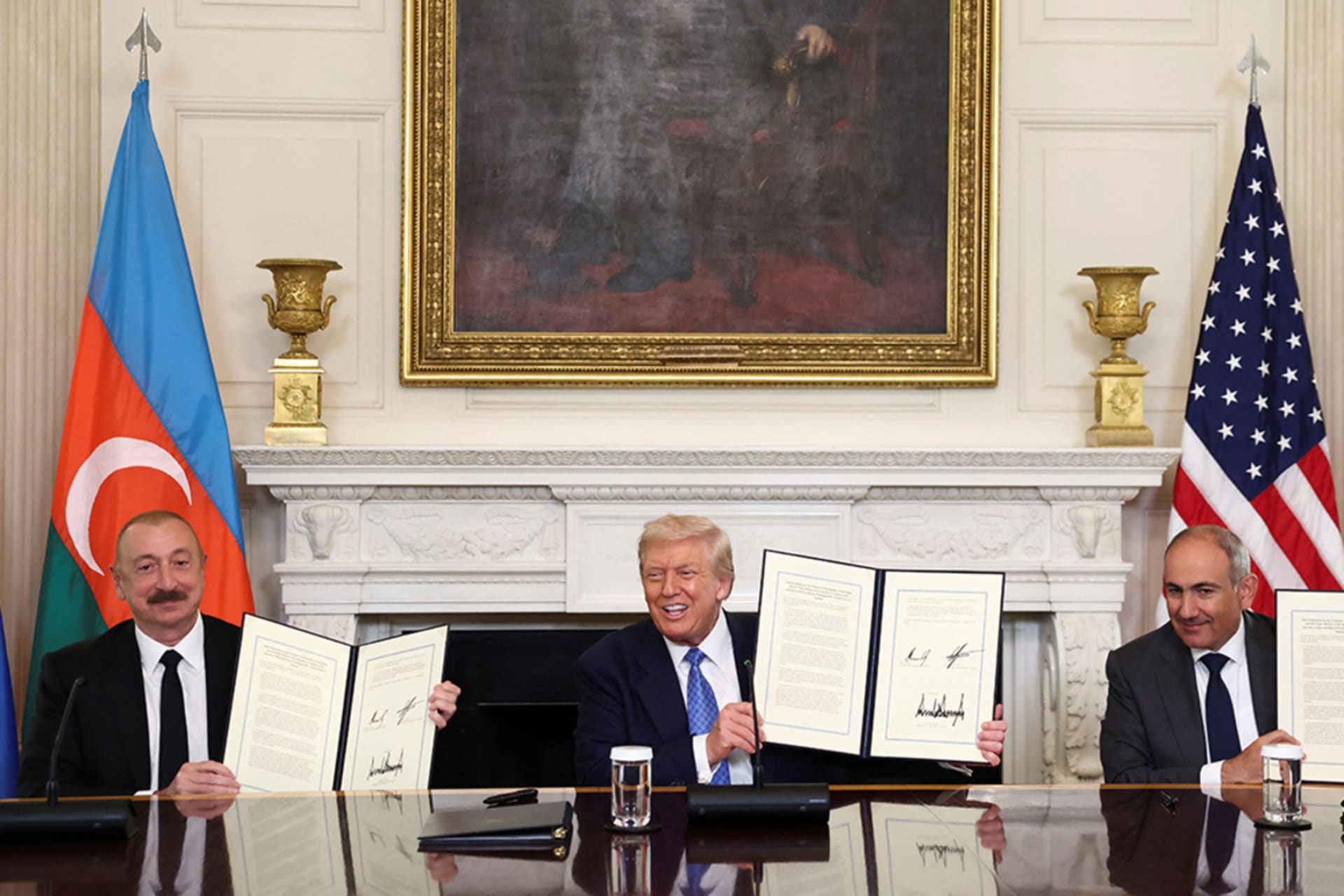
Yet in August, the two countries agreed to a U.S.-brokered peace agreement that would allow for the establishment of the transit corridor, dubbed the Trump Route for International Peace and Prosperity. Armenia granted the United States special development rights to the corridor land for ninety-nine years, allowing U.S. contractors to develop rail, oil, and gas lines. The corridor will connect the South Caucasus and Central Asia to Europe, facilitating the transport of the region’s vast wealth of critical minerals and other natural resources. Azerbaijan contains aluminum and copper and is a major producer of crude oil and natural gas, while Armenia possesses copper, silver, and antimony.
Some U.S. lawmakers lauded the deal as a way to reduce U.S. dependence on China.
India-Pakistan
India and Pakistan’s long-running conflict over the disputed Kashmir region revived in May when a terrorist attack in Indian-administered Kashmir prompted New Delhi to launch missiles on Pakistani territory and Pakistan-administered areas of Kashmir. Trump waded into the conflict as tensions between the neighbors escalated, eventually claiming to have mediated an end to the fighting. His involvement broke a precedent of noninterference in the India-Pakistan conflict and angered Indian Prime Minister Narendra Modi, as India typically rejects third-party mediation.
While U.S.-India relations were strained, Pakistan embraced Trump’s overture, reversing previously tense relations over Pakistan’s support for the Taliban and al-Qaeda during the Global War on Terrorism.
The Trump administration’s pivot comes as Pakistan promotes its critical minerals sector. Pakistan is home to an estimated $6 trillion in critical minerals, primarily in its Balochistan province. However, the paramilitary group Balochistan Liberation Army (BLA) has waged an insurgency against the central government since the early 2000s, threatening to attack mining and energy projects that do not benefit local communities.
As U.S.-Pakistan ties thawed, a flurry of agreements followed. Trump promised in July to help Pakistan develop its largely untapped “vast oil reserves.” In September, when he hosted the Pakistani prime minister and army leader at the White House, the parties announced that Pakistan would provide the United States with critical minerals and rare earth elements. A Missouri mining firm then signed a $500 million memorandum of understanding with a conglomerate owned by the Pakistani military to build a poly-metallic refinery, a part of the critical mineral supply chain for battery production.
In return, the United States designated the BLA as a foreign terrorist organization and revived counterterrorism talks with Islamabad. If U.S. firms proceed to invest, they could risk becoming a target of attacks. The BLA and other militant groups have repeatedly targeted existing infrastructure linked to China-Pakistan Economic Corridor projects in Pakistan, including attacking Chinese nationals, gas pipelines, and mineral trucks.
Is this approach effective for ending the conflicts?
Trump administration officials have stated their emphasis on economic incentives will promote peace. While negotiating a ceasefire between Russia and Ukraine, special envoy Steve Witkoff justified plans for U.S. investment in Russia by saying the business deals would “naturally be a bulwark against future conflicts.”
This approach to Russia is not new. Following the dissolution of the Soviet Union, many European governments believed that increasing economic integration would improve relations with Russia. Europeans strengthened their ties to Russia, including through projects like the Nord Stream natural gas pipelines. Yet economic integration didn’t dissuade Russia from invading Ukraine—in fact, some experts argue the European Union’s reliance on Russian natural gas and oil has actually hindered the bloc’s ability to respond to Russian aggression against Ukraine.
Previous U.S. administrations also promised economic investment while negotiating conflicts—as the Clinton administration did in the Balkans and Northern Ireland—but they often made future aid contingent on the agreement’s implementation. Although Trump’s engagement has provided momentum to bring warring sides to the negotiating table, it is too early to tell whether the approach will bring the lasting peace the administration says it will.
Some experts are skeptical of the sustainability of Trump’s approach. Yale University’s David J. Simon and Kathyrn Hemmer wrote in Just Security earlier this year, “one cannot buy peace with mineral and real estate deals.” The Trump administration’s focus on critical minerals in conflict negotiations demonstrates a stronger commitment to securing access to natural resources than to diplomacy, they said. This approach to solving global conflicts stems from the belief that “foreign policy is not free,” CFR’s Crebo-Rediker noted.
However, neither are the benefits of this approach, which face significant obstacles. The mining and processing of these resources is complex, and conflict zones may not be equipped to facilitate intensive, decades-long investments. Trump’s transactional approach often presents economic opportunities as the linchpin of a peace settlement. But, Crebo-Rediker warned, “it is unrealistic for certain parts of the world to try and gloss over historic, entrenched conflicts that can’t be solved by commercial agreements.”