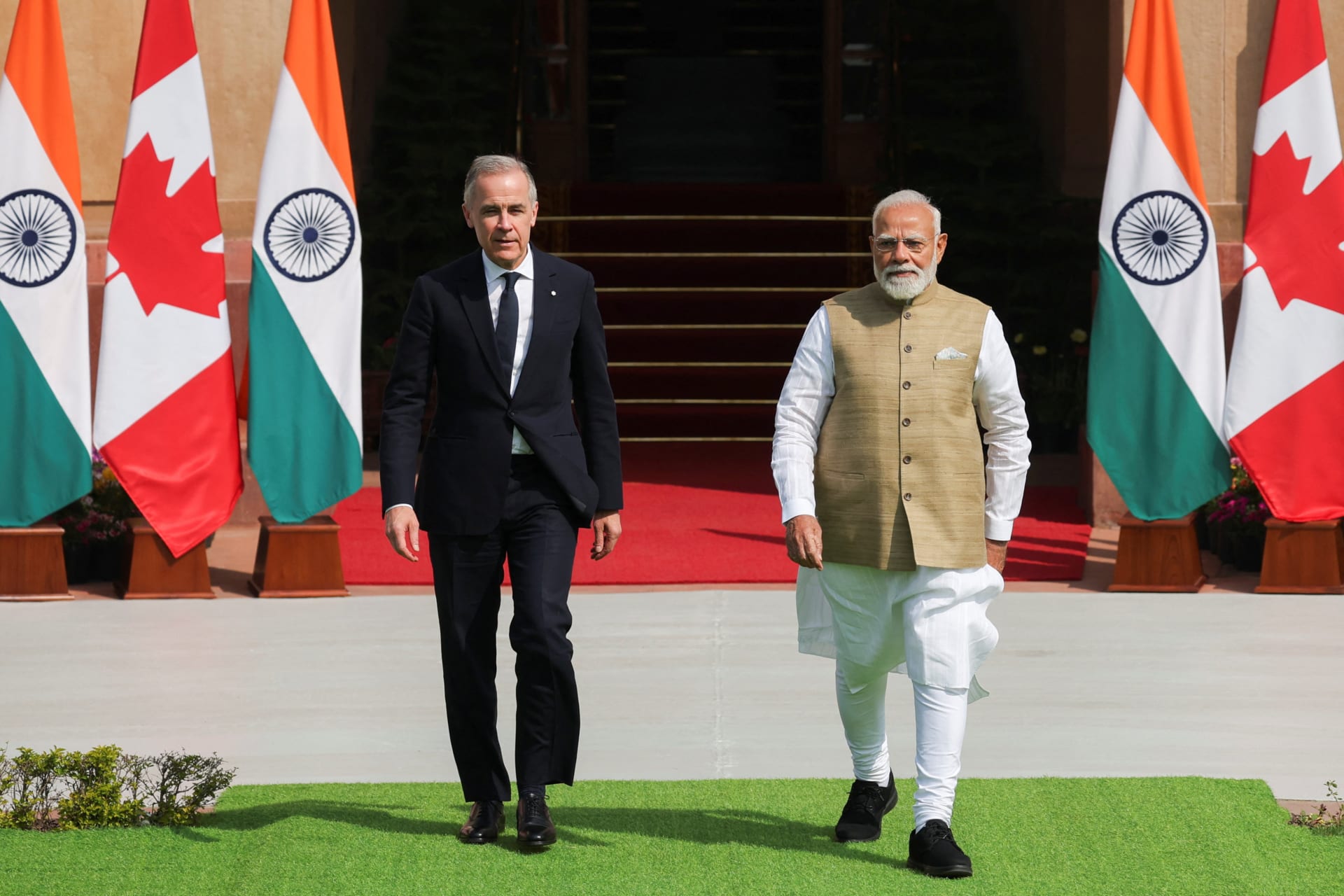

Canadian Prime Minister Mark Carney has embarked on a weeklong diplomatic mission to India, Australia, and Japan. The sight of a North American country working with three of the Indo-Pacific’s largest economies to negotiate trade deals and speed diversification away from the United States—unthinkable just a year ago—underscores the new salience of middle powers. But while middle-power diplomacy has suddenly become ubiquitous, there is a widespread misunderstanding of not only the nature of these countries but also the risks of their collective rise.
The idea of middle powers banding together was first put forth by Carney at this year’s World Economic Forum in Davos, Switzerland. It marked a watershed moment in contemporary international relations. A key U.S. ally and neighbor stood up and announced that the liberal international order had ruptured because its primary architect, the United States, was actively endangering it. In response, Carney called on middle powers to work together to navigate this new world.
Whether one agreed or disagreed with Carney’s speech, it was undeniably remarkable. Brutally candid and steering clear of the typical diplomatic euphemisms, it was a firm rejoinder to escalating U.S.-Canada trade tensions and American threats to make Canada its 51st state. But Carney’s call for middle powers to cooperate in the face of great-power machinations heralds a risky new way of doing business. While Carney framed it as coalition-building and fellowship—or, as he put it, “if you’re not at the table, you’re on the menu”—in effect, his speech was a call to arms. If answered, it portends the fragmentation of the international order, the possibility of multiple new competing orders, and the emergence of a more dangerous world.
To make sense of what the fulfillment of Carney’s words could mean for the future of the international system, we need to understand what middle powers are and why they matter.