China’s New Climate Target
By experts and staff
- Published
By
- CFR Editors
Welcome to the Daily News Brief, CFR’s flagship morning newsletter summarizing the top global news and analysis of the day.
Subscribe to the Daily News Brief to receive it every weekday morning.
Top of the Agenda
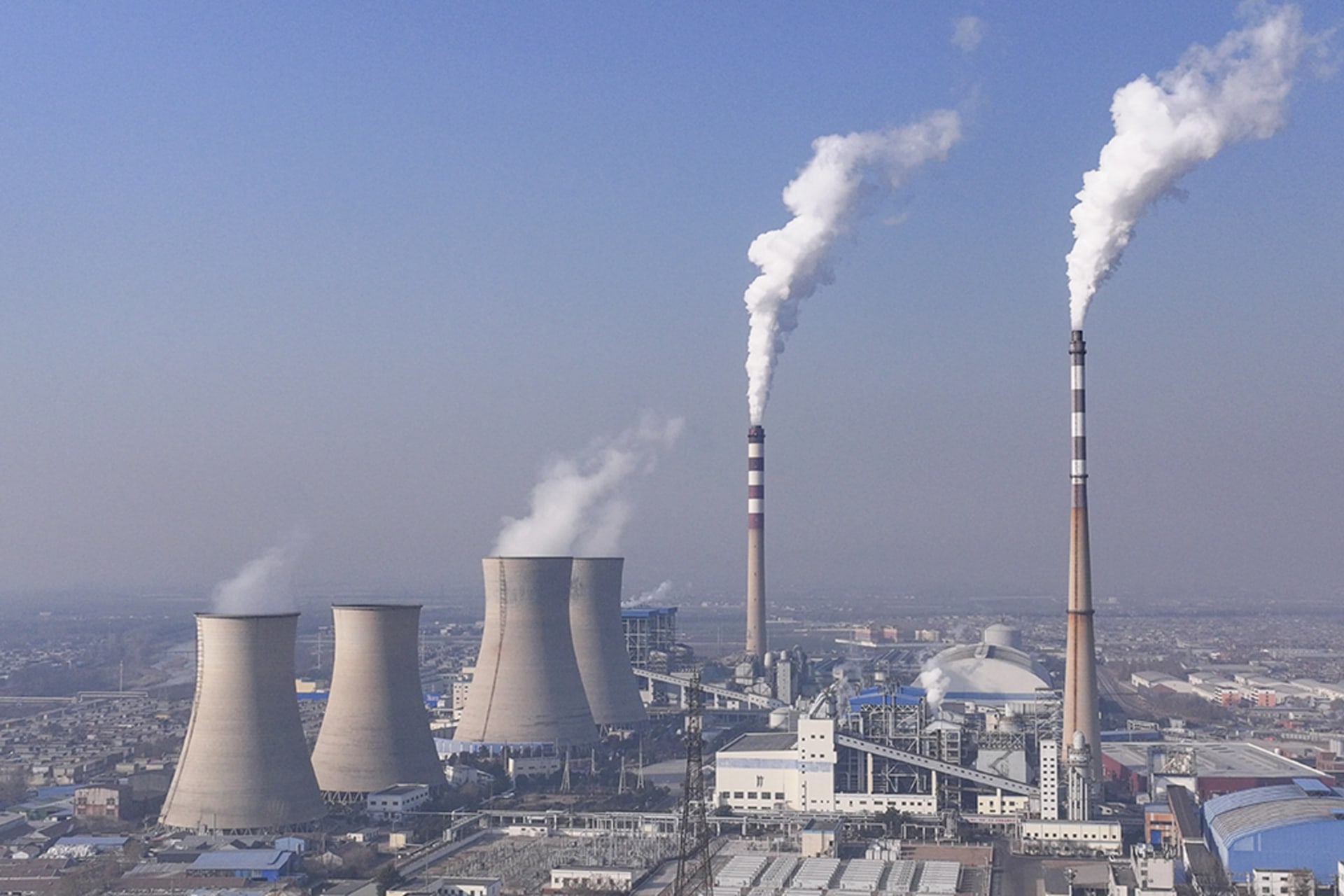
Most of the world’s countries gathered to review their 2035 climate pledges yesterday at an event that saw China present its first economy-wide target to cut emissions. The United States did not attend. The meeting took place on the sidelines of UNGA, with UN Secretary-General António Guterres hailing “the dawn of a new energy era.” However, climate experts qualified China’s new goal as conservative, and other major emitters have been slow to finalize their own.
China’s new target. Chinese President Xi Jinping, addressing the group virtually, said China would reduce its greenhouse gas emissions by 7 to 10 percent from peak levels by 2035. The Centre for Research on Energy and Clean Air says that China would need to reduce emissions by 30 percent by 2035 to align with the Paris Agreement goal of limiting global warming to 1.5℃ (2.7℉). Xi also pledged China would boost the portion of non-fossil fuels in its energy consumption to more than 30 percent over the next ten years.
Targets behind schedule. The UN climate body had set UNGA as a deadline for countries to present updated emissions targets. Some 120 did so at yesterday’s event. The EU submitted only a tentative goal, and India has yet to submit its goal; both said they would confirm the goals by the COP30 conference in November. The United States submitted a target at the end of the Biden administration, but U.S. President Donald Trump triggered a process to pull out of the Paris Agreement by next January. Speaking to the General Assembly Tuesday, he called the notion of a carbon footprint a “hoax.”
The weight of U.S. withdrawal. Environmental experts have criticized not only the U.S. pullback from global climate diplomacy but also its cuts to domestic green energy funding. Even as Guterres and others at yesterday’s summit hailed the proliferation of affordable green energy as an unstoppable force, the U.S. Department of Energy said it would cancel more than $13 billion in support for green energy projects. Still, the International Energy Agency estimates that global investment in clean energy is on track to be twice that in fossil fuels in 2025.
“The United States has gone off into a far corner on climate change that really no one else is interested in joining in a significant way, other than, perhaps, other fossil fuel producing nations…President Trump is standing alone among nations in saying the United States should back off on doing anything, even though it is the world’s historically largest emitter.”—CFR expert Alice C. Hill at a Media Briefing
What You Missed: The UN at CFR
World leaders and thinkers are visiting CFR during the UN General Assembly week. We’ll bring you their insights in the Daily News Brief every morning.
Yemen emphasizes Houthi danger: Today, Yemen is facing a threat from the Iran-backed Houthis that also endangers the broader region and the world, warned President Rashad al-Alimi. The group currently controls part of the country, though Alimi is internationally recognized as Yemen’s leader. While the Trump administration’s redesignation of the Houthis as a terrorist group was “historic,” he said, it will be difficult to reach a peaceful solution “unless there are international and regional circumstances that can bring some pressure to bear.” He called on the United States to provide Yemen with more economic support and added that Washington could lead an international alliance that aims to “eliminate the Houthi terrorist group.”
Watch the full conversation with President Rashad al-Alimi.
Ecuador calls for global investment: Ecuador is “open for business,” declared Foreign Minister Gabriela Sommerfeld, describing the country as “a market where investments can thrive,” particularly in the energy sector. Given the increasingly complex global economic landscape—marked by geopolitical tensions and rapid technological changes—she stressed the importance of Ecuador’s integration into international and regional supply chains. She also highlighted Ecuador’s role as “a strong U.S. ally,” while stressing the need to “keep that market open” with China.
Watch the full conversation with Foreign Minister Gabriela Sommerfeld.
Across the Globe
Talks on Palestinian territories. Washington presented its 21-point peace plan for Gaza to Muslim-majority countries at meetings this week, U.S. Middle East envoy Steve Witkoff said yesterday. He added that he believed it addressed both Israeli and regional concerns. Trump separately told Arab and Muslim leaders yesterday that he would not allow Israel to annex part of the West Bank, meeting attendees told multiple news outlets.
Syria’s return to UNGA. Interim President Ahmed al-Sharaa called for international sanctions on the country to be lifted in an address to the UN General Assembly—the first by a Syrian leader since 1967. He criticized Israeli airstrikes on Syria but stressed Syria was “committed to dialogue.” Israeli Prime Minister Benjamin Netanyahu said yesterday that negotiations were underway on a potential security pact between the two countries. In another sign of Syria’s global reintegration, Ukraine restored diplomatic ties with Syria yesterday.
U.S. tariff cut for EU. Washington officially lowered tariffs on EU cars from 27.5 percent to 15 percent, making the measure retroactive to August 1. The filing in the Federal Register also included tariff exemptions for products including aircraft, pharmaceuticals, and certain metals and ores. Both sides previewed these changes in July, though no further details were provided at the time. The EU, for its part, introduced legislation on August 28 to remove some tariffs on U.S. goods.
Taiwan-South Africa tensions. Taiwan lifted its chip export controls on South Africa after just two days, despite citing unspecified national security concerns when announcing the controls. Taipei said today that the suspension was granted in response to Pretoria requesting talks about moving Taiwan’s de facto embassy. The measures were Taipei’s first unilateral chip export controls for any country. China had criticized that move, saying Taiwan was destabilizing global supply chains.
Thailand’s political transition. Prime Minister Anutin Charnvirakul announced yesterday he will dissolve parliament in four months to call new elections. Anutin’s party left the ruling coalition after a court removed his predecessor last month. He was elected prime minister with the support of a pro-democracy opposition party that conditioned its backing on new elections.
Russia’s economic strains. Russia will raise its value added tax from 20 to 22 percent to help continue funding its war in Ukraine, reversing President Vladimir Putin’s pledge last year to refrain from tax increases until the end of the decade. The country’s finance ministry said the tax hike was needed to fund Russia’s mounting war costs. The economic development ministry also lowered Russia’s 2025 growth forecast to 1 percent of GDP, down from the 2.5 percent projected earlier this year.
Shooting at ICE facility. A shooting at a Dallas, Texas facility for U.S. Immigration and Customs Enforcement (ICE) yesterday killed one detainee and left two others injured. One of the wounded people is a Mexican national, Mexico’s foreign ministry said. The shooter also died from a self-inflicted wound. Authorities are investigating the incident, which the Department of Homeland Security called “an attack” on ICE law enforcement.
France’s Sarkozy convicted. A court convicted former French President Nicolás Sarkozy today of criminal conspiracy, sentencing him to five years in jail. The conviction follows a three-month trial in which Sarkozy denied receiving illegal campaign funds from late Libyan leader Muammar al-Qaddafi. Sarkozy claimed the case was politically motivated; he is expected to appeal.
What’s Next
Today, presidential and legislative elections begin in Seychelles.
Today, Trump hosts Turkish President Recep Tayyip Erdoğan in Washington.
Tomorrow, NATO’s military leadership begins a meeting in Latvia.