Europe Has to Take on China to Save Free Trade

By experts and staff
- Published
 Shannon K. O'NeilCFR ExpertSenior Vice President of Studies and Maurice R. Greenberg Chair
The US and the European Union have been on a trade agreement tear, competing to define the future global trading system. The EU looks to backstop the more established rules of the road; the US, to muscle bilateral commercial balances in its favor. Each has lessons for the other: The US would do well to remember the stability, cooperation and shared gains that enriched it alongside others. The EU would benefit by recognizing, as the US does, that traditional trade rules no longer work when China, the world’s second largest economy, doesn’t abide by them.
Over the last five years the EU has signed new free-trade agreements with New Zealand, Kenya, Australia, the South American nations of Mercosur, Singapore, Indonesia, and India, and overhauled previous ones with Chile, Ukraine, and most recently Mexico. Together, these accords set rules for nearly a third of the globe’s GDP.
The agreements aim to preserve the rules-based order that has benefited the continent for decades. Commitments to lower tariffs on goods and open markets for services play by the World Trade Organization’s most favored nation rules, benefiting all trade partners. Labor protections codify international labor standards; emissions and environmental commitments lean into the Paris Accord and other multilateral conventions. Digital provisions affirm the safe and free flow of information between partners by banning data localization, prohibiting custom duties on electronic transmissions, and protecting consumers and their privacy. And critical minerals deals to reduce supply chain vulnerabilities focus on equal access and non-discriminatory pricing as the way to protect EU companies wanting to invest in mining and refining or to purchase the outputs.
Europe did of course press for advantage. It leaned heavily into public procurement, forcing equal access for its companies to federal and local public contracts. It added hundreds of products to the list of so-called “geographic indicators,” ensuring that Rioja wine, Parma ham, Roquefort cheese and other delicacies must be made in Europe to bear the name in partner countries. And European capital and investments now have formal investment courts their companies can appeal to in case of conflict.
These baselines contrast with those set forth in the Agreements on Reciprocal Trade, or ARTs, that the Trump administration has signed with Argentina, Indonesia, Malaysia, Taiwan and five other countries. These US rules discriminate by design, treating countries differently depending on the concessions they make. They talk little about public procurement, dispute settlements, ways to boost small business exports, or anti-corruption measures to clean up the local business environment. As executive orders, they remain malleable enough to change with the administration’s multiple goals, shifting reasoning, and even whims.
The new US agreements lack the benefits of Europe’s innovations within an established system. A treaty-bound investment court provides a clever workaround for politicized local justice. Better access to public procurement contracts could open up hundreds of billions of dollars in new markets for US companies. And after laborious years in the making (just ask the nations of Mercosur), these accords bring solidity for companies and investors keen to expand their footprints and global sales.
But Europe’s deals do little to protect it or its partners from the single largest threat to global commercial rules: China. China’s 2025 net exports topped $1 trillion; in the first quarter of 2026 they rose another 15%. Last month, its trade surplus with the European Union hit a new record. Chinese firms increasingly dominate high tech industries including cars, telecommunications, construction equipment, batteries, drones, and specialty chemicals as well as more labor-intensive textiles, toys, and furniture.
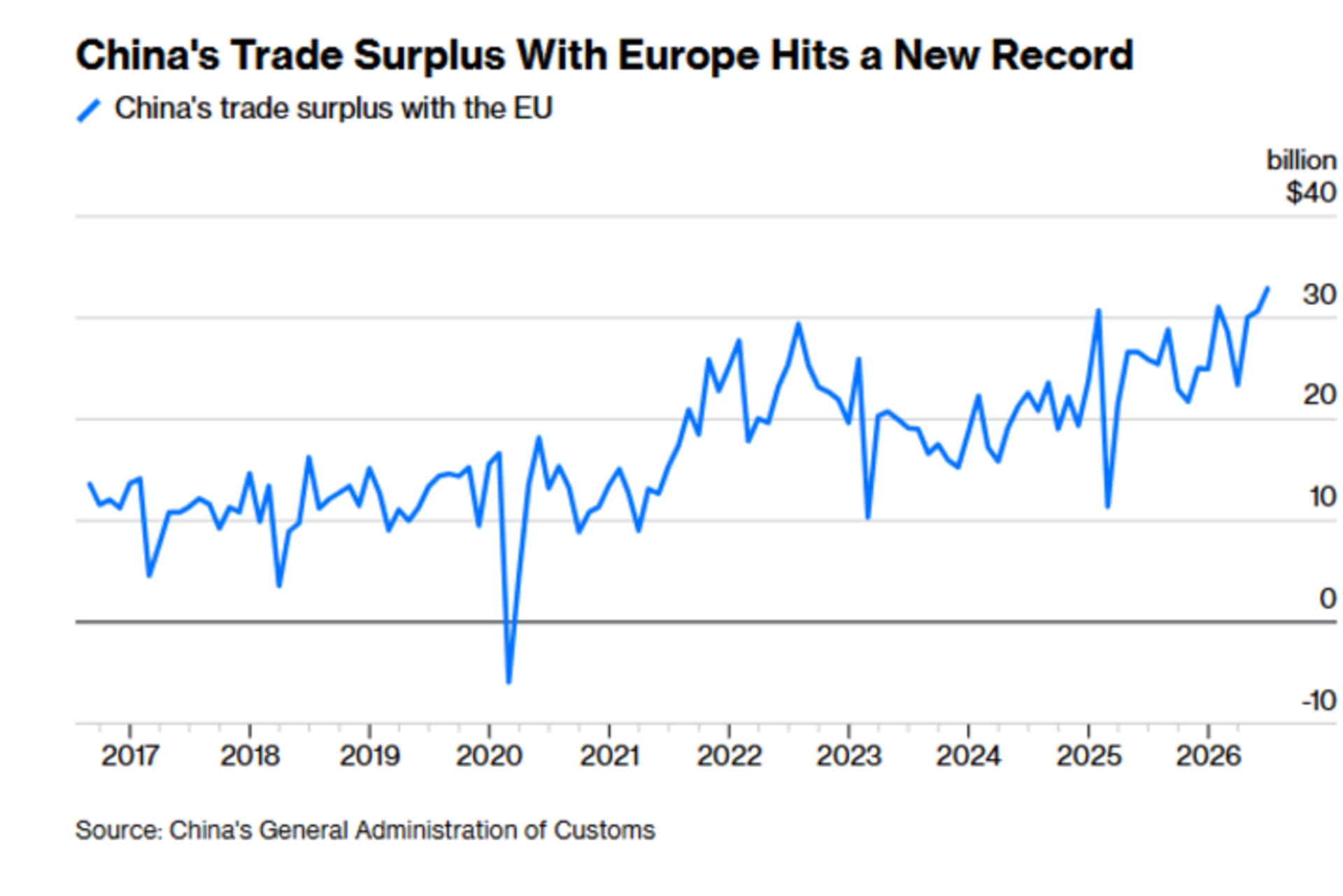
This expanding manufacturing dominance comes not just from their economies of scale and scope. Western countries have long complained about intellectual property theft and forced technology transfers. But China’s export dominance depends on more than that. Widespread subsidies provide access to cheap land and money, tax breaks, and protected markets. The IMF estimates the government spends 4.4% of GDP on such support, nearly three times what Europe lays out for its business sector and many times more than what the US government supports.
Unlike Europe, the new US trade agreements do push back on China. US trade partners generally agree to tighten rules of origin to stop Chinese trans-shipment so goods don’t bypass high US tariffs. They screen investments from third countries (namely China) in critical or sensitive sectors, match US export controls on sales to individuals or companies on US blacklists (mostly Chinese), enforce US forced labor designations in their own economies (against Xinjiang among other places), restrict imports from third countries (i.e., China) for US economic or national security reasons, and allow the US to veto new trade agreements with any “third country that undermines US interests,” (again, China).
Europe tries to defend its manufacturers by other means. It has recently launched a record number of anti-dumping and anti-subsidy investigations, leveling duties on many companies and in many sectors. It has created tools to keep companies that receive foreign subsidies from bidding on public contracts, to tariff other nations for bullying behavior, and to tax products made cheaper by lax carbon emissions standards. Yet these measures have proven too slow, too narrow, too spotty, or too divisive to do much.
Some are now calling for a European “Section 301”-style tariff to take on unfair trading practices faster and more comprehensively. Others propose capping the percentage of products that can come from one country, forcing buyers to diversify away from China’s manufacturing juggernaut. Some are even suggesting tariffs on Chinese goods until the renminbi gains ground. These are a start and might help redress the increasingly lopsided trade imbalances.
But by not addressing China’s behavior in its trade agreements, the EU is holstering its best trade weapon. European companies would fare better by finding common cause with its many trading partners’ whose economies also suffer from China’s great subsidized export machine. Safeguards mandated across more nations carry more weight. Caps on one country’s exports work better if they also block transshipment through another. Demands that China appreciate its currency are more likely to be heard if more markets participate.
With the US backing away from its once-staunch defense of the rules-based trading order, Europe bears a heavier burden in taking on and excluding those that game it. They will be far more likely to succeed if they can enlist the economic might of those willing to make the same commitment.