The Bombing of Nagasaki
Did the United States act too hastily in dropping a second atomic bomb on Japan?
By experts and staff
- Published
 James M. LindsayCFR ExpertMary and David Boies Distinguished Senior Fellow in U.S. Foreign Policy
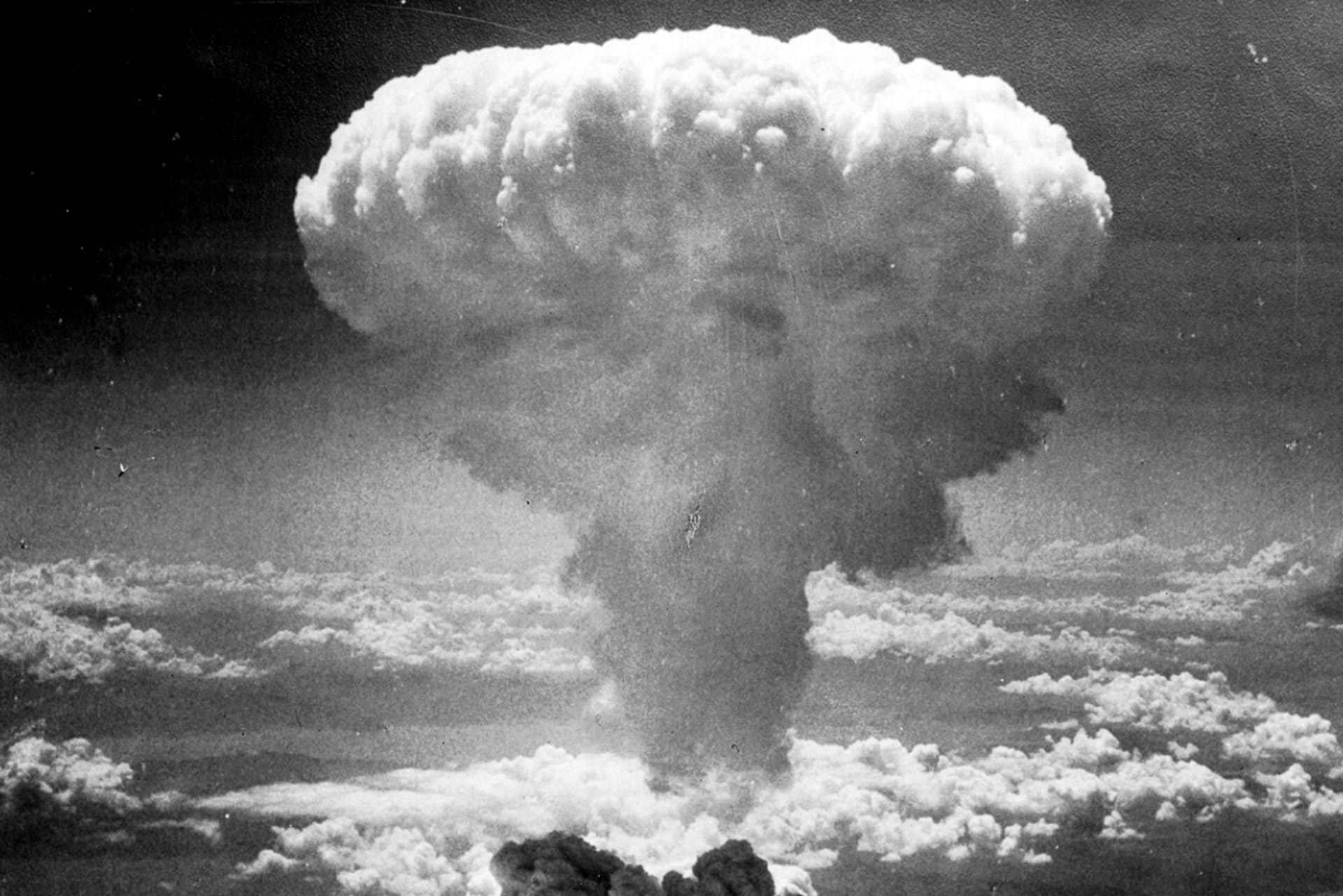
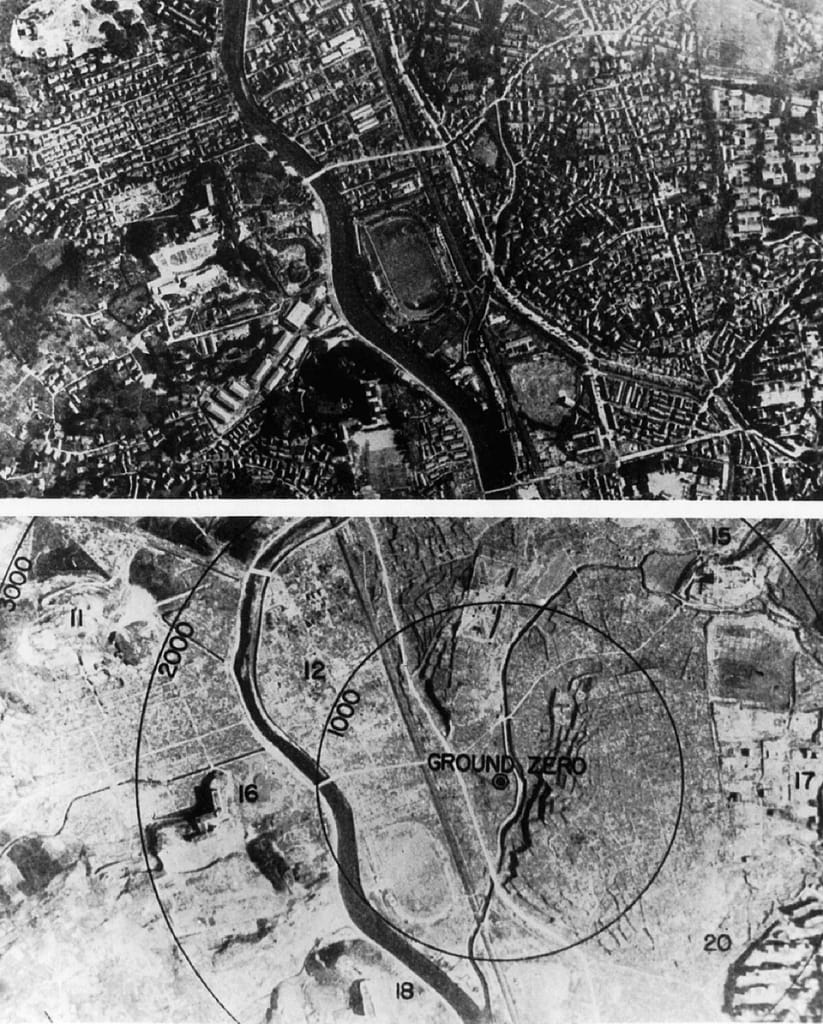
On August 6, 1945, the United States dropped an atomic bomb on Hiroshima, Japan. That first-ever use of an atomic weapon killed an estimated 140,000 people, most of whom were civilians. Three days later, the United States dropped an atomic bomb on the city of Nagasaki. Some 40,000 people, again mostly civilians, died instantly. Another 34,000 died agonizing deaths from radiation poisoning, flash burns, and other injuries in the weeks that followed.
The decision to use atomic bombs against Japan remains hotly debated. Both attacks subjected civilian populations to horrific devastation with long-lasting effects. The bombing of Nagasaki comes with the additional criticism that it happened too soon after the Hiroshima attack to allow the Japanese government to fully assess what had happened and possibly quit fighting.
A survey I conducted on behalf of the Council on Foreign Relations with members of the Society for Historians of American Foreign Relations (SHAFR) ranked the bombing of Hiroshima as the fifteenth-worst foreign policy decision in U.S. history. SHAFR members ranked the bombing of Nagasaki as the tenth-worst foreign policy decision in U.S. history.
[Video: https://www.youtube.com/watch?v=8RnHzTn5F7U]
The Manhattan Project
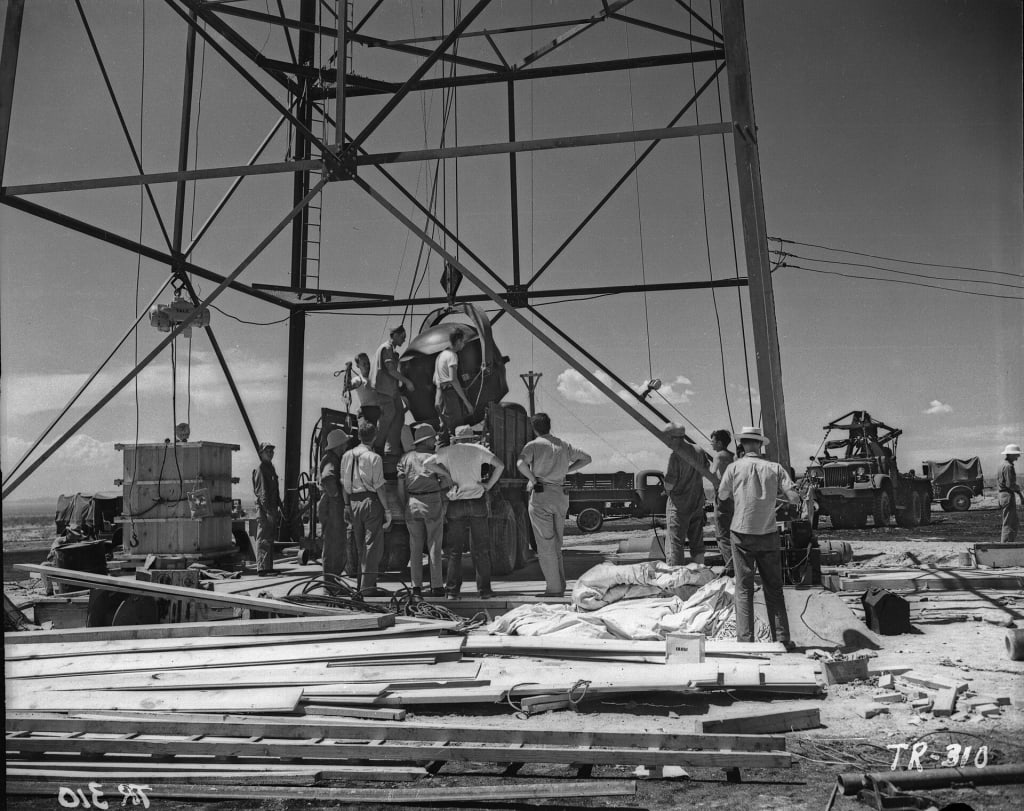
The 1938 discovery of nuclear fission by German scientists opened the door to the atomic age. The United States launched its own atomic initiative, the Manhattan Project, two months before Pearl Harbor out of fear that Germany would develop atomic weapons and dominate the world. Despite significant efforts, Germany failed to develop an atomic weapon. U.S. and British scientists, however, succeeded. On July 16, 1945, two months after Germany surrendered, the world’s first atomic device was detonated in the Trinity Test in Alamogordo, New Mexico.
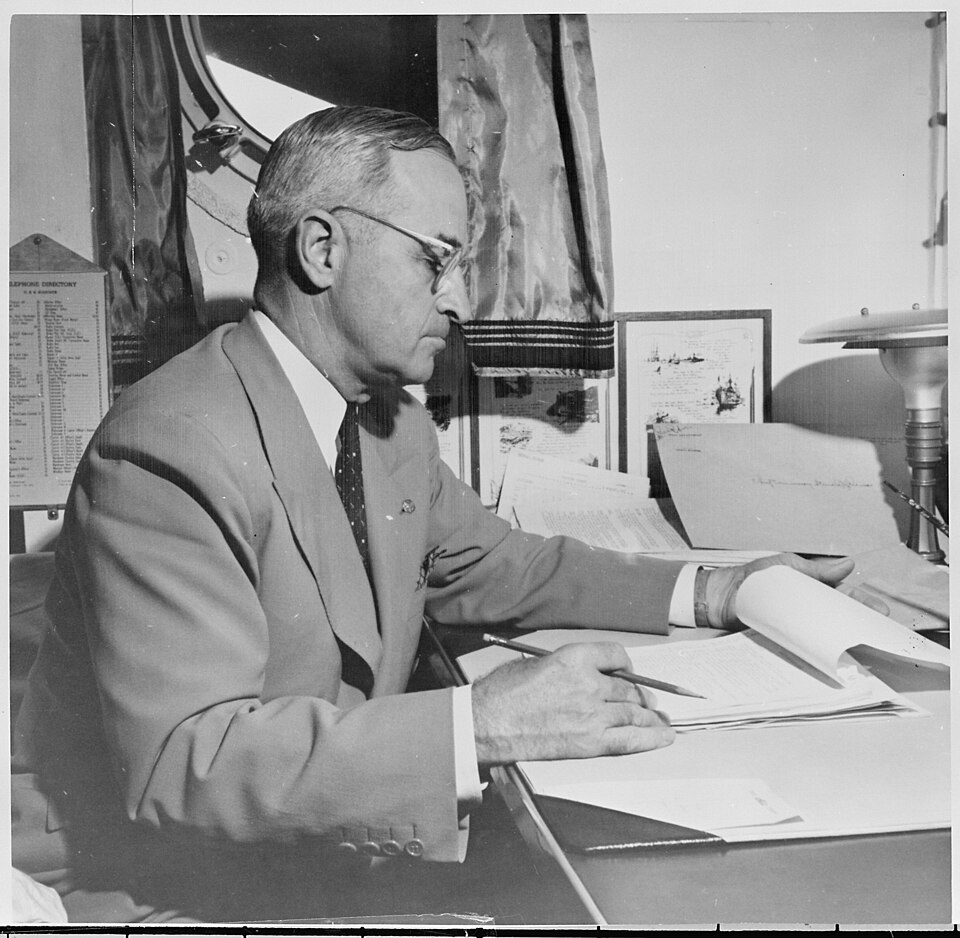
The decision on whether to use an atomic bomb against Japan, and if so, how, fell to President Harry S. Truman. He had first learned about the Manhattan Project just two months earlier, just hours after being sworn into office after the death of President Franklin D. Roosevelt. FDR left behind no guidance on how, or even if, he would use an atomic bomb should the Manhattan Project succeed. Truman was on his own.
The Interim Committee
In May 1945, Secretary of War Henry L. Stimson established an Interim Committee composed of himself and seven other high-ranking officials to advise Truman. They considered and rejected as impractical the suggestion that the United States conduct a non-combat demonstration of the new weapon to warn Japan of what it faced. Their reasoning was straightforward: The United States initially would have only a few working weapons. The demonstration test might be a dud, which could embolden Japan to fight on. If Japan knew the intended target, it might move U.S. prisoners of war to the site or shoot down the U.S. plane carrying the bomb. The Interim Committee instead recommended on June 1, 1945, that the atomic bomb “be used against Japan as soon as possible; that it be used on a war plant surrounded by workers’ homes; and that it be used without prior warning.”
Some Manhattan Project scientists argued against using their creation. On June 11, they argued in what became known as the Franck Report that “the release of this new means of indiscriminate destruction upon mankind” would “precipitate the race of armaments, and prejudice the possibility of reaching an international agreement on the future control of such weapons.” Leo Szilard, who had been instrumental in persuading FDR to launch the Manhattan Project, organized a separate petition that seventy Manhattan Project scientists signed. It urged Truman not to drop an atomic bomb on Japan unless Tokyo was first informed of the weapon and given an opportunity to surrender.
Neither the Franck Report nor Szilard’s petition swayed the Interim Committee. In a meeting on June 21, it reaffirmed its recommendation to Truman.
The Potsdam Declaration
Truman accepted the recommendation to use what he called “the most terrible thing ever discovered” against Japan. He was in Potsdam, Germany, meeting with British Prime Minister Winston Churchill and Soviet leader Joseph Stalin, when he learned of the successful Trinity Test. On July 26, 1945, Truman and Churchill issued, with the concurrence of Chinese President Chiang Kai-shek, the Potsdam Declaration. Among other things, it declared:
We call upon the government of Japan to proclaim now the unconditional surrender of all Japanese armed forces, and to provide proper and adequate assurances of their good faith in such action. The alternative for Japan is prompt and utter destruction.
The declaration did not mention atomic weapons, and it did not set a deadline for Japan to comply with its terms.
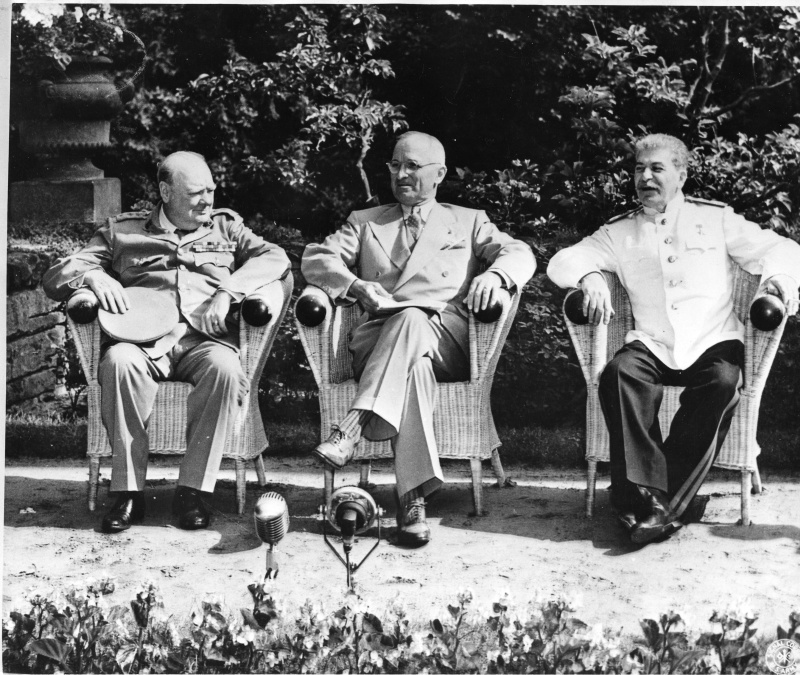
Stalin did not sign the declaration because the Soviet Union was not at war with Japan at the time. He did promise Truman, however, that the Soviet Union would soon join the fighting. The Soviet Union did just that on August 8.
Japan’s military-dominated government rejected the Potsdam Declaration. Not knowing that Stalin had agreed to join the Allied cause, Japanese officials clung to the hope that he would mediate a peace more favorable to Japan.
Hiroshima
The United States carried out the Potsdam Declaration’s threat of “prompt and utter destruction” on August 6 when a B-29 bomber named the Enola Gay dropped an atomic bomb known as Little Boy on Hiroshima, a city of some 350,000 people. As many as 80,000 people died instantly.
Later that day, Truman announced to the world that the United States had developed an atomic bomb. He went on to warn:
We are now prepared to obliterate more rapidly and completely every productive enterprise the Japanese have above ground in any city. We shall destroy their docks, their factories, and their communications. Let there be no mistake; we shall completely destroy Japan’s power to make war.
It was to spare the Japanese people from utter destruction that the ultimatum of July 26 was issued at Potsdam. Their leaders promptly rejected that ultimatum. If they do not now accept our terms they may expect a rain of ruin from the air, the like of which has never been seen on this earth.
Despite Hiroshima’s destruction, Japan refused to surrender. Some Japanese leaders doubted that the United States had many more atomic bombs. Others hoped that Stalin might be convinced to prevent further U.S. attacks.
Nagasaki
The U.S. plan had been to drop a second atomic bomb on Japan on August 11. Truman and his advisors believed that two bombings in less than a week would be the likeliest way to compel Japan’s surrender. However, weather forecasts showed storms moving in. The mission was moved up to August 9.
A specially equipped B-29 bomber named Bockscar departed from Tinian in the Northern Mariana Islands early on August 9. The crew had nicknamed its cargo, a bomb of a different design than the one dropped on Hiroshima, Fat Man. The crew’s orders were to target Kokura, now Kitakyushu, a city of 130,000 that was home to one of Japan’s largest weapons factories. U.S. bombers had yet to hit Kokura with conventional bombs. That meant that the United States could measure Fat Man’s full destructive power.
When Bockscar reached Kokura, clouds and smoke obscured the target, the city’s weapons factory. On the plane’s third bombing run, it began to attract heavy antiaircraft fire. Following a pre-established procedure, the B-29 redirected to its secondary target, Nagasaki, a port city with a population of more than 250,000 people. The clouds over Nagasaki broke just as Bockscar arrived. The plane dropped its cargo at 11:01 a.m. local time. Fat Man fell for 47 seconds and then exploded at a height of 1,650 feet.
Bockscar, which had been in the air for more than eight hours, headed for Okinawa, its nearest emergency landing strip. Once Bockscar touched down, its engines died. It had run out of fuel.
Japan’s Surrender
The bombing of Nagasaki came a day after the Soviet Union declared war on Japan, dashing the hope that Stalin might prevent a second bombing. Japan’s government met in the presence of Emperor Hirohito on the night of August 9 and debated into the next day. A vote on whether to surrender produced a tie. Emperor Hirohito took the unprecedented step of intervening to decide in favor of surrender.
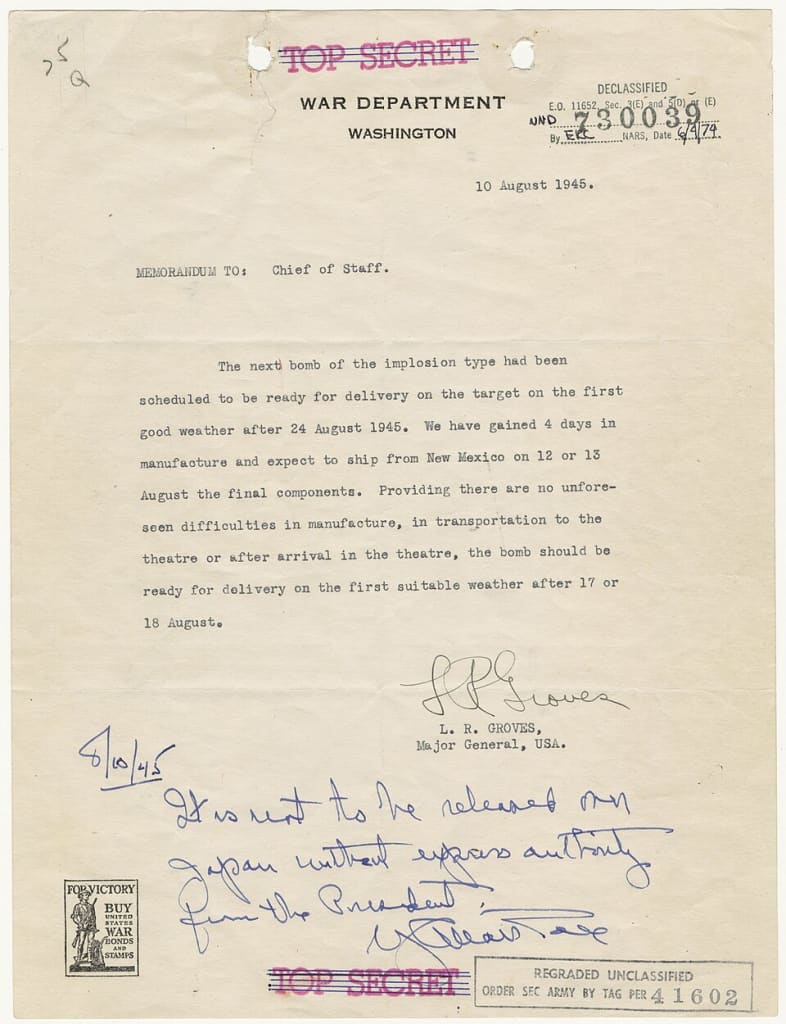
The Japanese government communicated its surrender to the United States and its allies on August 10. That morning, Truman had ordered that no further atomic bombs be dropped on Japan. Vice President Henry A. Wallace wrote in his diary:
Truman said he had given orders to stop atomic bombing. He said the thought of wiping out another 100,000 people was too horrible. He didn’t like the idea of killing, as he said, “all those kids.”
General George C. Marshall, chief of staff of the U.S. Army, personally communicated Truman’s order, though the Manhattan Project continued to prepare additional atomic bombs should they be required.
Japan’s surrender came with one condition, that the emperor be allowed to remain as Japan’s ceremonial head of state. Several days of negotiations on the details followed. On August 15, Emperor Hirohito went on national radio to announce Japan’s surrender. It was the first time that most Japanese heard his voice.
The Legacy of Nagasaki
The question that hangs over the bombing of Nagasaki, even more so than over the bombing of Hiroshima, is whether it was necessary. Even some people who supported attacking Hiroshima believe the answer is no. As the famed physicist Hans Bethe, who worked on the Manhattan Project, put it: “I think it was necessary to drop one, but the second one could have easily been avoided. I think Japan would have capitulated anyway.”
Critics of the decision to bomb Nagasaki ask difficult questions. Was three days sufficient time for Japanese leaders to absorb the enormity of what had happened to Hiroshima? Could the United States have done more to persuade them that Japan faced additional atomic bomb attacks? Was the Soviet entry into the war sufficient by itself to convince Japanese leaders to surrender?
By deciding that the two atomic bombings would happen in short order and then speeding up what became the attack on Nagasaki, the United States ensured that those questions would remain forever unanswered.
Oscar Berry and Jack Patton assisted in the preparation of this article.
This work represents the views solely of the author(s). The Council on Foreign Relations is an independent, nonpartisan membership organization, think tank, and publisher, and takes no institutional positions on matters of policy.