Five Takeaways from the 2026 Hamburg Sustainability Conference
This is a limited excerpt from the Climate Realism Initiative Newsletter. Sign up to receive monthly insights from the initiative’s fellows and staff, including articles, videos, podcasts, events, and more.
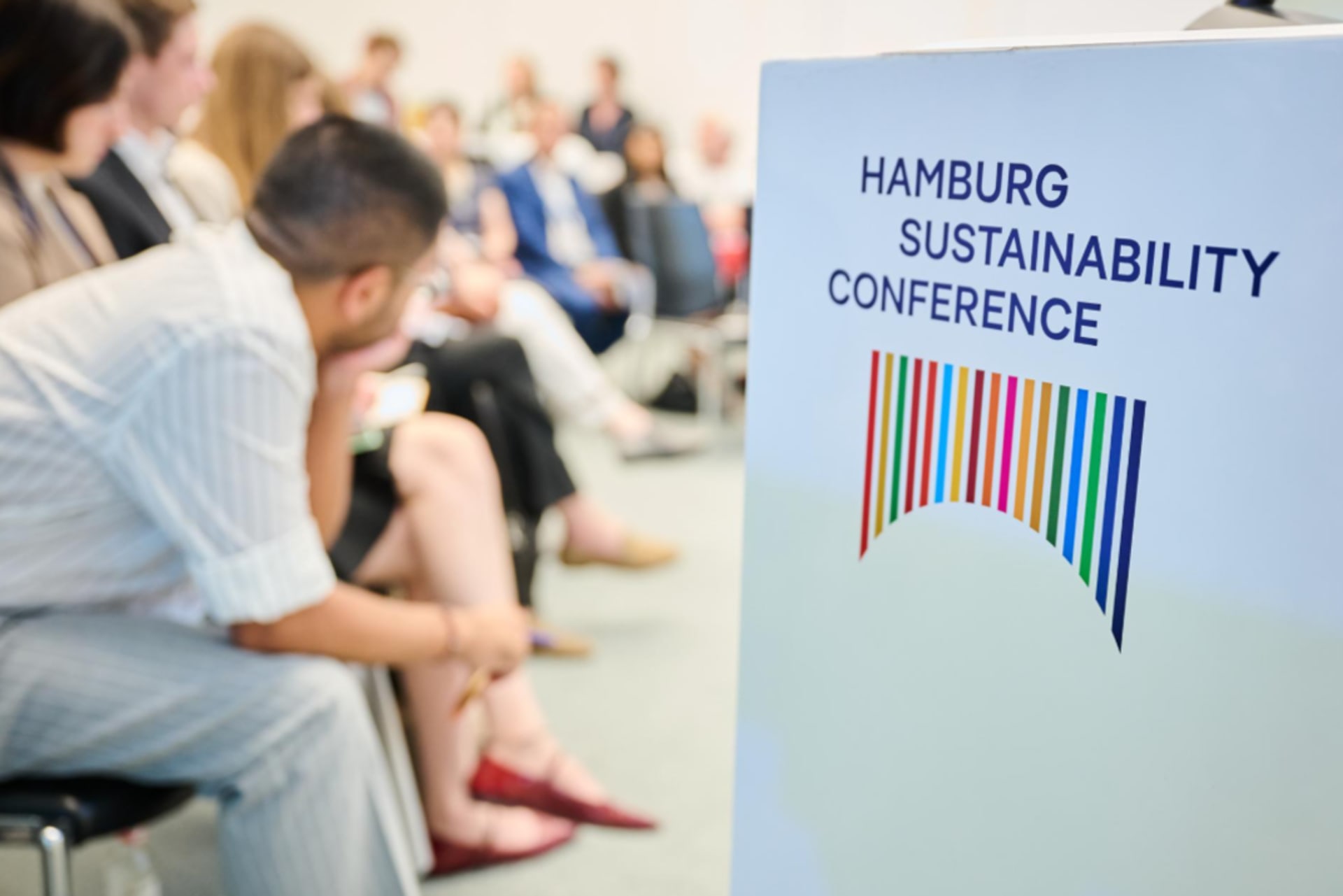
More than 1,600 policymakers, practitioners, business leaders, think tankers, journalists, and others descended on northern Germany last month for the third Hamburg Sustainability Conference (HSC). Held in an elegant downtown complex that encompasses both the historic City Hall and the restored Chamber of Commerce, the conference featured a choose-your-own adventure mix of high-level policymaker panels, issue-related talks, and business pitches from a wide range of sustainability start-ups.
CRI was on the ground, hosting a side event on the geopolitics of the energy transition and meeting colleagues and collaborators from around the world. Over the course of the two-day event, across a diverse agenda of both official meetings and informal discussions, the conversation gravitated toward a few common themes. In short, while there are plenty of positive signs for the world’s transition to cleaner energy, adaptation and traditional conservation efforts are at growing risk, and the United States is increasingly left behind.
Schrödinger’s Multilateralism
Faith in the multilateral climate system seemed to be, like Schrödinger’s famous cat, simultaneously alive and dead. Many conference speakers, especially from Europe, mounted a vocal defense of the Paris Agreement and other multilateral climate efforts. The HSC itself stressed the importance of “cooperation, multilateralism, and investment in global public goods” in its official mission statement, and the German government utilized the conference’s stage to launch a new multilateral commission designed to shape global cooperation on sustainable development.
It was not at all clear, however, that participants believed existing or new multilateral bodies would be able to deliver meaningful progress. Despite the fact that preparatory negotiations for the 2026 UN climate summit had wrapped up just days earlier in Bonn, Germany, virtually no one brought up expectations for the upcoming meeting in Antalya, Turkey. Perhaps this was because expectations are even lower than usual, but that itself speaks volumes. After last year’s meeting in Belém, Brazil, a breakaway group of frustrated high-ambition countries launched their own negotiating process to try to speed the transition away from fossil fuels. That group’s first meeting, held in Colombia this April, produced no concrete results, and there was little consensus as to whether or to what extent it would add to, rather than detract from, whatever the UN process can offer.
The Transition Is Becoming an Economic Imperative
Perhaps one reason that multilateralism seems to be a fading tool for climate action is that it’s simply being overtaken by events. The falling prices and rising quality of clean technologies, including renewable energy generation and electric vehicles, are becoming the sector’s most compelling arguments. Affordable resources are meeting abundant demand; in this scenario, there is little need to make a political case for climate action. Economics will do. This is especially true across the Global South, where cheap Chinese imports are generally not competing with incumbent domestic manufacturers and where consumers are eager to adopt affordable new products.
Concerns about overreliance on China, common in the United States and Europe, are also shared among some developing and emerging economies. At CRI’s event, a participant from an Indian think tank noted that there were meaningful trade-offs to balance between adopting the most affordable technologies and securing energy sovereignty. But for many countries, supply chain risks are simply not seen as a problem large enough to justify slowing clean energy deployment.
A New Era for Climate Finance
Across multiple events and private discussions about climate finance, official development aid barely registered. Investors and leaders from emerging and developing economies were much more preoccupied with building access to private capital, managing foreign exchange risk, and developing a predictable, bankable pipeline of infrastructure projects than they were with increasing aid flows from traditional donors. Concessional finance and managing high debt burdens were, to be sure, part of the conversation, but only insofar as they could help build access to private markets.
This dynamic could well have been selection bias; the conference was designed to bolster the private sector’s capacity to speed the energy transition, so participants were primed to speak that language. Nonetheless, it was a promising indicator of the financial sector’s willingness to explore infrastructure-scale investments in the Global South, and of the ability of those economies to manage such projects successfully.
Red Flags for Other Sectors
If the economics of clean energy are a good news story, however, the economics of everything else are getting harder. Ghana provides a clear example of the challenge. As gold prices touched more than $4,000 an ounce in 2025, Ghana (a leading gold supplier) produced a record six million ounces. Just over half of that total was produced by small-scale or artisanal mines. In Western contexts, that description might evoke gauzy pictures of smiling homesteaders panning for gold in a crystalline stream. In reality, it involves unregulated road construction, widespread deforestation, and waterways contaminated with mercury and other toxic substances.
Donor countries, international financial institutions, and many private sector entities have spent years developing suites of financial instruments designed to reward countries, landowners, and farmers for the environmental benefits of intact forests or carefully stewarded forest agriculture. All the goodwill in the world, though, is unlikely to push the payout for those services above the astronomical value of gold, which means that preserving those resources will require not just economic but political action. Amidst a weakening multilateral climate regime and a financial system increasingly focused on the profits to be made in clean energy, funding for adaptation and conservation could become troublingly scarce.
A Yawning Trust Deficit
It is difficult to overstate the effect that the second Trump administration has had on international attitudes toward the United States. If the first administration was seen as an aberration, with the Biden administration as a welcome return to traditional American leadership, Trump’s reelection has wrought a more durable change.
Future U.S. presidents will find a world that has largely moved on. U.S. participation in multilateral climate dialogues was always at least a little bit fraught; Washington never moved as quickly as its most ambitious allies and friends would have liked. Nonetheless, its active participation was seen as essential for serious progress. That perception is now mostly gone. Washington will be welcome to join, but nobody will be waiting for it.
Restoring the trust of friends and allies will be the work not just of one future presidency, but many.