Hegseth Responds to Deadline for Congress to Authorize War
By experts and staff
- Published
Welcome to the Daily News Brief, CFR’s flagship morning newsletter summarizing the top global news and analysis of the day.
Top of the Agenda
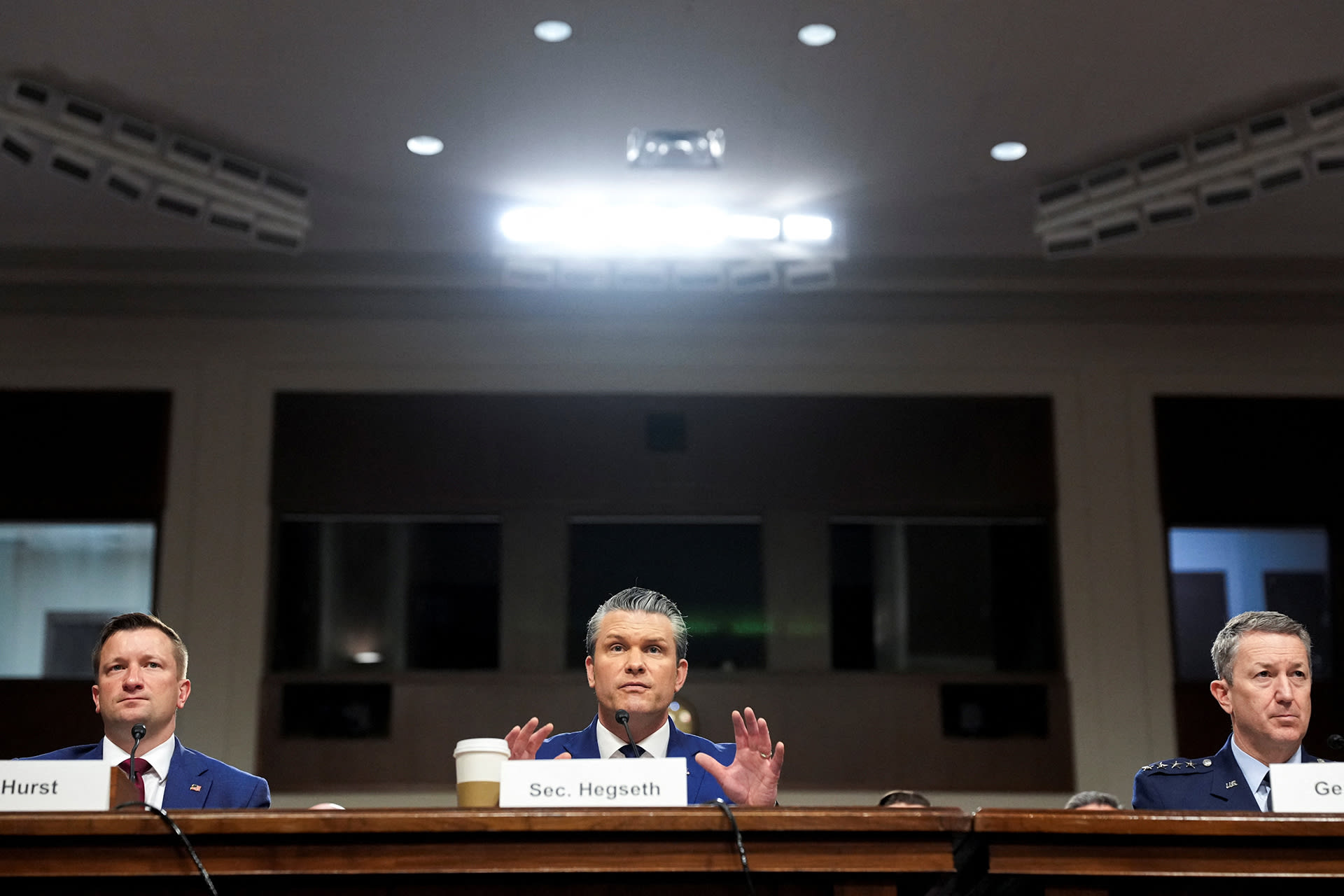
The war in Iran hits a threshold today that typically requires a U.S. president to seek congressional authorization under the War Powers Act. The Vietnam War-era law says conflict should be wound down after sixty days unless Congress declares war or authorizes the fighting. When asked about the deadline at a Senate hearing yesterday, Defense Secretary Pete Hegseth said he believed it was extended due to the current ceasefire. Pentagon officials briefed President Donald Trump yesterday about options for renewed U.S. strikes on Iran, underscoring the possibility of a return to large-scale fighting.
The question of Congressional authorization. The Trump administration officially notified Congress of its hostilities in Iran on March 2, which began the sixty-day countdown to today. Hegseth said yesterday that he believed the clock was paused due to the current truce, while an unnamed senior administration official told the Washington Post today that for the purposes of the War Powers Act, “the hostilities that began on Saturday, February 28 have terminated.” A handful of Republican senators broke from their party to endorse the withdrawal of U.S. troops from Iran in a resolution vote yesterday, but it failed to pass.
Congress voted to authorize U.S. military involvement in the Middle East in the wars in Iraq and Afghanistan, but it did not grant authorizations for later missions including operations in Libya in 2011 and against the Houthis in Yemen beginning in 2024.
A return to fighting? The heads of U.S. Central Command and the Joint Chiefs of Staff yesterday reviewed options with Trump for a return to fighting, according to an Axios reporter. An unnamed senior official in Iran’s Islamic Revolutionary Guard Corps was quoted by Reuters yesterday as saying that new U.S. attacks would be met with “long and painful strikes” on U.S. assets in the region.
“Was [this war] worth it? Much will depend on its duration—whether the ceasefire is fully implemented and how long it lasts—and whether that leads to a longer-term resolution or to a frozen conflict with cycles of renewed attacks and repeated closings.”
—CFR President Michael Froman, The World This Week
Across the Globe
Trump to lift UK liquor tariffs. The United States will remove tariffs on whiskey from the UK in honor of King Charles and Queen Camilla, Trump wrote on social media yesterday, following their visit to Washington. In a deal reached last year between the two countries, the United States set a 10 percent tariff level on all UK goods. Without Trump’s newly announced tariff relief, a separate 25 percent duty on whiskey was set to take effect later this year.
Mexico responds to indictment. Mexican President Claudia Sheinbaum said yesterday that the country does not plan to send Sinaloa state Governor Rubén Rocha Moya to the United States to face trial after the United States indicted him, saying there was no “overwhelming and irrefutable” evidence in the cartel conspiracy case. If such evidence emerged, he would be tried in Mexico, an official said. The Justice Department did not immediately comment.
Japan’s currency intervention. The Japanese government intervened in the foreign exchange market for the first time in nearly two years yesterday in order to prop up the falling value of the yen, multiple news outlets reported. The government reportedly bought yen and sold dollars, and the yen’s value against the dollar rose by as much as 3 percent to its highest level since late February. A weaker yen makes it more expensive for Japan to pay for imports like oil.
U.S. sanctions former DRC leader. The United States announced sanctions yesterday on former Democratic Republic of Congo (DRC) leader Joseph Kabila, saying he supported Rwanda-backed rebel groups that are fighting in the country’s east. The move comes after a U.S.-endorsed peace deal for the eastern Congo and Rwanda in December fell apart shortly after its signing. The DRC’s current government applauded the sanctions. Kabila has been sentenced in a Congolese court to death in absentia for war crimes; he mostly lives in South Africa.
Russian forces in Mali. Russia rejected a call by separatist rebels in Mali for its forces to leave the country, a Kremlin spokesperson said yesterday. The rebels’ demand followed their recent nationwide attacks carried out alongside al-Qaeda–linked militants. Russia will continue to fight alongside Mali’s military government, Moscow said.
Court victory for Nigeria’s opposition. Nigeria’s Supreme Court reversed a ruling that could have blocked opposition candidates from challenging President Bola Tinubu in next year’s elections. The lower court’s decision to delist an internal faction of the African Democratic Congress was “unnecessary, unwarranted, and improper,” Supreme Court Justice Mohammed Garba said. The first and second runners-up in the 2023 presidential elections both recently joined the opposition party.
Tensions over Cyprus. Turkey’s defense ministry criticized a plan to deploy French troops to Cyprus yesterday, saying that it risks “upsetting the existing delicate balance and heightening tensions on the island.” The plans were announced last week after a meeting between France and Greece. Republic of Cyprus President Nikos Christodoulides said the troops would be “exclusively for humanitarian purposes.” The Republic of Cyprus is a European Union (EU) member; the breakaway northern third of the island is recognized only by Turkey as the Turkish Republic of Northern Cyprus.
Antigua and Barbuda’s election. Voters in the Caribbean island country elected Prime Minister Gaston Browne for a fourth term yesterday. Browne’s Labor Party was on track to expand its majority in the seventeen-seat legislature by winning fifteen seats, according to preliminary results. Concerns about the cost of living and the effects of U.S. visa restrictions have dominated the political debate in the country in recent months.
What’s Next
- Today, the EU-Mercosur trade deal takes provisional effect.
- Today, the UK’s King Charles and Queen Camilla begin a visit to Bermuda.
- Tomorrow, Niue holds a general election.
- Sunday, OPEC+ holds its first meeting without the United Arab Emirates as a member.