How Global Gen Z Protests Have Shocked and Transformed Governments
Recent youth-led protests against older politicians, corruption, slow economic growth, and lack of economic opportunity have gained strong momentum on social media. But for many of these movements, the future of policy reforms remain unclear.
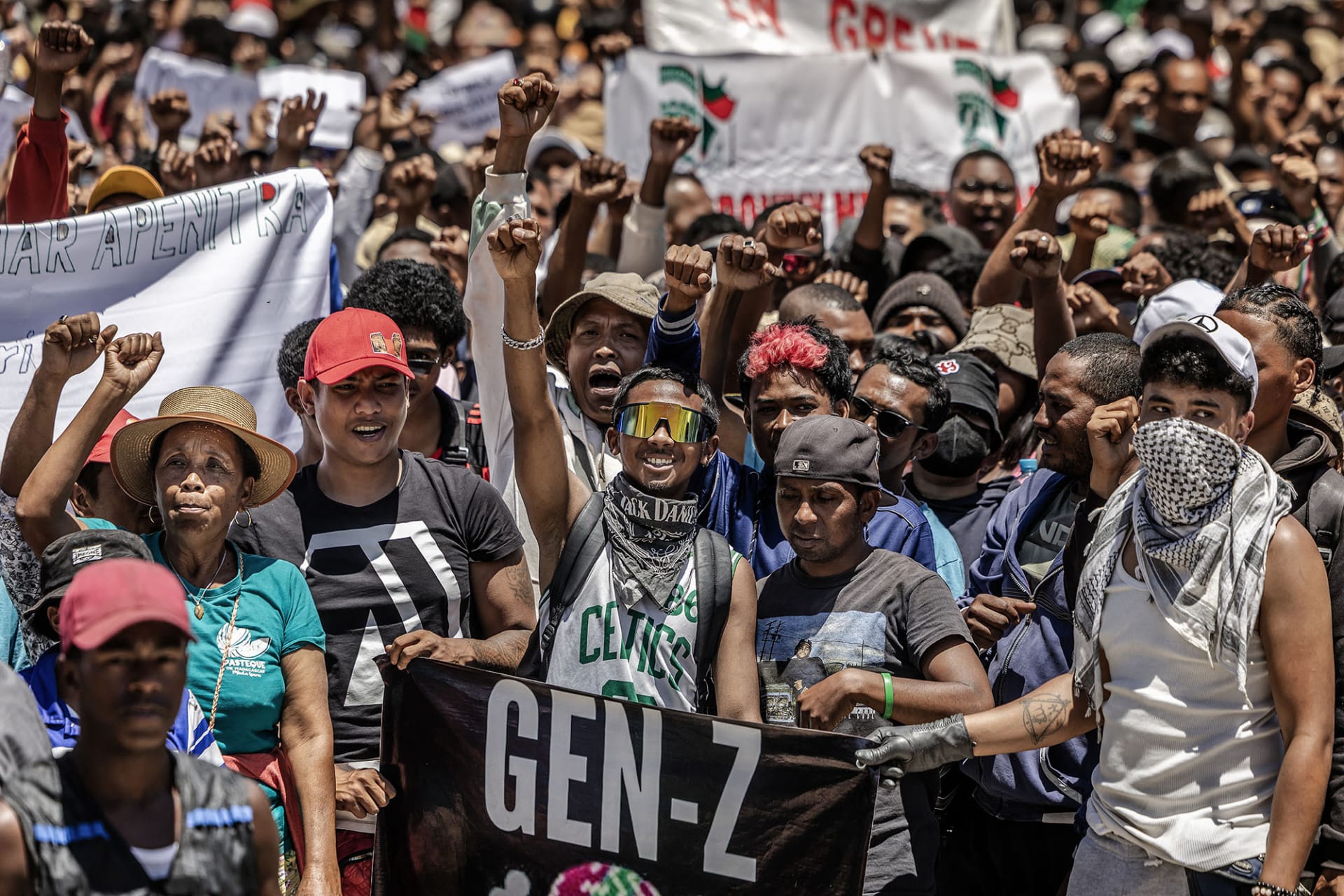
Throughout the past year, members of Generation Z (those born in the late 1990s to early 2000s) have taken to the streets in multiple countries—including Madagascar, Morocco, Nepal, and Peru, to name a few—to express their frustrations over corruption allegations, police brutality, lack of economic opportunity, and economic inequality. In many cases, demonstrators have used social media to mobilize, organize, and amplify their message, raising global awareness of their movements.
Most recently, youth organizers in Mexico, linking themselves to the global Gen Z movement, gathered for antigovernment and anti-organized crime protests in mid-November following the assassination of a mayor who had publicly criticized cartels and the government’s security policies.
Yet the outcomes of these youth-led protests have been mixed. Although some have successfully overturned an existing political order, such as in Bangladesh or Nepal, others have failed to affect longtime powerbrokers, such as in Indonesia. Many leaders have been able to quell protests by rescinding controversial policies, firing certain political officials perceived as corrupt, and simultaneously using force to suppress demonstrators. But even though several of these movements have helped usher in new governments, experts have questioned whether these new governments can enact lasting reforms that address demonstrators’ underlying concerns.
Which countries have seen major Gen Z protests?
The recent rise in youth-led protests follows a larger trend of political movements that have emerged or gained popularity on social media—dating back at least to the 2011 Arab Spring. Several of these online movements have, at times, translated into real-life mobilization. In 2020, youth protests erupted in Hong Kong over a sweeping national security law and in Thailand over lèse majesté laws, which restricts speech against the royal family. Students were also a driving force behind the 2022 Aragalaya protests in Sri Lanka that highlighted government economic mismanagement.
In 2024, there were significant antigovernment protests in countries including Bangladesh, Kenya, and Serbia. The following year, protests erupted in Indonesia, Madagascar, Mexico, Morocco, Nepal, Peru, the Philippines, and Timor-Leste.
Since September 2025, youth protesters in Morocco and Madagascar have made references to their generation specifically: Morocco’s organizers are known as Gen Z 212 (a reference to the country’s dialing code) and Madagascar’s are called Gen Z Mada. Recent protests in Mexico, initially led by youth organizers, have also garnered support from older generations and opposition parties.
What’s driving these protests?
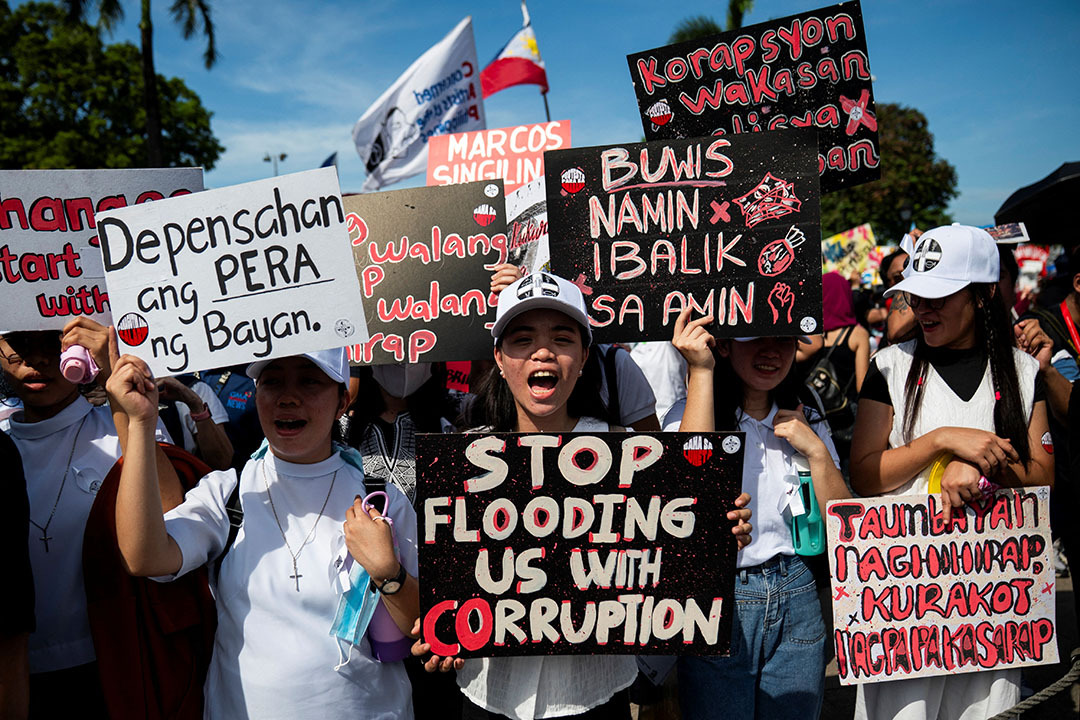
Corruption allegations and economic inequality. Youth protesters in many countries have asserted that political and economic elites, including major oligarchs, enjoy state-provided housing, stipends, and other benefits, while ordinary citizens not connected to the state face a high cost of living and a lack of economic opportunity. In Indonesia, protests in August were spurred by a $3,000 housing allowance given to parliament members in addition to their salaries—a sum that is more than ten times the annual minimum wage in the capital, Jakarta. Meanwhile, protests in Nepal erupted in September over social media posts by children of Nepalese political elites, in which they appeared to have taken luxury holidays, been living in mansions, and received designer fashion gifts.
Other protests center on poor infrastructure management that is attributed to corruption and government negligence. Protests in Serbia that have been ongoing since November 2024 first broke out after a roof collapsed in a renovated train station in the city of Novi Sad, killing sixteen people. Demonstrators blamed the government for the station’s shoddy construction, which was supported by Chinese businesses as part of the China’s Belt and Road Initiative. In Morocco, protesters demanded the resignation of billionaire Prime Minister Aziz Akhannouch after eight women died giving birth in one of the country’s hospitals. They accused the Moroccan government of spending more than $5 billion on the 2030 FIFA World Cup instead of investing in public health resources.
Economic stagnation and youth unemployment. Another source of frustration is what youth perceive as a lack of economic opportunity, and experts say the rise of artificial intelligence (AI) replacing entry-level positions is playing a major role. “AI and automation will continue to add pressure to a fragile job market, compounding the disillusionment among youth who expected upward mobility,” said Kat Duffy, CFR senior fellow for digital and cyberspace policy.
In several countries, youth unemployment remains high. Morocco’s youth unemployment rate stood at 22 percent in 2024, the same as Serbia’s, while Nepal’s—where some 43 percent of the population is between the ages of sixteen and forty—was 20 percent.
The global economic environment is partially to blame, experts note. “A central problem is that these big structural economic issues are not totally in the power of the state,” said Michelle Gavin, CFR senior fellow for Africa policy studies. “They’re part of a global system that is not working for a lot of countries,” pushing many people to take to the streets.
Disconnect from traditional political parties. Researchers have observed that young people are aligning less with mainstream parties in their countries, instead becoming politically engaged in different ways. The 2025 Global Youth Participation Index [PDF], an European Union-funded research group, found that while those under thirty years old are less likely to vote in elections, they are more likely to play active roles in online and in-person civic and political movements.
Recent protests have channeled anger about corruption toward incumbent leaders and governments, some of which have maintained decades-long control. In Bangladesh, protesters ousted the fifteen-year-long rule of the Awami League in 2024, replacing it with an interim government headed by Nobel laureate and political independent Muhammad Yunus. The new government barred the Awami League from the February 2026 national elections, while students formed their own political party to push for a new democratic constitution and transparent economic reform.
What’s been the role of social media?
Social media has played a central organizing role in recent protests, allowing people to connect directly about widespread challenges, build solidarity through shared cultural references, and learn tactical lessons from other movements.
Young people have used pop culture references, hashtags, viral dance trends, and imagery and memes to raise awareness about their protests on various platforms. For example, a pirate flag from the popular Japanese manga and anime series One Piece—whose themes focus on fighting against oppressive governments and tackling injustice—has been flown in protests in Indonesia, Mexico, Nepal, Peru, and Timor-Leste.
Some media platforms have gained popularity because of their decentralized networks, which make it harder for governments to identify and crack down on individual leaders. Youth organizers planned protests in Morocco and Nepal through Discord, an instant messaging social platform where users can maintain some anonymity by using different usernames to link to multiple public servers from a single account. Some organizers from Morocco’s Gen Z 212 Discord channel, which has more than 250,000 members, told German news outlet DW that the forum is more “secure” since the police are still not familiar with the platform.
But while decentralization can create a sense of egalitarianism, it also “leaves movements without sustained organizational structures,” wrote Janjira Sombatpoonsiri, research fellow at the German Institute for Global and Area Studies, for the Carnegie Endowment for International Peace. This allows them to easily veer away from their original goals.
In Nepal, after parliament was set ablaze, more than ten thousand Nepalese youth used the “Youth Against Corruption” Discord channel to vote on their preferred candidate for a new interim government leader, despite legal and logistical limits to an online vote. The group selected Sushila Karki, Nepal’s former chief justice, who was ultimately appointed interim prime minister a week later. But the 160,000-person Discord channel only represented a small fraction of Nepal’s close to 30 million-person population, and the lack of a constitutional process will create a lot of uncertainty for a future government, said Alyssa Ayres, CFR adjunct senior fellow for India, Pakistan, and South Asia. “Nepal’s interim government now has the responsibility of administering a free and fair election in accordance with its hard-won constitution,” she added.
How have governments reacted to protesters?
Several governments have attempted to crack down on demonstrations, responding with increased law enforcement, violence, and mass arrests. As protests in Serbia entered its eighth month in July 2025, local witnesses reported [PDF] law enforcement beating student demonstrators. In Morocco, riot police and plainclothes officers arrested masses of protesters within days of nationwide protests breaking out.
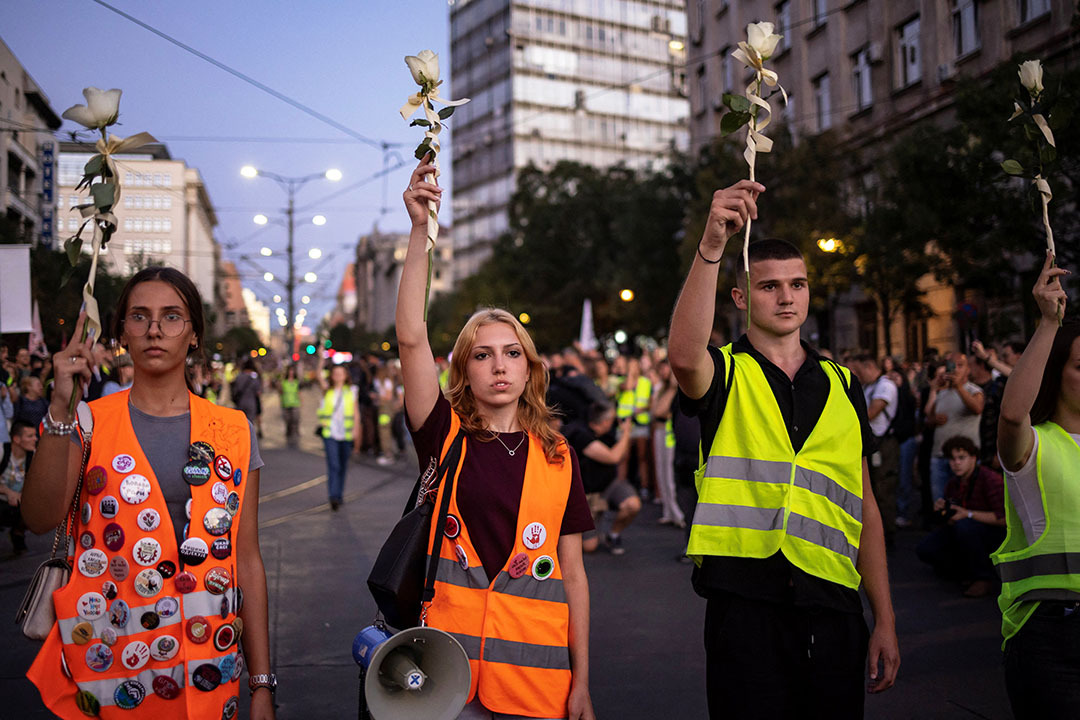
To tackle online mobilization, some governments tried to ban social media or impose internet blackouts, which exacerbated protests in these cases. Bangladesh’s blackout in 2024 led to increased demonstrations and the eventual ouster of former Prime Minister Sheikh Hasina. Nepal’s mass social media ban of more than twenty-six platforms, which the government argued was to combat hate speech, was seen as an attempt at censorship and resulted in widespread outrage.
Other governments have yielded to protesters’ immediate demands to prevent escalation. Indonesia rescinded a salary increase for lawmakers, for example, and Kenya’s president rejected a controversial proposed finance bill in 2024 shortly after protests broke out. In the Philippines and Peru, high-level government officials resigned following mass demonstrations.
While protests in several of these countries have died down, experts observe that these demonstrations have not resulted in the systemic government reform that protesters were demanding.
What have been some of the outcomes from these protests?
In Bangladesh, Nepal, and Madagascar, governments have been entirely dissolved, with youth expressing that they have been iced out of the transitional process. In these cases, experts warn that the challenge now will be implementing sustainable long-term reform. While digital movements can grow rapidly, CFR’s Gavin noted that successful “digitally organized social uprisings tend not to be very hierarchical,” making it “difficult to drive toward really specific change” once existing power structures are toppled. These recent movements, as CFR Senior Fellow for Southeast Asia and South Asia Joshua Kurlantzick explained for World Politics Review, can “lack clear strategies for transforming protest demands into legislative priorities, finding ways to enter government and manage governance, and exercising leadership.”
Kurlantzick noted that Gen Z could wield more political influence by fostering collaboration among civil society groups, political parties, and institutional actors. That was the case in Thailand after a new generation of progressive political leaders emerged through the protests in 2020 and created a new People’s Party, which won the most seats in the 2023 parliamentary elections. As several countries—notably Morocco, Nepal, and Peru—gear up for elections in 2026, experts say Gen Z could cast a long shadow in the ballots, with their demands for addressing perceived corruption, inequality, and political discontent taking center stage in potential upcoming government shifts.