How I Got My Career in Foreign Policy: Max Boot
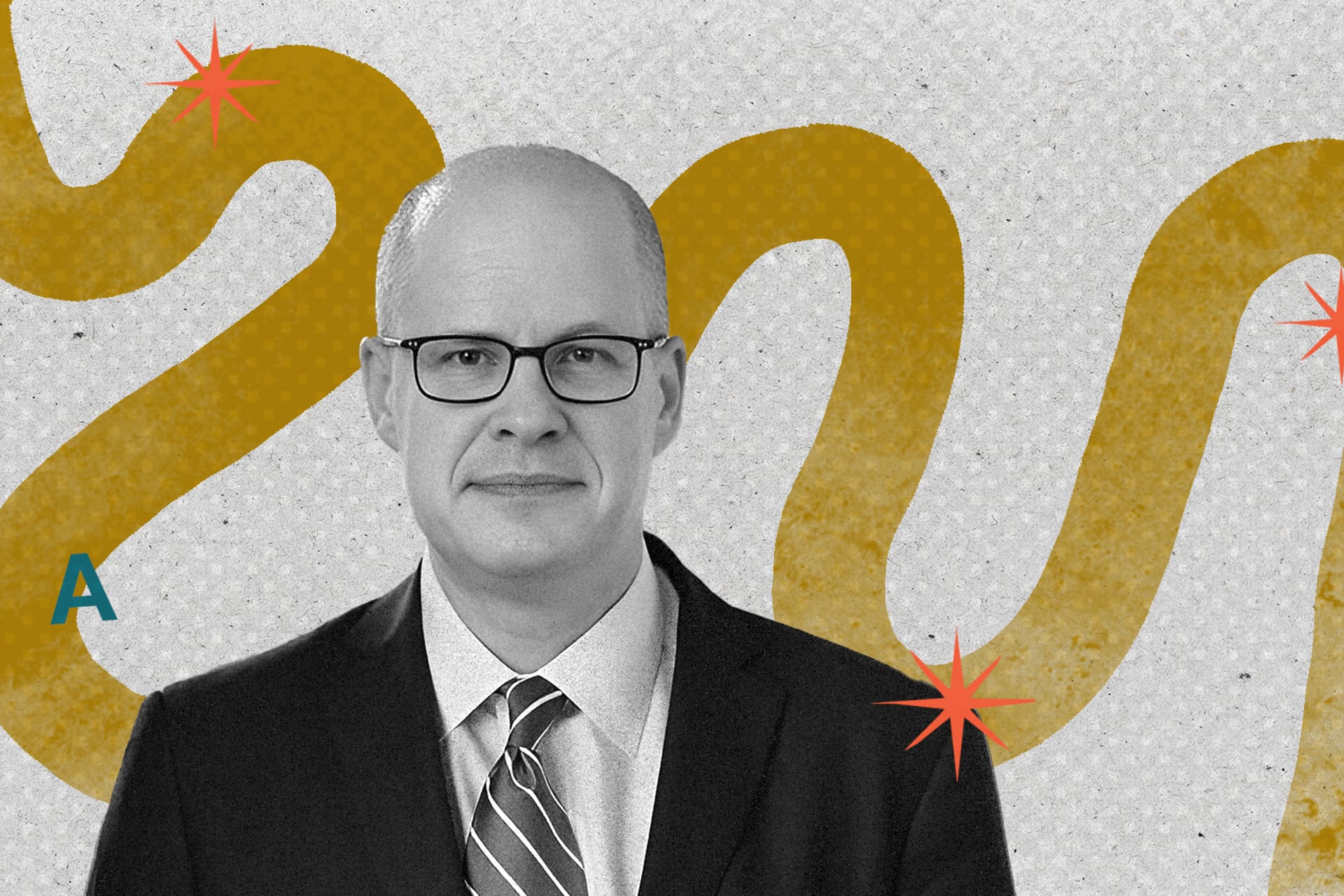
As a CFR fellow of more than twenty years, Max Boot has traced the ups and downs of American foreign policy. He chatted with CFR about how his career burgeoned from a love of history and the benefits of starting off in journalism.
By experts and staff
- Published
- Editor
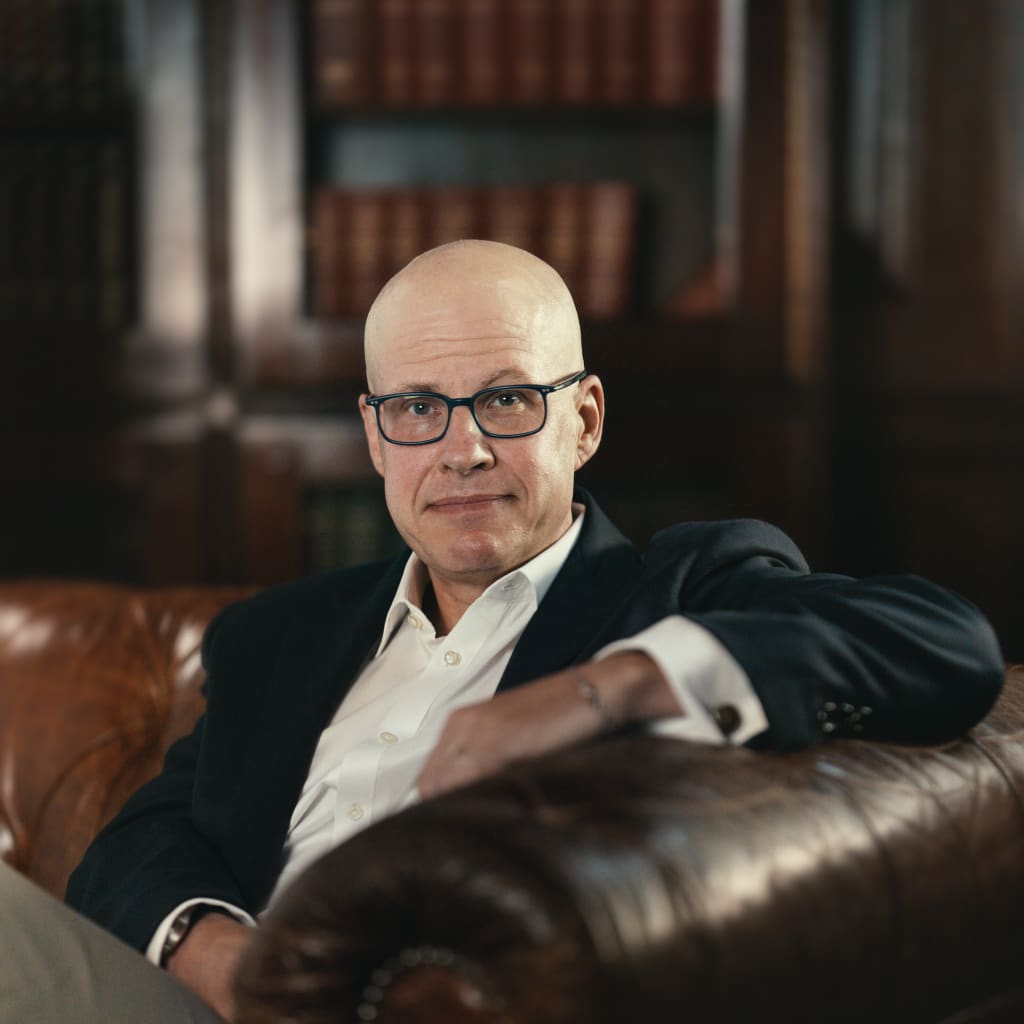 Max BootCFR ExpertJeane J. Kirkpatrick Senior Fellow for National Security Studies
Max Boot’s love of writing and history led him to a yearslong career in journalism, before becoming a senior fellow at the Council on Foreign Relations. He now balances his work at CFR with his role as a Washington Post columnist while authoring several books. Below, he discusses how being an immigrant shaped his worldview, the danger that artificial intelligence (AI) poses for young people, and memories of his trips to Iraq during the U.S. war.
Here’s how Max Boot got his career in foreign policy.
What did you want to be when you were little?
Gosh, that was so long ago. My earliest aspiration that I can remember—after the, you know, astronaut, fireman stage—was really wanting to be a writer. That’s pretty much the only thing I’ve ever wanted to do.
I remember in junior high school starting a school newspaper with some friends. In high school, I was the editor of both the official school newspaper as well as the underground school newspaper.
And so I’ve always wanted to write, but always felt like I lacked the imagination to write fiction, and so I needed to find something in the real world to write about.
I feel like that also is what ended up drawing me to journalism. But we’ll talk about that later. You were born in Moscow, and you moved to the United States as a child. How did experiencing your early years in the Soviet Union and immigrating to the United States influence your interests in foreign policy and your view of America’s role in the world?
I mean, I was an American by choice—or at least by my parents’ choice. I think, like a lot of people who come to the United States from communist countries, it tended to push me to the right side of the American political spectrum. Think about all the Cuban immigrants, for example, or Venezuelans, Russians fleeing the Soviet Union—really no different. So it made me a Republican and a conservative, and that was shaped by my experience growing up in the 1980s, the last decade of the Cold War, and influenced by [President] Ronald Reagan, somebody I wound up later writing a biography about.
So I, at the time, was thrilled to see Reagan standing up to what he called the evil empire, calling out Soviet abuses, predicting that communism would be consigned to the ash heap of history, saying, “Mr. Gorbachev, tear down this wall.” I very much appreciated that hard-line stance, but it also made me very appreciative of America’s role as a liberal democratic bastion in the world and a champion of the values embodied in the Declaration of Independence and the Constitution.
Above all, I think it made me very grateful for America’s identity as a land of immigrants, as a country that took in people from all over the world and transformed them into Americans almost overnight. I think that was part of the reason why my family came here, and certainly I’ve never felt, from a very early age, less than wholly American. That’s very hard to achieve in other countries.
So it’s all the more heartbreaking for me to see the strains of nativism and xenophobia—which have been there, to be sure, throughout American history—now seemingly on the ascent, with attacks on birthright citizenship or massive deportations of undocumented immigrants, or even of refugees. My own family came here as refugees. I wouldn’t be here today if the United States had not been this welcoming place for people fleeing tyranny all over the world.
I was surprised, actually, when doing my research that you actually studied history at both the undergrad and graduate level, rather than political science. When did you pivot to foreign policy, or what was the decision in doing history?
Well, I’ve always been interested in history. I grew up reading a lot of books about World War II, reading about Winston Churchill, Teddy Roosevelt—a lot of figures in history—and that’s always been my primary interest. I always found it more interesting to read works of history and biography than to read political science.
At the risk of alienating political scientists out there, I’ve always found history to be a more rewarding discipline for me personally. Maybe it’s because I lack the intelligence necessary to comprehend political science sufficiently. I’ve always recoiled from attempts to impose what I regard as this kind of artificial academic framework—often an artificial statistical framework—on the messy stuff of history.
I think political science certainly has insights to offer and I’m always happy to read interesting works of political science or to cite interesting political scientists. But me, personally, in terms of what really animated me, it was always the study of history. I just love it because I think history essentially has stories to tell, and the stories are kind of inherently interesting if they’re told with any degree of expertise. So that’s something that always interested me as a reader, and it’s certainly something that interests me as a writer today.
Definitely. I would be remiss to not ask, as a fellow Berkeley alum—first, go bears!—but also I saw you were on The Daily Californian as well. So I’m curious—
I’m terrified to ask what year you graduated.
I graduated in 2018. So not that young, but relatively young.
I’m the class of ‘91.
It may bring you no joy to know that you graduated before I was born. But you did journalism in college and you went into journalism—I’m curious why pursue your interest in foreign policy through journalism, rather than think tanks, other organizations, or government roles?
Well, first, whenever I’m asked what led me to become a writer, I always cite what H. L. Mencken said: “I write for the same reason that a cow gives milk.” It’s really not a conscious impulse. It’s just something that has always been within me and I can’t explain it—kind of like, why don’t I have more hair? Why do I want to write? I don’t know. These are all immutable mysteries of genetics or upbringing, or what have you. But it is what it is.
In terms of why foreign policy, I was kind of drawn to, in my study of history—in both undergraduate work at Berkeley and as a grad student briefly at Yale—military history and diplomatic history and foreign policy. The study of foreign policy in the contemporary world is really very closely related to the study of diplomatic and military history. In fact, everything that is foreign policy as of five minutes ago is essentially diplomatic and military history. So it’s basically just projecting my historical interests into the contemporary arena.
But I’m also interested in politics in the contemporary world. So I’ve written some about that as well, but generally have focused on foreign policy and national security issues, in part because I’ve been employed at the Council on Foreign Relations for more than twenty years now. And obviously, foreign policy is our business.
So when I was researching your work, you spent time at the Christian Science Monitor and then at the Wall Street Journal, but it didn’t seem like you were doing foreign policy work there exclusively. At the Journal, you wrote a column on legal issues and then became the opinion editor. How did that work—not necessarily in those areas—still inform your work later?
I guess I didn’t start off writing about foreign policy and national security policy, in part because those tend to be more specialized disciplines in the journalistic world, and also, to some extent, more prestigious disciplines. So usually, if you’re just, you know, a snot-nosed twenty-two-year-old kid, nobody’s going to say, “go write about some diplomatic crisis.”
I was briefly at the Christian Science Monitor as an assistant national editor, then I went to the Wall Street Journal, and I was an assistant op-ed editor and then op-ed editor. So, naturally, I was a generalist, and I did write quite a bit at the Journal about legal issues, in part because it was just happenstance—the guy who had been the legal columnist happened to leave, and so I thought there was an opening there. I mean, I was interested in legal issues too, and my wife at the time was going to law school and became a lawyer.
I actually published a book about the judiciary in the late 1990s. It wasn’t a great book. I feel like some actor or actress who made some disreputable movie at the beginning of their career that they would rather forget—and that’s kind of mine. But after having published that, I really started to think about, what do I want to do with the rest of my life? Do I want to write books about the legal system? Do I want to become a legal expert? And I decided not really. I’m not that interested in it.
At the end of the day, what I’m really interested in is history, military history—the kind of issues that animated me as a kid and as a student and grad student. So I decided to go back to that, and I wrote a book called The Savage Wars of Peace: Small Wars and the Rise of American Power, about all these small conflicts throughout American history. I began it before 9/11, but it appeared after 9/11—it appeared in 2002—and it did well enough that Les Gelb, who was then the president of the Council on Foreign Relations, decided that CFR could no longer function adequately without having me on its staff.
That was a little bit of a hard sell to me at the time, because I was perfectly happy as op-ed editor of the Wall Street Journal. But Les was a hard guy to say no to, and I’m very glad that I gave in, because it turned out that being a Council fellow has been the best job I’ve ever had, the best job I could ever imagine having, and certainly the longest job I’ve ever had. It’s something that’s allowed me to move from being a complete generalist across a whole range of subjects to being a generalist within the foreign policy [and] national security arena.
Because I’m not an area specialist—I don’t focus on one country or one region, or even one specialized discipline, like economics—my area has been broadly defined as national security policy, so a lot of that has to do with the military, use of force, conflicts. But also foreign policy, kind of writ large.
You mentioned that you were pitched the job at CFR. How did you weigh the pivot to the think tank world, versus maybe trying to carve out a foreign policy beat in journalism?
Well, that would have been another way to go. Basically, I’ve been able to combine those two things, because while I’ve been employed at CFR since 2002, throughout that whole time I’ve also been a regular contributor to a whole series of newspapers and magazines. So I have been, in some ways, a foreign policy journalist, but with this think tank perch. So it’s kind of given me the best of both worlds, because CFR really allows me to dig deep.
The nice thing about what I do is, I’m not in the news business, per se, although I certainly write about news events all the time. But I’m not a full-time reporter who has to cover a beat and has to produce story after story, day after day. I have a lot more freedom in terms of how I allocate my time, and so I’m able to write opinion pieces and give my take on things that interest me about what’s going on.
I also have the time, freedom, and support to be able to write books, which I really think is the most valuable thing that I can do in the long run. I really think that the books are—if anything that I produce stands the test of time, and who knows if any of it will—but to the extent that any of it does, I think it’ll be the books, not the journalism.
I’m curious, going from writing relatively shorter things in articles, both for CFR and for publications, is there something that surprised you about the process of book writing, which not every journalist does?
I don’t know what’s really surprised me, because at this point I’ve been doing it for a long time. I guess maybe the one thing that kind of surprises me is it never gets much easier. As I like to say, it’s easy to write a book, and it’s very hard to write a good book. And every book is different. At least every book that I write is different, so there’s not an obvious template you can apply from one to the other. Each time you do one, you kind of have to start from scratch and figure it out—figure out what’s the narrative, what’s the structure, how are you writing it? What are the sources? How are you getting the information? All this stuff is always a challenge. As I say, it never gets easier.
What I actually find with writing books is the hardest part is getting to a first draft, because that usually requires many years of work, and actually producing the first draft is often fairly agonizing. But once I have the first draft, then everything becomes much easier and more fun, because I enjoy the rewriting and the editing process much more than I enjoy the first draft process.
But I kind of like the ability to do both the journalism and the book writing simultaneously, because I’m kind of afraid that if I just did the book writing and I had to wait, you know, five, six, seven, even ten years between having the results of my writing come out, I would be very frustrated, because there’d be all these things I want to comment on in the meantime. So I feel like by being able to do journalism—now, as a Washington Post columnist—I’m able to get my dopamine hit from having regular responses to the news and thinking about what’s going on, and writing these relatively short, fast pieces.
At the same time, I’m also able to do deeper engagement in book writing. I feel like when I’m doing the newspaper columns, I’m kind of draining my knowledge banks. I’m drawing on everything I know, and I’m using as much as I can. But when I’m researching and writing a book, I’m actually adding to my mental data banks. I’m learning stuff, and I love the process of learning.
That makes sense. Another thing that you’ve done in your career is you’ve advised for several presidential campaigns—[John] McCain’s, [Mitt] Romney’s, [Marco] Rubio’s. How did you get into that line of work? Who calls you to offer these jobs?
Well, it actually happened because of my history writing, oddly enough. I had mentioned my 2002 book, The Savage Wars of Peace, about America’s small wars. One of those small wars happened to be Pancho Villa’s invasion of New Mexico during World War I. General John J. Pershing subsequently pursued Villa throughout northern Mexico.
Well, unbeknownst to me, one of the U.S. Army officers who was at this little outpost that was attacked by Pancho Villa in New Mexico was an ancestor of Senator John McCain. McCain was —by the way, I have to confess, I’m writing a biography of John McCain as we speak—but McCain was an inveterate reader, and he read that book and was fascinated to see his ancestor mentioned. So he called me in to meet him and I struck up an acquaintance with him because of that history book. I ended up traveling with him to the Munich Security Conference and some other things, and that kind of led naturally to this role, serving as a foreign policy advisor on the 2008 campaign. That in turn led to serving as a foreign policy advisor to the Romney campaign in 2012 and to Rubio in 2016.
Fascinating. How does advising on presidential campaigns differ from writing about foreign policy for outside outlets or for yourself at CFR? Is there a different orientation to the work?
No, I mean, it’s not radically different. A lot of it is just what I always do in terms of my opinion writing, which is basically trying to say, “What do you think the United States should do about issue X, Y, or Z?” Normally I’m just spouting off to anybody who reads it—this is my view. When you’re advising a presidential candidate, you’re writing for a smaller audience, which is just the candidate and the rest of his team. But it’s kind of the same idea, like “you should do X, Y, or Z.”
In fairness, often the recommendations are more detailed than they are in newspaper writing. They tend to be more policy-oriented, instead of just focused on oratory. But there is also a large rhetorical element to it as well. With the McCain campaign—I was helping to write some op-eds and speeches and so forth, basically just trying to articulate his views.
The nice thing about somebody like McCain was he knew a heck of a lot more about foreign policy than I did, so he didn’t need a lot of advice about what the policy should be. It was just really a question of finding the words to express what he thought and articulating his views on some issues.
Looking back on your career now, do you think there was a benefit to starting off in journalism that maybe you wouldn’t have gotten if you’d gone straight into policy work or think tanks?
I think so. I think there are trade-offs in anything. People wind up in think tanks from a wide variety of sources. Most of my colleagues come from government or academia—in my case, from journalism. And naturally, people coming from different backgrounds have different biases and different strengths and weaknesses.
And I guess my weakness is I was never really forced to become an uber-specialist. In the academy or in government, people tend to dig down much more on one very narrow set of issues and become much more expert in that area. Whereas I’ve always been kind of a mile wide and an inch deep, you might say. I’ve tended to cover a wide gamut of things.
But I think my journalism background has allowed me to write quickly and hopefully not too badly, and to be able to communicate fairly complex ideas in ways that non-specialists can understand. So I think there’s a value to having somebody who’s kind of a generalist who can articulate these concepts, but is looking at them with a journalist’s perspective and not an uber-expert’s eye. Because when you have a little bit more of an outsider perspective, I think you can explain things perhaps a little bit better or more easily to other non-experts than the experts can explain them. Because it’s very easy when you’re an expert to get caught up in the details and the minutiae.
Personally, it’s gratifying to me because I’m a curious person. I like to learn, and so I like the ability of being able to write about a fairly wide variety of things and not just focus on one thing day after day. But there’s a trade-off in that. Obviously, I don’t know as much about any one thing as the experts know about each individual thing, but I know a little bit about a lot of things.
That makes sense. Because this series is geared for young people, I’m curious if you have any advice for them? Are there skills that they should be really focused on or issues you think they should pay attention to?
My advice is read a lot and write a lot. Those are the building blocks of any career, and certainly any career in foreign policy. That’s also the building blocks of probably many careers—maybe even most careers—at least outside of strictly technical fields. I’m not speaking to all the [science, technology, engineering, and mathematics] majors out there, but you could never read and write enough.
I fear with younger folks today—I mean, I’m a dinosaur. I can remember getting my first computer in high school. The internet didn’t exist until I was already in the work world in the 1990s, so I grew up in this very antiquated era. It’s like the era of quill pens and carrier pigeons or something like that. But I grew up reading a lot of books, and I’m concerned that younger folks today may not be reading as much as they should be, because their attention span has been warped by all the digital media.
In fairness, even my attention span has been warped by digital media, because I’m glued to my phone all the time too, just like everybody else. But I think it’s really bad for your mental health, and I think it’s really bad for being able to understand the world. So I think it’s actually—and I don’t just say this because I write long books, although I guess I do have a self-serving interest in promoting serious, long books—incredibly important to read serious, long books. Not necessarily mine, although it’d be nice if they were mine, but you can read others as well.
You’ve got to really build up your mental data banks in order to be able to deal with the world, to be able to comment on it intelligently, to be able to respond to the flow of events in a meaningful manner. I’m very concerned that all the incentives today are for quick takes, for thirty-second, one-minute TikTok videos, for influencers. At the risk of sounding like a crotchety old guy, which I probably am becoming, I just think it’s all so shallow, inane, and superficial.
So my humble plea would be: please dig deeper. Do not let AI write your papers for you. Do not let AI summarize big books so you don’t have to read them yourself. Do the reading, do the writing. And I think you will then develop your own capabilities and your own expertise, and I think that will serve you well in whatever you choose to do.
Don’t take the digital shortcuts which are available today.
I agree, it’s scary to think about what we’re doing to our attention spans. But we want to end on something fun! I assume, over the years, you’ve had plenty of fascinating work trips or dinners as you’ve been doing your work. Is there a most memorable trip or meal that you could share with us?
Okay, well, my most memorable work trips were probably in Iraq and Afghanistan, because I was a pretty regular traveler to both countries while the wars were going on. That’s another one of the great things about working at CFR—I was able to do that. I was able to serve as an advisor to U.S. military commanders. I was also able to write about those conflicts as they were going on, and it was fascinating to see.
Obviously I have a lot of memories, not all of them entirely fond. Like being in a Humvee in Mosul, Iraq and the Humvee in front of me hit an [improvised explosive device] and blew up, and we were under attack from insurgents to the left of the column. Or being sniped at in another city. Or even just this random, not particularly dangerous thing, but it was memorable—I remember I was at a base in northern Iraq, and I was dropped by helicopter there in the middle of the night, and I had no idea where to go. Everything was pitch black. There was a complete blackout going on.
So I found my way to this cargo plane that was supposed to take me where I needed to go next, I think somewhere in western Iraq. After wandering lost around this base in the middle of Iraq for like twenty minutes, I finally found my ride and finally got on the right cargo plane. It was kind of a memorable scene, because on this cargo plane, right next to me, was this giant generator which was tied down to the plane. But as we were flying, the thing kept moving back and forth. And I was thinking, “what happens if this generator slips the ropes and goes careening out of control? What’s going to happen to this flight?”
Then we picked up more passengers, including a detainee—some Iraqi guy in robes who had his hands handcuffed behind him and had a bag over his head and had armed guards with him. It was as bizarre as you can get, but also completely ordinary in a place like Iraq. I don’t know, just so many memories of Iraq and Afghanistan, even really minor things. Like going to some base in the middle of nowhere, in a pretty dicey area with a lot of combat, and then seeing that every one of these bases has a Green Beans franchise, which is kind of the military’s Starbucks. You can get a latte right before you go out on patrol with these troops in a war zone. And you think about what it takes to get the beans and the coffee equipment and all this other stuff into the middle of Iraq. But the U.S. military pulled off these crazy logistic feats, which didn’t often translate into actual battlefield success, but was still memorable. Just so many images that are kind of seared into my mind from these trips.
This interview has been edited for length and clarity. It represents the views and opinions solely of the interviewee. The Council on Foreign Relations is an independent, nonpartisan membership organization, think tank, and publisher, and takes no institutional positions on matters of policy.