How I Got My Career in Foreign Policy: William Davis
William Davis’s career has taken him from the U.S. government to international multilateral institutions. He sat down with CFR to talk about the importance of the United Nations and the benefits of his “side-door” approach to foreign policy.
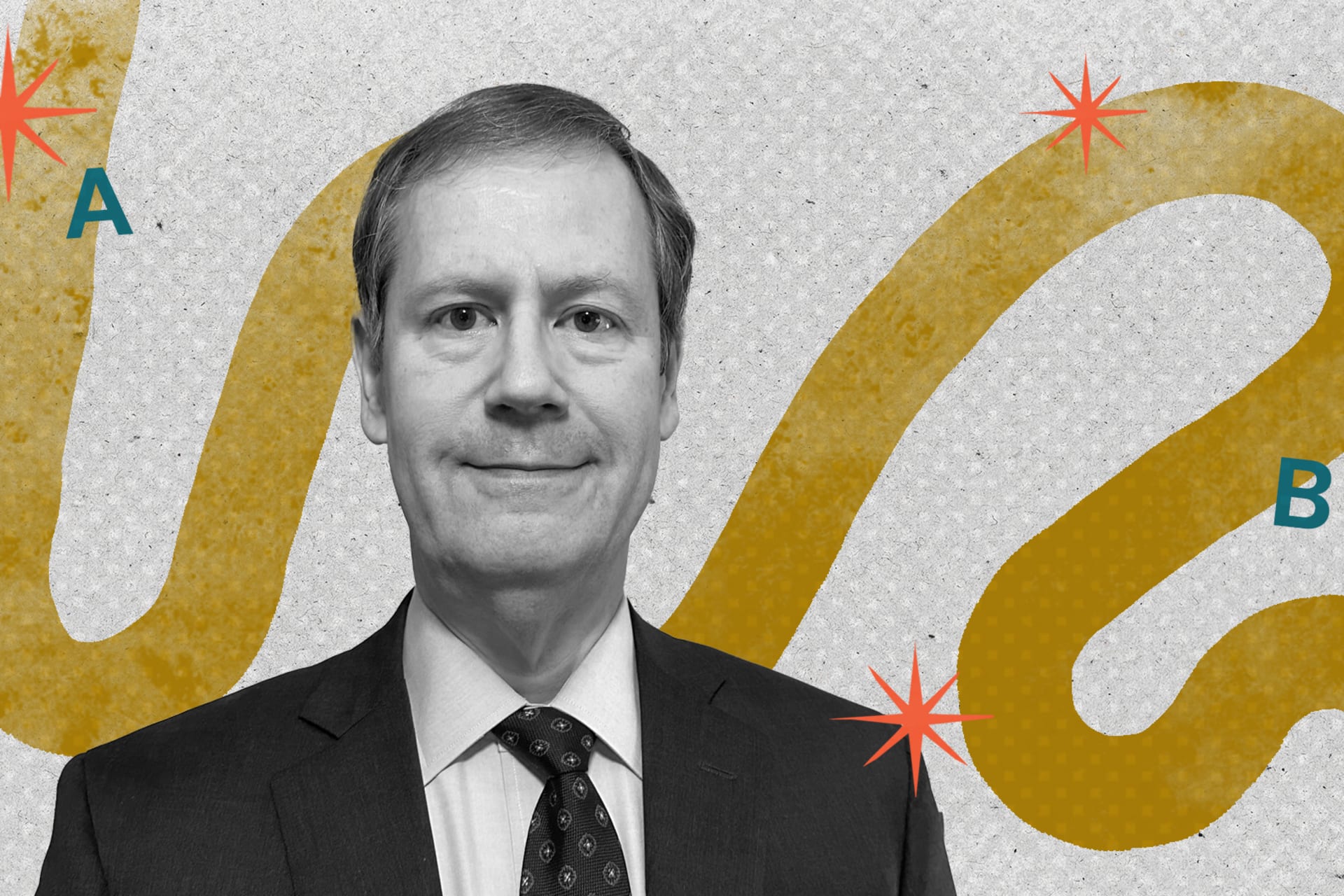
William Davis may have dreamt of becoming an oceanographer, but he quickly caught the foreign policy bug. His wide-ranging career has taken him to the State Department, the National Security Council (NSC), the United Nations, and the Organization for Economic Cooperation and Development (OECD). Currently, he is the director of the UN Information Center (UNIC) in Washington, DC, and is a member of the Council on Foreign Relations. Read more about the skills that have served him well in his career, why he feels many Americans don’t appreciate the United Nations’ work, and his time visiting a UN peacekeeping mission.
Here’s how William Davis got his career in foreign policy.
We always kick off with the same question. What did you want to be when you were little?
I grew up in Ohio, so for me, the most fascinating thing on the planet were the oceans. I wanted to be an oceanographer like Jacques Cousteau, but when I got to university and realized that being an oceanographer meant a lot of math and science—which meant a lot of homework—I gravitated towards political science.
Do you remember a particular moment that sparked your interest in foreign policy?
I was studying abroad in college. I spent my entire junior year in Luxembourg.
For a farm boy from Ohio, this was [amazing]. I was smack in the middle of Europe—you could jump on a train and be in Paris, Amsterdam, or Brussels within a few hours. Being in an environment with so much history, culture, and political activity, I was bitten by the international bug and never looked back.
I bet! After college you graduate, and your first job—this is kind of a mouthful—is as an analyst with the Executive Office of the President. How did you land that first job?
First of all, beware—my titles are some of the longest of any human being on the planet, and they’re much more significant than the actual work turned out to be.
I was a Presidential Management Fellow (PMF) competing against four hundred other finalists for about five jobs at the State Department. I got one, but it required a security clearance and background investigation. While waiting tables on Capitol Hill that summer to pay rent, I got a call saying that due to budget cuts, the State Department couldn’t guarantee my position.
There I was in September, hopeless. Fortunately, the PMF office knew some of us would be waiting for background checks to clear. They put me in touch with a guy doing a short-term project at the Treasury Department, and that led to me finding out there was a vacancy in the Executive Office of the President.
The Executive Office of the President is not technically the White House. It’s the umbrella term for all the little agencies that orbit the White House. So I worked in the Office of Administration that did common administrative support, procurement, computers, payroll, [and] budget. I got hired to be a budget analyst, and I could think of nothing that was going to take me farther away from my goal of being secretary of state than being a budget geek.
In retrospect, it was one of the happiest circumstances of my life because it taught me how money moves in Washington and how anything policy-related needs resources to implement it. That’s what eventually attracted me to the State Department.
You go to the State Department as a senior advisor in the Bureau of Legislative Affairs, liaising with Senate committees. What did that teach you about how the different branches of government work together on foreign policy?
So much. My joke was, I joined the State Department to see the world, and basically all I did was travel up and down Constitution Avenue to Capitol Hill. But while my Foreign Service colleagues were slowly climbing one rung at a time, I had extraordinary exposure. Within my first few weeks, I was writing the weekly congressional report to Secretary [of State James] Baker.
It was really eye-opening to see how politics marry with foreign policy. There are a lot of brilliant foreign policy thinkers at the State Department—I was not, and am not, one of them—but I got to see the nexus between whatever political issue was on the front page of the Washington Post that day showing up in the deliberations of how foreign policy would be executed at Foggy Bottom. For me, that was a great political education.
You’ve done so much it’s hard to compress everything, but you go from State to the National Security Council, before arriving at the OECD. You’re at the OECD both in Washington, and then you’re also deputy head of public affairs at the headquarters in Paris.
A real hardship post.
What was it like to finally transition from domestic government roles to this big international institution? What did working abroad do to change your perspective on foreign policy?
I loved just about everything about it. The OECD is a great organization. They fly a little under the radar because their work is often very technical. But the quality of their statistics, analysis, and the value they provide to the roughly thirty-eight OECD member states is unsurpassed.
The funny thing is, yet again, Will Davis had zero plan for his career. I had loved working for my boss at the NSC so much that when he went to run the OECD Washington office, he asked me to be his deputy. I said, “Sure, what’s the OECD?” I’d never really worked closely with them, but one of my guiding principles has been: work for a boss you like and respect, who can invest in you, help you learn new skills, and broaden your network. I would have followed him anywhere.
Going to work for the OECD was another happy circumstance because he promptly left to make really good money as a lobbyist, leaving me holding the bag as head of their Washington office. After the 2000 election, headquarters said they needed an American to explain the new administration. Would I be willing to move over? After consulting with my wife, we said sure. Our kids were fortunately young enough to be relatively portable—seven and four. One morning they were on a playground in Bethesda, the next morning they’re on a playground in France speaking French.
We thought we’d be there for two years and ended up staying close to four because the work was fascinating. On a personal note, the travel opportunities with the kids, being able to show them all around Europe and Northern Africa—we had some really great experiences with them. And what’s not to love about Paris? They have a good understanding of work-life balance in France.
You do eventually come back. You’re briefly at the State Department, but then you come to your first UN role. How did that come about?
I’d come back to the State Department as a civil servant, but I’d risen as high as I thought I could without declaring political stripes or taking the foreign service exam. This was during the early years of the Iraq war—tensions were running high, and I wasn’t having a great time in Legislative Affairs working on war policy with Capitol Hill.
My wife knew somebody at the UN Foundation and sent me over for an interview. They mentioned the UN Secretariat was looking for a director for their Washington office. I said, “You mean the real UN?” They said I’d need to speak to Assistant Secretary-General Robert Orr in [former UN Secretary-General] Kofi Annan’s office. I had worked a few offices down from Bob at the NSC, so I called him up. He said, “You’re interested? Great, you’re hired.” They brought me on board extremely quickly.
When I interviewed with Deputy Secretary-General Mark Malloch Brown, who had worked with my wife at the Carnegie Endowment, his only question was: “So you were smart enough to marry your wife, then you’re smart enough to work for the United Nations. Welcome to the team.”
It goes back to this theme—networking and people are sometimes even more important than the portfolio. For me, it was a match made in heaven. Despite the United Nations’ bureaucratic gridlock, it gives me psychic income. Even if I’m not directly vaccinating kids or protecting civilians as a peacekeeper, the work I do in Washington supports those life-saving activities, and that really motivates me.
Yeah, that’s nice. I feel like so many people are jaded about the United Nations, but there’s so much that they do beyond maybe the Security Council.
Usually with some justification, but Americans in particular—not to get on my high horse—Americans don’t see the real United Nations. Ask any non-American about the value of the United Nations and which country runs it, and they’ll say the United States is the most influential member and the United Nations does great stuff. Because they’ve come from fragile states, conflict states, or disaster-stricken states, and they’ve seen the impact the United Nations can have for good. Americans don’t see [the UN Children’s Fund] vaccinating kids or [the] World Food Program feeding people in Cleveland or peacekeepers maintaining stability in Kansas City. They only see the talking.
You eventually go to the U.S. Global Leadership Coalition (USGLC). What appealed to you about joining a nonprofit?
USGLC is the best of the best when it comes to advocating for continued American engagement on the international scene and the resources that back up that engagement. They’re particularly good at speaking to conservatives, which I thought was a really important mission. I’d done ten years with the United Nations—I’d moved from the UN Secretariat office to the UN Development Program, and it was fascinating work. But similar to the State Department, I’d risen as far as I could in the UN system. When the opportunity at USGLC beckoned, it was just too good to pass up.
You later returned to the OECD, and then you also later returned to the United Nations. What’s it like to come back to these big international organizations during different administrations? Do you see changes in how you see the work or the goals, or is it consistent?
On a personal level, very comfortable, because I have a lot of experience in both the UN system and the OECD, and a lot of the characters stay, so you see a lot of familiar faces. Even when I left the United Nations in 2015 and came back last year, there were still tons of people I’d worked with before.
What has changed is that international organizations have always been political punching bags—we don’t defend or explain ourselves very well. Secretary-General Kofi Annan used to joke that “SG” doesn’t really stand for “Secretary-General,” it stands for “scapegoat.” When member states are frustrated with something, they give it to the United Nations and then criticize the United Nations for not being able to solve it. That’s kind of how the organization is set up.
But what I’ve noticed is there’s always been suspicion in certain quarters about international organizations, but now it’s antipathy. These organizations are seen as somehow a threat to the United States or American interests. For my money, as an American who’s worked in these organizations for a long time, nobody has ever asked me to do anything even remotely close to clashing with my interests as an American. In fact, it’s quite the opposite—I see how much these organizations help advance U.S. interests and, frankly, all of their member states’ interests.
It’s a mission of mine to counteract the myths and misperceptions about international organizations. It’s soft power—not a phrase in vogue these days—but people will begin to realize the value of these smart power tools. Former Secretary of Defense [James] Mattis used to say, “If you don’t fund the foreign assistance budget, then you need to buy me more bullets.” It’s all part of the toolkit a country as powerful and influential as the United States can and should bring to bear. It’s troubling to see some of those tools being laid aside.
Zooming out a little bit—your career spans the White House, the State Department, the United Nations, the OECD. Do you think there are particular skills that have carried you through all of those?
I came to Duke University to be an oceanographer, then shied away from the quantitative, harder sciences. But getting a public policy master’s degree was a wonderful stroke of good luck because it taught me just enough economics and statistics to be dangerous. That translated through my work as a budget analyst to figure out how resources influence policymaking. That’s been useful throughout my career. Every job I’ve had has involved figuring out how the appropriations process works or how [the Office of Management and Budget’s] role in the executive branch works to finance what the United States wants to achieve. That was a really valuable skill.
Another is learning how to write for busy decision makers. That was a skill I picked up in grad school—instead of writing ten thousand-word term papers, you write a one-page decision memo. If you don’t know how to do that when you land in Washington, you’re toast. Learning how to write concisely, compellingly, and quickly for an assistant secretary who needs to make a decision has served me well throughout my career.
Do you think there’s a benefit to moving between these different sectors instead of deciding, “I’m going to really power through the NSC and get to the top?”
As I alluded to earlier, I came out of grad school with a bunch of really talented people, many of whom joined the Foreign Service. A Foreign Service career is spectacularly rewarding, but one should approach it with eyes open because it comes with challenges. You and your family get picked up and moved every two to three years. It’s an up-or-out system, so you can find yourself on the sidewalk at fifty-two looking for a second career.
What I found in my side-door approach to the foreign policy world—coming in through legislative affairs and congressional liaison—was less competition for those kinds of jobs. I got exposure to the senior leadership of the State Department at a much sooner and greater rate than my colleagues climbing rung by rung up the Foreign Service ladder. They start on the Barbados desk and report to a deputy office director, who reports to a director, who reports to a deputy assistant secretary, who reports to an assistant secretary, who reports to an undersecretary, who reports to the secretary of state. There I was briefing the secretary of state for congressional testimony.
I liked coming in through an unusual side door to the foreign policy world and that exposure to the top levels of foreign policy decision-making that came very early from working in congressional affairs.
Do you have any advice for young people who are starting out today?
Having a language or two in your back pocket is valuable. As Americans, we get spoiled. At the OECD, if you put someone from South Korea, Portugal, and Mexico in a room, they’re going to speak English. So 90 percent of my meetings were in my mother tongue, which gave me a huge advantage. But knowing a language or two, particularly if you’re working for the United Nations in a developing country, is valuable.
The ability to work in a multicultural environment in an international organization is something many don’t appreciate. You have to understand that Asians, Africans, Latin Americans, and North Americans are going to bring different perspectives, and marrying these work styles and cultural differences into a cohesive, functioning bureaucracy is an interesting puzzle. I find it intellectually stimulating.
The last thing I’ll say, for people considering careers in international organizations: check your own tolerance for bureaucracy. It’s a given that you’re going to find some bureaucratic insanity. For me, it’s almost like a puzzle—figuring out who to go to, how to get things done, who can move quickly. That’s an interesting challenge, so I don’t mind. But for other people, particularly those coming from the Hill or NGO world, are used to much flatter decision-making structures and less burdensome administrative systems. Their heads can explode very quickly. I thought State Department bureaucracy was the apex of insanity, but the United Nations takes it to a whole new art form.
We come to our last question. Over the years I’m sure you’ve had plenty of interesting work trips and dinners. Is there a most memorable one you could share with us?
Visiting the UN peacekeeping mission in the Democratic Republic of the Congo (DRC). The head of our peacekeeping mission there was a former U.S. ambassador who I’d accompany to meetings on the Hill. At one point he said, “Will, you’re the voice for the secretary-general in Washington. How many peacekeeping missions have you actually seen?” I said none. He said, “I need to fix that.”
He brought me over to travel around the DRC for ten days with a battalion of Indian peacekeepers. At one meal, an Indian colonel was briefing me at a World Food Program distribution site while feeding me Indian cuisine on a tray in a tent. All of a sudden there was a commotion outside. He put down his pointer, grabbed his machine gun, and ran out.
I looked outside and saw a group of people beating a guy on the ground. These young Indian peacekeepers—some only eighteen or nineteen years old—waded into the crowd, picked the guy up, threw him in an armored personnel carrier, and it took off. The colonel returned, put down his gun, picked up his pointer, and resumed his briefing like it was just another day.
I said, “What was that?” He said, “People cut in line and others don’t take kindly to it. Last week one gentleman cut in line and they threw oil on him and lit him on fire, so we have to be vigilant.”
I thought, “This is amazing—these kids traveled halfway around the world to put themselves in situations like this for people they don’t know and will never meet again.” So I asked him, “What motivates you to do this?” And he stood up straight and says, “It’s an honor in the Indian military to serve in a UN peacekeeping mission.” Then he concluded by saying, “and we can help people.” If that isn’t a wonderful explanation of the value of the United Nations’ work, I don’t know what is.
This interview has been edited for length and clarity. It represents the views and opinions solely of the interviewee. The Council on Foreign Relations is an independent, nonpartisan membership organization, think tank, and publisher, and takes no institutional positions on matters of policy.