How I Got My Career in Foreign Policy: Sadanand Dhume
Sadanand Dhume has both sprinted as a foreign correspondent and endured the marathon of writing two books. The new senior fellow for India, Pakistan, and South Asia sat down with CFR to share insights from his experiences covering the economy, extremism, and international relations in both South and Southeast Asia.
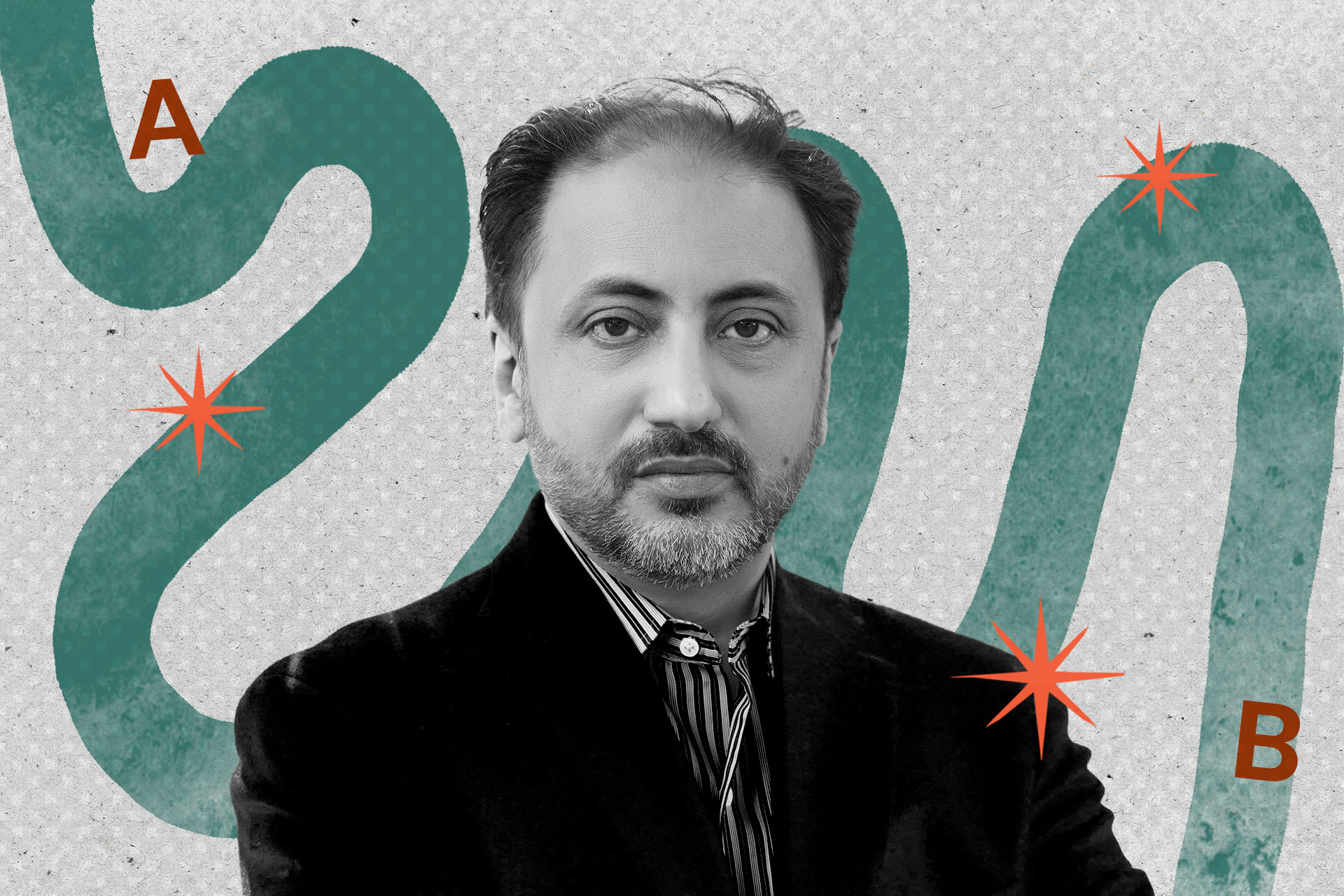
By experts and staff
- Published
- Roxy EkbergDigital Editorial Intern
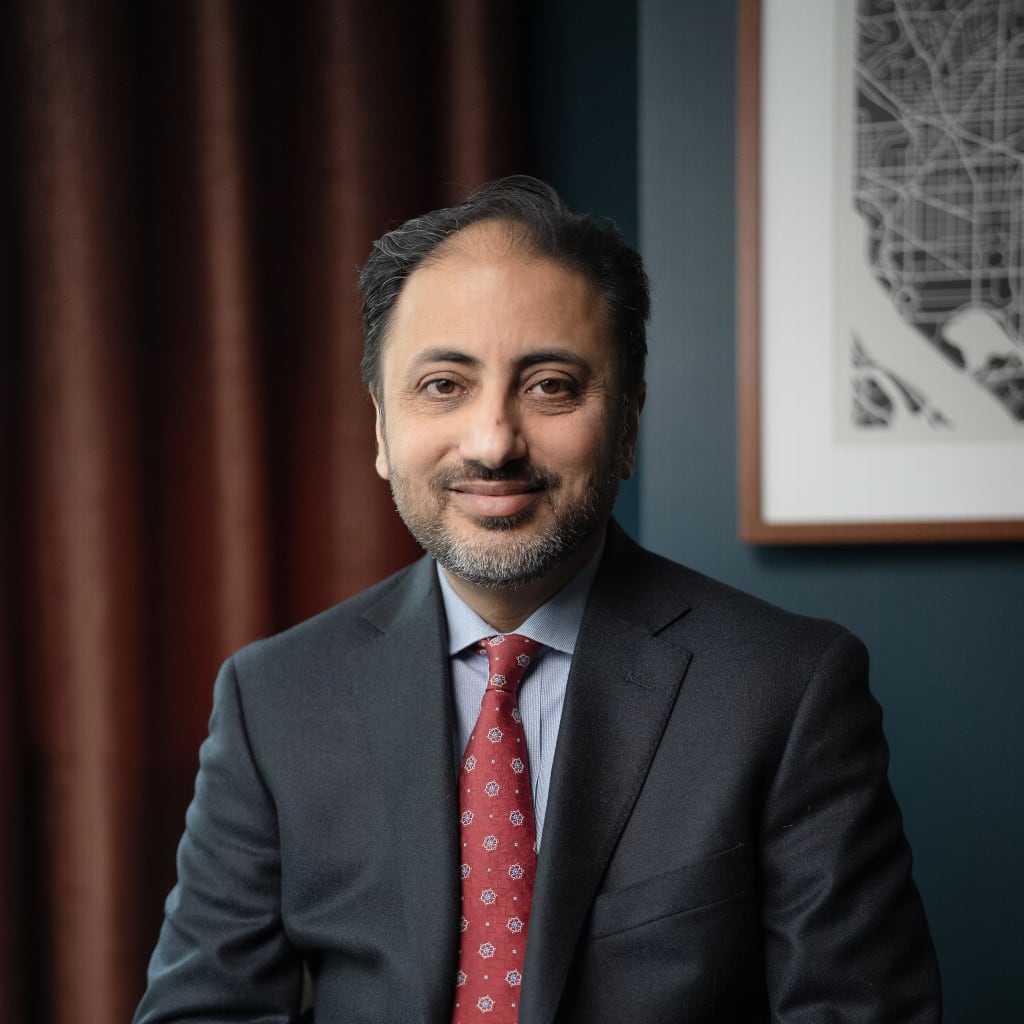 Sadanand DhumeCFR ExpertSenior Fellow for India, Pakistan, and South Asia
Sadanand Dhume has viewed foreign policy through the lens of a foreign correspondent, a newspaper columnist, an author, and now a senior fellow at CFR, where he focuses on India, Pakistan, and South Asia. He also writes the biweekly East is East column for the Wall Street Journal, covering South Asia and the Indian diaspora. Read more about Dhume’s evolution across different writing styles and his advice for those seeking to break into international relations or journalism, including the importance of cultivating curiosity and developing strong language skills.
Here’s how Sadanand Dhume got his career in foreign policy. If you’re interested in this series, check out more editions here.
What did you want to be when you were little?
A fireman, or a soldier, or maybe Ultraman. Isn’t that what all little boys want to be?
You studied sociology at Delhi University, journalism at Columbia, and then international relations at Princeton. How did this combination of disciplines shape the way you approach foreign policy writing?
My writing was probably shaped most by my two graduate degrees. If I had to divide it, I would say Columbia Journalism School taught me to value brevity and clarity. From studying international relations, I learned to appreciate the complexity of many of the issues I would go on to write about, including economic development and religious extremism. One degree was focused more on craft, conveying information to a general reader quickly and accurately, and the other was focused more on substance. Though, obviously, the two are related.
How did your experience as a reporter covering South Asia change your understanding of the region?
I worked for a now defunct magazine called the Far Eastern Economic Review (FEER). This was a legendary publication that sprung up after World War II and specialized in covering in-depth the economics, politics, and foreign policies of Asia—not just South Asia, but also Southeast Asia and Northeast Asia. What was amazing for me working for FEER was that right out of grad school I was given the freedom to essentially write about whatever I wanted to write about in India, no matter how obscure or unsexy the topic—this was long before the era of counting clicks.
I’ll give you an example. Shortly after I became the FEER bureau chief in India, I went off to the eastern state of Odisha, one of the poorest states in India, to look at power-sector reform and a bid to privatize electricity distribution companies. Now, this was not the kind of story that many international publications or editors would have been willing to back with a travel budget, but the Far Eastern Economic Review was that kind of place. It was great because I got to engage with issues that I found interesting without having to worry too much about whether readers would also find them interesting. This was a luxury then and it’s an even bigger luxury today.
The other thing that I found very helpful was that it was a magazine that covered both the politics and the economics of the region in a way that was meant to appeal to an informed insider rather than an absolute layperson. That allowed me to familiarize myself with a range of topics and issues related to India—and later Indonesia, where I also worked for the same magazine—in a way that I think if I’d been working for another kind of magazine, I may not have had that same breadth or depth of exposure.
You then transitioned to writing for think tanks. What was that shift like? What drew you to foreign policy analysis from news reporting?
There’s a step in between where I stopped working as a full-time journalist and wrote a book about the rise of radical Islam in Indonesia. The book idea came to me in the aftermath of the Bali bombings in 2002, which at the time were the largest terrorist attacks after 9/11 anywhere in the world. I wrote a book called My Friend the Fanatic about Indonesia, which documented the inroads made by an intolerant brand of Islam in the world’s most populous Muslim-majority country.
After that I was freelancing, and thinking of writing a book about the Indian middle class, when I stumbled upon this opportunity to be a columnist for the Wall Street Journal’s Asian edition—at that time, the Wall Street Journal used to have separate Asian and European editions––and I began writing a column twice a month for the Asian paper edited in Hong Kong. It would sometimes get republished in the U.S. paper, which was how my work first became part of the public conversation on India and South Asia in the United States.
Not too long after I began writing the column, the American Enterprise Institute in Washington began looking for an India scholar. At the time, in 2010, to put this in perspective, the Indian economy was booming. People were beginning to realize that you couldn’t really understand Asia without having a sense of the events unfolding in the Indian subcontinent. There was certainly much greater interest in India in Washington than there had been when I started my journalism career a little bit more than ten years earlier. Everything came together around the same time and within a year of starting the column I started to work for the American Enterprise Institute.
With My Friend the Fanatic, you transition from being a journalist to being an author. What did it take to step into a different style of writing?
In some ways, journalism is extremely helpful for book writing. In other ways, it can be harmful for book writing. The way in which it’s helpful is that it gives you an outlet to test out ideas in short form, and to get feedback and to acquaint yourself with a topic or an issue without first spending years on research. For instance, by the time I started working on my Indonesia book, I had already written several stories about the eruption of religious violence in the country after the fall of President Suharto in 1998. Journalism also gives you an audience, and the knowledge that there are people out there who will read your book.
The drawback is that there’s remarkably little in common between writing an 850-word magazine story or newspaper column and writing a 100,000-word book. In fact, what you learn from writing an 850-word column, in some ways, you may have to unlearn to write a 100,000-word book. The way you think about paragraphs, or even word choices, changes. In many ways, the column is my natural game. The psychology of writing for me—the way I’m wired after doing this for so long—is that I expect a kind of instant gratification. I write something and I send it to the editor, and then I get an edit, and then by the next day, it’s published online or in the paper and I immediately have ten thousand angry people yelling at me.
You have this work-to-reward ratio, the work-to-psychic-reward ratio, which is completely different from writing a book. With a book, you could be laboring over it for years and years, and nobody’s going to see it until publication. It can be disorienting for someone whose writing brain has been conditioned in a different way. I really admire people, including colleagues at CFR, who are able to pull off both.
The other part that’s different is that you can write a column or a short magazine article with one intense, concentrated burst of effort. It’s like a sprint. But a marathon is not just a series of sprints, and that’s the part I really didn’t understand until I wrote my first book. I thought, I write 1,200-word articles all the time, so how hard can a book be? It turns out that it’s a completely different beast.
If your writing mind has been trained to sprint, you really have to unlearn some of that to do the marathon. That’s the tricky part. The part that’s helpful is that if you’re writing regularly, you don’t have the luxury of things like writer’s block. You’ve got to deliver. That’s another mark on the positive side of the ledger for journalism.
Your forthcoming book, Tinderbox: The Unpredictable Rise and Uncertain Future of Modern India, comes out in February, correct?
It comes out in November in the United Kingdom and India, and in February in the United States. The book draws a lot on my writing over the last fifteen years, where I’ve examined the rise of Indian Prime Minister Narendra Modi and the rise of India’s Bharatiya Janata Party, as well as Hindu nationalism, in some detail. It expands on three themes that I return to often in my column. One is the question of religious pluralism in India and what it means for one of the most religiously diverse societies on Earth to be governed by a party and movement rooted in the illiberal idea that religious minorities are somehow less Indian than members of the majority faith.
The second is an explanation of the Indian economic story. This is a vast country; it has about 1.5 billion people, or a sixth of humanity. Is it going to be the next China economically, or is it going to be something else? This is of tremendous significance for the world.
The third question has to do with the nature of democratic backsliding in India. How democratic is the world’s largest democracy? Are India’s liberal institutions—the courts, the media, the professional civil service—strong enough to push back against illiberalism? Those are the three questions I explore in some depth in this book. Then, finally, I tie it all together in terms of explaining what this means for India and the world, and for U.S.-India relations specifically.
What brought you to CFR?
I had always admired CFR’s work, the depth of its scholarship, and the range of issues that fellows look at. I had attended countless CFR events. I had been a guest on a CFR podcast and I had written for Foreign Affairs. My wife worked here for several years as well, so I was deeply familiar with CFR. When I was approached and asked to come and talk to people and to later give a job talk, I was very enthusiastic about it and it all seemed to work out.
What advice would you give to someone starting out today who wants to cover South Asia or foreign policy more broadly?
A couple of things. The first is that it helps to be deeply curious about the country that you’re interested in, beyond foreign policy, even if you only want to write about foreign policy. How are Indians talking about India? Pakistanis about Pakistan? And so on. As a corollary to that, it helps enormously to know local languages because the world, particularly the developing world, is moving quite decisively away from a place where the only interlocutors, the only people you really need to know or be engaged with, are elites who speak English.
India is a really good example of this. When I was a foreign correspondent, you could be the FEER India correspondent and not speak Hindi. That was okay in a way because you could get by in India without Hindi or another Indian language in a way that you couldn’t get by in China without Mandarin. In India, there are newspapers and TV news channels in English, the politicians you would meet would often speak English, everybody in the senior civil service spoke English, and so on.
That’s no longer the case because the ruling elite of the country are now people who are really distant from that English-speaking world. They think in Hindi, and speak in Hindi or native Indian languages. It becomes more and more important that if you want to understand this world, you need to have a toolkit that includes languages. You need to know what politicians and public intellectuals tell their own people in their own languages, not just what they say to foreigners in English at Davos.
Over the years, you’ve had many interesting work trips and dinners. Is there a most memorable one you could describe?
One of my most memorable trips may have been a visit to the island of Ambon in the Moluccas, which was just recovering from a civil war at the time. It was a beautiful place marred by tragedy. I was navigating from the Muslim section to the Christian section of the island and back, and always had this slight fear in the back of my mind that a sniper may think that I was there to interfere in the war and take a shot at me.
Oh my goodness!
That was certainly interesting. Another one that stood out was when I managed to smuggle myself into the prison cell of Indonesia’s most-wanted terrorist at the time, Abu Bakar Ba’asyir. I wrote about this in My Friend the Fanatic. He was surrounded by friends and family. Once he found out that there was a foreign journalist in the room, he suddenly switched into pure propaganda mode and started giving this fiery lecture denouncing the United States and the war on terrorism. Then the cops noticed and I was very quickly ushered out of the prison. I was worried that they may boot me out of the country.
I need to read that! How did you smuggle yourself into a prison?
My friend the fanatic, the guy I was traveling with, was very well connected with these people, and he figured out which day Ba’asyir’s family was allowed to visit, and we just walked in with them.
Oh my gosh, it was that easy?
It was. Indonesia is a fairly easygoing, go-with-the-flow kind of place. But it didn’t last very long because once he switched into lecture mode, the cops wised up and kicked me out.
This interview has been edited for length and clarity.
This work represents the views solely of the author(s). The Council on Foreign Relations is an independent, nonpartisan membership organization, think tank, and publisher, and takes no institutional positions on matters of policy.