Japan’s Ruling Party Loses Key Election
By experts and staff
- Published
- CFR Editors
Welcome to the Daily News Brief, CFR’s flagship morning newsletter summarizing the top global news and analysis of the day.
Subscribe to the Daily News Brief to receive it every weekday morning.
Top of the Agenda
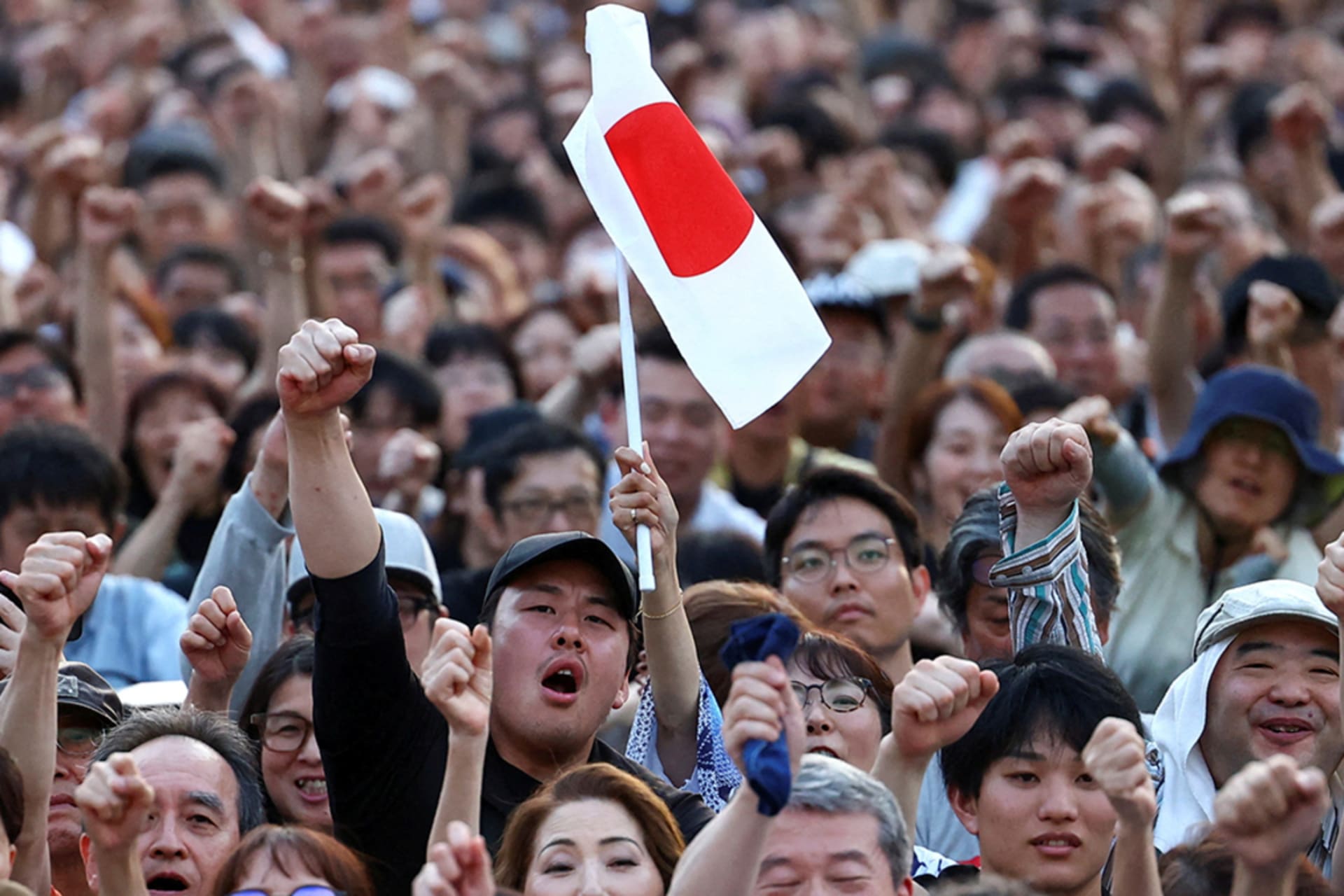
Japanese Prime Minister Ishiba Shigeru said he intends to remain in power despite his coalition losing its upper house majority in yesterday’s elections. Ishiba’s Liberal Democratic Party (LDP) and its coalition partner Komeito had already lost their majority in the more powerful lower house last October. The results came as Ishiba attempts to reach a tariff deal with the United States.
The LDP’s slump. This election marks the first time since the LDP’s founding in 1955 that its coalition has lost majorities in both legislative houses.
- While corruption concerns loomed large ahead of the party’s October defeat, economic woes defined this election, as voters complained about rising prices—particularly that of rice. Ishiba said he believed his government’s steps to relieve prices had yet to be felt by many voters and he would take the election results “humbly and sincerely.”
- The center-left Constitutional Democratic Party remained the largest opposition party in the upper house after the vote, but conservative populist parties—including the anti-immigrant Sanseitō party—made significant gains, according to projections from public broadcaster NHK.
Foreign policy implications.
- Stronger opposition parties could complicate Ishiba’s efforts to reach a trade deal with the United States that staves off Washington’s announced 25 percent tariffs.
- Sanseitō’s rise suggests voter dissatisfaction with Japan’s recent pro-immigration policies intended to boost the economy. The party said it would consider working with the ruling coalition on some issues and plans to grow enough in the next election to become part of a coalition government.
“Japanese voters are thinking mainly of their own economic worries. Those worries are likely to grow as the Japanese economy feels the effects of U.S. tariffs…The economic stakes of the impasse with the United States are high—and getting higher—as Prime Minister Ishiba and his party battle for support at home.”
—CFR expert Sheila A. Smith and CFR’s Chris Baylor, Asia Unbound
Across the Globe
DRC peace deal. The Democratic Republic of Congo (DRC) government and representatives of the M23 rebel group signed a ceasefire agreement Saturday, with both sides committing to a lasting resolution to their conflict and pledging to sign an official peace deal by August 18. Washington welcomed the Qatar-facilitated deal, while the UN peacekeeping mission in the DRC called it “an important step towards sustainable peace.” It follows a June peace agreement between the DRC and Rwanda.
Israel’s operations in Gaza. Israel’s military launched ground operations in the central Gaza city of Deir al-Balah today, its first such offensive there since the war began. It came after one of the deadliest days yet for Palestinians seeking food aid in the territory, with at least sixty-seven killed in northern Gaza yesterday, Gaza’s Health Ministry said. The UN World Food Program said Israeli “tanks, snipers, and other gunfire” shot at a crowd surrounding an aid convoy. The Israeli military said it had fired “warning shots” to remove an “immediate threat.”
West Bank church attack. U.S. Ambassador to Israel Mike Huckabee visited a Christian village in the West Bank on Saturday where a church had been attacked earlier this month, calling the incident an “act of terror.” Clerics said Israeli settlers started the fire nearby; Israel did not immediately comment. Last week, Huckabee called for a probe after a Palestinian American man was beaten to death in the West Bank.
Europe-Iran nuclear talks. Iran will hold nuclear talks with France, Germany, and the United Kingdom on Friday, an Iranian foreign ministry spokesperson said. The three European countries had warned they would push for renewed international sanctions on Tehran by the end of August if it did not return to the negotiating table.
Chinese exit bans. Wells Fargo bank suspended travel to China after a Shanghai-born, Atlanta-based managing director was banned from leaving the country, unnamed sources told the Wall Street Journal. Neither U.S. nor Chinese authorities immediately commented on the specific case. Separately, unnamed sources told the Washington Post that a Chinese American man was blocked from leaving China after failing to disclose on his visa application that he worked for the U.S. government.
Visa block on Brazil judge. U.S. Secretary of State Marco Rubio on Friday announced visa bans on Brazilian Supreme Court judge Alexandre de Moraes and his “allies on the court,” accusing them of leading a “witch hunt” against former Brazilian President Jair Bolsonaro and creating a “persecution and censorship complex.” Moraes is presiding over Bolsonaro’s trial for allegedly plotting a coup and has led efforts to limit online misinformation, including by temporarily suspending Elon Musk’s X in Brazil last September. Brazilian President Luiz Inácio Lula da Silva said Saturday that U.S. interference in Brazil’s judiciary was “unacceptable.”
French probe of X. Social media platform X said today that it would not cooperate with a French government probe into its potential illegal handling of data, calling it politically motivated and a threat to free speech. The company said the French government had requested access to its recommendation algorithm and data about user posts, but had left the company “in the dark” about the accusations against it. The Paris prosecutor’s office that launched the probe did not immediately comment.
Iran expels Afghans. Iran has increased deportations of Afghans to some thirty thousand per day following its twelve-day war with Israel last month, the UN refugee agency said. Tehran had already begun deporting Afghans in March, citing the economic burden of hosting them, and has now accused some Afghans of spying for Israel. The UN special representative for Afghanistan said the volume of returns “should be setting off alarm bells across the global community.”
What’s Next
- Today, a European Parliament delegation begins a visit to the United States.
- Today, Chilean President Gabriel Boric hosts the leaders of Brazil, Colombia, Spain, and Uruguay in Santiago for a meeting on democracy.
- Tomorrow, Philippine President Ferdinand Marcos Jr. meets with U.S. President Donald Trump in Washington, D.C.