John F. Kennedy’s “Strategy of Peace” Speech and the Push to Limit Nuclear Weapons
A 1963 commencement address at American University helped usher in the era of nuclear arms control.
By experts and staff
- Published
 James M. LindsayCFR ExpertMary and David Boies Distinguished Senior Fellow in U.S. Foreign Policy
Commencement addresses have figured prominently in U.S. foreign policy. Whether it was Franklin D. Roosevelt in 1940 ending the pretense that the United States would remain rigidly neutral in World War II in a speech at the University of Virginia, or George W. Bush warning Americans in 2002 of the growing need for preemptive (actually, preventive) action abroad in an address at West Point, major foreign policy turning points are sometimes announced on college campuses.
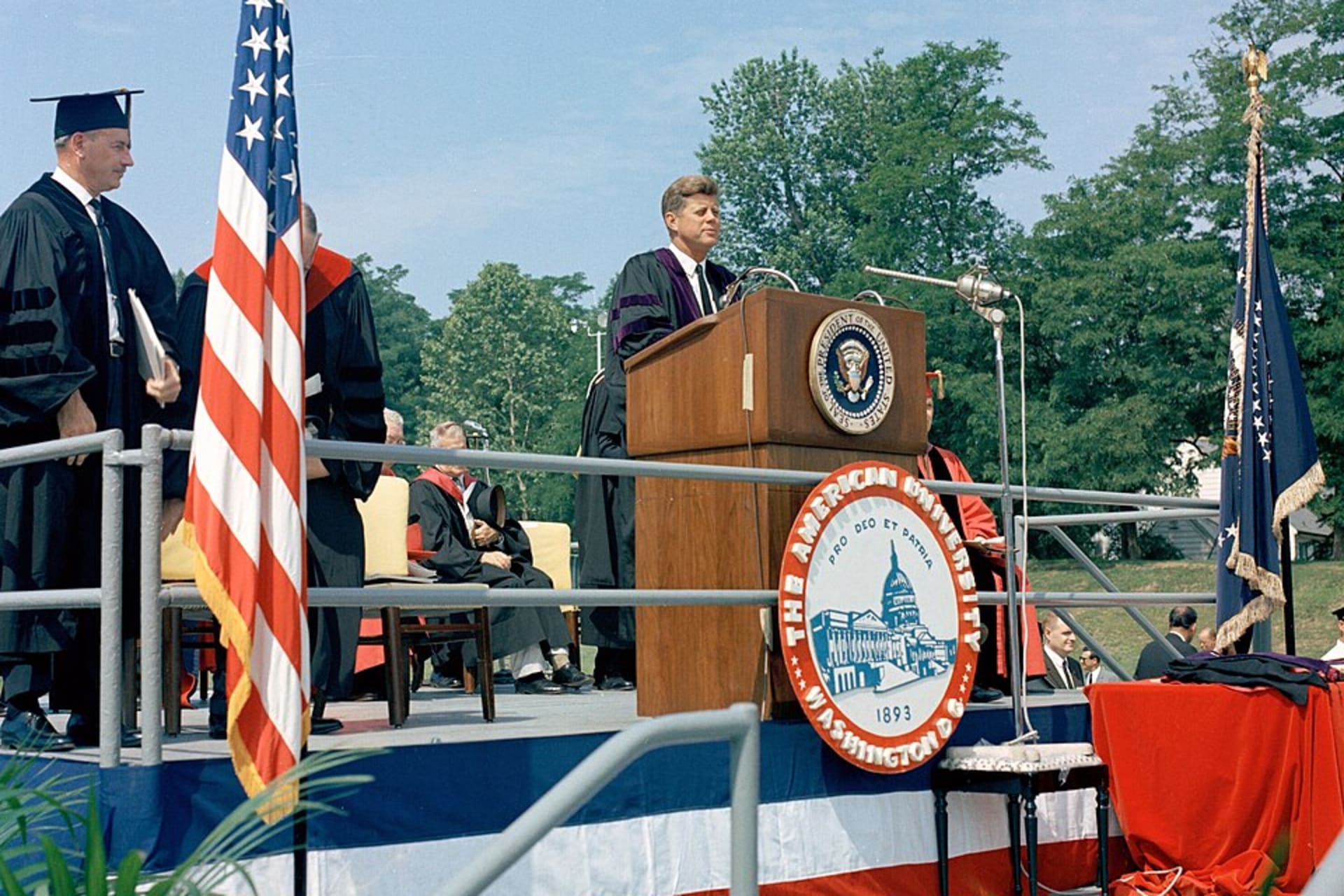
So which of the many foreign-policy themed commencement addresses was the most significant? My money is on Secretary of State George C. Marshall’s 1947 address to Harvard’s graduating class—it unveiled the Marshall Plan. But others might give the nod to a commencement address given sixteen years later: John F. Kennedy’s “A Strategy of Peace” speech on June 10, 1963, to the graduating class of American University. It helped usher in the era of nuclear arms control.
A New Vision
Kennedy’s address to American University’s graduates did not offer any memorable lines, certainly nothing that could compete with “ask not what your country can do for you” rhetoric of his inaugural address. The speech was instead significant because it asked Americans to rethink U.S. relations with the Soviet Union and to support finding ways for the two countries to co-exist peacefully.
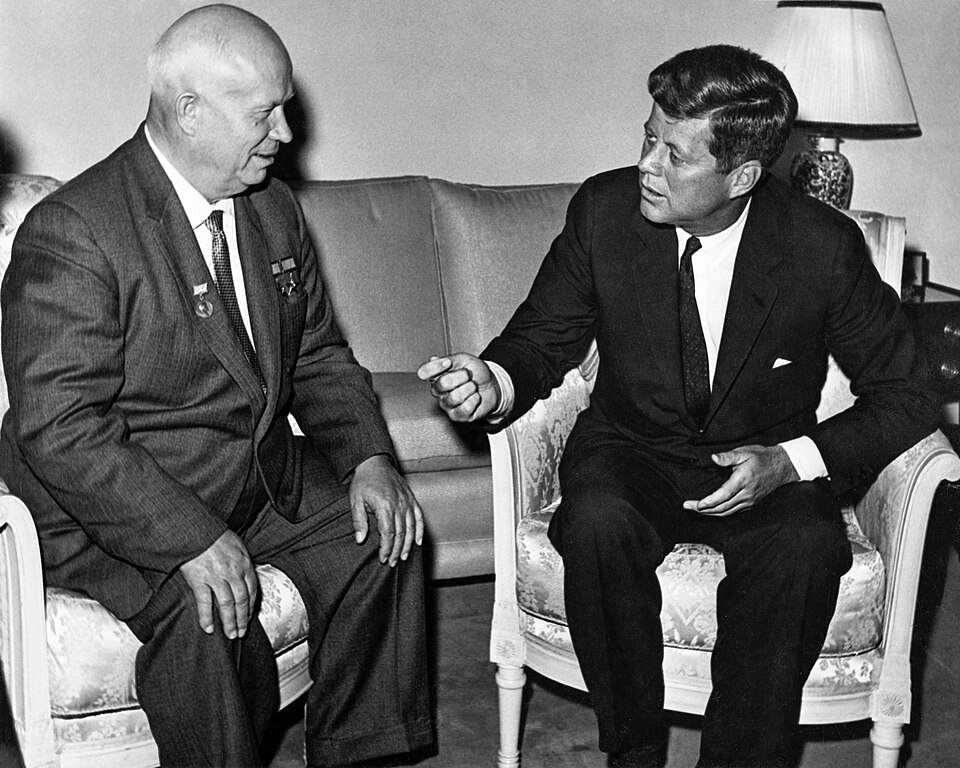
That was a bold position to take in 1963. The crushing of liberty in Eastern Europe after World War II, the communist victory in China in 1949, North Korea’s invasion of South Korea in 1950, Soviet leader Nikita Khrushchev’s 1956 boast that “We will bury you!,” and his subsequent bid to base nuclear weapons in Cuba were just a few of the events that had convinced most Americans that they faced an implacable foe in the Soviet Union.
Indeed, just two years before speaking to American University’s graduates, Kennedy had told the nation:
Each day we draw nearer the hour of maximum danger, as weapons spread and hostile forces grow stronger ... the tide of events has been running out and time has not been our friend.
Now he was making the case that United States needed to rethink its approach to a dangerous world.
At the Brink
The 1962 Cuban Missile Crisis explains the change in JFK’s thinking. Having survived a nuclear showdown, his fears of Soviet military superiority had given way worries about the risk of nuclear war, a risk that would grow as nuclear weapons spread. In March 1963, he told reporters:
I am haunted by the feeling that by 1970, unless we are successful, there may be ten nuclear powers instead of four, and by 1975, fifteen or twenty … I see the possibility in the 1970s of the President of the United States having to face a world in which fifteen or twenty nations have these weapons. I regard that as the greatest possible danger.
In late May, JFK decided to give a speech on the U.S.-Soviet relations and the nuclear threat. He had been considering the idea for a while; a letter from author and peace activist Norman Cousins urging him to give a speech that would “create a whole new context for the pursuit of peace” helped persuade him to move ahead.
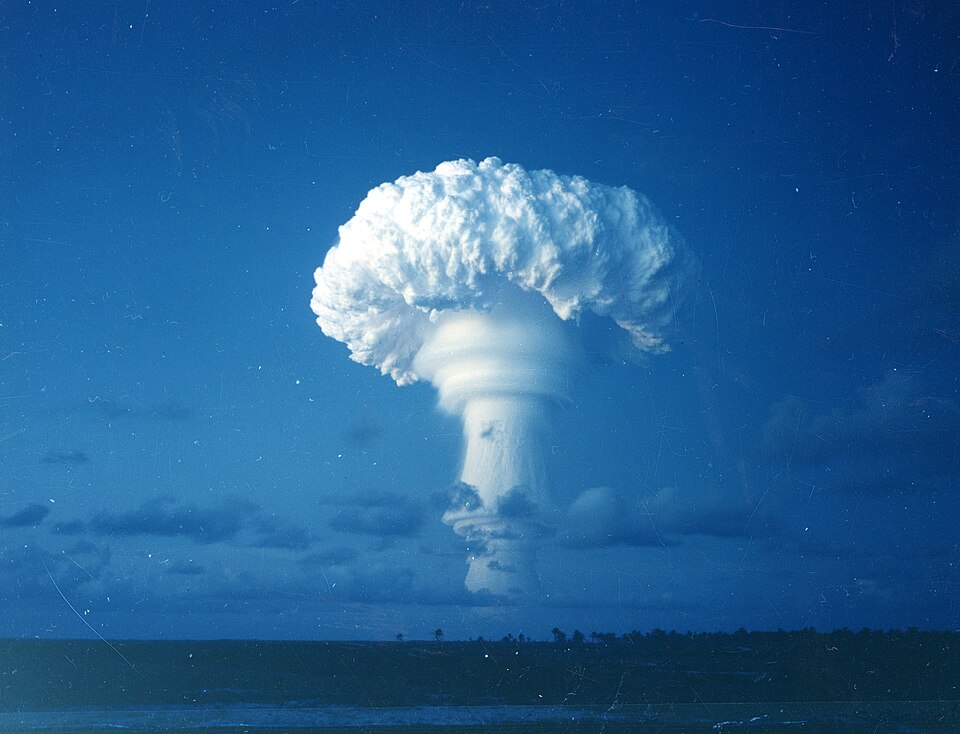
Kennedy tasked his gifted speechwriter Ted Sorensen to write remarks that would both lay out a vision of how the United States could live in peace with its major adversary and help reinvigorate the foundering eight-year effort to negotiate a nuclear test-ban treaty. Kennedy and Sorensen kept the Pentagon and the State Department in the dark about the speech’s content until the last moment, lest they attempt to scuttle it.
As Sorensen worked on the speech, which drew on a draft that Cousins had prepared, White House officials scrambled to find an appropriate venue. They approached American University to gauge its interest. The university had already scheduled Pauline Frederick, a journalist and American University graduate, to be its commencement speaker. But a presidential address is hard to pass up. Ms. Frederick graciously stepped aside.
A Short Trip for a Big Message
Kennedy traveled the four miles from the White House to American University’s campus by helicopter. When he spoke to the graduates, their families, and friends, he did not gloss over the differences between the United States and the Soviet Union. But he asked his audience to focus on the common danger facing both countries:
Today, should total war ever break out again—no matter how—our two countries will be the primary targets. It is an ironic but accurate fact that the two strongest powers are the two in the most danger of devastation. All we have built, all we have worked for, would be destroyed in the first twenty-four hours. And even in the cold war—which brings burdens and dangers to so many countries, including this nation’s closest allies—our two countries bear the heaviest burdens. For we are both devoting massive sums of money to weapons that could better be devoted to combat ignorance, poverty, and disease. We are both caught up in a vicious and dangerous cycle with suspicion on one side breeding suspicion on the other, and new weapons begetting counter-weapons.
The speech also contained a unilateral offer to the Soviets:
I now declare that the United States does not propose to conduct nuclear tests in the atmosphere so long as other states do not do so. We will not be the first to resume. Such a declaration is no substitute for a formal binding treaty—but I hope it will help us achieve one. Nor would such a treaty be a substitute for disarmament—but I hope it will help us achieve it.
Kennedy’s speech pleased some Americans and alarmed others. (The Columbus Dispatch called it an “appeasement cue.”) But it made a decidedly positive impression on the one person JFK most hoped to reach: Khrushchev. The Soviet leader subsequently told Under Secretary of State Averell Harriman that it was “the greatest speech by any American president since Roosevelt.”
A Most Important Speech
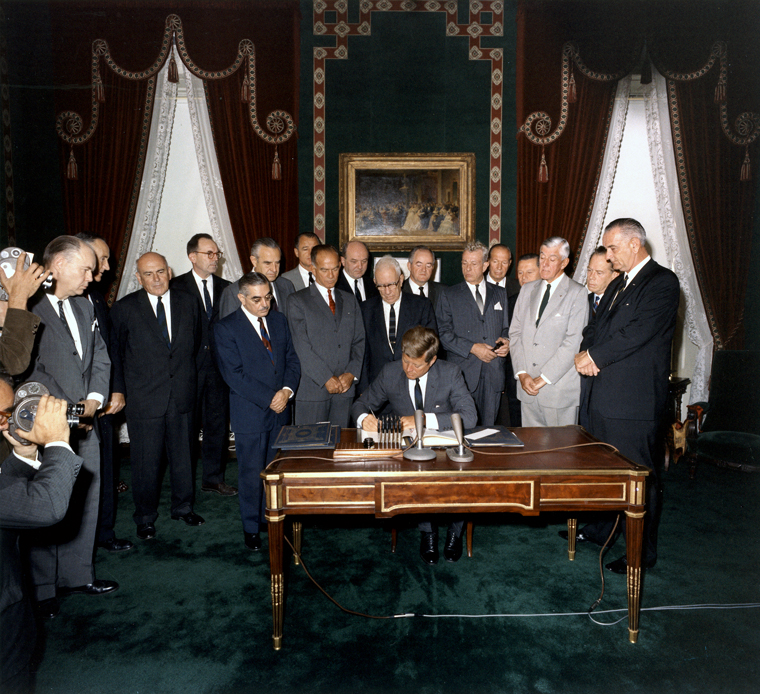
Ten days later after Kennedy gave his address, U.S. and Soviet negotiators agreed to establish a crisis hotline between Washington and Moscow. The once moribund test-ban talks also picked up momentum. On July 25, the United States, the Soviet Union, and the United Kingdom agreed to the Limited Nuclear Test Ban Treaty, which barred nuclear testing in the atmosphere, underwater, and in outer space. The foreign ministers of all three countries formally signed the treaty in Moscow on August 5, 1963. That agreement helped open the door to the 1968 Nuclear Non-proliferation Treaty and to what would become a decades-long effort to negotiate limits on U.S. and Soviet (later Russian) nuclear stockpiles.
So it is easy to see why Sorensen later called Kennedy’s American University speech “the most important and the best speech he ever gave” and why Time magazine named it one of the top ten commencement speeches.
The United States celebrates its 250th anniversary in 2026. To mark that milestone, I am resurfacing essays I have written over the years about major events in U.S. foreign policy. A version of this essay was published on June 10, 2013.
Oscar Berry assisted in the preparation of this article.