The Announcement of the Marshall Plan
A hastily drafted commencement address announced a plan that would revitalize Western Europe after World War II and leave a lasting mark on world history.
By experts and staff
- Published
 James M. LindsayCFR ExpertMary and David Boies Distinguished Senior Fellow in U.S. Foreign Policy
Most commencement addresses are forgettable. The speaker gives some advice on how to live a productive life, advice that typically means more to the wistful parents in the audience recalling the missteps of their youth than to the headstrong students looking to conquer the world. A few commencement speeches resonate beyond the venue in which they are given because of the speaker’s unusual eloquence and urgency.
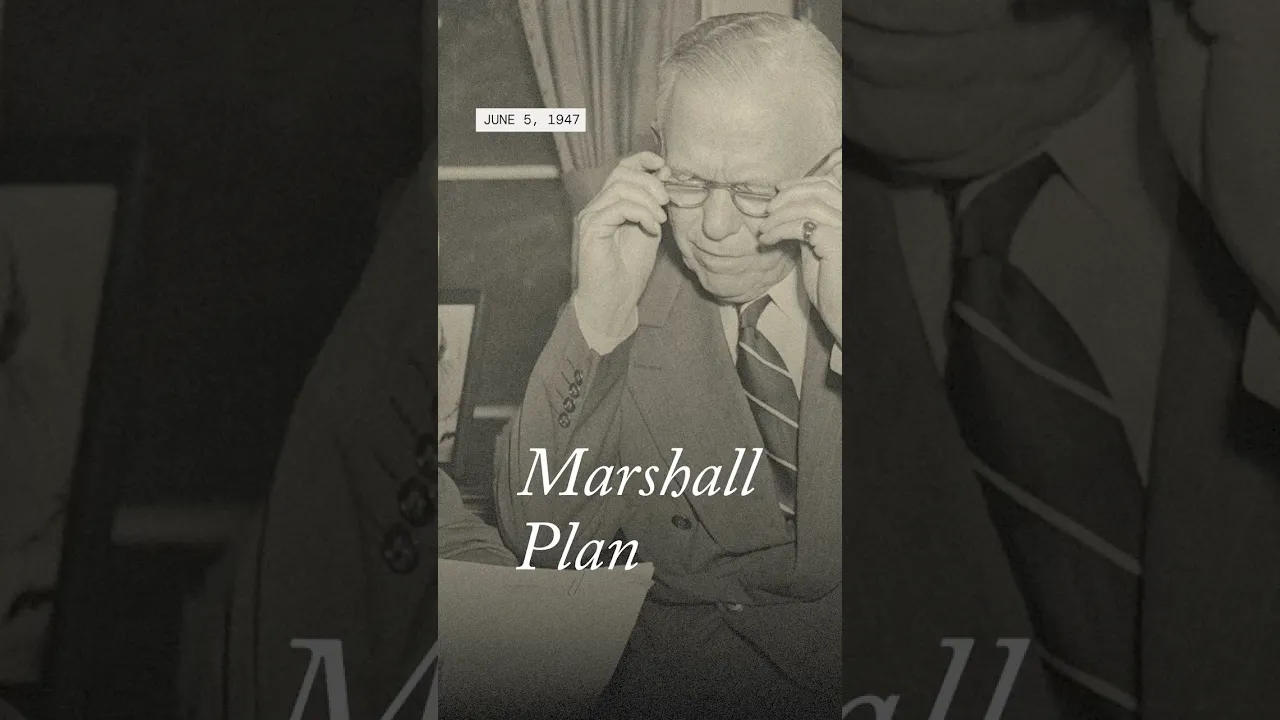
Almost no commencement addresses change the world. But the address that Secretary of State George C. Marshall gave on June 5, 1947, to Harvard’s graduating class did just that. It unveiled what we know today as the Marshall Plan, an expansive U.S. aid program that revitalized Western Europe in the aftermath of World War II. A recent survey I conducted with members of the Society for Historians of American Foreign Relations (SHAFR) ranked it as the best foreign policy decision in U.S. history.
[Video: https://www.youtube.com/shorts/0eWPhhUPg5o]
Europe in Ruins
Marshall gave his speech just two years after the defeat of Nazi Germany. Initial optimism that peace would spur rapid economic growth soon foundered over the harsh realities of reconstructing a continent in ruins. The winter of 1946-47 was one of the harshest in memory, taxing already inadequate coal supplies and further hampering industrial recovery. Making matters worse, the spring harvest of 1947 was the worst since the nineteenth century, exacerbating food shortages. From 1946 to 1947, Europe produced only four-fifths as much food as in 1938—with a population that was 10 percent larger.
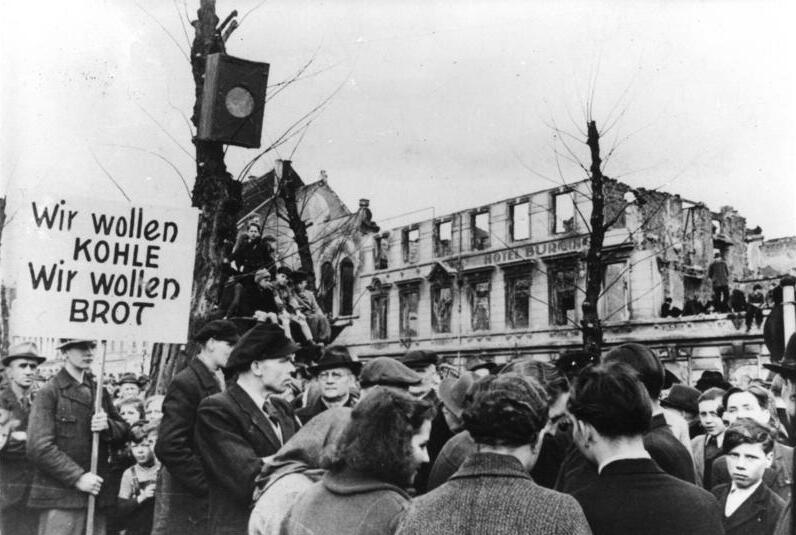
The slow pace of reconstruction raised fears that a weak and demoralized Europe could fall prey to Communist propaganda and Soviet influence. The Soviet Union was working to establish pro-Moscow regimes in the territories its armies occupied in Eastern Europe. In Western Europe, Communist parties commanded around a fifth of the popular vote in Italy and a quarter of the popular vote in France. U.S. policymakers faced the prospect that Joseph Stalin would gain what Adolf Hitler had sought—but without firing a shot.
Tentative Steps
As Marshall headed to Cambridge in June 1947, the Truman administration had already taken some steps to respond to the crisis in Europe. In 1945, Washington had extended a $4.34 billion loan to help Great Britain recover from the war. Even with that support, London could not maintain its role as the dominant power in the Eastern Mediterranean. Rather than allowing the Soviet Union to fill the vacuum created by Britain’s withdrawal from the region, President Harry S. Truman in March 1947 unveiled what became known as the Truman Doctrine. It promised support to “free peoples who are resisting attempted subjugation by armed minorities or by outside pressures.” Two months later, Congress appropriated $400 million in military aid to Greece and Turkey.
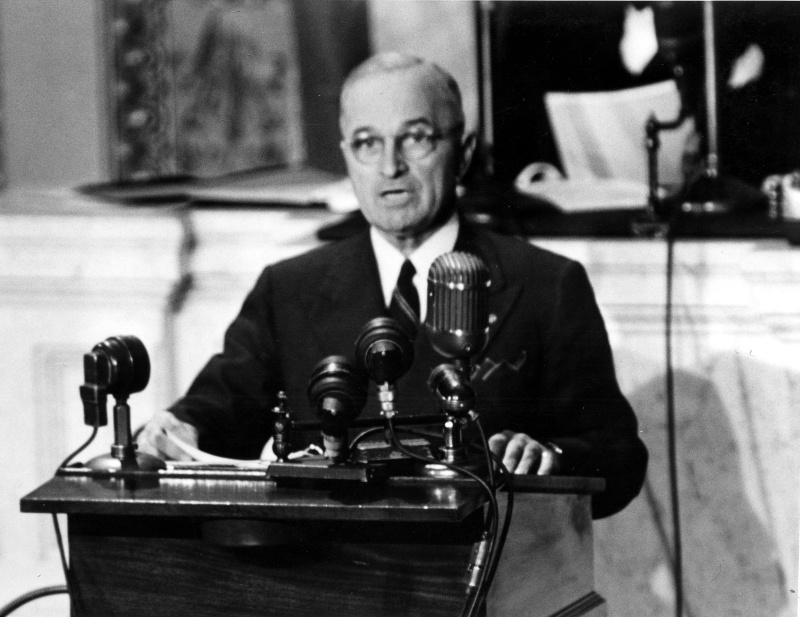
Truman worried that these piecemeal measures were inadequate. So, he tapped Marshall to develop a comprehensive plan for European reconstruction. When George Kennan, who would lead the effort as the head of the State Department’s new Policy Planning Staff, asked Marshall for guidance, the secretary’s answer was simple: “Avoid trivia.”
The sense of urgency in the State Department was high. Undersecretary of State for Economic Affairs William L. Clayton returned from a trip to Europe in May warning that “without further prompt and substantial aid from the United States, economic, social and political disintegration will overwhelm Europe.” Americans would feel the impact directly as the United States would lose valuable export markets, which might send the U.S. economy into recession.
Harvard Yard
By the start of June, Marshall and his team had sketched the outlines of their plan for European recovery. They knew that public support for the initiative would be critical. So just two days before Harvard University held its commencement, Marshall accepted the university’s open invitation to receive an honorary degree. He would use his speech to roll out the “Marshall Plan.”
A crowd of 15,000—including fellow honorees T.S. Eliot, J. Robert Oppenheimer, and General Omar Bradley—filled Harvard Yard to capacity on June 5. Marshall spoke for less than eleven minutes. Most of his audience did not immediately grasp the significance of what Republican Senator Arthur Vandenberg of Michigan later called the “electric effect” of “a few sentences in a quiet sequence.” In the weeks to come, they would.
[Video: https://youtu.be/ML7LpdTFcwg?si=-06Pnj-4fTzkGD4a]

The Proposal
Marshall’s proposal was as simple as it was bold: the United States would help rebuild war-torn Europe if Europeans agreed to work together to develop a plan for reconstruction. But that simple idea raised a thorny question: Which European countries would be eligible for U.S. aid? Marshall knew that Congress would reject his plan if it meant sending aid to the Soviet Union and Communist governments in Eastern Europe. But he also knew that the United States needed to avoid creating the impression that it was trying to divide Europe.
Marshall decided to make the offer to all the countries of Europe, including the Soviet Union. He had not gone soft on communism. Instead, he calculated that Stalin would reject the proposal because it would require the Soviet Union and its satellite countries to open up their economies to Western inspection. Marshall was right. Stalin said no. The emerging Soviet bloc would not participate.
Persuading Congress
Marshall’s proposal was warmly received in Western Europe. The critical hurdle was persuading Congress to fund the plan. The political winds seemed unfriendly. Truman’s personal popularity was sagging. Republicans controlled both houses of Congress, and their relations with the Democratic president were strained. Moreover, 1948 would be a presidential election year.
Besides these political headwinds, Truman and Marshall faced substantive objections to what they were proposing. Many lawmakers bristled at the idea of sending taxpayer dollars overseas, arguing that Europe’s problems were Europe’s to solve. Other lawmakers warned that no matter how noble the purpose, foreign aid would divert funds from domestic programs, increase government spending, interfere with the operation of free markets, and create dependency rather than foster self-sufficiency. And some lawmakers asked why the United States should aid former adversaries Germany and Italy.
The Bipartisan Moment
Truman and Marshall had a critical congressional ally on Capitol Hill Vandenberg. He chaired the Senate Foreign Relations Committee and was a leading Republican presidential candidate. Before Pearl Harbor, he had opposed becoming entangled in European affairs. But the war convinced him that the United States could no longer afford to turn its back on events overseas. He and several of his fellow lawmakers were willing to put partisan differences aside and work with Truman and Marshall to craft a plan for European recovery.
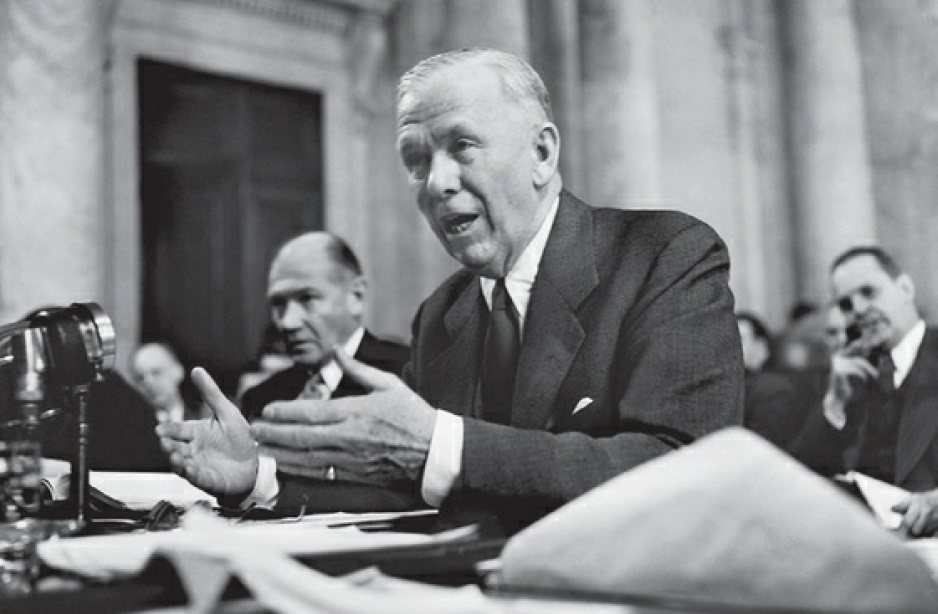
Vandenberg pushed the Truman administration to stress the national security reasons for the Marshall Plan. At his behest, the administration provided Congress with detailed reports on the dire conditions in Europe. The administration also sent officials across the country to explain why the Marshall Plan was needed and enlisted business leaders and local officials to press the case that U.S. aid was not charity but a hardheaded and effective way to repel communism and expand markets for American-made goods. Continued news of Soviet intimidation in Eastern Europe also helped make the case.
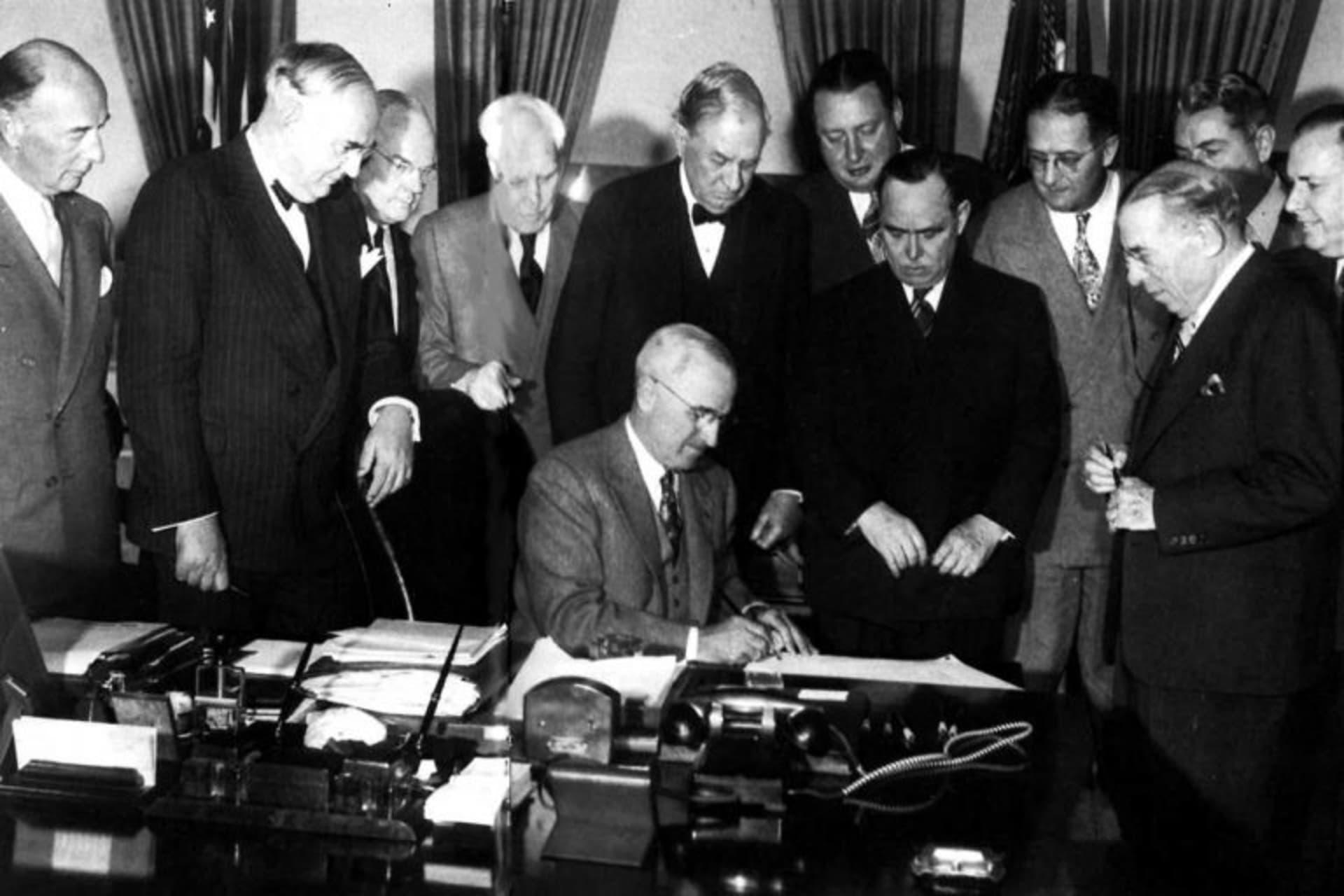
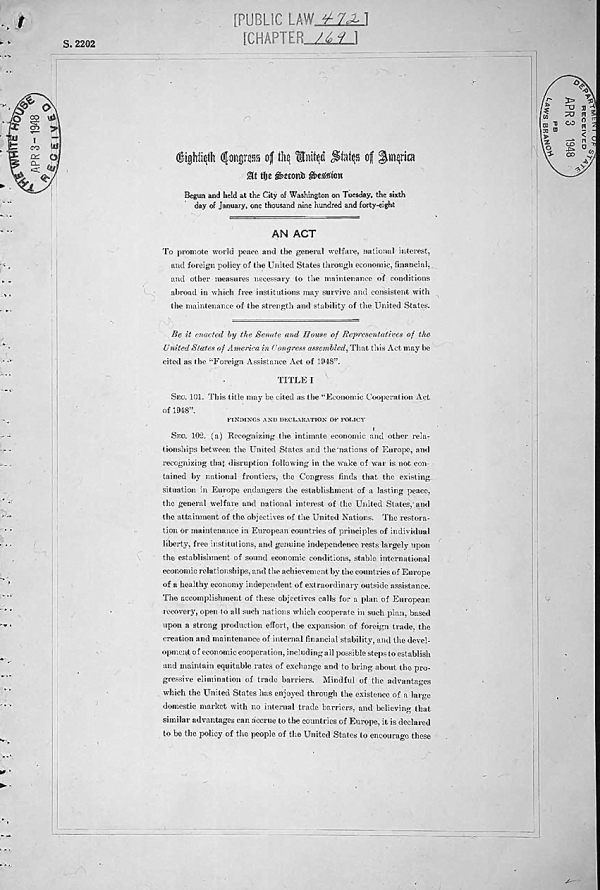
The extensive bipartisan and cross-institutional collaboration worked. The Senate passed the Marshall Plan by a margin of 69 to 17. The House passed it by a margin of 329 to 74. On April 3, 1948, Truman signed what was formally known as the Economic Cooperation Act of 1948 into law.
A Great and Honorable Venture
The Marshall Plan was an enormous success. Between 1948 and 1952, the United States provided $13 billion (equivalent to more than $150 billion in 2026 dollars) in grants and loans to sixteen Western European countries. The impact was dramatic. By 1952, every recipient country had seen its gross domestic product (GDP) surpass prewar levels, food shortages end, and its quality of life improve.
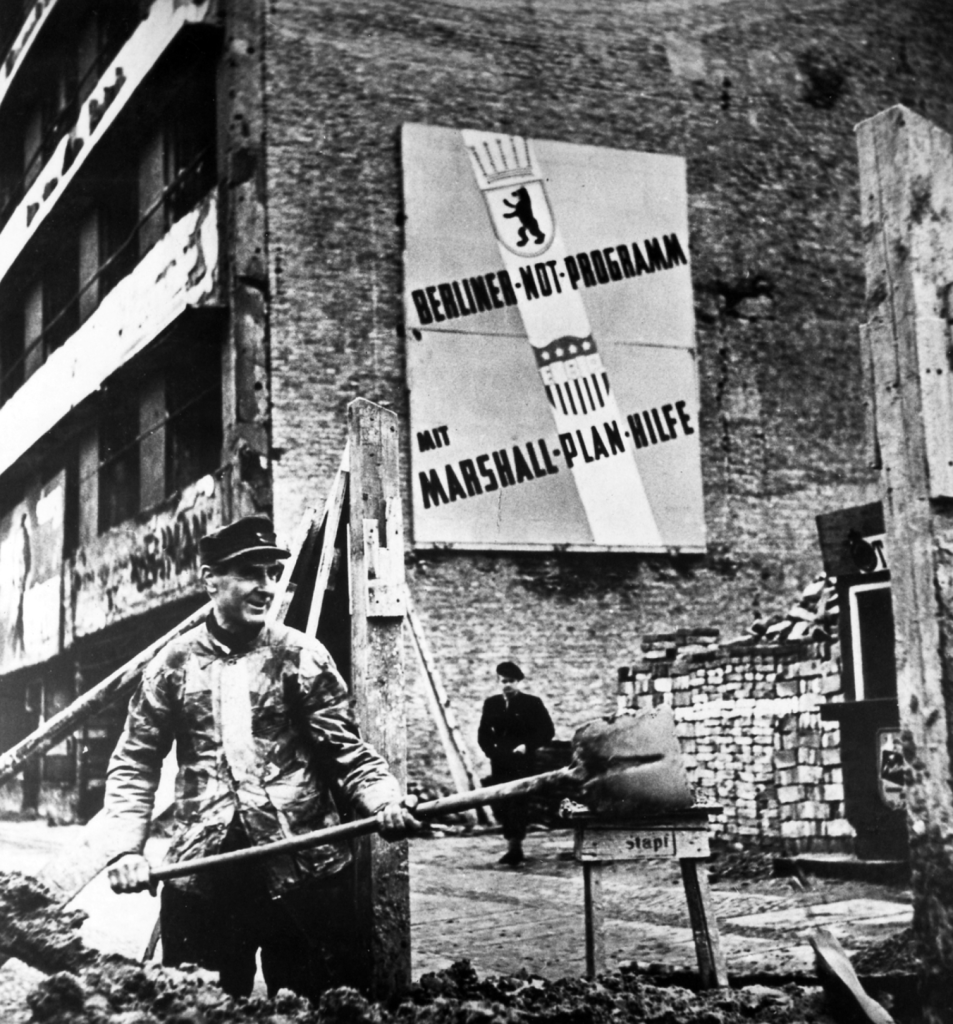
Western Europe’s remarkable economic turnaround cannot be attributed solely to Marshall Plan investments. While U.S. aid was large in absolute terms, it was small relative to the overall size of European economies. But along with the creation of NATO in 1949, it inspired confidence in the future and spurred other public and private investment. The Marshall Plan also encouraged European economic integration, enabling each country to grow faster than it would have in isolation.
Western Europe’s economic growth in turn shored up its fragile democracies. Falling unemployment, rising wages, and improved living standards diminished the appeal of the radical proposals that Communist parties offered and left less room for the Soviet Union to meddle. Center-left and center-right parties flourished. Western Europe’s political crisis passed.
Historian Thomas Bailey years ago called the Marshall Plan “the greatest act of statesmanship in the nation’s history.” As the results of the SHAFR survey show, it is a view that historians today continue to share. Secretary of State Dean Acheson put that assessment in even grander terms, calling the Marshall Plan “one of the greatest and most honorable adventures in history.”
Sometimes commencement addresses matter.
Learning More
If you would like to learn more about the Marshall Plan, check out the podcast episode I recently did with my CFR colleague Benn Steil. He is the author of The Marshall Plan: Dawn of the Cold War, the definitive work on the program that stimulated the reconstruction of Western Europe.
[Video: https://www.youtube.com/watch?v=s-8bTRWnUOE]
The United States celebrates its 250th anniversary in 2026. To mark that milestone, I am resurfacing essays I have written over the years about major events in U.S. foreign policy. A version of this essay was published on June 5, 2012.
Oscar Berry assisted in the preparation of this article.