Joint EU Loan to Ukraine Decided
By experts and staff
- Published
By
- CFR Editors
Welcome to the Daily News Brief, CFR’s flagship morning newsletter summarizing the top global news and analysis of the day.
Subscribe to the Daily News Brief to receive it every weekday morning
Top of the Agenda
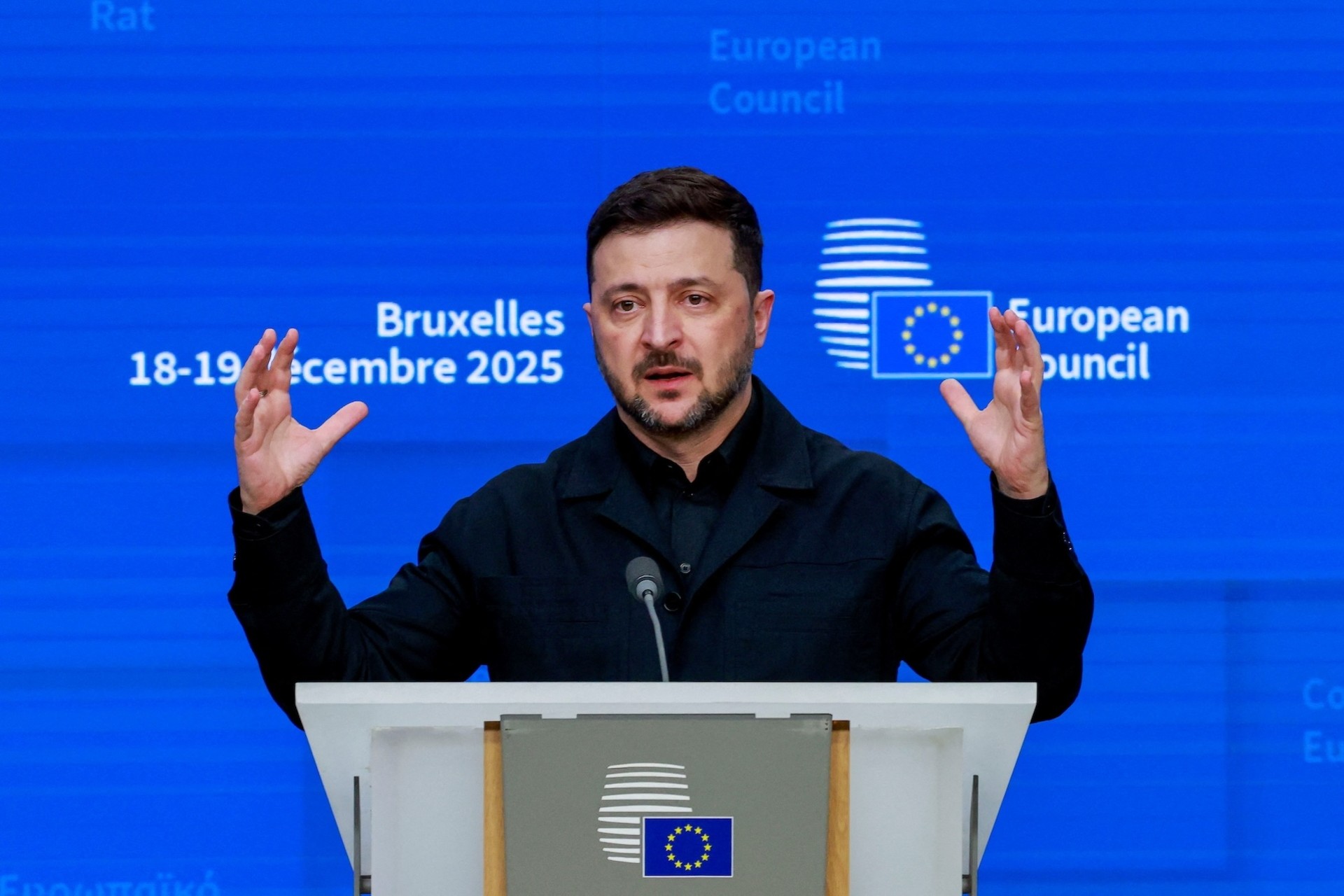
EU countries will lend $105 billion to Ukraine, bloc leaders decided yesterday. Money for the loan will be backed by the bloc’s budget rather than by frozen Russian assets, ending months of debate about the possibility of using those reserves—which could have created a larger loan. Still, the amount is expected to cover much of Ukraine’s projected budget gap for the next two years. Ukrainian President Volodymyr Zelenskyy called it “significant support that truly strengthens our resilience” in a social media post yesterday.
The details. The International Monetary Fund estimates that Ukraine’s military and nonmilitary financial needs for the next two years total around $158 billion. Belgium, which houses the majority of Russia’s frozen reserves in Europe, opposed their use as collateral. Russia had threatened lawsuits and other retaliation should the assets be used. Meanwhile, the United States has significantly reduced its aid to Ukraine during the second Trump administration; earlier this week, Washington approved just $800 million for the next two years. Funding strains have affected Ukraine’s war planning and pushed the country to raise taxes on its citizens last year. The new EU loan is interest-free, and only needs to be paid back if Russia later pays Ukraine war reparations.
Where peace talks stand. Ukrainian and Russian officials have each said they plan to hold peace talks with the United States in Miami over the weekend. Russian President Vladimir Putin, speaking at a press conference today, said that Russia stood by its war demands from last year; they include Ukrainian withdrawal from eastern territories claimed by Russia. Yesterday at the EU meeting, French President Emmanuel Macron called for European countries to engage directly with Russia on ending the war rather than having their positions relayed through third parties.
“The Trump administration’s hostility calls into question the stability of the transatlantic alliance and Europe’s ability to defend itself—and seeks to undermine Europe’s place in global decision-making. Europe needs to recognize this as the crisis it has been waiting for.” —CFR expert Heidi Crebo-Rediker and the Brookings Institution’s Douglas Rediker, Foreign Affairs
Across the Globe
TikTok sale. TikTok signed an agreement to divest its U.S. operations to a joint venture, according to a memo from its CEO seen by Axios. U.S.-based investors Oracle and Silver Lake, as well as Abu Dhabi-based MGX, will together own around 45 percent of the new company, while TikTok’s parent company ByteDance will continue to control 20 percent and affiliates of ByteDance investors will hold almost 33 percent. The new joint venture oversees U.S. data protection and algorithm training, while TikTok would manage e-commerce, advertising, and marketing. TikTok’s CEO wrote that more work was needed to close the deal by a January 22 target date.
India’s nuclear sector reform. The legislature approved a bill to ease private investment in the country’s civilian nuclear power sector. The measure is expected to be signed into law. India still generates more than 75 percent of its electricity by burning fossil fuels, but it has set a target of installing 100 gigawatts of nuclear power by 2047.
Talks on Hezbollah disarmament. Officials from France, Lebanon, Saudi Arabia, and the United States met in Paris yesterday to discuss a roadmap for disarming Hezbollah, one of the central tenets of a ceasefire agreement reached between Israel and Lebanon late last year. The countries agreed to host a conference on the matter in February, France’s foreign ministry said. A separate ceasefire monitoring committee met today in southern Lebanon. Each side has accused the other of ceasefire violations; Israel carried out strikes in Lebanon yesterday.
Sanctions on ICC judges. The U.S. State Department yesterday announced sanctions on two International Criminal Court (ICC) judges for targeting Israel without Israel’s consent. Israel argues it cannot be targeted by the ICC in part because it is not a party to the court’s statute; the Palestinian territories are a member. The ICC called the sanctions “a flagrant attack against the independence of an impartial judicial institution.” Washington had sanctioned six other ICC judges involved in cases against Israel earlier this year.
Pause on immigration program. The United States is pausing the diversity immigrant visa program (DV-1), U.S. Homeland Security Secretary Kristi Noem wrote yesterday on social media. Noem wrote that the man suspected of killing two Brown University students and a Massachusetts Institute of Technology professor in recent days entered the United States through the program, which currently makes up to fifty thousand immigrant visas available per year to citizens of countries with low levels of immigration to the United States.
Latest U.S.-South Africa tensions. The U.S. State Department yesterday claimed that Pretoria had doxed and detained U.S. officials who were in the country providing “humanitarian support to Afrikaners.” South Africa denied that it detained U.S. officials or released their information. Earlier this week, it arrested Kenyan nationals who it said were working without authorization in the country. The Kenyans were helping Afrikaners fill out applications for refugee status in the United States.
Egypt-Israel gas deal. Israel approved a roughly $35 billion deal with Chevron to supply gas to Egypt, Israeli Prime Minister Benjamin Netanyahu said Wednesday. He called the agreement the “largest gas deal in Israel’s history.” The United States had pushed for the deal for months. Washington has urged the two countries’ economic integration as part of its broader ambitions for peace in the region.
EU-Mercosur decision tabled. The EU deferred its plans to sign a free trade deal with South American customs union Mercosur this weekend by “a few extra weeks,” European Commission President Ursula von der Leyen said. France and Italy supported the delay, which came as farmers opposed to the agreement blocked roads with tractors and set off fireworks in Brussels. The deal has been under negotiation for twenty-six years.