Kharg Island: Iran’s Oil Hub That Trump Keeps Threatening to Take
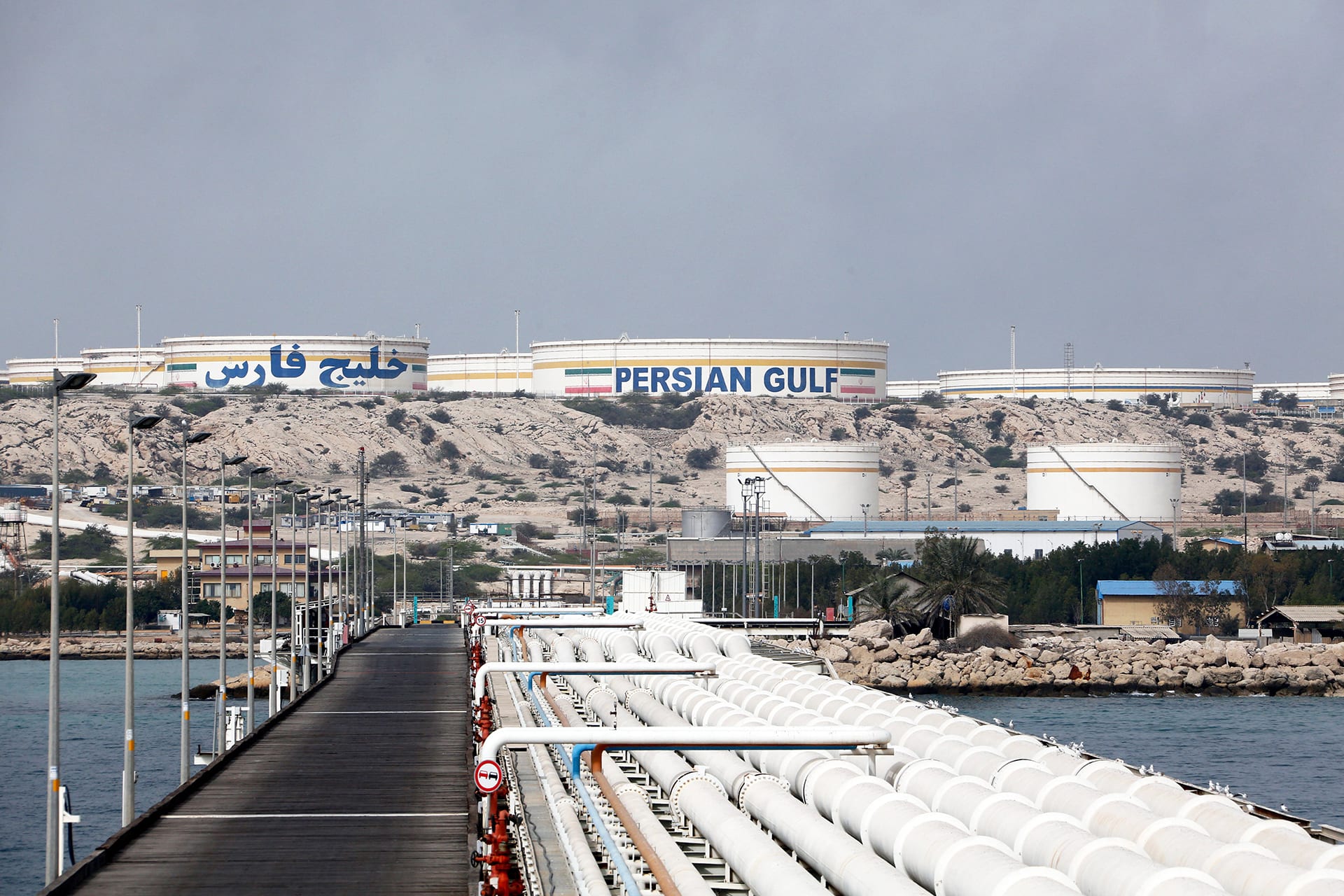
The small island in the Persian Gulf serves as Iran’s primary oil terminal, handling roughly 90 percent of the country’s crude exports. Recently, it has become a high-value target in the U.S.-Israeli war on Iran.
By experts and staff
- Updated
- Senior Editor, Data Visualization
- Writer/Editor
- Senior Writer/Editor, Latin America
Kharg Island, a small coral island in the northern Persian Gulf responsible for handling approximately 90 percent of Iran’s crude oil exports, has become a flash point in the United States and Israel’s widening conflict in Iran.
President Donald Trump issued a threat on June 11 that the United States intended to hit Iran “VERY HARD” later that night and seize Iran’s energy base on Kharg Island as part of that effort. “At some point in the not too distant future, we will be taking Kharg Island, and other oil infrastructure points, and assume total control of their Oil and Gas Markets,” he wrote about Iran on Truth Social. Trump called off the strikes in a later post, claiming that peace negotiations had progressed with high-level Iranian leaders and other regional powers—Bahrain, Egypt, Israel, Jordan, Kuwait, Pakistan, Qatar, Saudi Arabia, Turkey, and other countries.
“The Naval Blockade will remain in full force and effect until this Transaction is finalized,” he wrote in a Truth Social post. “Time and place of the signing to be announced shortly.”
The threats and the walkback that followed come after the United States and Israel exchanged strikes with Iran over the course of two days, exposing cracks in a tenuous ceasefire first negotiated in April. U.S. Central Command said it had launched a barrage of “self-defense strikes” this week, targeting military, surveillance, and radar sites. Iran’s foreign ministry said the U.S. attacks rendered the negotiated ceasefire “practically meaningless.”
The two-month truce had been on shaky ground since it was first struck, with U.S.-Iranian negotiators unable to find common ground on major sticking points like the Iranian nuclear program and the blocked Strait of Hormuz. Iran announced on June 11 that it had closed the critical waterway, but U.S. Central Command refuted this claim. Trump alleged earlier this week that the United States had secured 100 million barrels of oil by having the U.S. military covertly move ships past Iran’s chokehold.
As the clampdown on the strait has roiled energy markets, Kharg has become an even more high-profile target for the United States. The president has previously suggested that the United States could seize the island, and the U.S. military did strike the island in March and April. Trump had said at the time that he’d chosen not to “wipe out” the island’s oil infrastructure—despite his well-documented threat late in the conflict that “a whole civilization will die tonight” if Iran did not agree to U.S. terms. He later walked back this threat as well.
While the United States has ramped up its military presence in the Middle East, experts say an attack or invasion of Kharg Island could further drive up global oil prices by curbing Iran’s oil exports, provoke retaliation, and endanger the lives of U.S. military personnel who could be deployed to the island.
Where is Kharg Island?
The island is situated in the northern Persian Gulf, approximately 21 miles off the coast of Iran. Known as the “Forbidden Island” due to its role as a critical energy hub, Kharg Island measures only roughly 8 square miles—about one-third the size of Manhattan—and is heavily guarded by Iran’s Islamic Revolutionary Guard Corps, with strict limitations on who can enter.
Why is Kharg Island important?
Kharg Island has been Iran’s primary oil export hub for nearly seven decades and is considered a lifeline for the Iranian economy. It handles the majority of the country’s crude oil shipments, most of which are destined for Asia—predominantly China. The island’s deepwater, high-capacity terminals can accommodate very large crude carriers, known as supertankers, which cannot dock on much of Iran’s shallow mainland coast.
A 1984 declassified CIA document [PDF] described the island’s oil facilities as “the most vital in Iran’s oil system,” noting that “their continued operation is essential to Iran’s economic well-being.” On March 7, shortly before the U.S. attack, Israeli opposition leader Yair Lapid wrote on social media that destroying the island’s oil infrastructure “will cripple Iran’s economy and topple the regime.”
As some analysts argue, if the United States were to occupy the island, it would gain leverage over the Iranian regime and could pressure it to reopen the Strait of Hormuz. The U.S. military “could kill two birds with one stone: remove an economic lifeline for the regime—and perhaps lower its chances of survival—and stabilize global energy markets,” Bilal Y. Saab, associate fellow in the Middle East and North Africa Program at Chatham House, wrote for War on the Rocks.
Iran is a major oil producer, holding roughly 12 percent of global oil reserves. Despite severe international sanctions, primarily led by the United States, Iran accounted for approximately 4 percent of global oil supplies in 2023, placing it among the top ten oil producers worldwide. Analysts say the current conflict has actually driven a surge in oil revenues, likely in the “hundreds of millions of dollars,” as Iran still controls access through the Strait of Hormuz.
According to the Foundation for Defense of Democracies, roughly half of Iran’s government revenue comes from oil and gas, meaning any destruction or loss of Kharg Island would deal a major blow to a critical revenue source for Iran. But the Trump administration recently eased sanctions on Iranian oil, and any disruption to Kharg Island could further reduce global supply at a time when energy markets are already experiencing a significant shock triggered by the outbreak of war.
How difficult would it be for the U.S. to occupy Kharg Island?
If Trump were to attack the island, that operation—whether by air or sea—could pose a threat to U.S. security. Kharg Island’s proximity to Iran’s mainland means it could be targeted by drones and short-range missiles; should U.S. troops be deployed to the island, they would be susceptible to Iranian attacks. Indeed, Iran’s parliamentary speaker warned that the country would “rain down fire” on U.S. forces attempting to invade the island. Iran’s mountainous coast makes it difficult for U.S. radar to pick up on any assault quickly enough to neutralize it, experts say.
It would also be a challenge for the United States to resupply troops stationed on Kharg Island, especially as the waterways near Iran, particularly the Strait of Hormuz, have become highly securitized. The nearest major U.S. military bases are in Bahrain, Kuwait, and Qatar, which are all more than 100 miles away from Kharg, leaving any ships traveling that distance vulnerable to attacks, too. Iran and its proxies could also lay land mines or strike ships in the Persian Gulf using its so-called mosquito fleet, composed of small attack craft armed with drones, missiles, and rockets.
Iran could also retaliate against oil and gas facilities in the region, further driving up prices. Several nearby sites have already suffered damage.
In terms of the legality of a potential U.S. invasion or seizure of Kharg Island, international law allows attacks on civilian infrastructure only if the military edge gained outweighs the civilian harm done. There are at least eight thousand civilians living on the island, which could raise the legal stakes of a potential invasion or occupation.
Are there other strategic targets around the Strait of Hormuz?
Several other islands in the area could be targets in the war. Nearby Kharg Island is Qeshm, the largest island in the Persian Gulf where Iran is suspected to house underground missile and drone sites. It is also home to desalination plants that serve as a crucial water source for water-stressed Iran.
Abu Musa and Greater and Lesser Tunb are a trio of islands right off the Strait of Hormuz; they are all occupied by Iran but are claimed by both Iran and the United Arab Emirates. Larak Island, too, sits just offshore from the critical Bandar Abbas port, a point through which Iran currently has all tanker vessels pass for checks. Together, this constellation of islands off Iran’s coast gives the United States multiple potential targets to disrupt the shipment of Iranian oil.
A maritime blockade against ships carting Iranian oil out of the Gulf—further from the coast—could be another alternative and, perhaps, safer option if it is out of reach of many of Iran’s weapons.
Colophon
Data Visualization
- Will Merrow
- Michael Bricknell
- Austin Steinhart
- Lara Yeyati Preiss