The Global Water Crisis: Stress, Scarcity, and Conflict
Updated
Growing water stress is threatening the health and development of communities worldwide. The United Nations warns the planet has entered an era of “water bankruptcy,” as climate pressures and rising demand intensify the strain on global water resources.
- Water stress occurs when demand for safe, potable water exceeds the available supply, often due to factors including agricultural production, climate change, and population growth. Today, billions of people experience some form of water stress.
- Countries have often cooperated on water management. Still, there are a handful of places where transboundary waters are driving tensions, such as Africa’s Nile Basin.
- UN researchers warned in a January 2026 report that the world has entered an era of “water bankruptcy,” requiring radical reforms to prevent further irreversible damage to global water supplies.
What are backgrounders?
Authoritative, accessible, and regularly updated Backgrounders on hundreds of foreign policy topics.
Who Makes them?
The entire CFR editorial team, with regular reviews by fellows and subject matter experts.
Introduction
More than two billion people across the world lack adequate access to one of the essential elements of life: clean water. Although governments and aid groups have helped many living in water-stressed regions gain access in recent years, the problem is projected to worsen as the global population grows and climate change intensifies. Yet insufficient international coordination on water security has slowed the search for solutions. In a January 2026 flagship report, UN researchers warned that the world is in a state of “water bankruptcy,” in which human demand and depletion of natural water systems exceed replenishment rates. This threatens global energy and food security and potentially causes irreversible ecological degradation.
Water stress can differ dramatically from one place to another, in some cases causing wide-reaching damage, including to public health, economic development, and global trade. It can also drive mass migrations and spark conflict. As regions, particularly the Middle East and North Africa, become increasingly water-stressed, pressure is mounting on countries to implement more sustainable and innovative practices and to improve global water management cooperation. Experts say impacted countries must also account for the potential that watersheds—areas of land that channel rainfall, snowmelt, and runoff into a common body of water—may never return to their historical baselines, making sustained collaboration essential to meeting every country’s water needs.
What is water stress, and how bad is it?
Water stress is a broad term used to describe the strain on water resources when the demand for safe, usable water in a given area approaches or exceeds the available supply. It encompasses both quantity and quality, including factors such as water usability and contamination. On the demand side, the vast majority—roughly 70 percent—of the world’s freshwater is used for agriculture, while the rest is divided between industrial (less than 20 percent) and domestic uses (around 12 percent). On the supply side, sources include surface waters such as rivers, lakes, and reservoirs, as well as groundwater stored primarily in aquifers. In many regions, the latter is being depleted faster than it can naturally replenish.
Scientists use different methods to measure water stress. One of the most common is the Falkenmark Water Stress Indicator, which measures the total renewable freshwater resources available per capita annually. It has three primary thresholds for categorizing water availability: water stress (less than 1,700 cubic meters per person annually), water scarcity (less than 1,000 cubic meters), and absolute scarcity (less than 500 cubic meters). However, experts say the Falkenmark Indicator has several limitations, including that it doesn’t account for water quality or regional and seasonal variations in water availability and use.
Globally, water stress is widespread and growing. In January 2026, UN researchers published a flagship report [PDF] stating that the term “water crisis” is no longer sufficient to describe the structural depletion of global water systems. Instead, the world is now in an era of “water bankruptcy,” in which the persistent overwithdrawal of surface and groundwater has damaged natural water systems to the point of being either impossible or prohibitively costly to fix. Wetland degradation and shrinking glaciers, for example, “are not simply signs of stress or episodes of crisis,” the report stated, but rather symptomatic of ecosystems that have passed the point of recovery. The result will create “knock-on effects for food prices, employment, migration and geopolitical stability,” it added.
What is water scarcity?
Water stress can be an early warning sign of water scarcity, which denotes the shortage of accessible freshwater resources to meet regional demand. Water scarcity is often divided into two categories: physical and economic. Physical scarcity occurs when demand for water exceeds supply. Economic scarcity materializes when “communities, countries, [and] societies don’t have the economic and technological resources to take advantage of or utilize their available water resources,” David Michel, a senior associate for the Global Food and Water Security Program at the Center for Strategic and International Studies (CSIS), told CFR. Saudi Arabia, for example, has no permanent rivers or lakes and receives minimal rainfall, but its wealth allows it to invest heavily in water management infrastructure and seawater desalination projects to meet its water needs.
A stressed area can experience both a shortage of rainfall and have insufficient water storage, treatment, or sanitation facilities. Even when there are significant natural causes for a region’s water stress, it’s often exacerbated by human activity, particularly regarding access to clean water and safe sanitation.
At the same time, some areas that suffer physical water scarcity have the infrastructure that has allowed life there to thrive, such as the southwestern United States. States there, including Arizona and Nevada, rely heavily on extensive dams, aqueducts, and reservoirs to manage water scarcity and transport water from distant sources.
In countries across the world, a variety of authorities, from the national level down to local jurisdictions, govern or otherwise influence the water supply. In the United States, more than a dozen federal agencies manage, regulate, or fund water supply and infrastructure. This includes the Environmental Protection Agency (EPA), which enforces federal clean water regulations, and the Federal Emergency Management Agency, which prepares for and responds to environmental disasters such as hurricanes. Similar authorities at the state and local levels protect and oversee the use of water resources, including through zoning and rehabilitation projects.
What causes water stress and water scarcity?
Experts say water stress can result from a combination of human and natural factors, including:
Agriculture. Agriculture accounts for about 70 percent of global freshwater withdrawals, outstripping both industry and domestic freshwater usage by a large margin. Agricultural water withdrawals primarily refers to water used to support livestock and irrigate crops. As populations grow, more land is used for agricultural purposes. Certain crops such as rice and cotton require more water than others, placing additional strain on local water supplies. This pressure is intensified in dry regions, where soil erosion and low rainfall mean crops require more irrigation.
As rainfall becomes more unpredictable and rising temperatures accelerate the evaporation of water from soil, experts believe farming will become increasingly challenging. Water scarcity makes agricultural production more difficult, threatening communities’ access to reliable food supplies. Food-insecure communities may experience both acute and chronic hunger, with children particularly vulnerable to conditions stemming from malnutrition, such as stunting and wasting, as well as diet-related chronic illnesses like diabetes.
Climate change. Rising temperatures due to climate change are intensifying water stress in already affected regions and increasing the number of water-stressed areas. Higher temperatures are also altering global rainfall patterns, making water availability less reliable and predictable. Subtropical areas, such as the Mediterranean and North Africa, are expected to continue warming and experience more frequent and longer droughts. When rainfall does occur, it is projected to be more intense, raising the risk of flooding and severe storms. Weather in tropical regions is likewise becoming more variable, climate scientists say.
In a 2023 report [PDF], the Intergovernmental Panel on Climate Change (IPCC)—the UN body tasked with regularly assessing the latest climate science—found a more than 50 percent chance that global warming would hit or exceed 1.5°C (2.7°F) between 2021 and 2040 under the current pace of emissions. Though adhering to the Paris Agreement on climate change could still substantially reduce the likelihood of water stress in regions like the Mediterranean and southern Africa, most experts agree this is not enough to prevent the most devastating effects of climate change, particularly as global cooperation on the matter slows.
Population growth. As the global population grows, demand for freshwater used in agriculture, households, and sanitation increases. Particularly in urban areas, rapid population growth can outpace the development of water infrastructure, leading to water shortages. In regions with finite water sources, such as the Middle East and North Africa (MENA), greater demand can also intensify competition among households and industries, contributing to the overexploitation of water systems.
Poor water management. Aging or poorly maintained water infrastructure and inefficient irrigation systems can lose large quantities of water through leaks. Weak governance and regulations—or lack thereof—can also drive unsustainable water usage and accelerate depletion. This is particularly true for groundwater, which supplies approximately 50 percent of domestic water use and more than 40 percent of irrigation water use globally.
Water-related governance decisions can also have far-reaching ripple effects. “The infrastructure that we build to manage water in our community can disrupt water flows [and] water availability to a community next door or a community downstream, and exacerbate their water stress,” CSIS’s Michel said.
Additionally, constructing projects that require high water usage, such as data centers, can compound existing scarcity issues. In the United States, data centers consume billions of gallons of water annually. About two-thirds of new data centers that have been built or have been in development since 2022 are in water-stressed areas, according to Bloomberg.
Which regions are most water-stressed?
Close to 75 percent of the world’s population lives in countries classified as “water-insecure” or “critically water-insecure,” according to the United Nations. The MENA region is considered the most vulnerable to scarcity and other water-related challenges due to its naturally arid climate and lack of waterways. Rapid urban growth and densely populated cities further increase demand on water supplies. The UN Children’s Fund notes that fifteen of the world’s twenty most water-scarce countries are located in the MENA region.
To meet their water needs, Gulf countries rely heavily on the use of large-scale desalination plants that convert nearby seawater into drinking water, earning them the moniker “saltwater kingdoms.” Qatar is the most dependent of the Gulf countries on water from desalination, relying on it for 99 percent of its drinking water. Many MENA countries also import much of their food, reducing agricultural water demands.
Other areas of the world that are particularly vulnerable to severe water stress include South Asia, sub-Saharan Africa, and the southwestern United States.
In the United States, factors such as aging infrastructure and rapid population growth have put tremendous stress on water systems. That’s particularly true in the Southwest, where states regularly grapple with water scarcity and prolonged drought conditions. According to the EPA’s 2022 Clean Watersheds Needs Survey, which was released in May 2024, U.S. states and territories need at least $630 billion over the next two decades to upgrade wastewater, stormwater, and other clean water infrastructure.
How does water stress and scarcity trigger conflict?
Many freshwater sources transcend international borders, and, for the most part, national governments have been able to manage these resources cooperatively. Close to three hundred international water agreements have been signed since 1948, many addressing water allocation, management, and quality protection. For example, the Senegal River Basin Organization—established by Guinea, Mali, Mauritania, and Senegal in 1972—allows member states to jointly own and manage major hydraulic infrastructure in the basin. Water-sharing agreements have even persisted despite cross-border conflicts, as with the Jordan River in the Middle East.
Increasing or maintaining access to water has also formed the basis of modern cooperation agreements, particularly as freshwater grows more limited. The fifty-five member African Union announced in February 2026 that its annual summit that month would focus on sustainable water management as the continent faces a growing scarcity crisis. China and the European Union have also collaborated to develop strategies on water resilience.
However, water has also emerged as a source of conflict in recent years, leading to mounting concerns about so-called water wars. Across the world, the number of water-related conflicts—both within states and between them—has increased. In 2024, the last full year for which data is available, there were a record 420 such conflicts, according to the Pacific Institute, which tracks water-related violence.
The institute’s Water Conflict Chronology has recorded more than 2,750 instances of water and water systems being used as a trigger, target, or weapon of violence over the past several thousand years. Although most of these conflicts occur at the communal or local level, transboundary waters are a rapidly growing source of tension, either because there is no agreement in place or an existing water regime is disputed.
A prominent example is the Nile Basin, a major transboundary river system in northeastern Africa. Egypt claims the rights to most of the Nile’s water based on several treaties, the first dating back to its colonial era, but other states say they are not bound to the accords because they were never party to them. The dispute has flared in recent years due to Ethiopia’s Grand Ethiopian Renaissance Dam, a massive hydroelectric project on the Blue Nile that Egypt says could drastically reduce its share of the river’s water.
Countries have also carried out deliberate attacks on each other’s water systems. During the war in Ukraine, Russian attacks damaged critical water infrastructure, including dams, treatment plants, and pumping stations. Some experts have described Russia’s actions as “aquacide”—the deliberate destruction, contamination, or weaponization of water resources and infrastructure. In the U.S.-Israeli war against Iran that began in February 2026, Iranian officials accused the United States of striking a desalination plant on Qeshm, an island in the Persian Gulf, disrupting the water supply to thirty villages. U.S. officials denied responsibility.
However, while water scarcity can cause or contribute to conflict, it can also foster cooperation, experts say. “If different countries or parties won’t talk about anything else, they have to come to the table to talk about water because there’s nothing you can do without water,” Liz Saccoccia, a water security associate at the World Resources Institute, told CFR. “So it will actually bring groups together when they can’t agree on anything else.”
Moreover, water stress can affect global trade by reducing agricultural output and stalling supply chains. Reduced rainfall lowers water levels, particularly in waterways and canal systems, which can disrupt global shipping. This happened in 2023, when a prolonged regional drought resulted in historically low water levels in the Panama Canal, prompting authorities to restrict the number of ships that could pass through it each day. Water stress can also fuel forced migration, acting as a threat multiplier that exacerbates agricultural struggles and economic inequality.
What are countries and international organizations doing about water stress?
International water and sanitation efforts are largely coordinated by UN-Water, which works to accelerate progress toward fulfilling Goal 6 of the Sustainable Development Goals (SDGs), a sweeping fifteen-year development agenda adopted by UN member states in 2015. Goal 6 aims to “ensure availability and sustainable management of water and sanitation for all.” Effective water management is also vital to achieving many of the other SDGs, including eliminating hunger and ensuring good health and well-being.
Water has also become more prominent in international climate discussions. At the 2023 UN Water Conference, countries adopted the Water Action Agenda, a set of voluntary commitments to increase investment in water infrastructure and strengthen water-related governance to meet global water goals. Water was a major topic at COP30, the United Nations’ annual climate summit, held in November 2025. And in December 2026, the United Nations will host a Water Conference in the United Arab Emirates focused on water cooperation, multilateral governance, and water-related investments.
However, unlike efforts to combat climate change or preserve biodiversity, there is no comprehensive global framework focused on tackling water stress. The January 2026 UN report put forth a number of recommendations, including developing a global water bankruptcy monitoring framework, preventing further water depletion, increasing financial support for water-related initiatives, and adapting to changing water availability levels. However, while water has increasingly become a focus of international discussion, it remains to be seen whether these recommendations will be taken up.
Still, some governments and partner organizations have successfully increased access to water services. Between 2000 and 2020, the share of people using safely managed drinking water and safely managed sanitation services rose by more than 13 percent and 22 percent, respectively. But many countries are behind on meeting SDG Goal 6 ahead of the 2030 target date.
Even so, some countries have taken steps to improve their water security:
Green infrastructure. Peruvian law mandates that water utilities reinvest a portion of their profits into green infrastructure (the use of plant, soil, and other natural systems to manage stormwater), and the United States and Canada have provided tens of millions of dollars in recent years to support Peru’s efforts. Vietnam has taken similar steps to integrate natural and more traditional built water infrastructure.
Wastewater recycling. More cities around the globe are recycling sewage water into drinking water, something Namibia’s desert capital has been doing for decades. Singapore has as well, turning treated sewage into high-grade reclaimed water. Facilities in countries including the United States and China turn byproducts from wastewater treatment into fertilizer.
Smarter agriculture. Technological innovations in areas such as artificial intelligence and genome editing are also driving progress. China has become a world leader in bioengineering crops to make them more productive and resilient.
Land restoration. Restored land can hold more water and release that water more slowly, making it a longer-term resource, said the World Resources Institute’s Saccoccia. This is taking place in areas such as Ethiopia’s North Mecha district, where community-driven initiatives like tree planting and terracing are restoring water security and decreasing water runoff.
Recommended Resources
A January 2026 flagship report [PDF] by UN researchers warns the world has entered an era of “global water bankruptcy” and urges governments to shift to adaptation measures.
The World Resources Institute’s Aqueduct data platform maps global water risk.
The Pacific Institute’s Water Conflict Chronology tracks outbreaks of water-related conflict around the world.
CSIS’s David Michel does a deep dive of how sub-Saharan Africa can build resilient water systems.
For the Guardian, Rachel Salvidge unpacks how half of the world’s one hundred largest cities are in high water stress areas.
CFR’s Why It Matters podcast talks to Georgetown University’s Mark Giordano and the Global Water Policy Project’s Sandra Postel about water scarcity in this 2021 episode.
Colophon
Staff Writers
- Diana Roy
- Claire Klobucista
- Kali Robinson
Data Visualization
- Austin Steinhart
- Lara Yeyati Preiss
- Will Merrow
Additional Reporting
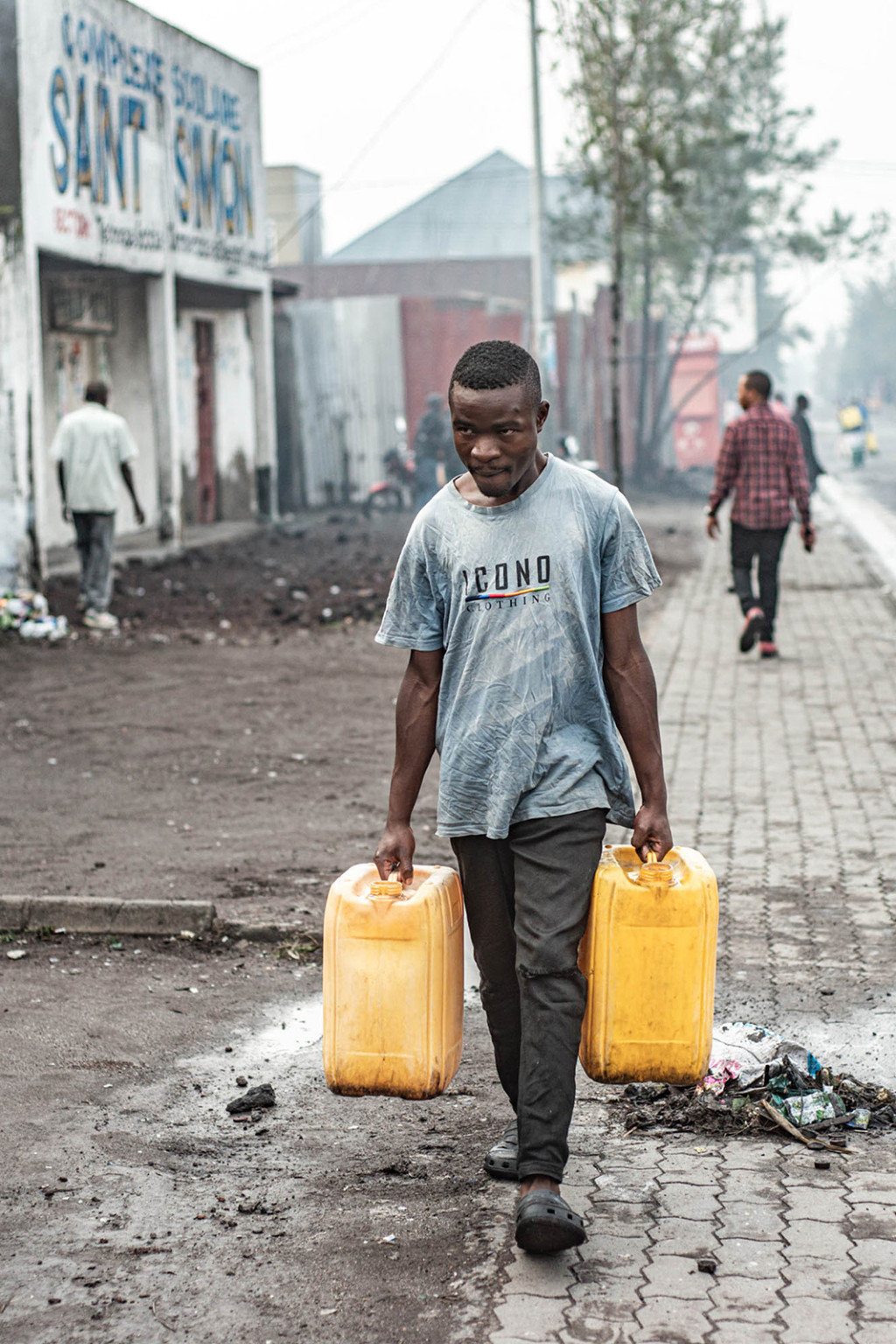
Surina Venkat and Emily Lieberman contributed to this Backgrounder. Will Merrow and Austin Steinhart helped create the graphics. Header image by Daniel Buuma/Getty Images.
 Backgrounder
 Backgrounder
 Backgrounder
 Backgrounder