PEPFAR Has Saved Tens of Millions of Lives. Why Is It at Risk?
PEPFAR has long been hailed as a landmark health initiative, earning bipartisan support for its role in combating HIV/AIDS worldwide. However, the Trump administration’s efforts to overhaul U.S. foreign aid have threatened the program’s long-term security.
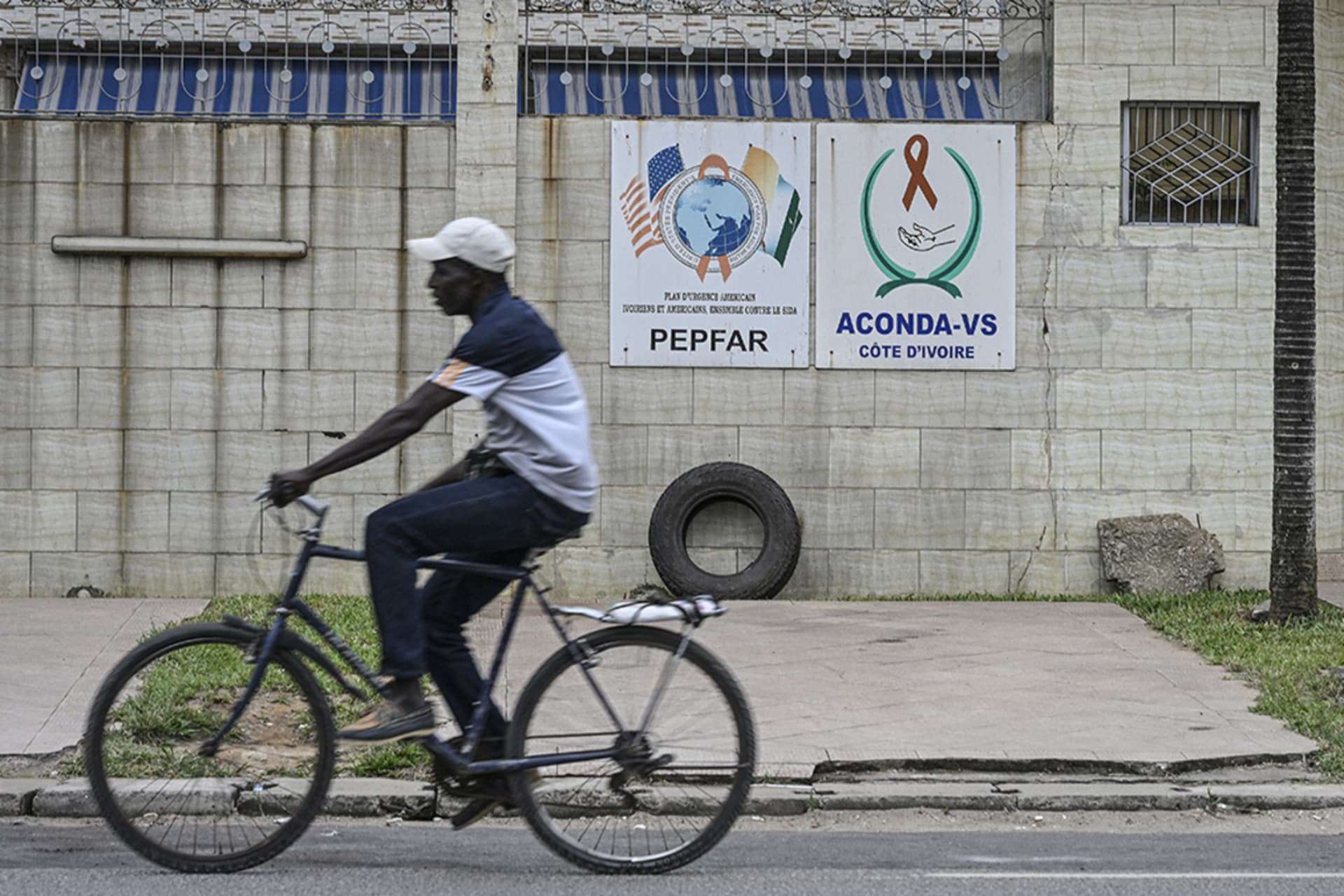
By experts and staff
- Published
- Ellora Onion-De
The President’s Emergency Plan for AIDS Relief (PEPFAR), which President George W. Bush launched in 2003 during the deadliest period of the global AIDS crisis, has been central to global efforts to combat HIV infection and AIDS-related deaths. The large-scale international program has been widely lauded as a success, particularly in sub-Saharan Africa, and is credited with saving twenty-six million lives.
However, PEPFAR has come under renewed scrutiny in 2025 as the Donald Trump administration has pursued broader efforts to scale back foreign aid and dismantle the U.S. Agency for International Development (USAID). Though PEPFAR—unlike many U.S. foreign aid programs—is still operating, experts say the recent loss of funding and support has already hampered its ability to respond to the global HIV/AIDS crisis and leaves its future uncertain.
What is PEPFAR and why was it created?
In 2003, AIDS-related deaths were nearing a deadly peak, having killed roughly three million people the previous year. For years, people living with HIV and their allies had engaged in strategic activism to lower drug prices, laying the groundwork for large-scale interventions. In response, Bush created PEPFAR to help deliver lifesaving treatment, care, and preventative outreach, allocating $15 billion over its first five years to the world’s most affected populations. The program, overseen by the State Department, is widely considered to be the biggest commitment to address a single disease by any nation in history.
PEPFAR operates through country-level partnerships, working with private organizations, communities, and governments to support local health workers, care systems, and outreach networks. The program also provides financial support to organizations that help fund and coordinate global treatment, including the Global Fund and the Joint UN Program on HIV/AIDS (UNAIDS). Unlike many other U.S. foreign aid programs, PEPFAR is implemented by multiple federal agencies, including USAID, the Department of Health and Human Services, and the Department of Defense.
What’s at stake for PEPFAR under the Trump administration?
Since returning to office, Trump has taken action to dismantle much of the U.S. foreign aid network as part of a broader campaign to reduce what the administration said is unnecessary government spending. In a January executive order, Trump instituted a review of all U.S. foreign assistance programs and a ninety-day funding freeze, including for PEPFAR, accusing the foreign aid industry of being “not aligned with American interests.” The freeze came just two months before PEPFAR’s congressional authorization was set to expire, which experts said made it difficult to make sustainable investments and long-term plans with partner countries.
While PEPFAR continues to operate through appropriated funds, the lack of congressional reauthorization—a process which establishes the program’s operational framework and priorities—raises questions about the program’s future. The lapsed reauthorization leaves PEPFAR vulnerable to changes, making it more difficult for program leaders to forge long-term partnerships and create strategies that continue the fight against HIV/AIDS.
How have Trump’s changes affected PEPFAR so far?
Nearly forty-one million people are still living with HIV, three-quarters of whom rely on antiretroviral treatment, according to UNAIDS. Since the start of the epidemic in the 1980s, tens of millions of people have died from AIDS-related causes. The UN agency estimates that without PEPFAR’s support, over four million people could die from AIDS complications and an additional six million could contract HIV by 2029.
Trump’s ninety-day aid pause disrupted supply chains, research collection, and lab operations, while spurring funding shortages for health-care workers, treatment purchasing, and HIV testing programs. In South Africa—home to the world’s largest HIV treatment program—the loss of funding has disrupted data systems and decreased viral load testing.
Without USAID, PEPFAR’s implementation capacity has been hit. “There are countries where 100 percent of PEPFAR is gone because it was all [operating under] USAID,” Emily Bass, author of To End a Plague: America’s Fight to Defeat AIDS in Africa, said. The supply chain of medicines has been particularly affected. “USAID always managed the supply chain contract, so there have been horrible stock-outs and shortages,” she said.
For FY 2026, the Trump administration has proposed a $2.9 billion budget for PEPFAR, a substantial reduction from $7.1 billion in 2024. “PEPFAR is gravely damaged. And at the country and community level, there’s really widely variable impacts. There’s already been a huge loss of trust,” Bass said, “[but] PEPFAR is still there.”
What has been the debate over PEPFAR?
In the early days of the program, critics disapproved of PEPFAR’s promotion of abstinence for HIV prevention and generic drug restrictions before it later gained widespread bipartisan support. But PEPFAR has faced renewed scrutiny in recent years over allegations that it had aided abortion access abroad.
In 2023, the Heritage Foundation, a conservative think tank, published a report that alleged the program was funding abortions abroad, and Representative Chris Smith (R-NJ) argued that the Biden administration had “hijacked” the program to “empower pro-abortion international nongovernmental organizations.” Although U.S. law prohibits PEPFAR funds from being used for abortions, the debate over the issue resulted in the program’s one-year authorization in March 2024 instead of the typical five-year period.
Proponents of PEPFAR say that the program has strengthened health-care systems in countries all over the world, saved twenty-six million lives, and transformed life for those living with HIV. CFR expert Michelle Gavin called the program one of the most successful U.S. foreign assistance efforts—though she added that PEPFAR isn’t perfect.
“It’s so important to continue investing in research around potential vaccines, [and] in prevention so that there are fewer new cases added to the ledger,” Gavin said. “I worry sometimes we have not gotten the balance right between continuing the programming and also working on these other pieces of the HIV puzzle… so that we can eventually find ourselves in a place where it’s not necessary to spend so much money, particularly on antiretrovirals.”
Still, some Republicans in Congress have sought to preserve the program. In July 2025, Congress sought to pass a Trump-backed rescission package that would claw back roughly $9 billion of federal funding for public broadcasting and foreign aid programs. Senator Susan Collins (R-ME), chair of the appropriations committee, strongly advocated for exempting PEPFAR from $400 million worth of proposed cuts.
While the amount was not a “game-changer,” it carried symbolic importance, Bass said. “What we see is Congress being willing to stand up for the program.”
How much does the United States spend on global health funding?
The United States is historically the largest global health donor, with Germany in the second place spot. In 2023, Germany contributed over $5 billion to global health funding while U.S. assistance totaled nearly $21 billion. Since PEPFAR’s launch, the United States has invested more than $120 billion in the program, increasing its annual funding from just under $2 billion in fiscal year (FY) 2004 to $6.5 billion in FY 2025. Funding is split between bilateral efforts with partner countries and multilateral organizations like UNAIDS and the Global Fund.
PEPFAR has provided lifesaving antiretroviral treatment, HIV testing, training for health-care workers, and preventative medicine. According to a July 2025 UNAIDS report [PDF], the provision of antiretroviral therapy and other health measures has increased life expectancy in sub-Saharan Africa from 56.5 years in 2010 to 62.3 years in 2024. In 2024, PEPFAR supported HIV testing for more than 84 million people, provided treatment for nearly 21 million, and offered assistance to over 340,000 health-care workers.
Ellora Onion-De is an editorial intern at CFR. Austin Steinhart created the graphics for this article.