The Supreme Court’s Tariff Decision Could Affect Trump’s China Negotiations
Washington retains formidable tools of pressure, but deploying them will require more consensus, more procedure, and more time. Beijing, for its part, gains a modest tactical advantage but not a strategic reprieve.
By experts and staff
- Published
 Zongyuan Zoe LiuCFR ExpertMaurice R. Greenberg Senior Fellow for China Studies
Zongyuan Zoe Liu is Maurice R. Greenberg senior fellow for China studies at the Council on Foreign Relations
When the U.S. Supreme Court ruled that the International Emergency Economic Powers Act (IEEPA) does not authorize tariffs, it more than invalidated President Donald Trump’s favored tariff authority. The ruling triggered the need to rapidly rewrite the White House’s economic statecraft playbook.
The decision narrows unilateral presidential trade powers, constrains improvisational coercion, and shifts the terrain of U.S.-China competition away from executive brinkmanship to institutional process. Far from ending tariff confrontation with China, the ruling recalibrates how—and with what credibility—the United States can wage its trade wars.
What changed and what didn’t
The immediate legal implication is straightforward. Tariffs imposed under IEEPA authority—including Trump’s ten-percent “fentanyl emergency” tariffs on Chinese imports and the sweeping “reciprocal” tariffs that targeted dozens of trading partners—no longer rest on valid statutory ground. If a tariff’s legal basis was IEEPA alone, it is now unsustainable. For importers, that opens the possibility of large refund claims through the U.S. Court of International Trade. For the president, it removes one of the fastest tools in the executive arsenal: the ability to invoke emergency powers and immediately raise trade barriers.
Yet the structural architecture of U.S. tariffs on China remains largely intact. Duties imposed under Section 301 authorities dating back to 2018—still the backbone of U.S. tariff pressure on Chinese goods—remain untouched. National security tariffs under Section 232 also stand, as do anti-dumping and countervailing duties derived from Commerce Department investigations (such as the recently finalized 205 percent tariffs on Chinese active anode materials for batteries).
Implications for U.S.-China negotiations
For Beijing, the real significance of the decision lies in how it reshapes incentives. Presidents of both parties have treated economic emergency authorities as flexible instruments of foreign policy leverage for decades, but the Supreme Court has now indicated that flexibility has limits. This could slow escalation. Future tariff actions will require reliance on narrower statutory tools or political bargaining with Congress. The era of instantaneous tariff retaliation is not over, but it is constrained.
The decision also means that Chinese officials can now argue that American tariff threats are made empty by their constitutional guardrails. That strengthens China’s narrative that U.S. economic coercion is not only controversial internationally but also contested and illegal domestically. Beijing has criticized the Trump administration for undermining the rule-based international trade system by imposing tariffs and unilateral sanctions. Following the Court’s ruling, China’s Ministry of Commerce noted that the Trump administration’s measures, including reciprocal and fentanyl-related tariffs, violate both international trade rules and U.S. domestic law.
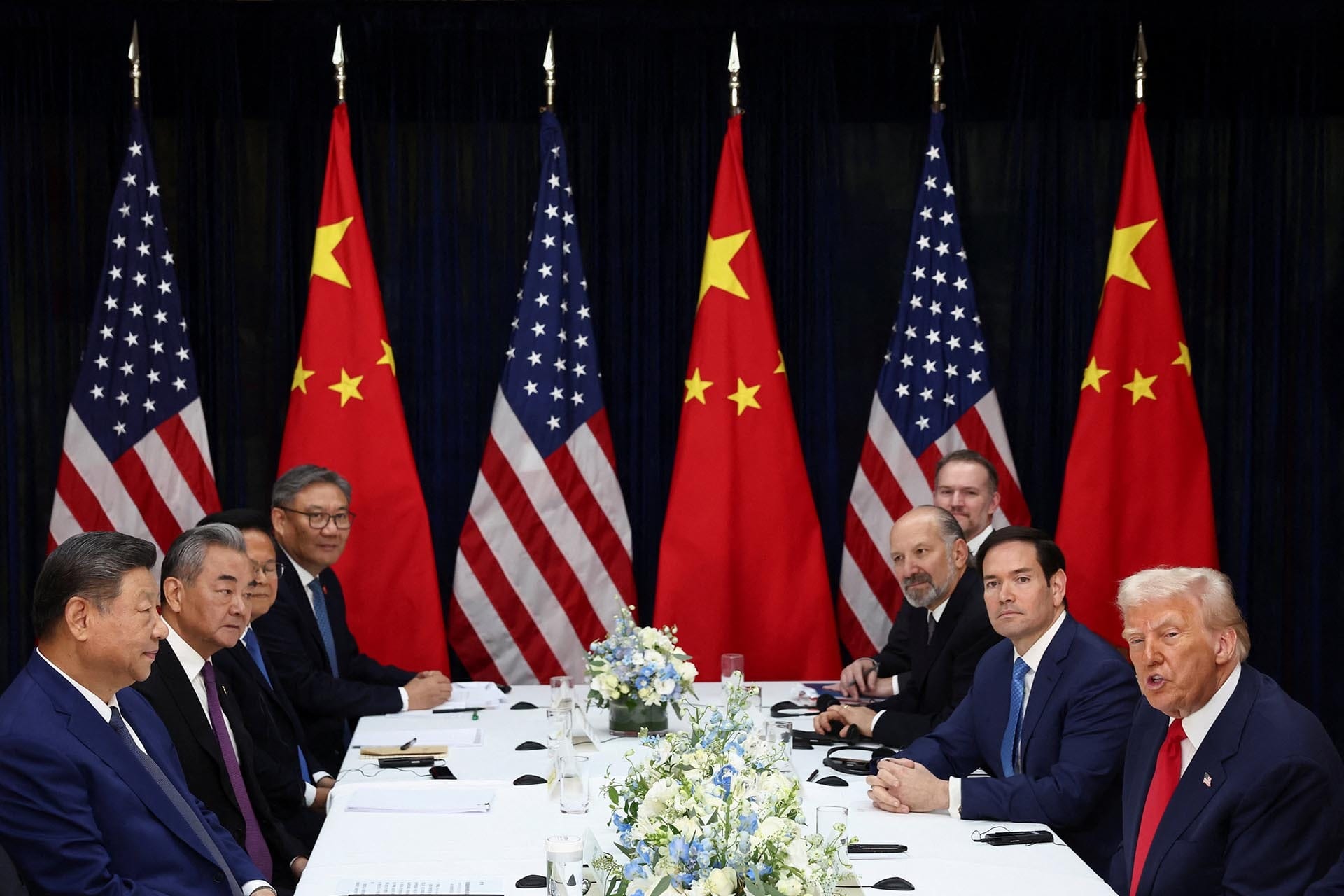
The timing of the Court’s decision carries particular significance for the scheduled summit between Trump and Chinese President Xi Jinping. By invalidating IEEPA as a tariff authority, the Court has inadvertently rebalanced the bargaining space ahead of the visit. Trump now enters the talks with one less unilateral lever at his disposal, a change that will not be lost on Chinese negotiators. They likely now view the ruling as slightly improving Beijing’s negotiating position ahead of future trade talks with Xi and his counterparts. If Washington cannot easily escalate tariffs on its own authority, China now has greater time, leverage, and room to maneuver. Delay becomes a rational strategy.
For Trump, the leaders’ summit could shift from a potentially high-stakes ultimatum to a more structured bargaining process, one that requires explicit legislative buy-in for any new tariff measures. In practical terms, this reduces the immediacy and unpredictability of U.S. threats and foregrounds negotiated solutions over executive brinkmanship—an outcome that could encourage more substantive, less transactional dialogue between capitals.
The decision also changes how businesses interpret geopolitical risk. In the short term, firms must reassess supply-chain costs, audit which tariffs remain legally valid, and determine whether they are eligible for refunds. Compliance departments will now need to shift their focus from tariff rates to statutory origins. While that shockwave will feel immense in the short term, the ruling could reduce volatility over the medium term. For multinational corporations, slower policy can mean more predictable policy—even if underlying tensions remain high.
There is another side to that coin, however. Economic statecraft works best when threats are credible, rapid, and scalable. By restricting the president’s ability to impose tariffs under emergency authority, the Court has reduced one dimension of that flexibility. The administration can still deploy other legal pathways—temporary tariffs under Section 122 or new trade investigations under Section 301—but these tools have limits, take time, and can also require evidentiary or procedural steps. Speed, in coercive diplomacy, is itself a form of leverage. That leverage is now more limited.
Trump seeks alternatives
The Trump administration has already begun deploying alternative strategies to maintain leverage by resorting to more specific trade laws.
Trump has invoked Section 122 of the balance-of-payments authority to impose a 15 percent global tariff. This lever has a 150-day window, after which the president’s authority to maintain these duties expires and will require Congressional approval. While the statute does not explicitly forbid the president from declaring another balance-of-payments emergency to restart the clock, doing so likely would face severe legal and political challenges. The 150-day Section 122 window is not a permanent solution, but it provides the Trump administration with a five-month bridge to finalize more permanent, investigation-backed tariffs under different laws.
The administration is also initiating new investigations under Section 301 Unfair Trade Practices. Unlike Section 122, these tariffs are not capped at 15 percent and do not have a 150-day expiration date, although they require a formal investigation process that typically takes months. The administration can also resort to Section 232 national security levies. The president can expedite existing investigations into strategic goods, such as semiconductors and medical equipment, to impose more durable tariffs based on national security grounds.
Moreover, the administration could invoke Section 338 of the Tariff Act of 1930 (part of the Smoot-Hawley Act), which allows for tariffs of up to 50 percent on countries that disadvantage U.S. commerce. During the nearly century-long history of this act, it has never actually been used. The last known official reference to this statue appeared in a 1949 telegram from Secretary of State Dean Acheson to the U.S. consul in Shanghai. Acheson mentioned it as a possible response to discrimination by China, though he never pursued it.
An adjustment to negotiations
These changes don’t amount to a sudden strategic windfall for China. The structural factors driving U.S.-China strategic rivalry—technological competition, industrial policy clashes, and security tensions—remain unchanged. But it does dull the edge of trade wars a bit by requiring them to be fought within statutory boundaries.
The broader implication is that American economic power is still rule-bound even as geopolitical rivalry intensifies, and U.S. institutions and hallmarks are strained by Trump’s politics. That paradox could define the next phase of U.S.-China relations. Washington retains formidable tools of pressure, but deploying them will require more consensus, more procedure, and more time. Beijing, for its part, gains a modest tactical advantage but not a strategic reprieve.
Thus, the Court’s decision does not end tariff confrontation. It professionalizes it. Economic conflict between the world’s two largest economies will continue—but it will proceed less like an improvised duel and more like a regulated contest, shaped as much by legal architecture as by political will.
This work represents the views and opinions solely of the author. The Council on Foreign Relations is an independent, nonpartisan membership organization, think tank, and publisher, and takes no institutional positions on matters of policy.