South Korean President at White House
By experts and staff
- Published
- CFR Editors
Welcome to the Daily News Brief, CFR’s flagship morning newsletter summarizing the top global news and analysis of the day.
Subscribe to the Daily News Brief to receive it every weekday morning.
Top of the Agenda
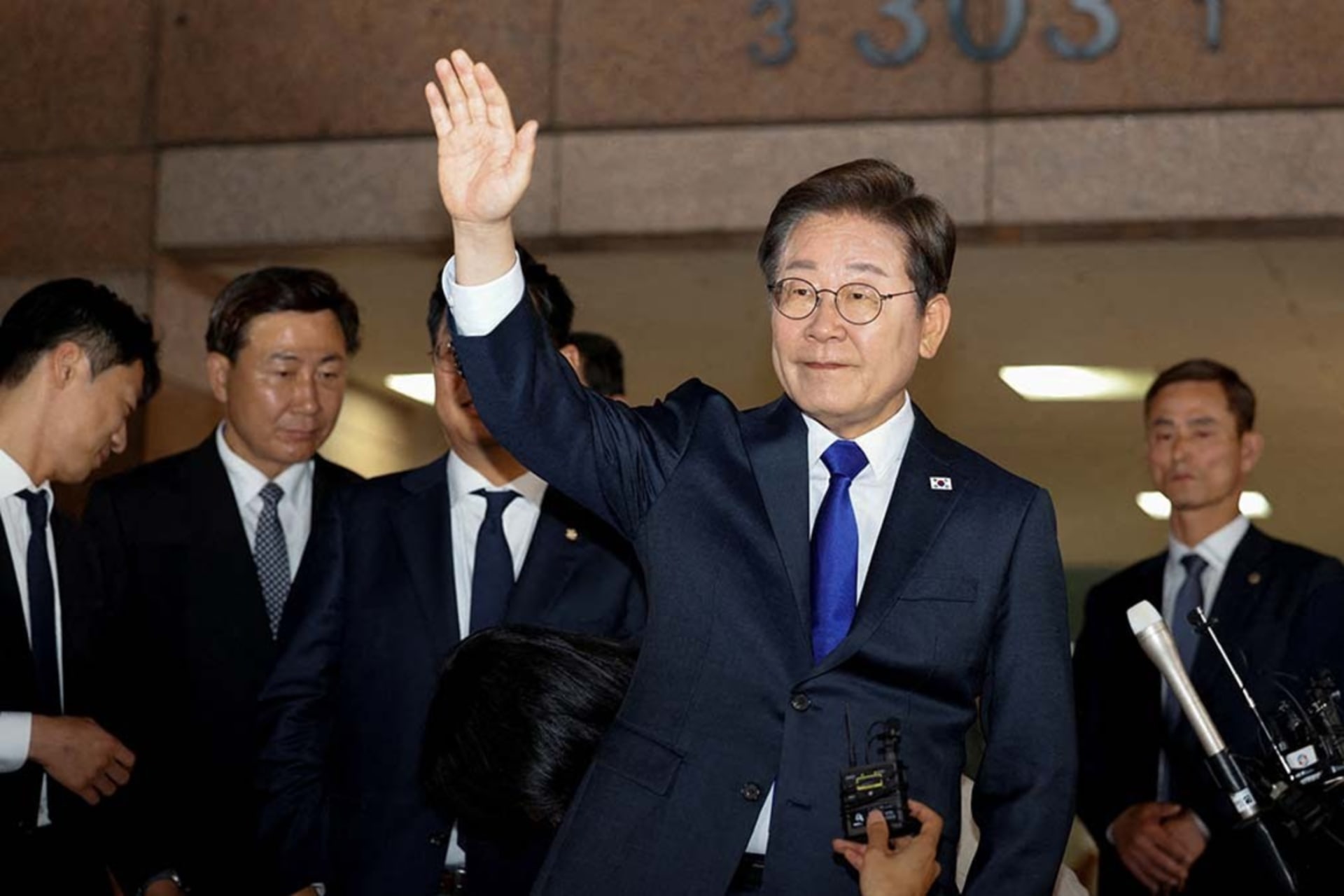
Lee’s meeting with U.S. President Donald Trump today is a temperature-check of a key alliance as both sides adjust their foreign policies. Their talks are expected to cover military deployments, trade, and strategy toward North Korea. Lee is visiting multiple countries in his first foreign trip as president. He did not travel to the United States first, as is tradition. Instead, he stopped beforehand in Japan, signifying a continued thaw in the long-tense relationship.
The South Korea-Japan meeting.
- On Saturday, South Korea and Japan pledged to cooperate on trade, artificial intelligence, and efforts to denuclearize the Korean peninsula, issuing their first joint statement in seventeen years during Lee’s trip to Tokyo to meet with Japanese Prime Minister Shigeru Ishiba.
- The countries have long had a strained relationship stemming from the Japanese occupation of South Korea in the early twentieth century. The Biden administration had pushed to reconcile this difficult past to help counter China in the region.
- Lee said on Saturday that “the international order has recently fluctuated” and “now, more than ever” the countries needed to strengthen ties. South Korea has sought to lower tensions with Asian neighbors as the United States has hiked tariffs and signaled that Asian countries should contribute more to their own defense.
The South Korea-U.S. meeting.
- Trump has called for Seoul to cover more of the costs related to the around 28,500 U.S. troops stationed in South Korea and for the country to spend more on defense in general.
- Lee hopes to cement an economic deal with the United States that was announced informally last month: Seoul saw planned U.S. tariffs fall from 25 to 15 percent and pledged to invest $350 billion in the United States.
- Lee and Trump have both expressed openness to engaging North Korean leader Kim Jong-un on nuclear issues, but Kim has so far signaled little interest in those efforts.
“At the highest level, the mission for President Lee is to reassure President Trump that the Korean alliance is solid and that the Koreans are ready to work with the United States on a range of issues, from national security to commercial [interests].”
—CFR expert Matthew P. Goodman
Across the Globe
Russia-Ukraine prisoner swap. Each country returned 146 prisoners yesterday in the latest prisoner swap—mediated by the United Arab Emirates—as both sides consider peace talks. While the United States and Ukraine have pushed for a meeting between Ukrainian President Volodymyr Zelenskyy and Russian President Vladimir Putin, Russia’s foreign minister said in an interview that none is planned and the agenda for such a meeting “is not ready at all.”
U.S. stake in Intel. The U.S. government is taking a 10 percent stake in the chipmaker, both parties announced Friday. More than eight billion dollars in grants from the 2022 Chips and Science Act that had not yet been paid will be converted into equity in the company. The government did not gain a board seat. Such a deal has few precedents in the United States, except for the Trump administration’s recent moves to take stakes in a steel merger and receive revenue from chip sales to China.
Carney in Europe. In a surprise visit to Ukraine during its independence celebrations on Saturday, Canadian Prime Minister Mark Carney said that he would not rule out the possibility of committing Canadian troops as part of postwar security guarantees. Carney is traveling through Europe this week discussing both military and economic deals. Separately, as Canada seeks to deescalate trade tensions with the United States, Carney announced the removal of some retaliatory tariffs on Friday.
Israeli strike on Yemen. Israel said it bombed targets including a complex housing Yemen’s presidential palace yesterday in response to a Houthi strike on Israel Friday that used cluster bombs. Six people were killed and eighty-six injured in Yemen, according to Houthi officials. The Houthis said their Friday attack was in support of Palestinians in Gaza.
Israeli strike on Gaza hospital. An Israeli strike on Southern Gaza’s main hospital today reportedly killed at least twenty people, including multiple journalists. The journalists worked for publications such as Reuters, the Associated Press, and Al Jazeera, the outlets confirmed. Israel said it would investigate the strike and regretted any harm to “uninvolved individuals.” Palestinians have been fleeing toward the territory’s south as Israel begins a military takeover of Gaza City, where a UN-backed group declared a “man-made” famine on Friday.
DoD firing. Defense Secretary Pete Hegseth removed the head of the Defense Intelligence Agency, the department said on Friday. It did not give a reason. The firing follows a defense intelligence assessment that said U.S. strikes on Iran’s nuclear sites had set the country’s nuclear activities back for months but had not obliterated them, which ran counter to Trump’s characterization. Hegseth has removed a string of top officials at the department in recent months.
Foreign workers in focus. The Euro area will have 3.4 million fewer people of working age by 2040, and the shortfall likely can’t be filled without an increase in workers from overseas, European Central Bank President Christine Lagarde said at a Friday summit of financial officials in Wyoming. Meanwhile, Japan’s central bank governor said that foreign workers accounted for just 3 percent of the country’s labor force but half of the recent growth in the workforce. The conference weighed strategies for approaching the costs of aging populations.
Mail on hold. National postal services in several European and Asian countries are pausing deliveries of small packages to the United States because of the end of a tariff exemption for goods worth under $800. The new policy takes effect Friday. The Trump administration has said the tariff decision is part of efforts to combat drug trafficking, while several mail carriers say its details remain unclear.
What’s Next
- Today, Indonesia and the United States begin military exercises with additional partner countries.
- Today, Bangladesh begins a high-level conference on the status of Rohingya refugees.
- Today, Nigerian President Bola Tinubu visits Brazil.
- Tomorrow, Canadian Prime Minister Mark Carney visits Germany.