Trump’s Criticism of Fed Chair
By experts and staff
- Published
- CFR Editors
Welcome to the Daily News Brief, CFR’s flagship morning newsletter summarizing the top global news and analysis of the day.
Subscribe to the Daily News Brief to receive it every weekday morning.
Top of the Agenda
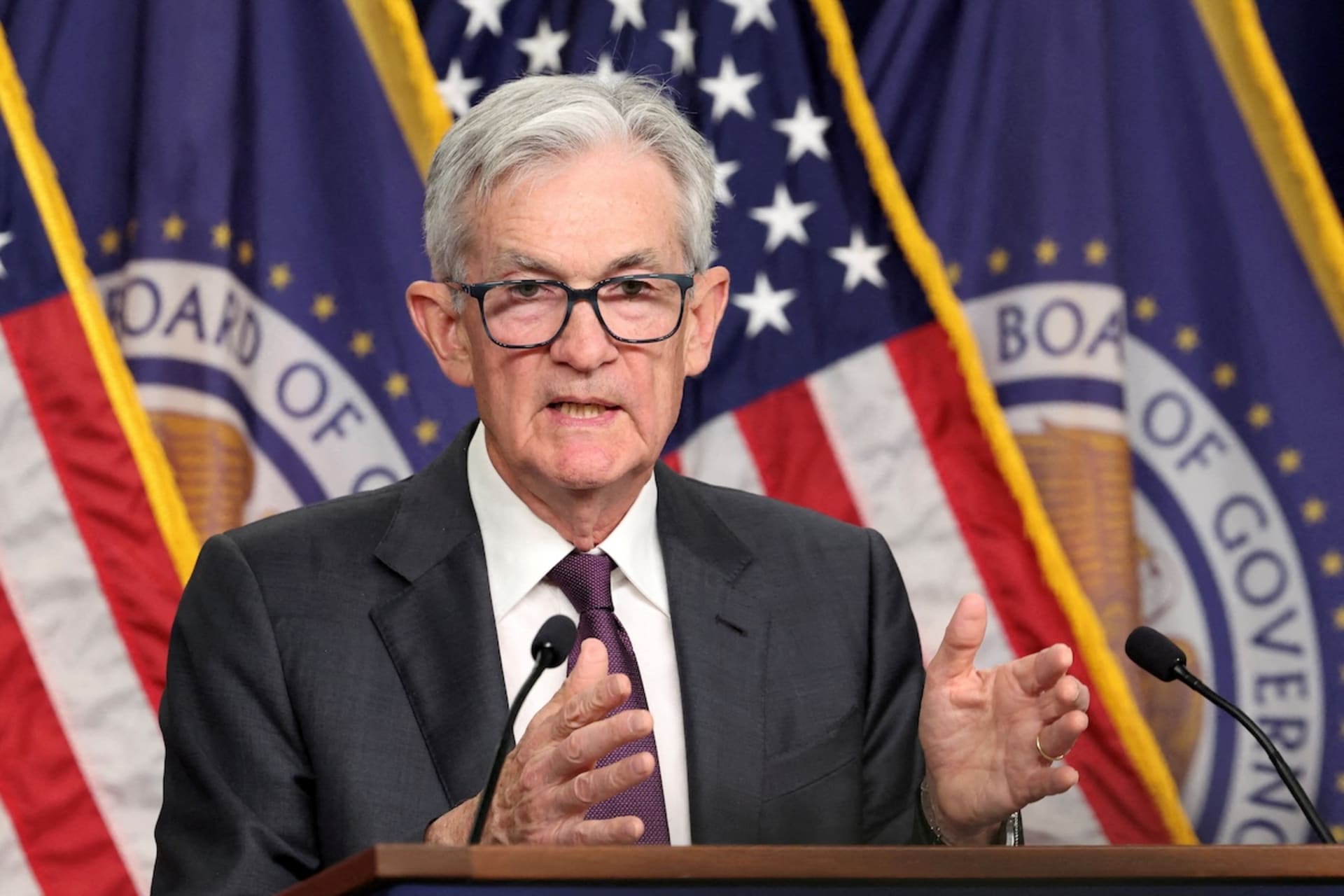
As policymakers gather in Washington for key meetings on the global economy, Trump renewed his criticism of the Fed yesterday. Trump urged Fed chair Jerome Powell to cut interest rates and called him “a major loser.” U.S. stocks slid and the value of the dollar fell to a three-year low. It came after Trump’s National Economic Council director said Friday that the White House would “study” the option of dismissing Powell.
The context. Trump’s attacks on the Fed follow tariff policies that have already increased uncertainty about the U.S. economy.
- The Federal Reserve’s independence is seen as a crucial element underpinning global market stability and U.S. financial power.
- The New York Times reported on Friday that Trump appeared persuaded that removing Powell was legally and financially risky, citing unnamed sources. Powell has said that Trump lacks legal authority to dismiss him.
- The International Monetary Fund (IMF) has said Trump’s tariffs have already caused it to downgrade its global growth projections, which it is due to announce in detail today as part of its Spring Meetings.
- During times of uncertainty, investors often move money from the stock market to U.S. assets that are considered safer, such as the dollar and U.S. treasury bonds. But recently, investors have been selling U.S. stocks, bonds, and the dollar.
Tariff talks. Foreign officials are continuing their scramble to try to negotiate down Trump’s duties, including on the sidelines of the World Bank and IMF Spring Meetings.
- The finance ministers of Japan and South Korea are expected to hold talks with U.S. Treasury Secretary Scott Bessent this week.
- U.S.-India tariff talks also occurred yesterday during U.S. Vice President JD Vance’s trip to New Delhi. The countries established a “roadmap” toward a deal that would reduce tariff and non-tariff barriers to trade, the Trump administration said.
- A senior Indonesian economic official said Friday that Indonesia was among the countries “accepted early for negotiations” and expected talks to conclude within sixty days.
“The U.S. dollar is depreciating significantly. While that is partly in response to less attractive yields, it also reflects capital leaving U.S. markets. Historically, the dollar has benefited during trade wars, both from expectations of less dollar-selling to acquire imports as well as from safe haven flows into U.S. assets. It’s obviously premature to suggest what’s happening now reflects shifting structural views about the dollar or U.S. exceptionalism. But a sustained dollar depreciation, while marginally helpful for the White House’s goal to support exports, could also reflect an evolving view on the broader attractiveness of the United States as a destination for global capital.”
—CFR expert Rebecca Patterson
Across the Globe
Putin floats talks with Ukraine. Russia is open to direct peace talks with Ukraine, President Vladimir Putin said yesterday. It was his first such proposal since the early days of the war. Ukrainian President Volodymyr Zelenskyy did not respond directly but said that Ukraine was “ready for any conversation” that would halt the targeting of civilians.
China-Iran diplomacy. Iranian Foreign Minister Abbas Araghchi is visiting Beijing today, a day ahead of Tehran’s technical nuclear talks with Washington. Iran’s foreign ministry spokesperson said that it was “natural” that Iran would consult with China on nuclear matters. The United States sanctioned Chinese refineries of Iranian oil earlier this month as part of efforts to increase pressure on Iran.
EV battery announcement. Chinese firm CATL said yesterday that its new electric vehicle (EV) battery technology could power a car for over 323 miles after five minutes of charging. That’s slightly farther than the range by rival BYD for the same period of time and ahead of Western competitors, including Mercedes-Benz and Tesla. CATL’s new battery system is a few years away from being widely used in new cars.
New Zealand-UK military ties. The two countries announced a $40 billion weapons deal and plans to extend a joint military training program for Ukrainian troops as United Kingdom (UK) Prime Minister Keir Starmer hosted New Zealand Prime Minister Christopher Luxon in London today. Starmer is preparing to host talks tomorrow with Ukraine’s European backers and the United States.
Beijing’s warning on trade. China’s commerce ministry warned its trading partners yesterday against making deals with the United States that isolate China, saying that “appeasement does not bring peace.” The statement came after the Wall Street Journal reported last week that Washington was seeking commitments from countries to economically cut out China to obtain reductions in U.S. tariffs, citing unnamed sources. The White House and Treasury Department did not comment on that report.
Myanmar’s post-quake truce. Myanmar’s junta said it will extend a humanitarian ceasefire following the recent earthquake to April 30. The truce had been due to end today. The junta said it would still retaliate if armed groups attack. Malaysia’s prime minister, who held talks with the junta and an opposition alliance about extending the truce, said the opposition would also “avoid any extension of the fighting.”
U.S.-South Sudan deportation talks. South Sudan is sending envoys to Washington in the coming days to coordinate scheduled deportations, the vice president’s office said. The United States recently suspended visa issuance for all South Sudanese passport holders after the country refused to accept a deportee, saying he was a national of the Democratic Republic of Congo.
Syria arrests militant leaders. Syria’s interim government detained two senior officials from the militant group Palestinian Islamic Jihad, the group’s armed wing said. The current authorities in Damascus continue to seek sanctions relief from Western countries, including the United States. Last week, a U.S. State Department spokesperson said that Syria’s interim authorities “should fully renounce and suppress terrorism.”
What’s Next
Today, countries around the world observe Earth Day.
Today, Kenyan President William Ruto begins a visit to Beijing.
Today, Indian Prime Minister Narendra Modi makes a trip to Saudi Arabia.
Tomorrow, G20 finance ministers and central bank governors hold a meeting in Washington, DC.