Ukraine War Diplomacy Intensifies
By experts and staff
- Published
- CFR Editors
Welcome to the Daily News Brief, CFR’s flagship morning newsletter summarizing the top global news and analysis of the day.
Subscribe to the Daily News Brief to receive it every weekday morning.
Top of the Agenda
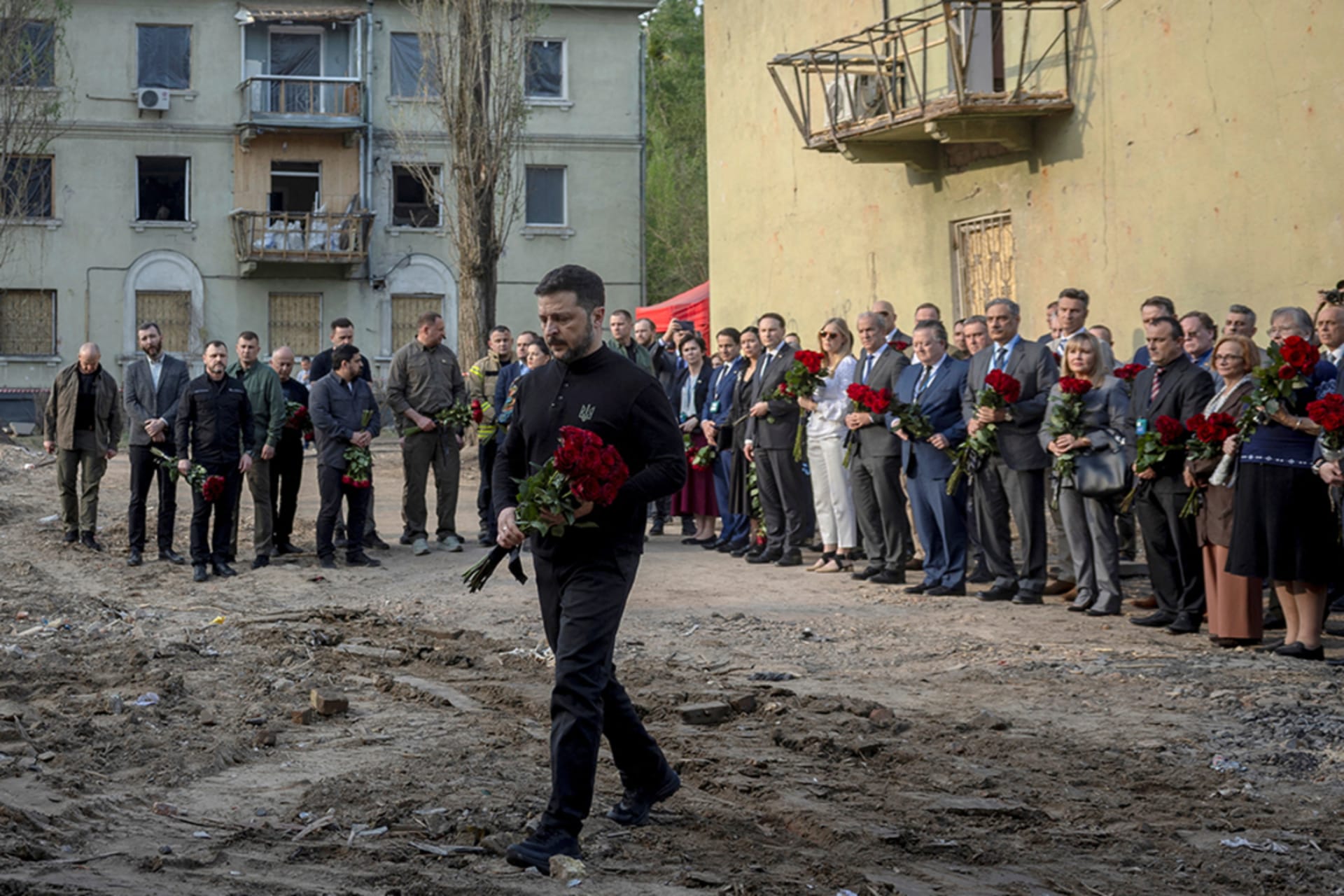
Russia proposed a three-day ceasefire in Ukraine next month after a weekend of diplomacy that included fresh criticism of Moscow by U.S. President Donald Trump. Trump met with Ukrainian President Volodymyr Zelenskyy Saturday on the sidelines of Pope Francis’s funeral. Trump praised Zelenskyy afterward and posted on social media that Russia’s continued military attacks suggested Russian President Vladimir Putin might have “to be dealt with differently” via sanctions. Putin said today that Russia’s May 8–11 truce “based on humanitarian considerations” would also mark the anniversary of the end of World War II. He similarly declared an unexpected short truce over Easter, but Moscow and Kyiv accused each other of violations.
The latest diplomacy.
- Zelenskyy traveled to the Vatican with a counterproposal to a U.S.-backed plan that would end the war on less favorable terms for Russia and include reparations for Ukraine, unnamed Ukrainian officials told the New York Times.
- Zelenskyy also held talks with several other world leaders at the funeral, and with the Vatican Secretary of State, whom he said was supporting efforts toward a ceasefire.
- U.S. envoy Steve Witkoff and Putin discussed the possibility of direct Russia-Ukraine talks during their Moscow meeting on Friday, a Kremlin foreign policy aide said.
- Washington will decide this week whether to keep working toward a Russia-Ukraine peace deal, U.S. Secretary of State Marco Rubio said yesterday.
On the battlefield.
- Russia’s military said on Saturday it took the last Ukrainian-held city in its Kursk region, though Ukraine said it was still fighting in the area.
- In an interview that aired Sunday, Russian Foreign Minister Sergey Lavrov said Russia would continue to strike Ukraine.
- North Korea publicly acknowledged for the first time today that it had sent troops to fight for Russia.
“Negotiating a cessation of hostilities requires disabusing Putin of the notion that Ukraine will fall into his lap if he only fights on. That requires giving Ukraine enough military and intelligence support to defend itself both to bring about and sustain a ceasefire, not strong-arming Kyiv into accepting unreasonable concessions that will endanger its security and independence.”
—CFR President Emeritus Richard Haass on Substack
Across the Globe
South China Sea claims. China proclaimed sovereignty and displayed its flag on Sandy Cay, a sandbank in the South China Sea, state media reported late last week. The sandbank is categorized as a rock, which could give the nation controlling it claim over surrounding waters. The Philippines disputed that China had seized Sandy Cay, visiting yesterday and displaying their own flag “to uphold the country’s sovereignty” and prove a lack of Chinese presence. China’s move came as the United States and the Philippines prepared to start joint naval drills nearby.
Efforts at India-Pakistan mediation. The United States is urging India and Pakistan to work toward a “responsible solution” after India publicly blamed Pakistan for an attack last week in Kashmir, a State Department spokesperson said. Pakistan denies responsibility; meanwhile, India’s navy tested missiles yesterday.
Iran port blast. An explosion at the port of Bandar Abbas in southern Iran on Saturday killed at least forty people and injured hundreds more. An official said the explosion was caused by chemicals but did not specify which; an unnamed person with ties to Iran’s military told the New York Times that sodium perchlorate, an ingredient in solid fuel for missiles, exploded.
Reduced trade at U.S. ports. The Port of Los Angeles estimates that the volume of goods arriving in the week beginning May 4 will be a third lower than the same period last year. Container tracking service Vizion said that bookings of twenty-foot shipping containers from China to the United States in mid-April were 45 percent lower than the year before. Traders appear to be “kicking decisions down the road” amid Washington and Beijing’s trade war, the International Chamber of Commerce’s secretary-general said.
Trump expands canal sights. Trump posted on social media Saturday that U.S. military and commercial ships should be able to transit both the Panama and the Suez canals for free. He wrote that he tasked Rubio with “immediately” addressing the situation. Panamanian President José Raúl Mulino said Saturday that fees were regulated by the autonomous Panama Canal Authority. The president of Egypt, who controls the Suez Canal, did not immediately comment.
South Korea’s opposition candidate. Former presidential candidate Lee Jae-myung overwhelmingly won the primary for the country’s opposition Democratic Party, which leads polls ahead of the June 3 election. Lee has taken more centrist positions than the party’s pro-labor standard in recent months; he also supports dialogue with North Korea. A senior South Korean trade official said Seoul would not reach a trade deal with Washington before the election.
Reported strike on migrant center. A U.S. strike overnight on a detention center in Houthi-controlled Yemen killed at least sixty-eight African migrants, the Houthi television channel reported. The U.S. military did not immediately comment. U.S. Central Command said yesterday that its strikes against the Houthis had hit more than eight hundred targets and killed hundreds of Houthi fighters since March 15.
Somalia’s new defense minister. Prime Minister Hamza Abdi Barre appointed a new defense minister yesterday as the country struggles to push back against gains by the militant group al-Shabaab. Ahmed Moallim Fiqi Ahmed, who previously served as foreign minister and national security chief, will hold the position. Al-Shabaab captured villages within thirty miles of the capital, Mogadishu, last week before being pushed back by government forces.
What’s Next
Today, Canada and Trinidad and Tobago hold elections.
Today, BRICS foreign ministers meet in Brazil.
Today, European Union countries that border the Adriatic, Baltic, and Black seas begin a connectivity summit in Poland.
Tomorrow, Japan’s Prime Minister Ishiba Shigeru begins a visit to the Philippines.