Upcoming U.S.-Iran Talks
By experts and staff
- Published
- CFR Editors
Welcome to the Daily News Brief, CFR’s flagship morning newsletter summarizing the top global news and analysis of the day.
Subscribe to the Daily News Brief to receive it every weekday morning.
Top of the Agenda
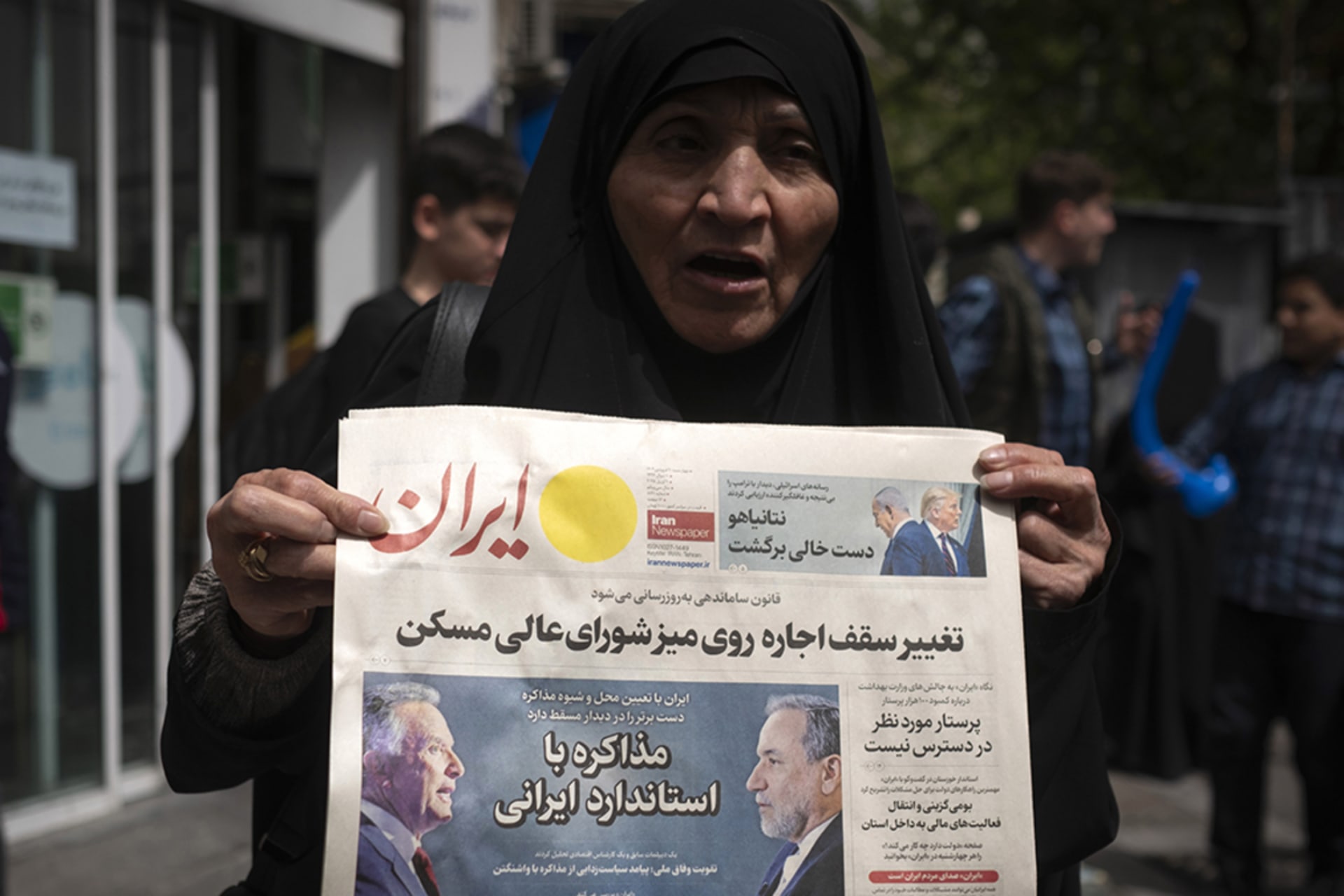
The United States and Iran are preparing to hold nuclear talks in Oman tomorrow. U.S. Special Envoy to the Middle East Steve Witkoff will meet with a senior Iranian official, U.S. Secretary of State Marco Rubio said yesterday. Observers across the region, already on edge, are watching the meeting closely. U.S. President Donald Trump said he aimed to reach a deal within weeks—if there is one to be had.
The run-up. Even as they move toward diplomacy, Trump and Iran’s senior leadership have also signaled escalatory steps they could take.
- Two U.S. aircraft carrier strike groups are currently stationed in the Middle East in an unusual deployment that Washington has said is meant to deter Tehran.
- Washington this week imposed new sanctions on entities that it said were supporting Iran’s nuclear program.
- An aide to Iran’s Supreme Leader Ali Khamenei wrote on social media that “continuing external threats” against Iran could lead the country to take measures such as expelling UN nuclear inspectors and moving its enriched uranium stockpile to “safe and undisclosed locations.”
The latest from both sides.
- Rubio said Thursday that the United States hopes the talks will “lead to peace.”
- Iran’s Foreign Minister Abbas Araghchi, who will participate in tomorrow’s talks, wrote a Wednesday Washington Post op-ed that touted “the trillion-dollar opportunity” of access to the Iranian economy if relations between the two countries improve. Iran is “ready to engage in earnest and with a view to seal a deal,” he wrote.
- While detailed negotiations could take months, Iran is considering proposing an interim deal to confirm confidence-building steps within the quick timeframe that Trump seeks, an unnamed European diplomat and another unnamed source told Axios. Iran’s mission to the United Nations did not comment.
“For now the president is deploying his usual escalate-to-de-escalate playbook: Tough-to-swallow demands, compressed timelines, and military menace, including the deployment of two aircraft-carrier groups and B-2 bombers to the region. But Mr. Khamenei doesn’t scare easily… In thirty-five years as supreme leader, he has overcome regime-rattling insurrections, economy-crippling sanctions and, most recently, devastating Israeli victories over Iranian proxies and air raids within Iran’s borders.”
—CFR expert Ray Takeyh and the Foundation for Defense of Democracies’ Reuel Marc Gerecht, Wall Street Journal
Across the Globe
China’s trade retaliation. Beijing will raise tariffs on U.S. goods to 125 percent, effective Saturday, in response to Trump’s latest levies. “If the United States insists on substantively damaging China’s interests, China will firmly retaliate and fight to the end,” China’s State Council said. The Trump administration clarified yesterday that its minimum tariff rate on China is 145 percent before any product- or sector-specific tariffs—such as those on aluminum and steel—are added. Trump told reporters yesterday that he believed the United States would make a deal with China.
EU-UAE trade talks. The European Union (EU) and United Arab Emirates (UAE) agreed yesterday to begin negotiations on a free trade agreement. The talks will focus on liberalizing trade in goods, services, and investment, as well as increasing cooperation with regard to renewable energy, green hydrogen, and critical raw materials, the European Commission said in a statement. The EU is the UAE’s second-largest trading partner.
Diplomacy on shipping pollution. After facing pressure from China and India, an EU attempt to require individual ships to report data on their carbon emissions was blocked. Governments made the decision yesterday in London during talks at the International Maritime Organization, which sets global standards for the shipping industry. In a compromise, countries agreed that governments—but not the broader public—will be given access to the data.
Tanzania opposition leader charged. A court charged Tundu Lissu with treason ahead of an October election. The charge carries the maximum penalty of death. Lissu had called for a nonviolent movement to obstruct the vote if steps such as ensuring the independence of electoral bodies were not taken. His lawyer called the treason charges politically motivated.
UK military leader visits China. The head of the United Kingdom (UK) armed forces visited China for the first time in a decade. Admiral Sir Tony Radakin wrote on social media that during his visit, “we agreed that in an unstable world, we must play our part as responsible nations with global interests.” Radakin was firm about “peace and stability in the Indo-Pacific” and the “concerns about any use of military aggression or assertiveness to pursue political ends,” the UK defense secretary said. China’s defense ministry said the two sides exchanged views on “the international and regional situation and issues of common concern.”
EU warning on big tech. If negotiations to reach a “completely balanced” agreement with Washington during Trump’s ninety-day tariff pause are not satisfactory, Brussels will consider countermeasures including a tax on the advertising revenue of digital services, European Commission President Ursula von der Leyen told the Financial Times. EU finance ministers are meeting today in Warsaw; in an unusual step, the president of Switzerland will join them. She said this week that the country aims to deepen relations with the EU.
Ruling on deportee’s return from El Salvador. The U.S. Supreme Court decided unanimously that the Trump administration must “facilitate” the return of a Maryland man who the administration acknowledged it had wrongly deported to El Salvador. While a lower court had ordered that the U.S. government must “facilitate and effectuate” Kilmar Abrego Garcia’s return, the top court said the call for “effectuation” required further legal review. Another hearing is set for this afternoon.
Armenia-Iran joint drills. The two countries concluded joint military exercises on their border yesterday. Armenia’s land border with Azerbaijan and Turkey has been closed for decades. Yerevan has drawn closer to Western partners in recent years but has also preserved ties with Tehran. While Armenia and Azerbaijan said they agreed to a peace treaty last month, there have been multiple gunfire incidents on their border in the interim weeks.