Why NATO and the Transatlantic Bond Will Outlast Trump
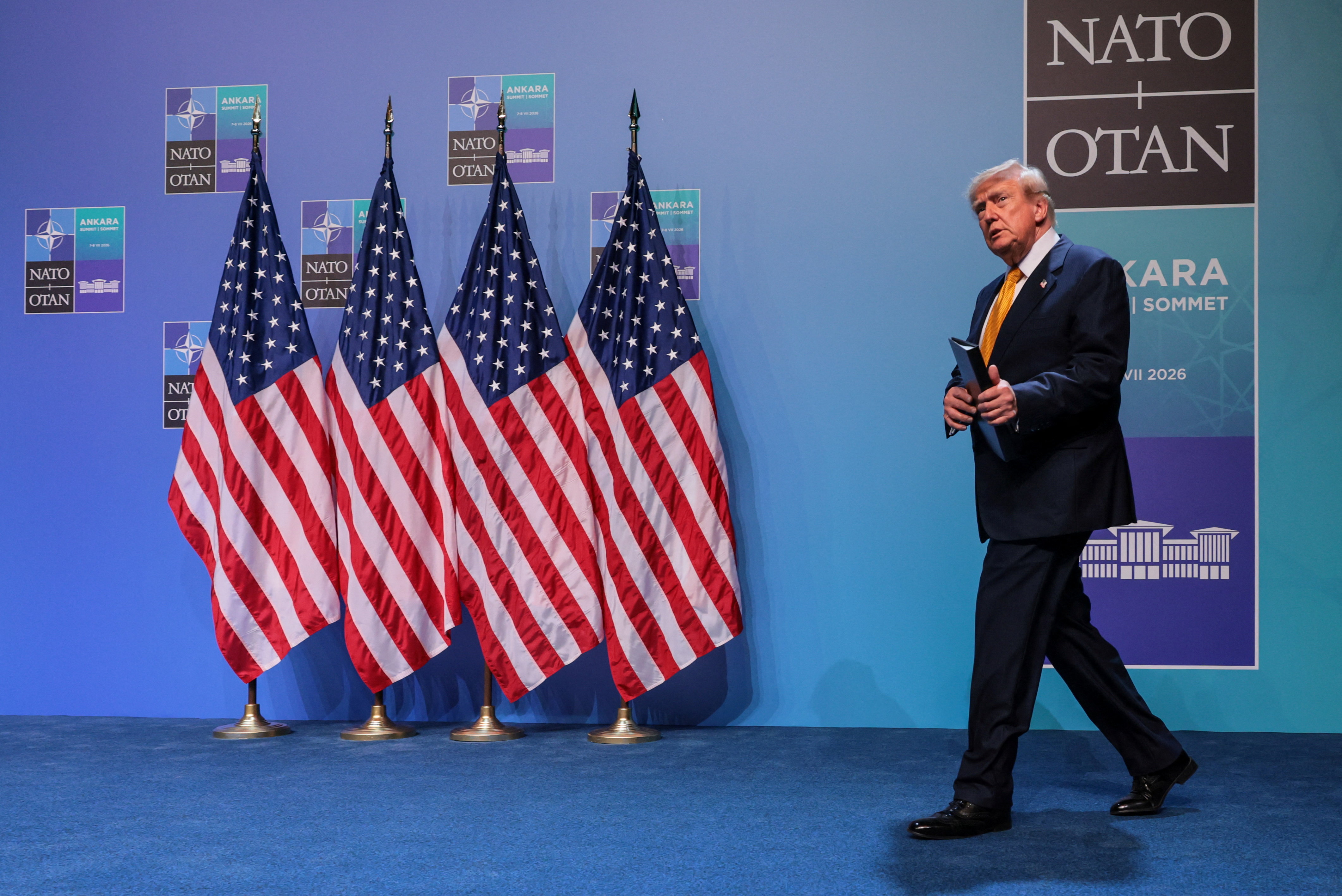
Trump’s threats and hectoring have rattled Europe, but growing defense budgets and lasting mutual interests mean the alliance is more likely to endure than to collapse.

This piece was originally published by Al Jazeera in Arabic.
Charles A. Kupchan is professor of international affairs at Georgetown University and the author of the forthcoming book Bringing Order to Anarchy: Governing the World to Come. He previously served as special assistant to the president and senior director for European affairs on the staff of the National Security Council in the Obama administration.
Europeans are understandably worried that their strategic partnership with the United States is coming to an end. President Donald Trump’s dismissive attitude toward NATO, his decision to turn off aid to Ukraine, his threats to seize Greenland from Denmark, his errant attack on Iran—these and other moves give Europeans good reason to wonder whether they can still count on their U.S. ally.
Yet it is far too soon to pronounce the irreparable rupture and death of the transatlantic alliance. Yes, Europe needs a plan B: prudence necessitates that Europeans get ready for self-reliance just in case Trump, who is impulsive and unpredictable, decides to pull the plug and leave NATO.
But that outcome is highly unlikely. The transatlantic alliance rests on common interests and values that endure. The United States’ best partners are still its European allies, and Europe still needs U.S. power and purpose to ensure its security. Accordingly, Europeans should continue to increase their defense budgets and seek to acquire more geopolitical heft. But they should play the long game with Trump, working with him when possible and standing up to him only as necessary. It is quite likely that NATO will emerge from the Trump era not only intact but fortified by a strengthened European pillar.
The transatlantic bond benefits the United States
Trump is right to insist on a rebalancing of the Atlantic alliance. For too long, Europeans underinvested in their militaries, lulled into complacency by the United States’ protective shield and the seemingly stable peace that emerged after the Cold War’s end. Trump could certainly be more tactful as he pushes European allies to ramp up defense spending; his hectoring unnecessarily breeds resentment. But coupled with a resurgent Russian threat, Trump’s pressure campaign is working. Nearly all NATO members have agreed to spend 5 percent of GDP on their armed forces and security infrastructure by 2035. It is particularly important that Germany, Europe’s largest economy, has built a solid political consensus behind major investments in its military establishment.
To be sure, Trump has on occasion mused about withdrawing the United States from NATO and continues to call allies “delinquent” when it comes to defense spending. Meanwhile, the Pentagon is undertaking a force posture review that could lead to the downsizing of the U.S. military presence in Europe.
Yet Trump is quite unlikely to walk away from the transatlantic alliance. Russia’s ongoing war against Ukraine and Moscow’s threatening posture toward NATO’s eastern flank would make it an act of strategic folly for the United States to quit Europe. U.S. forces are still needed to deter and defend against potential Russian aggression. Moreover, forward bases in Europe provide the United States with platforms for projecting military power into Africa, the Middle East, and beyond.
Europeans are working hard to fulfill Trump’s demands that they shoulder their fair share of the burden of defense. And even amid its military shortcomings, Europe has repeatedly demonstrated that it is a loyal and capable ally. European and U.S. soldiers teamed up to bring peace to the Balkans in the 1990s. After 9/11, European soldiers fought alongside their U.S. counterparts in Afghanistan. NATO played a role in the U.S.-led campaign against the self-proclaimed Islamic State. And thanks to transatlantic teamwork, Ukraine has survived the continuing Russian onslaught.
Given its track record, NATO enjoys the strong bipartisan support it deserves—both in Congress and among the U.S. public. Vibrant transatlantic trade, investment, and tourism strengthen the bond. Transatlantic trade in goods and services tops $2 trillion per year. During these busy summer months, more than one thousand flights crisscross the Atlantic every day. This network of strategic, political, economic, and societal linkages gives Trump every reason to keep NATO alive and well.
Europe’s strategic autonomy isn’t happening
Given that Europe has good reason to assume that the transatlantic bond will long outlast Trump, its best strategy is to manage and work with him—not confront and break with him. Moreover, Europe needs to invest in its military capability regardless of the trajectory of U.S. policy. In the best-case scenario, the transatlantic bond strengthens because the United States finds Europe a more capable partner. In the worst-case scenario, the United States quits Europe, but Europe is better prepared to assume responsibility for its own defense.
As Europeans contemplate their options, they also need to be realistic about their continuing dependence on U.S. military power. The increases in defense spending to which Europeans have committed are impressive, but it will take a decade or more for new expenditures to fill significant gaps in military capability. In the meantime, Europe will continue to need U.S. manpower, firepower, lift, and intelligence.
Britain and France do have nuclear weapons, and Paris has been floating the idea of forward deterrence—the extension of France’s nuclear umbrella to its neighbors. But the British and French arsenals are small and limited in capability. They do not pack the deterrent punch of the U.S. nuclear umbrella. As Europe faces down the war in Ukraine and the threat Russia poses to countries on NATO’s eastern flank, it simply cannot afford a strategic divorce from the United States.
Europe’s strategic deficit is also political in nature. Europeans need not only more military power, but also the political will to aggregate the power they have. Pooling sovereignty as well as defense resources would endow the European Union with the authority to oversee procurement of weapons, the division of defense responsibilities among member states, and overall security policy.
Yet member states remain reluctant to give up national control over matters of war and peace. Indeed, the growing strength of populist parties and ethnonationalism is fueling anti-EU forces that are making it even more difficult to move authority over security policy from national capitals to EU institutions in Brussels. Absent greater political unity, which is for now unattainable, Europe will continue to punch below its weight.
Passionate calls for Europe’s strategic autonomy sound good, but it’s not happening. The bottom line is that the United States still needs Europe, and Europe still needs the United States. That reality will not change anytime soon.
This work represents the views solely of the author(s). The Council on Foreign Relations is an independent, nonpartisan membership organization, think tank, and publisher, and takes no institutional positions on matters of policy.