The 1963 State Department Cable Authorizing the Overthrow of Ngo Dinh Diem
The Kennedy administration’s decision to seek the ouster of South Vietnam’s president intensified the country’s political instability and deepened the U.S. involvement in what became the Vietnam War.
By experts and staff
- Published
 James M. LindsayCFR ExpertMary and David Boies Distinguished Senior Fellow in U.S. Foreign Policy
Things usually slow down in Washington in August. Congress goes into recess and Washingtonians who can leave town usually do. But this recurring lull in government activity doesn’t mean that policymaking stops. Indeed, it can be precisely because much of official Washington is elsewhere that critical decisions get made. The cable that the U.S. State Department sent on the evening of August 24, 1963, is a classic example.
The subject of the cable was Ngo Dinh Diem, the president of South Vietnam. For years, the United States had viewed him as critical to making South Vietnam a bulwark against communist expansion in Southeast Asia. But by the summer of 1963, some U.S. officials had concluded that he had become part of the problem. In their view, his high-handed rule was undercutting South Vietnam’s effort to stop the guerilla insurgency led by the North Vietnamese-backed National Liberation Front, better known to Americans of the day by its epithet, the Viet Cong. Taking advantage of the fact that many senior members of the administration had left town, a small group of enterprising officials persuaded President John F. Kennedy to sign off on a plan to push Diem from power.
The “coup cable” set in motion the events that led to Diem’s overthrow two months later. Rather than ushering in a new government capable of meeting the challenges of the moment, the coup produced even greater political instability in South Vietnam. The result deepened U.S. involvement in a war that even some of its staunchest proponents doubted it would win.
Ngo Dinh Diem
Diem had once been an American favorite. He was born into a prominent Vietnamese family, joined the civil service, and in 1933 assumed a prominent government position under French colonial rule. He lasted only three months in the job, however, resigning to protest France’s refusal to grant Vietnam greater self-rule and the reluctance of Vietnam’s puppet emperor Bao Dai to demand greater autonomy for the country. Diem’s resignation burnished his nationalist credentials. After Ho Chi Minh declared Vietnam’s independence from France in 1946, he sought to recruit Diem to the communist Viet Minh cause. Diem refused because the Viet Minh had killed one of his brothers.
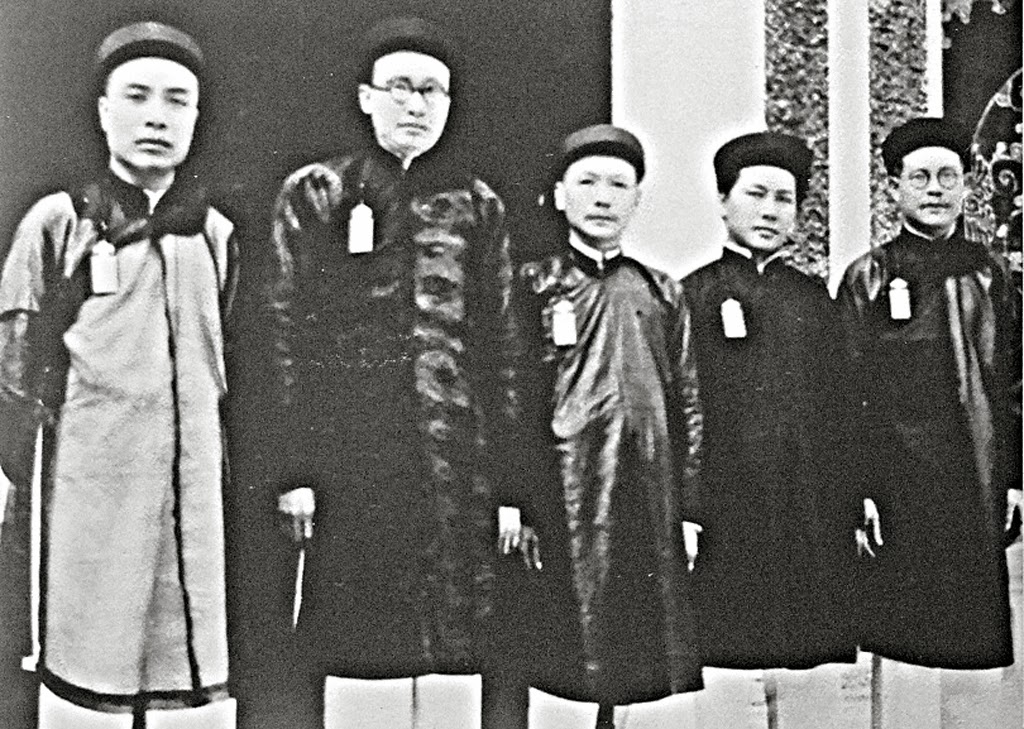
Diem’s opposition to both the French and the Viet Minh made him persona non grata in Vietnam. In 1950, he went into exile. He spent much of the next four years in the United States. He tried and failed to persuade the United States to push France to grant Vietnam’s independence. He succeeded, however, in impressing many well-connected Americans. Democratic Senator Mike Mansfield of Montana, who would eventually become Senate majority leader and a critic of the Vietnam War, thought after meeting Diem that “if anyone could hold South Vietnam, it was somebody like Ngo Dinh Diem.”
The Division of Vietnam
In May 1954, France gambled some of its best units on a decisive battle with the Viet Minh at Dien Bien Phu and suffered a devastating loss. Paris recognized that its eight-year fight to sustain its control over Vietnam had been lost. In the resulting 1954 Geneva Accords, France relinquished its colonies in Indochina and Vietnam was divided in two. The Viet Minh assumed control of what became North Vietnam. The question was who would lead South Vietnam pending a scheduled vote in 1956 on unifying the two parts of the country.
Diem had returned to Vietnam at the emperor’s request shortly before the Geneva Accords were signed to become prime minister in the south. Although Diem’s initial political position was weak, he succeeded in consolidating power. By doing so, he won U.S. backing.
The Eisenhower administration looked the other way in October 1955 when Diem won 98.2 percent of the vote in an election pitting him against Bao Dai to choose South Vietnam’s leader. Diem received 50 percent more votes in Saigon than there were registered voters. He quickly declared South Vietnam a sovereign country.
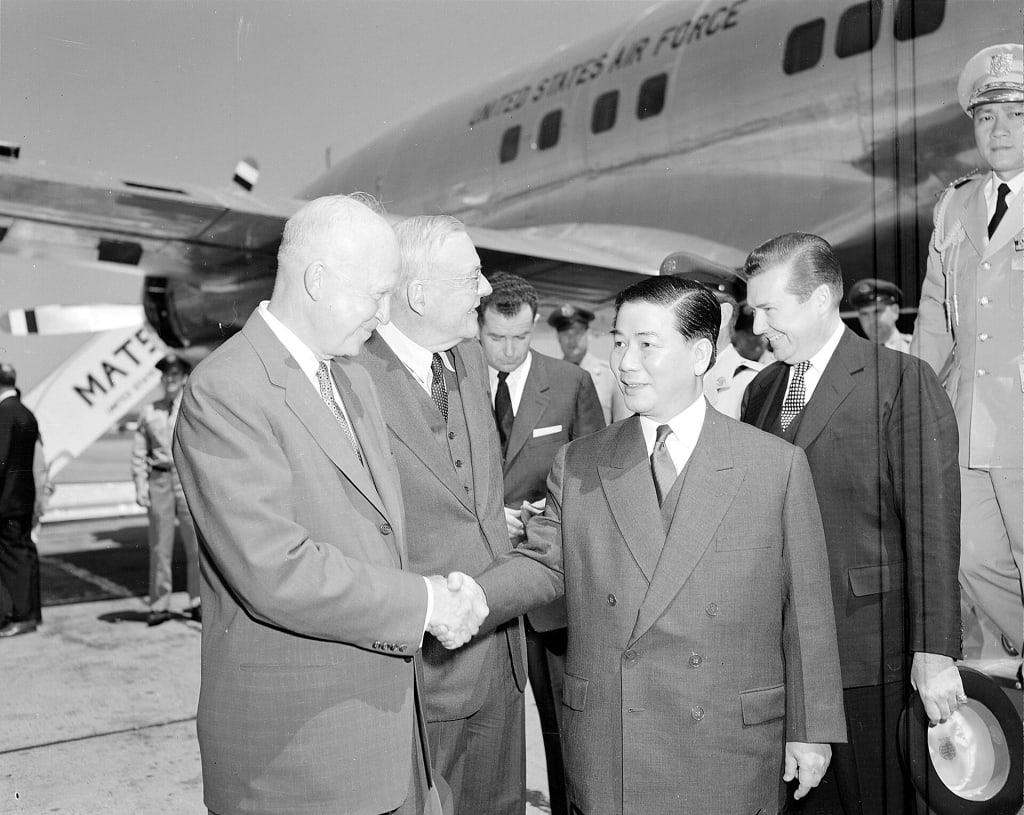
The promised referendum on uniting North and South Vietnam was never held. When Diem flew to Washington, DC, in May 1957, President Dwight Eisenhower personally met him at the airport, something Ike did for only one other head of state.
“The Churchill of Asia”
Eisenhower’s man in Saigon was initially Kennedy’s as well. Kennedy’s vice president, Lyndon B. Johnson, hailed Diem as the “Churchill of Asia” during a 1961 visit to South Vietnam.
Unlike Churchill’s success in rallying Britain during the darkest days of World War II, however, Diem failed to unite South Vietnam against the Viet Cong. The insurgency grew in size and lethality. The United States responded by leaning harder into the policy begun during the Eisenhower administration of building up South Vietnam’s military. By the end of 1962, the United States had roughly 11,000 U.S. military advisors in South Vietnam. Their mission was to train South Vietnamese troops. However, the U.S. military advisors frequently (but secretly) led them on operations against the Vietcong.
Diem bristled at the growing U.S. presence in South Vietnam—and at U.S. officials telling him what to do. He complained, “All these soldiers I never asked to come here. They don’t even have passports.”
The Buddhist Crisis
The irritation was mutual. The Kennedy administration saw Diem’s increasingly heavy-handed suppression of his domestic critics as alienating the South Vietnamese public he was trying to lead. And here, religion was an issue.
Diem came from a devout Catholic family—his older brother was the Catholic archbishop of the old imperial city of Hue—and he himself had taken a vow of chastity. The vast majority of Vietnamese, however, were Buddhists. They rankled at the blatant favoritism that Diem showed his fellow Catholics. As criticism mounted, he relied more heavily on his younger brother, Ngo Dinh Nhu, the informal head of both South Vietnam’s Special Forces and its secret police, to silence the opposition. Nhu was happy to oblige.
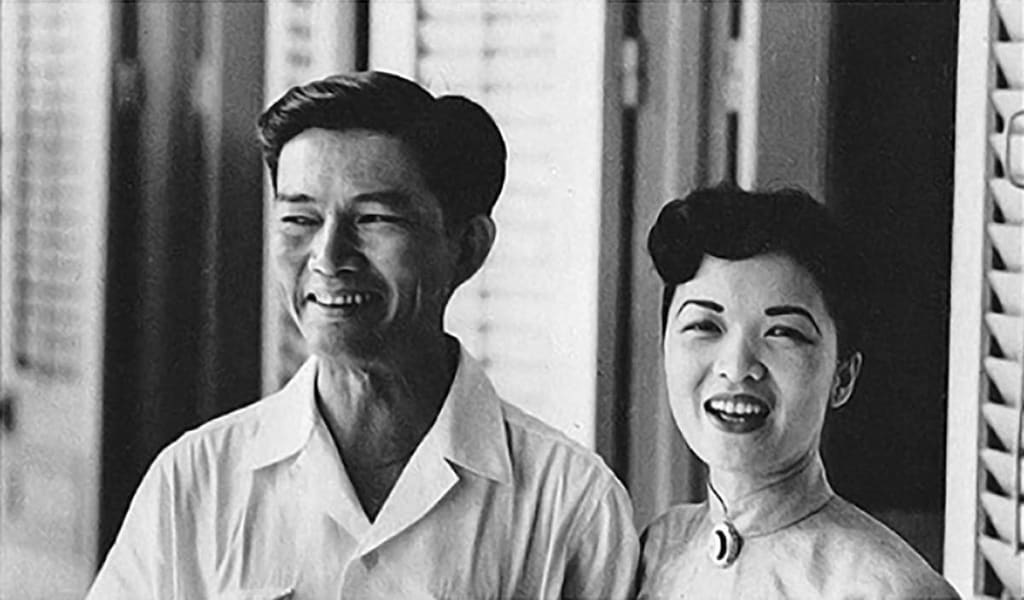
South Vietnam’s religious divide spilled into public view in May 1963. On the Buddha’s 2,527th birthday, Nhu’s forces fired on Buddhists protesting the government’s ban on flying religious flags. Nine people were killed, including several children. More protests quickly followed. Then in June, an elderly monk set himself on fire in downtown Saigon. Seven other monks soon followed his example.
Diem did nothing to stem the growing public anger; his sister-in-law, Tran Le Xuan, better known as “Madame Nhu,” added to it. She called the self-immolations a “barbecue.” “Let them burn,” she said, “and we shall clap our hands.” Despite promises from Diem that his government would not escalate the “Buddhist Crisis,” Nhu’s forces ransacked Buddhist pagodas across the country on August 21, arresting more than 1,400 people.
The Last Straw
The raids were the last straw for three U.S. officials: National Security Council staff member Michael V. Forrestal, Under Secretary of State for Political Affairs W. Averell Harriman, and Assistant Secretary of State for Far Eastern Affairs Roger Hilsman. They believed that Nhu’s tactics were driving the South Vietnamese into the arms of the Viet Cong. They also worried that Nhu was turning against the United States. He had repeatedly lied to U.S. officials, sought to stoke anti-American sentiments, and threatened to cut a deal with North Vietnam. In the view of Forrestal, Harriman, and Hilsman, if Diem could not be convinced to sideline his brother, South Vietnam needed a new leader.
Acting on intelligence reports that some South Vietnamese generals might be willing to overthrow Diem, Forrestal, Harriman, and Hilsman set out make a coup happen. With every one of the administration’s senior national security officials out of town, they drafted a cable on Saturday, August 24, to send to Henry Cabot Lodge, the new U.S. ambassador to South Vietnam. (Lodge, a former Republican senator from Massachusetts who had lost his seat to JFK in 1952, had arrived in Saigon just two days earlier and would not present his diplomatic credentials to the South Vietnamese government until the next day.) The cable was clear: Lodge should encourage South Vietnamese generals to oust Diem.
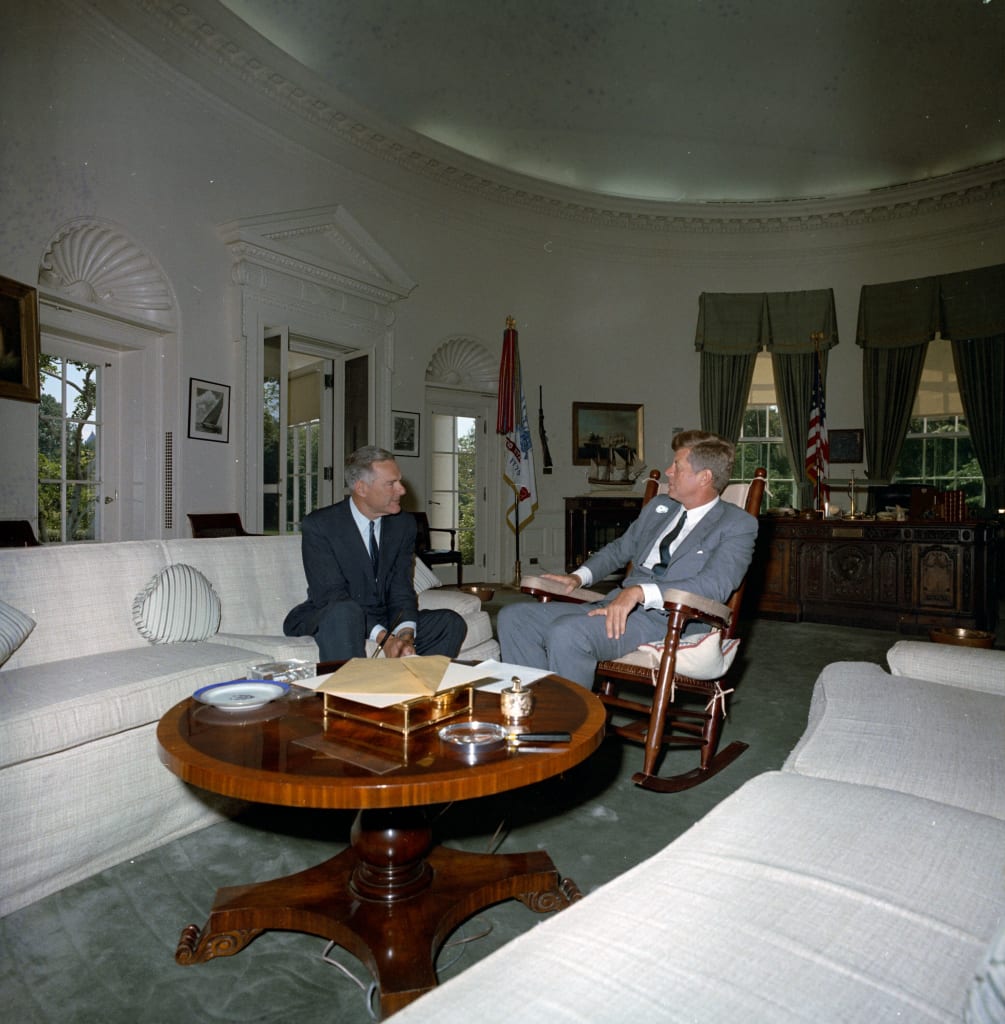
Forrestal, Harriman, and Hilsman did not ask their bosses, National Security Advisor McGeorge Bundy (who was on vacation) and Secretary of State Dean Rusk (who was in New York) to approve the cable. Instead, Forrestal called Kennedy, who was spending the weekend at his family’s compound in Hyannis Port, Massachusetts. Kennedy initially asked to defer a decision until he returned to the White House. Forrestal, however, argued that the matter could not wait. Kennedy relented and directed Forrestal to get the cable cleared by the State Department.
Harriman and Hilsman turned to Under Secretary of State George Ball, who had just finished playing a round of golf. Ball shared their view that Diem had to go, so he called Rusk. Ball used the impression that Kennedy was fine with the cable to get Rusk’s sign-off. Ball then relayed Rusk’s approval to Kennedy, who asked that several other officials be consulted. Forrestal, Harriman, and Hilsman quickly secured their approval. As one of them said later, “If Rusk went along with it and the president went along with it, I wasn’t going to oppose it.”
The Coup Cable
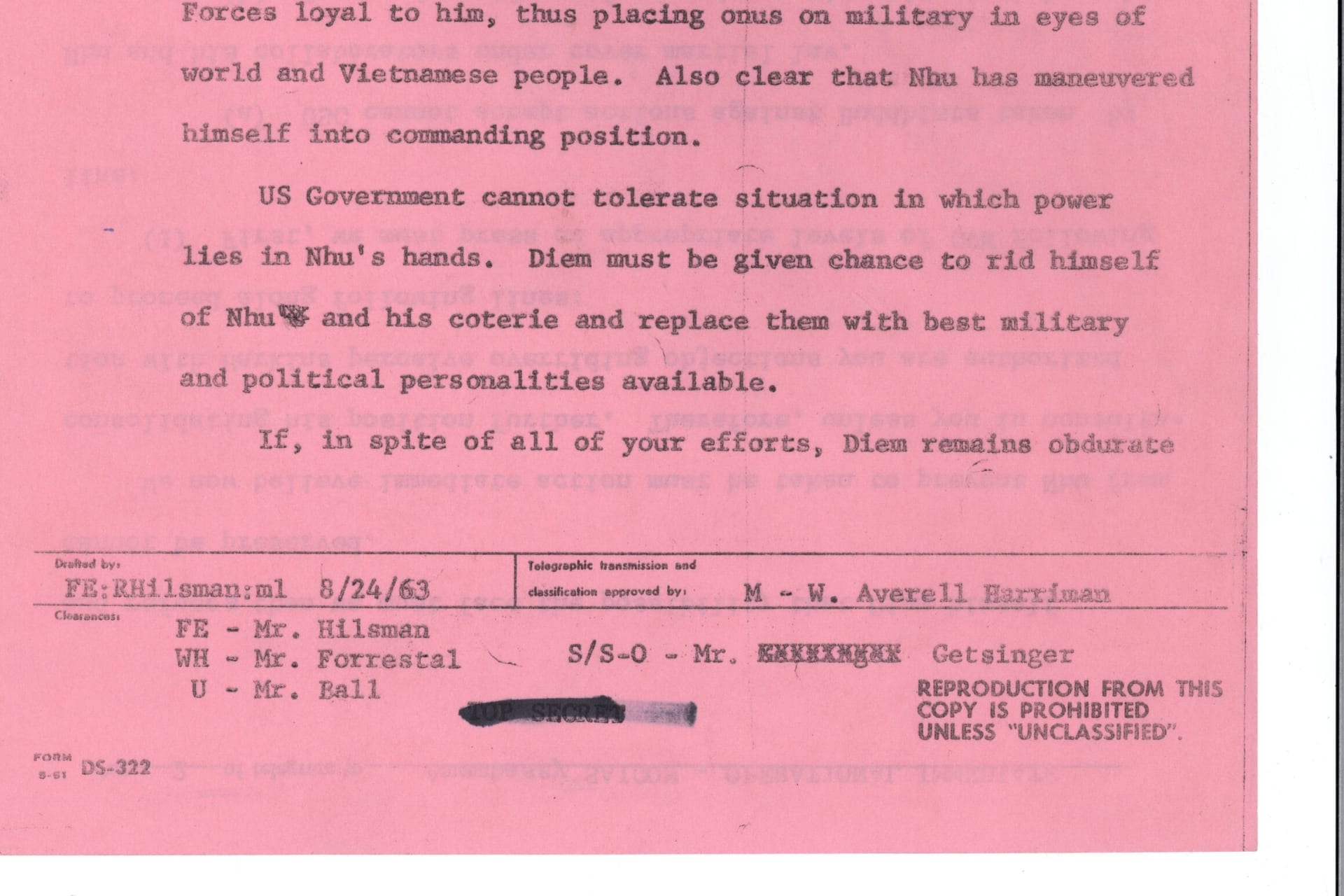
With the necessary approval secured, Forrestal, Harriman, and Hilsman wasted no time in sending the cable. It went out that night. Known officially as Cable 243, it told Lodge:
U.S. Government cannot tolerate situation in which power lies in Nhu’s hands. Diem must be given chance to rid himself of Nhu and his coterie and replace them with the best military and political personalities available.
If in spite of all your efforts, Diem remains obdurate and refuses, then we must face the possibility that Diem himself cannot be preserved.
….
Ambassador and country team should urgently examine all possible alternative leadership and make detailed plans as to how we might bring about Diem’s replacement if this should become necessary.
You will understand that we cannot from Washington give you detailed instructions as to how this operation should proceed, but you will also know we will back you to the hilt on actions you take to achieve our objectives.
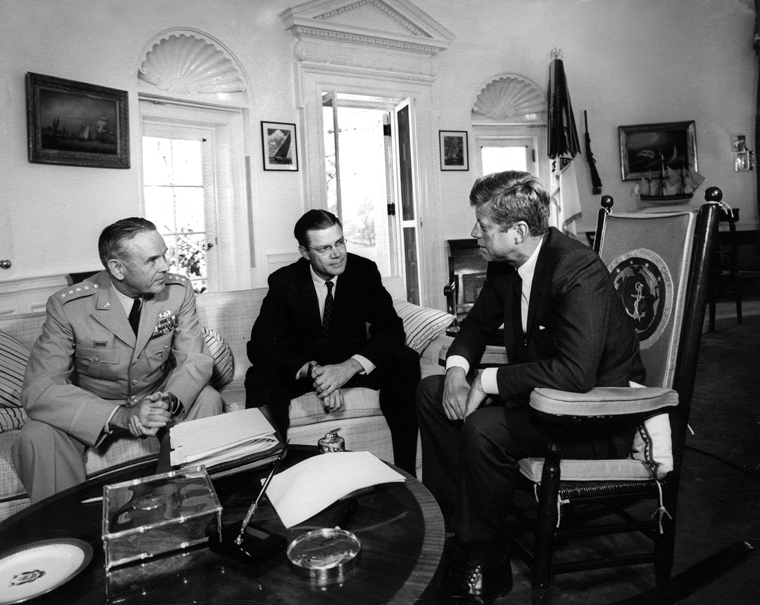
Tempers rose when Kennedy’s national security team reassembled at the White House the following Monday morning. Secretary of Defense Robert McNamara, CIA Director John A. McCone, and Chairman of the Joint Chiefs of Staff Gen. Maxwell D. Taylor all opposed encouraging a coup and objected to what Taylor later called an “egregious end run” around the normal decision-making process. Forrestal offered to resign, but Kennedy told him, “You’re not worth firing. You owe me something, so you stick around.”
The acrimony among JFK’s advisors drove him to lament, “My God! My government is coming apart.” Yet when Kennedy asked his advisors whether he should retract the cable, none said yes. Bundy later quipped that the lesson of Cable 243 was: “Never do business on the weekend.”
“No Respectable Turn Back”
While official Washington bickered over how the cable came to be, Lodge enthusiastically implemented his instructions. Within days, U.S. officials in Saigon had secretly contacted disaffected South Vietnamese generals. The message was clear: while the United States would not participate directly in Diem’s overthrow, it would recognize the new government. Suddenly, a coup seemed imminent. Then, just as quickly as it had come together, the plot fell apart. The plotters could not arrange for the right military units to be in Saigon, and they worried that Washington might backtrack on its pledge to recognize the new government.
Despite the collapse of the initial plot, complaints about how Cable 243 was approved, and the doubts about the wisdom of encouraging a coup, Kennedy never reversed the decision he had made at Hyannis Port. He dispatched McNamara and Taylor to South Vietnam on a fact-finding mission in September. They confirmed Diem’s mounting unpopularity. Kennedy chose to leave the question of whether to continue with the coup plan in Lodge’s hands. That decision was tantamount to giving it a green light. Lodge believed that the administration had already “launched on a course from which there is no respectable turn back.”
“‘Suicide’ With No Hands”
The coup that Kennedy authorized and Lodge spurred began on November 1, 1963. Although JFK had hoped that Diem’s overthrow would be bloodless, it wasn’t. Diem and his brother at first eluded the coup plotters. They were eventually captured and then shot and stabbed repeatedly in the back of an armored car. The plotters initially claimed that the brothers had committed suicide. A photo of the murder scene, however, showed the blood-soaked bodies of both men with their hands tied behind their back. Time magazine ran the photo over the caption, “‘Suicide’ with no hands.”
Many South Vietnamese cheered the end of Diem’s rule. But his death left Kennedy, in his own words, “shocked.” He blamed himself for having allowed the coup cable to be sent without a thorough airing of the issues it raised. He consoled himself with the hope that “the generals can stay together and build a stable government.”
[Video: https://www.youtube.com/watch?v=mQX4cBV5Kfw]

But the coup did not produce the political stability and national unity that Kennedy hoped for. Vietnam went through seven leadership changes in the following year-and-a-half. But that instability would bedevil a different U.S. president. Three weeks after Diem’s murder, Kennedy was assassinated.
Oscar Berry and Jack Patton assisted in the preparation of this article.
The United States celebrates its 250th anniversary in 2026. To mark that milestone, I am resurfacing essays I have written over the years about major events in U.S. foreign policy. A version of this essay was published on August 24, 2016.
This work represents the views solely of the author(s). The Council on Foreign Relations is an independent, nonpartisan membership organization, think tank, and publisher, and takes no institutional positions on matters of policy.