Americans Are Skeptical About Operation Epic Fury
Initial polls suggest that President Trump has work to do to persuade Americans that he made the right decision in launching major combat operations against Iran.
By experts and staff
- Published
 James M. LindsayCFR ExpertMary and David Boies Distinguished Senior Fellow in U.S. Foreign Policy
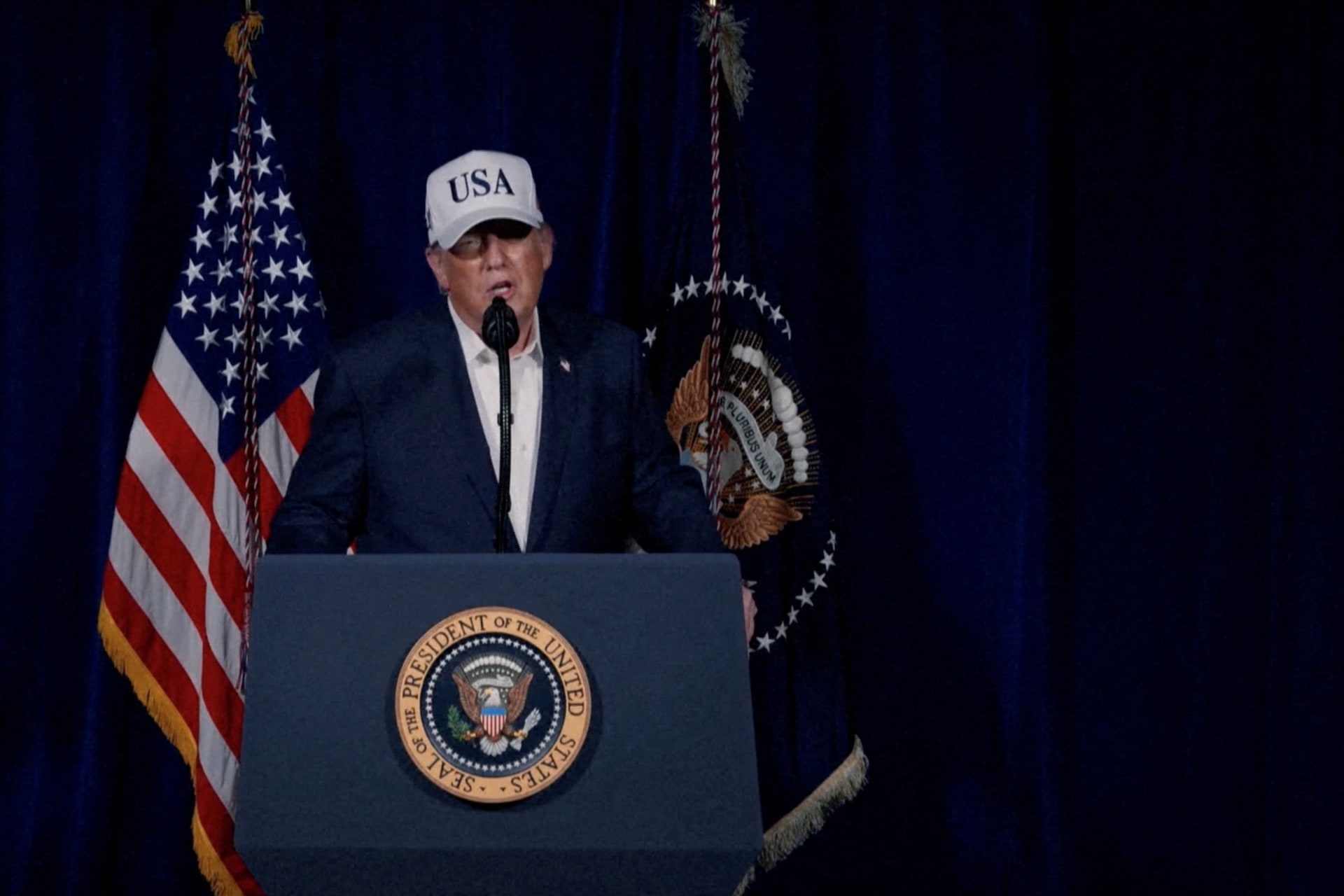
President Donald Trump announced early Saturday morning that the United States has launched “major combat operations” against Iran. Pollsters have been quick to gauge what Americans think of “Operation Epic Fury.” The results suggest that the president has a lot of work to do to persuade them of the wisdom of his decision.
What the Polls Said
Three major polling organizations have released results in the past forty-eight hours. Morning Consult was the first to go; its numbers were the most favorable to the president. Its poll found the country essentially split; 42 percent of registered voters said that the administration should have continued diplomatic negotiations, while 41 percent backed the airstrikes. Morning Consult also found no evidence that Trump was benefiting from a ‘rally-round-the-flag’ effect that often attends the use of military force; neither his overall approval rating nor his foreign policy approval rating improved over his pre-attack numbers. This is consistent with prior polls that have found that Trump’s foreign policy decisions have not had a significant impact on how the public views him.
A YouGov poll found that 45 percent of Americans thought that Trump had made “the wrong decision” in attacking Iran, compared to the 31 percent who thought he made “the right decision.” When YouGov asked whether the attack was justified or not, the numbers improved slightly for the administration. Thirty-nine percent thought that the attacks were not justified, while 32 percent thought they were.
A Reuters/Ipsos poll showed the least support for launching combat operations. Just 27 percent of Americans said they “approve,” while 43 percent say they “disapprove.” More than half (56 percent) agreed that Trump is “too willing to use military force.”
As with most polling on Trump, the Morning Consult, YouGov, and Reuters polls show a deep split between Democrats and Republicans. Democrats overwhelmingly disapprove of the president’s decision, while Republicans strongly support him. Self-described Independents fall somewhere in between but lean toward Democrats.
One last thing to note about all three polls is that roughly a quarter of Americans have yet to make up their mind on the wisdom of attacking Iran. Something to look for in future polls is whether the number of undecideds shrinks and which side they choose.
What Happens Next
The doubts Americans have at the start of Operation Epic Fury will not affect the prosecution of the war in the near term. Trump has plenty of experience riding out bad poll numbers. The House and Senate are scheduled to vote this week on measures to require Trump to obtain congressional authorization to continue the fighting. But much like the Senate’s vote last June in the wake of Operation Midnight Hammer, though, both measures are likely to fail, largely along party lines. The early poll results do not give Republicans good reason to abandon the president or Democrats good reason to join him.
What the early poll results do suggest, however, is that Trump does not have a deep reservoir of public support to draw on should U.S. combat operations in Iran suffer any setbacks or trigger adverse economic consequences. On the latter score, the price of gasoline could be a major factor in how many Americans assess the wisdom of the war. Morning Consult found that just 18 percent of registered voters favored continued military operations regardless of their impact on gas prices.
Colophon
Research and assistance
Oscar Berry