The World Cup Exposes North American Frictions, and Offers a Chance to Reconnect
The World Cup, the most-watched event in global sports, kicked off this week. Co-hosts Canada, Mexico, and the United States are grappling with economic and security tensions, but the tournament could be an opportunity to bridge divides.
By experts and staff
- Published
 Inu ManakSenior Fellow for International Trade
Inu Manak is an expert on U.S. trade policy who has written extensively on the United States-Mexico-Canada agreement.
For the first time in the World Cup’s history, athletes will compete across three countries: Canada, Mexico, and the United States. The North American trio won the bid to host the soccer tournament in 2018 with the slogan “United As One.” While one would expect the event to coincide with cheerful photo-ops between what former U.S. President George W. Bush once coined the “three amigos,” the prospect of such joviality seems slim. Polling shows that both Canadians and Mexicans view the United States as both a top ally and leading threat.
North America—a continent of over 500 million people accounting for one-third of global GDP—remains a highly integrated economic, social, and cultural space, but its countries today feel less like friends and more like suspicious neighbors.
Continental relations have never been perfect; in fact, they began on a particularly rocky path in the United States’ early decades. During the American Revolution, U.S.-based forces at war with Great Britain invaded Canada and forces from the newly independent nation did so again in the War of 1812; the memory of those failed attempts resurface when President Donald Trump blithely threatens to make Canada the fifty-first state. Relations with Mexico have witnessed the Mexican-American War, which ended with Mexico ceding significant territory to the United States, and U.S. military incursions during the Mexican Revolution at the turn of the twentieth century. Fears of U.S. involvement in Mexico’s domestic affairs persist. Aside from territorial conflict, North America has encountered its fair share of trade tensions and cultural clashes.
The journalist Anthony DePalma once observed about the northern frontier that people in the United States “see the border as joining Canada to the United States. For Canadians it is the last line separating us from them.” Similarly, Mexican leader Porfirio Díaz is attributed with the famous lament: “Poor Mexico, so far from God, so close to the United States.” Proximity to the United States has always served as a source of worry for Canada and Mexico. Political and economic strains over the last year have brought those feelings back to the surface.
U.S. President Donald Trump shocked his country’s closest trading partners by raising unprecedented and illegal tariffs on them within a month of taking office. Trump also threatened U.S. military incursions in Mexico to crack down on drug cartels, and he regularly suggests that Canada would be better off if it were absorbed into the United States. Yet despite the frictions that run through North America, much like the rivers and roadways that intersect these countries, a sense of connection often prevails.
This is the opportunity the World Cup brings. At a time when the United States is threatening to dismantle the economic pact that undergirds North American global competitiveness—the U.S.-Mexico-Canada agreement—and negotiations to renew the deal remain tense, the upcoming festivities provide a moment to pause and reflect on the things that bind us rather than divide us. Cross-border trade is a staggering $1 trillion annually, with $4 billion passing through U.S. northern and southern land borders every day. Mexico is the top foreign travel destination for Canadian and U.S. travelers, and Mexicans choose the United States as their favorite vacation spot. Trade provides all three countries with fresh fruits and veggies year-round, supporting the exploration of diverse cuisines.
This is not to say that sports competitions cannot be political. In fact, they have often been the focus of boycotts and protests, as well as outlets for nationalism. But once the games begin, a celebration of the sport, and the talented athletes competing, usually transcends the political noise. Local communities, political leaders, and expats can forge new bonds as they come together to enjoy a historic moment.
As World Cup fever heats up, there will be prominent displays of national pride. For instance, in Vancouver, British Columbia, a Canadian flag of record-breaking size drapes nearby Grouse Mountain. In Mexico City, fans will seek to break another Guinness World Record for the largest wave on the Paseo de la Reforma. At the same time, our interwoven communities have an opportunity to come together again. In Houston, for example, vibrant murals such as “Where Borders Fade,” by the Spanish artist Dulk, showcase the interconnectedness of North America through its natural habitat and people. Cross-border cooperation to facilitate the swaths of fans traveling to watch matches with their North American neighbors is a critical behind-the-scenes component of these festivities, from managing the land borders to the airports.
People moving through those borders, and the connections they have built, run deep. More than 300,000 people cross each border daily. Many have also chosen to settle across the borders: 800,000 Canadians live in the United States, while 50,000 live in Mexico; Canada is home to more than 50,000 Mexicans, and Mexicans account for the largest Hispanic-origin population in the United States; and roughly a quarter million U.S. citizens live in Canada and 1.6 million live in Mexico. This integration makes up a shared social fabric that connects nationals from the three countries over food, drink, culture, and sport.
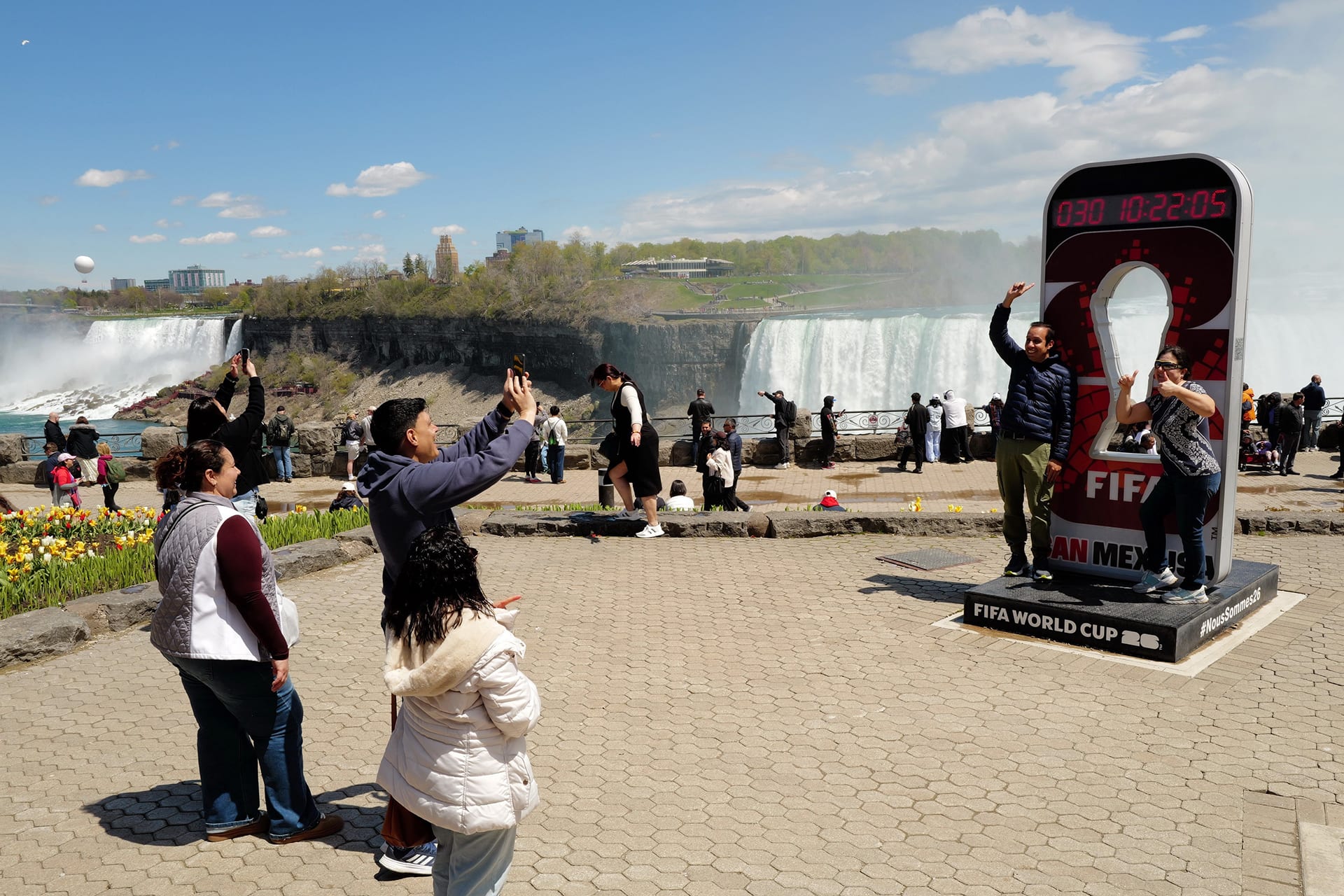
While the exorbitant ticket costs and concerns over U.S. immigration enforcement may be keeping some fans at bay in the United States, many still plan to attend watch parties and meet at parks or restaurants to cheer on their favorite teams. Border towns from Niagara, New York to Laredo, Texas will host events that bring their local communities together. Politics on the continent cannot dampen fans’ infectious enthusiasm for the sport and willingness to brave border delays to share in the excitement. As political scientist Robert Pastor once reflected about meeting Canadians and Mexicans outside of North America: “I am reminded of a feeling when I met someone from a rival high school when traveling in another state. The differences that seem so important in cheering for different sides during a football game melt away as you leave your hometown, and they are replaced by the shared experience of being at the same game.” That feeling will undoubtedly permeate the tournament wherever it is watched.
There may not be a gathering of “the” three amigos at this World Cup, but the leaders of North America would do well to watch and learn from the legions of soccer fans that will come together, cheer, console, and make new friends. They will be doing exactly what former President Ronald Reagan called for in 1979 when he announced his candidacy for president: to stop thinking of our nearest neighbors as foreigners.
This work represents the views and opinions solely of the author. The Council on Foreign Relations is an independent, nonpartisan membership organization, think tank, and publisher, and takes no institutional positions on matters of policy.