An ‘Open for Open’ Hormuz Deal Could Break the Iran Stalemate
Pressing economic concerns should compel the United States and Iran to decouple their blockades of the Strait of Hormuz from the complex and likely lengthy negotiations needed to reach a settlement on Iran’s nuclear program.
By experts and staff
- Published
 Max BootCFR ExpertJeane J. Kirkpatrick Senior Fellow for National Security Studies
Max Boot is the Jeane J. Kirkpatrick senior fellow for national security studies at the Council on Foreign Relations.
Talks to end the war with Iran appear to be hopelessly stalled. But there is a way forward if the United States agrees to pare down its immediate demands to focus on the most important issue confronting the world: the closure of the Strait of Hormuz, the conduit for 20 percent of the world’s oil and gas. An “open for open” formula, under which both sides end their blockades of the strait, could offer a way out of the negotiating stalemate evident this weekend.
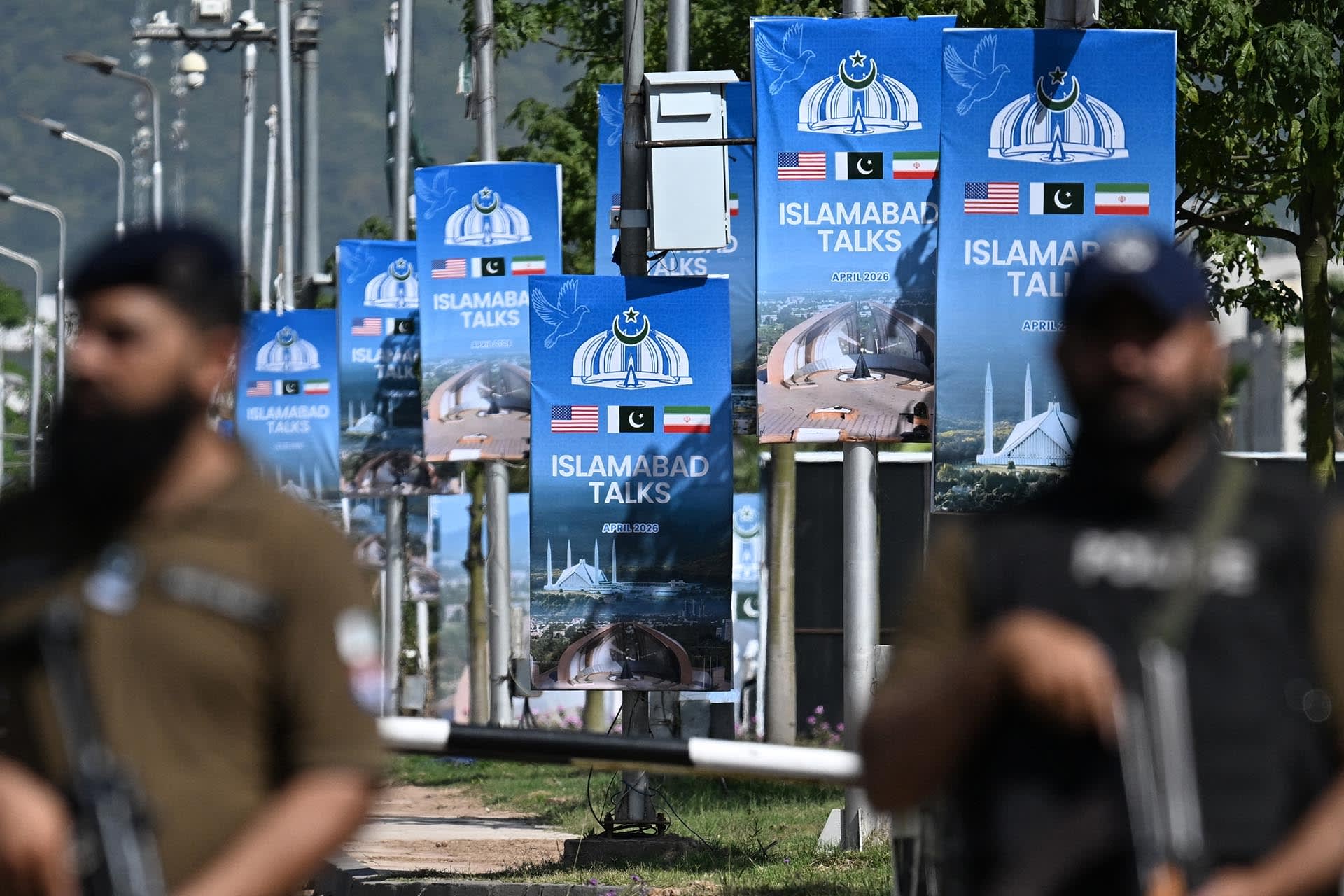
President Donald Trump announced on Sunday that U.S. negotiators would head to Islamabad, Pakistan, for a second round of negotiations with Iran on Monday. “We’re offering a very fair and reasonable DEAL,” he said, adding menacingly, “and I hope they take it because, if they don’t, the United States is going to knock out every single Power Plant, and every single Bridge, in Iran.”
But, in an indication of how far apart the two sides remain (and how little Tehran fears Trump’s hyperbolic threats), Iranian state media reported that Iranian envoys would not show up for the second round of talks because of what the government called “Washington’s excessive demands, unrealistic expectations, constant shifts in stance, repeated contradictions, and the ongoing naval blockade, which it considers a breach of the ceasefire.”
While the Iranian negotiating team may still show up, this is the second time in the last few days that Trump has expressed confidence that talks to end the conflict were advancing, and Iran put a damper on his happy talk. On Friday, Trump wrote on social media that “THE STRAIT OF HORMUZ IS COMPLETELY OPEN AND READY FOR BUSINESS” and “Iran has agreed to never close the Strait of Hormuz again.” Trump also claimed that Iran had agreed to give up all its enriched uranium (which he referred to as “nuclear dust”).
It was true that Iranian Foreign Minister Abbas Araghchi had written on X that, following the U.S.-imposed ceasefire in Lebanon, the Strait of Hormuz was “completely open for the remaining period of the ceasefire,” but even he added a caveat, noting that ships would have to follow “a coordinated route” controlled by Iran, raising the probability that Iran would try to exact a toll from passing tankers.
In any case, the relatively moderate Araghchi is not in control of the Iranian regime. The hard-line Islamic Revolutionary Guard Corps (IRGC), which has the guns (and drones and missiles), and exercises more influence, had other ideas. The IRGC publicly criticized the Foreign Ministry for committing to opening the strait while the U.S. blockade on ships entering or leaving Iranian ports was still in effect. Iranian forces fired on a couple of tankers trying to make their way out of the Persian Gulf.
The strait—which normally sees the passage of roughly 130 ships a day—remains closed for all but a handful of vessels. “With the continuation of the [U.S.] blockade, the Strait of Hormuz will not remain open,” vowed Speaker of the Parliament Mohammad Bagher Ghalibaf, who led the Iranian delegation to the first round of talks with the United States. On Sunday, the U.S. Navy fired on and then seized an Iranian-flagged cargo ship that was trying to evade the U.S. blockade. Iran vowed retaliation.
It is not just on the strait that the two sides remain far apart. There is no indication that Iran is moving away from its redlines—namely, not giving up its nuclear enrichment capacity, its ballistic missile program, and its support for militant proxies across the region. Indeed, Iran’s successful attempt to link a ceasefire with the United States to a ceasefire in Lebanon shows how much the fate of Hezbollah continues to matter in Tehran.
It will not be easy to move past the wide chasm of suspicion and misunderstanding that divides the United States and Iran. Neither side has much reason to trust the other: The U.S. can point to Iran’s clandestine nuclear program, despite Iran’s promises to never acquire nuclear weapons, and its long history of sponsoring anti-American and anti-Israeli terrorism. Iran can point to Trump exiting the Iran nuclear deal in 2018, even though Iran was abiding by its terms, and, more recently, to Israel and the United States on two separate occasions (June 2024 and February 2026) launching air strikes against Iran while negotiations were still proceeding.
Even if Trump’s inexperienced negotiators—Vice President JD Vance and special envoys Steve Witkoff and Jared Kushner—do finally meet their Iranian counterparts, there is scant reason to hope for a diplomatic breakthrough covering all the issues on the table. The last, and only time, that the United States successfully negotiated with Iran, it took more than eighteen months to reach agreement on the 2015 Joint Comprehensive Plan of Action.
Yet both Iran and the United States have an obvious interest in ending the war. Iran needs to rebuild from the damage (estimated at $270 billion) caused by extensive U.S. and Israeli air strikes, and it needs to restart oil exports that have now been bottled up by a U.S. naval blockade. If the blockade goes on long enough, Iran could face the prospect of an economic collapse. The United States, for its part, needs to reopen the Strait of Hormuz and get oil flowing again before the closure of the strait (which has already led to a substantial increase in gasoline prices and inflation in the United States) does more damage to the global economy.
Far apart as they are on many issues, the United States and Iran could conceivably agree on an “open for open” formula under which both sides would agree to end their respective blockades of the Strait of Hormuz. If commerce starts flowing in both directions, the global energy crisis will slowly dissipate. That will buy time for the two sides to undertake the laborious and lengthy negotiations needed to reach a new nuclear deal—a process that would be considerably hastened if Trump were to transfer the negotiating portfolio to Secretary of State Marco Rubio and whatever Iran, energy, and nuclear experts remain at the State Department after various political purges.
Even with the strait open, both sides have plenty of leverage to use against each other: Iran, which the New York Times estimates to still have 40 percent of its drones and 60 percent of its missile launchers, can always threaten to close the strait again and to strike at energy infrastructure throughout the Gulf. The United States, in turn, can always threaten to bomb Iran again while holding out the prospect of lifting sanctions and giving Iran access to frozen funds as part of any potential deal.
Because both countries are now complicit in keeping the strait closed, neither one will lose face by opening it—as long as the other one does the same. A mutual end to the blockades could be an important confidence-boosting step that could pave the way for more fruitful talks on other issues. If Trump, on the other hand, insists on maintaining the U.S. blockade, it is hard to see how negotiations can get anywhere, while the potential for another escalation of the conflict remains high.
This work represents the views and opinions solely of the author. The Council on Foreign Relations is an independent, nonpartisan membership organization, think tank, and publisher, and takes no institutional positions on matters of policy.