Trump’s Iran Ceasefire Has Been Extended. So Has the Hormuz Standoff.
After nearly six weeks of fighting, the United States and Iran agreed to a temporary truce, brokered by Pakistan. What are the conditions of the ceasefire, and what’s the likelihood it will lead to a permanent deal?
By experts and staff
- Updated
- Writer/Editor
- Senior Writer/Editor, Latin America
President Donald Trump extended the ceasefire between the United States and Iran on April 21, just as the truce was approaching its expiration. He announced the extension would last until the Iranian negotiators could reach a “unified proposal” for peace talks, which had reached a standstill.
Iran again closed the Strait of Hormuz hours after both countries announced last week that it was reopened, continuing a cycle of disruptions of the waterway that has become a focal point of their war.
The United States and Iran agreed to a ceasefire on the evening of April 7 after nearly six weeks of fighting that had disrupted global energy markets and spread through much of the Middle East. In the hours leading up to the ceasefire announcement, Trump threatened that “a whole civilization will die tonight” if Iran didn’t reach an agreement with the United States.
Trump said on social media that he would “suspend the bombing and attack of Iran” on the condition that Tehran completely and immediately reopened the Strait of Hormuz. But the day after the ceasefire began, Iran said it had again closed the strait following continued Israeli attacks on Hezbollah targets in Lebanon.
Iran has cited Israel’s campaign against Hezbollah in Lebanon as the reason for keeping the strait closed, saying it would reopen the waterway if Israel agreed to a ceasefire. Israel, which had said its fight with Lebanon was not part of the original truce with Iran, agreed on April 16 to a ten-day ceasefire in Lebanon. Yet mere days into the truce, Israel and Lebanon accused each other of violating their ceasefire agreement, stoking tensions even as plans for a second round of peace talks on April 23 progressed.
The Trump administration’s pressure campaign to force Iran to reopen the waterway—the choke point for nearly one-fifth of the world’s oil and natural gas supply—has strained the fragile ceasefire. After the first round of U.S.-Iran peace talks in Islamabad failed to reach an agreement on April 12, Trump threatened that the U.S. Navy would block “any and all” ships entering or leaving the strait. The U.S. Central Command later clarified the blockade would only target ships moving through Iranian ports, allowing vessels sailing to U.S. Gulf allies to transit.
Despite the United States and Iran’s agreement to reopen the waterway, Trump said the U.S. blockade on Iranian ports would remain “in full force” until a peace deal was reached. Iran fired on ships in the waterway the next day in retaliation for the U.S. blockade, exacerbating tensions.
Pakistan has pushed for a second round of peace talks, which Trump said could happen in the coming days. Some experts are skeptical the talks will lead to substantive change. “There has been no regime change in Iran, the current leadership is not any less radical than their predecessors, the Iranians still have the ability to menace their neighbors, and Iran has leverage over the Strait of Hormuz when it did not before the war began,” Steven A. Cook, Eni Enrico Mattei senior fellow for Middle East and Africa studies, told CFR. “I don’t see how negotiations will change this reality.”
What are the terms of the ceasefire?
Although the full terms of the ceasefire have not been released, the United States has agreed to pause military strikes on Iran for a conditional two-week period. Trump has said that all U.S. military objectives in Iran have already been met.
Trump said Iran had to agree to the “COMPLETE, IMMEDIATE, and SAFE OPENING” of the Strait of Hormuz, which has been largely closed since the war broke out in late February. According to Trump, the United States will assist with managing traffic buildup in the strait. Iran will also not be allowed to enrich uranium, something Trump said the two countries will work together to dig up and remove. It remains unclear how Iran’s decision to close the strait again will affect the fragile ceasefire.
In return, Iran’s Supreme National Security Council said in an April 7 statement that the country’s military would “cease their defensive operations” if U.S. and Israeli attacks stopped. It also agreed to safe passage through the Strait of Hormuz for the two-week period, though only “via coordination” with the Iranian armed forces and with “due consideration of technical limitations.”
“Both sides are interested in an off-ramp, but both have different expectations of what that looks like,” Ray Takeyh, Hasib J. Sabbagh senior fellow for Middle East studies, told CFR. “It may hold, imperfectly.”
Notably, Israeli Prime Minister Benjamin Netanyahu said Israel supported the ceasefire agreement but argued it did not apply to Lebanon, which had been the target of Israeli attacks since early March. His statement contradicted that of Pakistani Prime Minister Shehbaz Sharif, who said the United States, Iran, and Israel “agreed to an immediate ceasefire everywhere including Lebanon.”
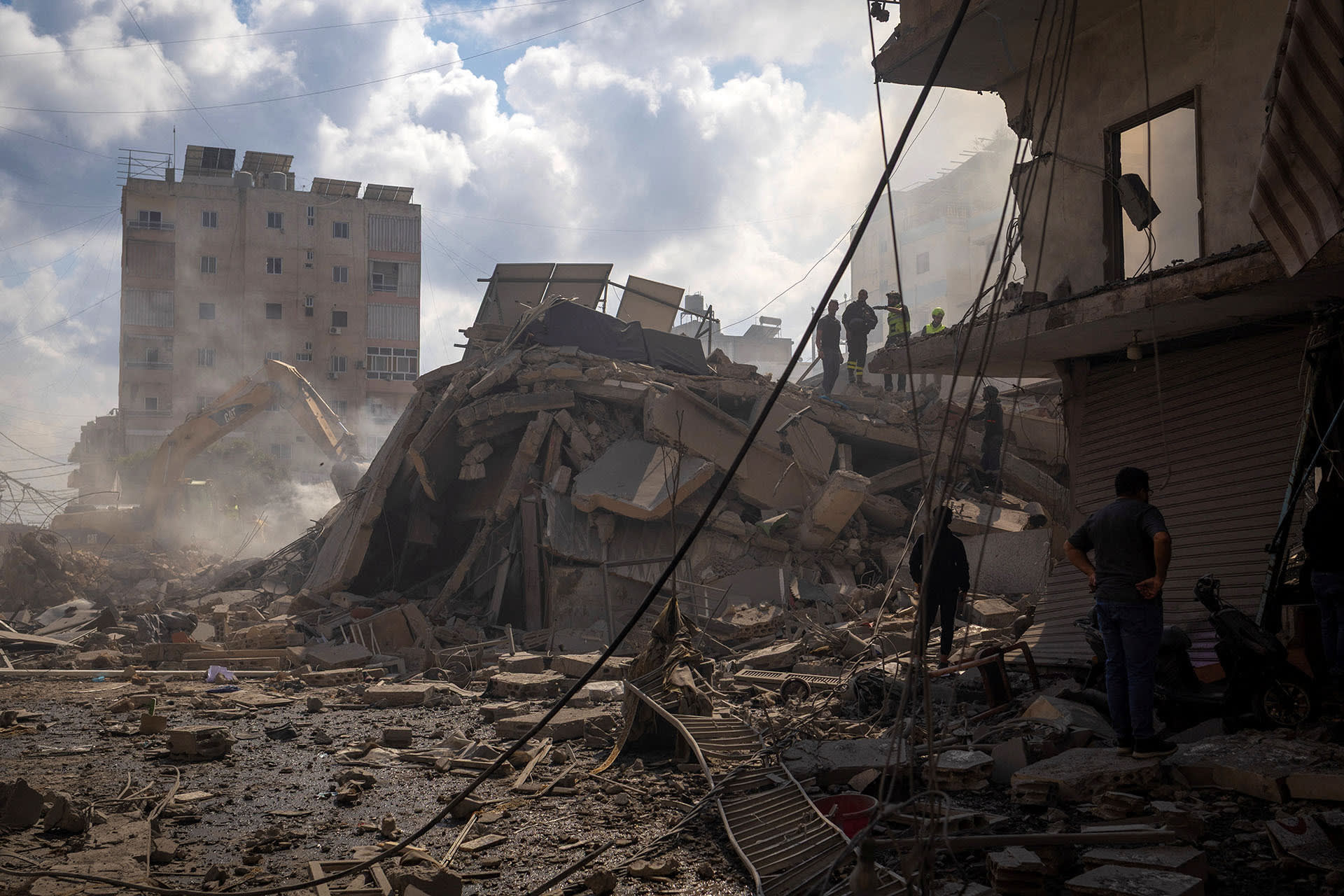
Trump later concurred that Lebanon was not included in the truce, referring to Israel’s war against Hezbollah as a “separate skirmish.” Hours after the U.S.-Iran ceasefire was called, Israel targeted Hezbollah in a wave of strikes across Lebanon, prompting Iran to accuse Israel of violating the truce and threaten to withdraw from the agreement altogether.
What does Iran want?
Iran has submitted a ten-point plan for peace, which Trump described as a “workable basis on which to negotiate.” The plan is a counterproposal to a fifteen-point agreement previously drafted by the United States in late March.
The official Iranian plan remains unclear, as several versions released in Farsi and English contain different phrasing. But Iranian state-linked media has cited several general provisions that it wants the United States to commit to, including
- a complete halt on aggression against Iran and its allied groups;
- allowing continued Iranian control over the Strait of Hormuz;
- acceptance of Iran enriching uranium;
- lifting all primary sanctions on Iran;
- lifting all secondary sanctions against foreign firms that do business with Iranian entities;
- terminating all UN Security Council resolutions against Iran;
- ending all resolutions on Iran’s nuclear program under the International Atomic Energy Agency;
- paying compensation to Iran for war damage;
- withdrawing all U.S. combat forces from the region; and
- ceasing hostilities on all fronts, including between Israel and Hezbollah in Lebanon.
The United States has dismissed many of those conditions in past negotiations. On Tuesday night, Trump said that “almost all of the various points of past contention have been agreed to” by Washington and Tehran. However, the next morning, Trump posted that “there will be no enrichment of Uranium,” but noted that “we are, and will be, talking Tariff and Sanctions relief”—and both he and Vice President JD Vance later said that the versions reported in the media were not what they had agreed to.
“The Iranian ten-point plan verges on the absurd,” Takeyh said, when asked if the United States was likely to accept the framework. “The negotiating platforms are designed to start talks, not serve as the basis of the final agreement.”
What happened after peace talks failed?
Both Washington and Tehran claimed victory in the ceasefire, but a true end to the conflict remains elusive.
The Pakistan-mediated negotiations on April 11 were the first face-to-face talks the United States had held with Iran since 1979. Vance—who had led the U.S. delegation—announced on April 12 that the countries had been unable to reach an agreement after twenty-one hours of discussion.
The reopening of the Strait of Hormuz and uranium enrichment emerged as two particular sticking points during negotiations. The two countries originally agreed to resume shipping across the Strait of Hormuz during the two-week truce, but both the United States and Iran have reimposed blockades during that time.
Iran had demanded Israel cease attacks on Lebanon in return for reopening the strait. Israel continued to attack Lebanon until it agreed to a ten-day ceasefire on April 16. Tehran had previously said unexploded sea mines deployed during the war had hindered its efforts to reopen the waterway. The country has also refused to relinquish or cease production of enriched uranium, a critical component for nuclear power.
Trump’s blockade further complicates the U.S.-Iran standoff as international pressure for a second round of ceasefire talks mounts. Trump has presented the blockade as a success, writing on social media that thirty-four ships had passed through the strait on the first day of the blockade. But media reports have suggested the strait’s maritime traffic did not substantially change that day despite U.S. action.
Using Hormuz as a bargaining chip in the negotiations isn’t in either country’s best interest, as both sides rely on the strait, CFR expert Max Boot argues. “An ‘open for open’ formula, under which both sides end their blockades of the strait, could offer a way out of the negotiating stalemate,” he wrote.
Following the first round of negotiations, Vance said it was up to Iran to “take the next step.” U.S. and Pakistani officials are reportedly coordinating another round of peace talks this week, though Iran has said it would not participate.
The same day that Trump announced an extended ceasefire, Iranian forces seized two ships in the Strait of Hormuz, while over in the Indian Ocean, the United States boarded a tanker carrying Iranian oil over the Indian Ocean.
How have other countries responded?
Countries around the world were quick to welcome the cessation of fighting, including leaders from Africa, China, and Europe. They were also quick to express their dismay after the U.S.-Iran negotiations concluded without a clear agreement.
British Prime Minister Keir Starmer and French President Emmanuel Macron urged the United States and Iran to resume talks. Macron previously noted that France was among at least fifteen countries across Asia, Europe, and the Middle East that have been working with Iran to help open the Strait of Hormuz. Meanwhile, China’s foreign ministry criticized the U.S. naval blockade, calling it “dangerous and irresponsible.”
Iranian state news has reported that Iran and Oman would charge transit tolls for any boats that cross the strait during the ceasefire and put the profits toward reconstruction, although Oman’s transport minister has since said that his country has no plans to do this. (This is not legal under the UN Convention on the Law of the Sea, which Oman has ratified, though neither the United States nor Iran has.)
Colophon
Data Visualization
- Austin Steinhart
- Will Merrow
Additional Reporting
Surina Venkat contributed to this article.